꽃 피는 과수원 Orchard in Blossom
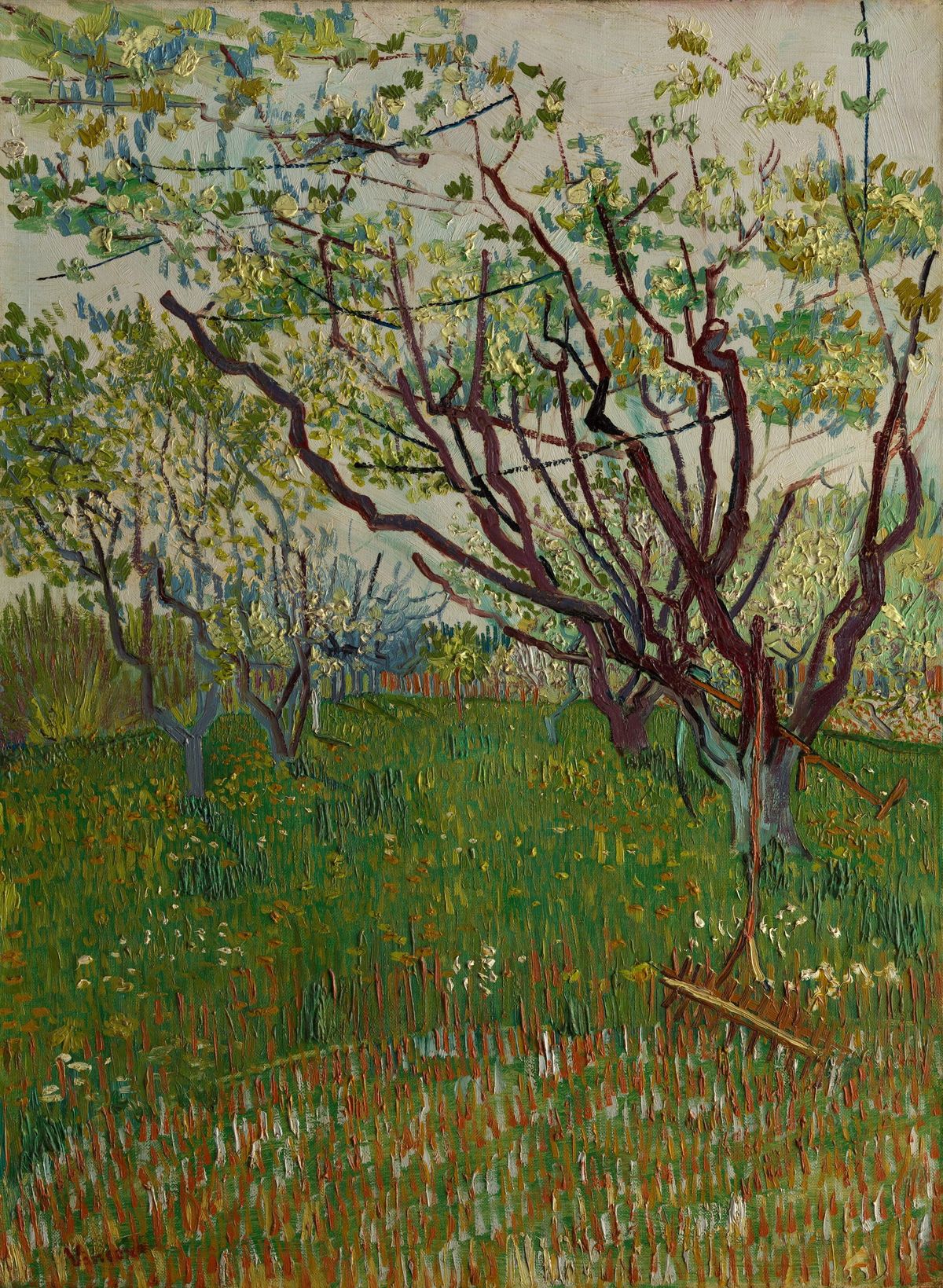
이 작품은 네덜란드의 후기 인상주의 거장 빈센트 반 고흐(Vincent van Gogh)가 1888년 4월 프랑스 아를(Arles) 체류 시기에 제작한 유화입니다. 공식 소장품 등록번호는 F511이며, 캔버스 위에 유채로 그려진 실제 실측 규격은 73 x 93 cm입니다. 현재 이 작품은 네덜란드 암스테르담에 위치한 반 고흐 미술관(Van Gogh Museum)에 공식적으로 소장되어 있으며, 아를의 따스한 봄과 과수원의 눈부신 생명력을 보여주는 대표작입니다.
작가의 고뇌와 창작 비하인드
프랑스 남부의 아를에 도착한 직후 반 고흐는 혹독한 겨울을 이겨내고 만개한 과수원들의 풍경에서 엄청난 예술적 영감을 얻었습니다. 그는 동생 테오에게 보낸 편지에서 남프랑스의 봄이 가져다주는 찬란한 색채에 매료되었으며, 복숭아와 살구, 자두나무 등 꽃 피는 과수원 시리즈를 열정적으로 그려 나갔다고 전했습니다.
작품 전경에는 초록빛 풀밭 위로 봄의 수확을 준비하는 듯 갈퀴 도구가 놓여 있으며, 거칠고 두터운 붓터치로 표현된 대지의 질감이 생생하게 살아 있습니다. 중경에는 짙은 갈색의 굵고 뒤틀린 나뭇가지를 사방으로 뻗어낸 과수 나무가 화면 전체를 압도하듯 웅장하게 서 있고, 그 위로 연한 흰색과 노란빛의 꽃망울들이 눈부시게 피어 있습니다.
배경으로는 아를의 평온한 농촌 풍경과 연한 하늘빛 대기가 부드럽게 어우러져 있으며, 전체 화면을 지배하는 따스한 봄의 기운은 고단했던 작가의 내면에 위안과 희망을 선사했습니다.
무의식 속 시선 및 심리 흐름
관람객의 시선은 가장 먼저 화면 오른쪽 아래에 놓인 갈퀴와 전경의 초록빛 풀밭으로 향하며, 농경지의 평화롭고 소박한 일상을 마주하게 됩니다. 이어지는 시선은 대지 위로 뻗어나간 굵고 역동적인 나뭇가지를 따라 위쪽으로 이동하며, 나무가 품은 생명력과 거친 에너지를 고스란히 체감하게 됩니다.
시선이 다시 수많은 꽃잎이 만개한 나무 상단과 배경의 하늘로 확장될 때, 관람객은 봄이 주는 따스한 해방감과 환희에 휩싸이게 됩니다. 이 일련의 시선 흐름은 평범한 과수원 풍경을 넘어, 작가가 자연의 순환 속에서 발견한 치유와 구원의 정서를 깊이 있게 느끼게 만듭니다.
미술계의 평가 및 조형미
미술사학계와 평단은 본 작품을 고흐가 아를 시기에 이룩한 자연주의적 색채 표현의 정수이자, 일본 우키요에 판화의 구도적 영향을 자신만의 독창적인 조형 언어로 승화시킨 걸작으로 평가합니다. 캔버스 가득 과수 나무를 클로즈업하여 배치한 대담한 구도는 평면적이면서도 강력한 공간감을 형성하며 화면의 긴장감을 높여줍니다.
물감을 두껍게 얹는 임파스토 기법을 사용하여 나뭇가지와 꽃잎, 풀잎의 촉각적 질감을 생생하게 살려냈으며, 초록색과 갈색, 화이트 톤의 조화로운 배색은 시각적 싱그러움을 더합니다. 자연의 아름다움을 찬란한 예술로 피워낸 이 작품은, 시대를 초월해 관람객의 마음에 깊은 울림과 따뜻한 위로를 전해줍니다.
Orchard in Blossom
Executed in April 1889 during his stay in Arles, France, this oil painting is a magnificent work by the Dutch Post-Impressionist master Vincent van Gogh. Officially cataloged under inventory number F511 and measuring 73 x 93 cm on canvas, the work is currently housed in the permanent collection of the Van Gogh Museum in Amsterdam, celebrating the radiant vitality of a Provençal spring.
The Artist's Turmoil and Creative Background
Upon arriving in the southern French town of Arles, Van Gogh was immediately captivated by the blossoming fruit orchards that signaled the end of a harsh winter. In his letters to his brother Theo, he expressed deep enchantment with the brilliant colors of the southern spring, leading him to passionately execute a celebrated series of flowering fruit trees, including peach, apricot, and plum trees.
The foreground features a rich green meadow accompanied by a rustic rake resting on the earth, rendered with vigorous and tactile brushstrokes that emphasize the substance of the soil. In the middle ground, a gnarled fruit tree with thick, twisting dark brown branches commands the composition, its delicate white and yellowish blossoms bursting forth in a triumphant display of seasonal renewal.
The background recedes into the serene atmosphere of the Arles countryside under a pale sky, capturing a moment of profound natural harmony that offered much-needed solace to the artist's troubled spirit.
Psychological Flow and the Unconscious Gaze
The viewer's gaze is initially drawn to the lower right corner, where a simple garden rake rests on the verdant grass, establishing an immediate connection to the quiet rhythm of rural labor. The eye then migrates upward along the dramatic, twisting network of branches, absorbing the raw, organic energy radiating from the tree's architecture.
As the gaze expands toward the blossoming canopy and the luminous background sky, the observer is enveloped in a profound sense of seasonal awakening and visual delight. This deliberate visual journey leads the viewer from grounded physical observation into an uplifting, emotional communion with nature's resilience.
Critical Acclaim and Formal Analysis
Art historians and critics widely celebrate this painting as a pinnacle of Van Gogh's Arles period, recognizing it as a brilliant synthesis of naturalistic observation and the compositional influence of Japanese woodblock prints. The bold framing of the orchard tree close to the picture plane creates a striking spatial immediacy that invigorates the entire composition.
The application of paint through a thick impasto technique accentuates the tactile qualities of the foliage, branches, and grass, while the harmonious orchestration of greens, browns, and soft lights generates a vibrant chromatic freshness. Capturing the transient beauty of spring as an eternal artistic truth, this masterpiece endures as a timeless testament to Van Gogh's visionary genius.
본 컨텐트의 저작권은 팔렛트제주에 있습니다. 허가없는 무단전제를 금지합니다.
Copyright © Palette Jeju. All rights reserved. Unauthorized reproduction or redistribution is strictly prohibited.