그리스도의 체포 The Incredulity of Christ's Betrayal and the Capture of Christ
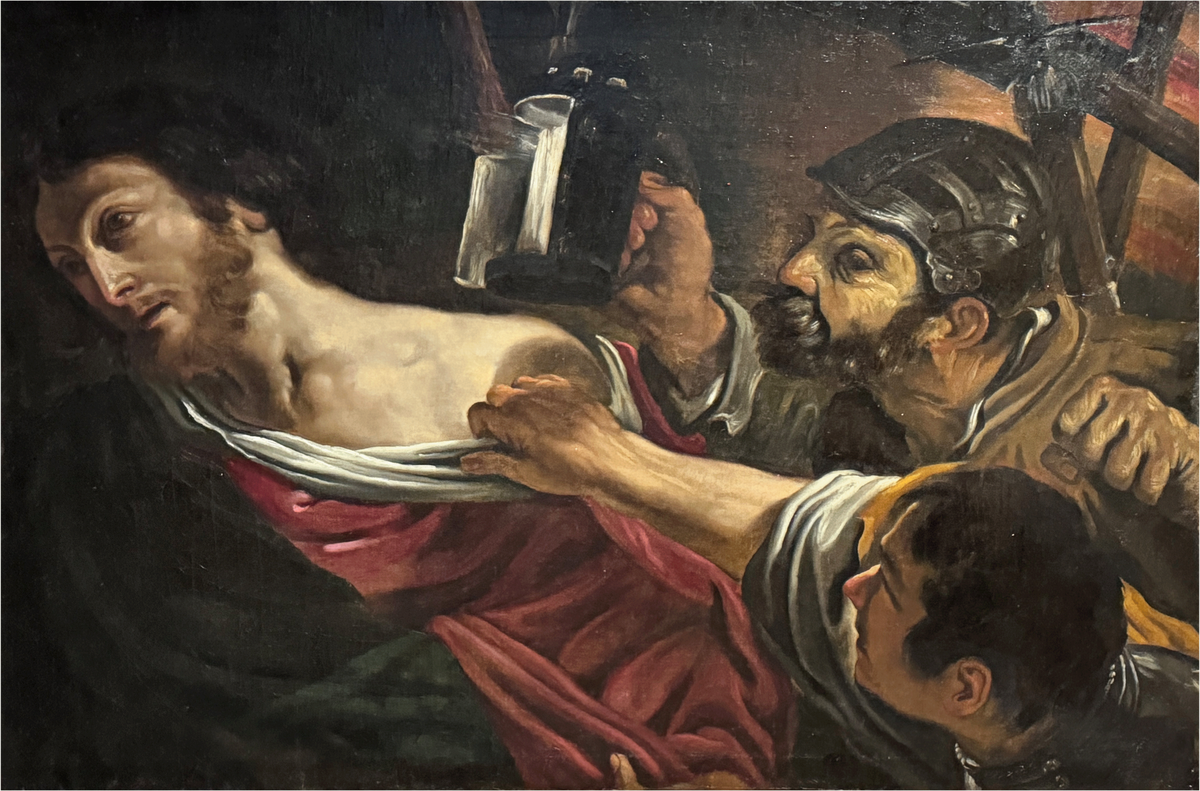
17세기 이탈리아 바로크 회화의 거장 조반니 프란체스코 바르비에리, 널리 귀에르치노(Guercino, 1591–1666)로 불리는 화가가 1621년경 완성한 대작 유화 그리스도의 체포(The Capture of Christ, 또는 The Betrayal of Christ, 이탈리아어: La Cattura di Cristo)는 115.0 cm × 142.0 cm 크기의 캔버스에 유채로 그린 대표적인 초기 바로크 수난 서사화 최고 걸작입니다. 현재 영국 런던의 내셔널 갤러리(The National Gallery, London) 및 독일 마인츠 주립박물관(Landesmuseum Mainz) 등에 원작과 역사적 주요 소장본이 보존되어 있습니다.
겟세마네 동산의 등불과 세라 가문의 주문, 로마 입성을 앞둔 청년 거장의 사투
1621년 귀에르치노가 고향 첸토를 떠나 교황 그레고리오 15세의 부름을 받고 로마로 떠나기 직전, 제노바의 명망 높은 귀족 야코포 세라(Jacopo Serra) 추기경은 화가에게 신약성경 복음서에서 가장 긴박한 순간인 겟세마네 동산에서의 그리스도 체포 장면을 의뢰했습니다. 당시 30세에 갓 도달한 젊은 귀에르치노는 카라바조가 남긴 전설적인 명작 그리스도의 체포를 깊이 의식하면서도, 단순히 로마의 거장을 모방하는 데 그치지 않고 인간적인 두려움과 거룩한 순종이 교차하는 예수의 내면적 고뇌를 자신만의 독창적인 조형 언어로 풀어내고자 치열하게 고심했습니다.
화가는 복잡한 야외 배경을 완전히 지워버리고 칠흑 같은 어둠 속에 인물들의 상반신만을 밀착시키는 대담한 근접 구도를 선택했습니다. 한밤중 겟세마네 동산의 짙은 어둠 속에서 병사가 높이 치켜든 쇠 램프의 유리창을 통해 쏟아지는 날카로운 불빛은 그리스도의 드러난 어깨와 창백한 목덜미를 강렬하게 비춥니다. 철 투구를 쓴 늙은 병사는 거친 손으로 그리스도의 어깨옷을 억세게 잡아채며 체포하려 들고, 아래쪽의 젊은 사내는 예수의 가슴 옷자락을 낚아채며 도망치지 못하게 막아섭니다. 옷이 벗겨지며 살결이 드러나는 치욕적인 순간에도 체념과 깊은 슬픔을 담아 고개를 돌리는 예수의 처연한 눈빛은, 십자가의 고난을 온전히 홀로 짊어지려는 구원자의 거룩한 희생을 숨 막히도록 생생하게 전달합니다.
등불의 강렬한 불빛에서 잡아채는 병사의 손길과 그리스도의 슬픈 눈망울로, 시선의 심리적 여정
그림을 마주하는 순간 관람객의 무의식적 시선은 화면 상단 중앙 어둠 속에서 번쩍이며 타오르는 사각 쇠 램프의 투명한 불빛과 이를 번쩍 든 병사의 억센 손으로 가장 먼저 빨려 들어갑니다. 밤의 정적을 찢으며 사방으로 퍼져 나가는 서늘한 등불의 광채는 보는 이에게 깊은 시각적 긴박감과 함께 한밤중 기습 체포의 현장에 직접 마주 선 듯한 전율을 선사합니다.
이어 시선은 등불의 빛을 받아 하얗게 드러난 예수 그리스도의 벗겨진 오른쪽 어깨와 쇄골의 굴곡을 지나, 고통과 연민이 교차하는 주님의 애절한 옆얼굴로 이동합니다. 자신을 붙잡으러 온 병사들을 원망하지 않고 묵묵히 다가올 십자가의 운명을 받아들이며 살짝 벌어진 입술과 촉촉한 눈망울을 확인하는 순간, 관람객은 배신당한 구원자의 외롭고 처절한 내면의 고통 속으로 온몸이 빨려 들어가게 됩니다.
마지막으로 시선은 그리스도의 붉은 튜닉과 흰 속옷을 억세게 쥐어뜯고 있는 두 병사의 거친 손가락 마디를 지나, 철 투구를 쓴 병사의 짙은 수염과 화면 오른쪽 아래에서 올려다보는 사내의 번뜩이는 눈빛에 멈춥니다. 칠흑 같은 겟세마네의 어둠을 뚫고 솟아오른 등불의 온기와 폭력 앞에서 빛나는 거룩한 침묵을 마주하며, 관람객은 인류를 위해 스스로를 내어준 참된 사랑의 위대한 가치와 귀에르치노가 건네는 묵직한 영혼의 울림을 가슴 깊이 마주하게 됩니다.
17세기 볼로냐 바로크 야경화의 정점과 조형미, 미술계의 평가
미술계는 그리스도의 체포를 귀에르치노가 청년 시절 카라바조의 테네브리즘을 완벽하게 흡수하면서도 인공 등불을 활용한 독창적인 야경 조명술을 완성해 낸 대표적인 초기 명작으로 평가합니다.
단 하나의 등불 광원만으로 강철 투구의 차가운 반사광, 인체의 매끄러운 피부 결, 붉은 실크와 거친 모직 의복의 입체감을 극도로 섬세한 명암법으로 완벽하게 구현했을 뿐만 아니라, 체포의 긴박한 폭력성을 숭고한 종교적 비장미로 승화시켰기 때문입니다. 어둠 속에서 진실한 희생의 빛을 길어 올린 귀에르치노의 이 역동적인 화폭은, 오늘날까지도 전 세계 수많은 감상자들에게 깊은 감동과 잊을 수 없는 시각적 충격을 전해주는 불멸의 명작으로 손꼽히고 있습니다.
The Incredulity of Christ's Betrayal and the Capture of Christ
Painted around 1621 in Cento and Rome by the preeminent Italian Baroque master Giovanni Francesco Barbieri, universally celebrated as Guercino (1591–1666), The Capture of Christ (also titled The Betrayal of Christ, Italian: La Cattura di Cristo) is an oil on canvas measuring 115.0 cm × 142.0 cm (45.3 in × 55.9 in), preserved through celebrated masterworks in the permanent collection of the National Gallery in London, United Kingdom, and the Landesmuseum Mainz, Germany.
The Gethsemane Lantern, the Serra Commission, and the Young Master's Passion Drama
Executed in 1621 immediately prior to Guercino’s momentous departure for Rome under the patronage of the newly elected Pope Gregory XV, this painting was commissioned by Cardinal Jacopo Serra, the papal legate to Ferrara and one of the artist's most discerning early benefactors. Acutely aware of Caravaggio's famous treatment of the betrayal in the Garden of Gethsemane, the thirty-year-old Guercino sought to distinguish his interpretation by intensifying the claustrophobic physical intimacy and the profound psychological vulnerability of the suffering Christ.
Guercino eliminated all extraneous landscape details, compressing the narrative into a tight half-length frieze dominated by dense shadows. A soldier in the background raises a metal and glass lantern aloft, casting a harsh, raking light across the nocturnal gloom that illuminates the pale bare shoulder and throat of Christ. An armored soldier with a weathered beard violently seizes the Savior's garments with a calloused grip, while a crouching youth in the lower right pulls at the cloth across Christ's chest to prevent escape. Stripped of his outer robes in a moment of mortal humiliation, Christ turns his head away with sorrowful resignation, accepting his sacrificial destiny with divine stoicism.
Subconscious Trajectory of the Gaze: From Raised Lantern to the Captured Savior
The observer's subconscious gaze is immediately magnetized by the upper-central register, drawn to the radiant, translucent panes of the lantern held aloft by the soldier. The warm, flickering illumination piercing the deep nocturnal darkness establishes an instant focal point of dramatic urgency, imminent peril, and explosive kinetic tension.
The visual path then descends along the beam of light to the sunlit alabaster skin of Christ's exposed right shoulder and chest, moving toward his sorrowful profile. Taking in his parted lips, his shadowed brow, and his moist eyes gazing into the void with silent surrender, the viewer directly experiences the physical reality of the betrayal and the immense loneliness of the Savior's sacrifice.
Finally, the visual trajectory follows the grasping hands of the captors tearing at the white chemise and vermilion tunic, moving across the burnished iron helmet of the bearded soldier toward the foreshortened profile of the youth crouching in the right foreground. Observing the dramatic harmony between radical chiaroscuro, tactile material realism, and raw human violence, the spectator perceives the timeless nobility of sacred faith and the profound aesthetic solace Guercino embedded within the canvas.
The Monument of Bolognese Nocturnal Realism: Critical Legacy
Art historians revere The Capture of Christ as a supreme pinnacle of Guercino’s early period, illustrating his mastery of Caravaggesque tenebrism combined with an innovative manipulation of artificial candlelight and lantern glow.
By orchestrating delicate textural contrasts between luminous skin, cold burnished steel, course woolen garments, and translucent horn lantern panes within a unified chiaroscuro scheme, Guercino transformed a violent gospel arrest into an intimate psychological meditation on sacrifice and redemption. This magnificent devotional canvas endures as an inspiring testament to the master's creative fortitude, celebrating the victory of sacred love over mortal violence and the transformative grace of living art.
본 컨텐트의 저작권은 팔렛트제주에 있습니다. 허가없는 무단전제를 금지합니다.
Copyright © Palette Jeju. All rights reserved. Unauthorized reproduction or redistribution is strictly prohibited.