그리스도의 채찍질 Flagellation of Christ
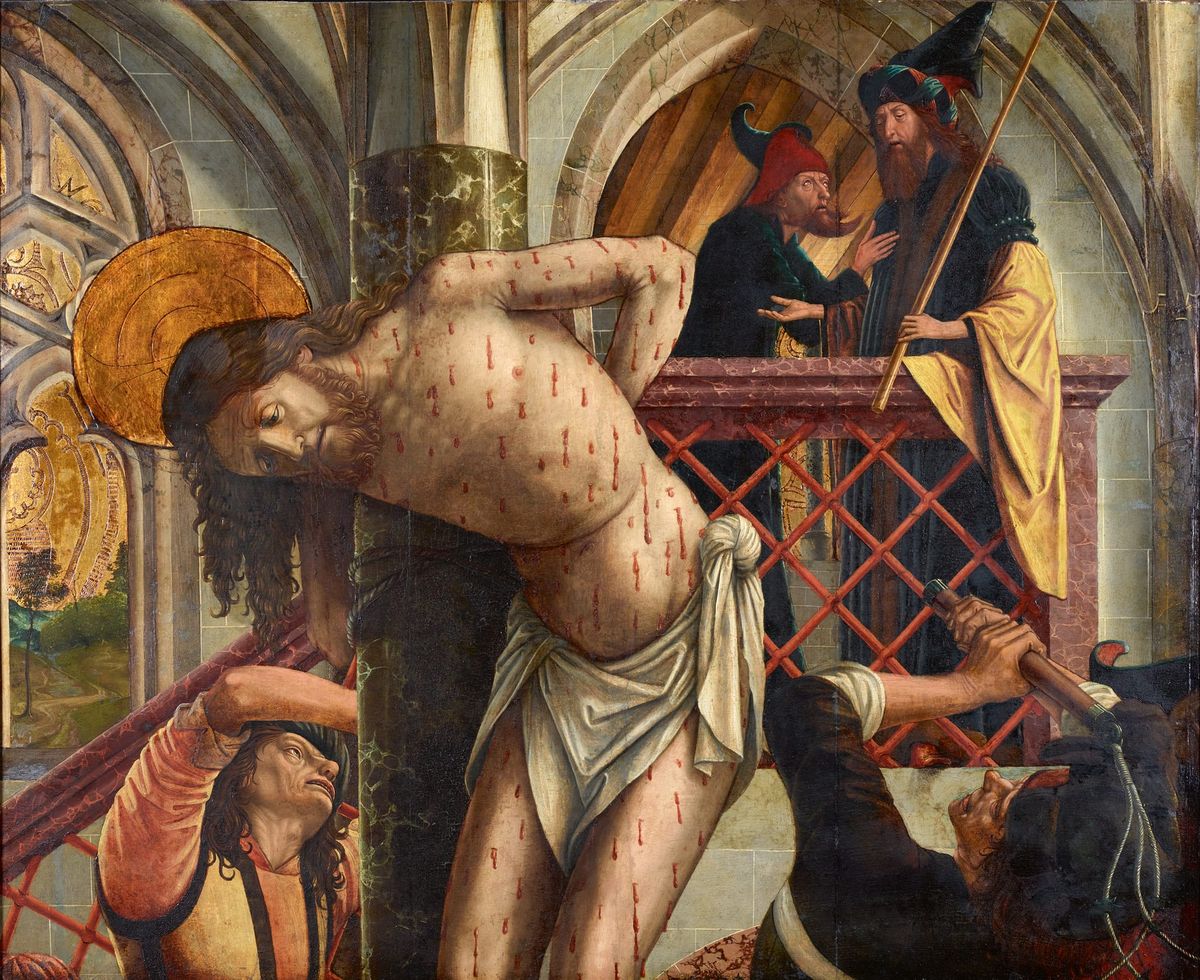
오스트리아의 거장 미하엘 파허(Michael Pacher)가 1471년부터 1475년 사이에 제작한 이 작품은, 알프스 이북의 종교적 열정이 지닌 처절한 잔혹함과 인간 육체의 고통을 가감 없이 드러냅니다.
오스트리아 빈의 빈 미술사 박물관(Kunsthistorisches Museum, Vienna)에 소장된 이 작품의 공식 소장품 등록번호는 GG 4845이며, 실제 작품의 실측 규격은 높이 99 cm, 너비 123 cm의 목판 유채 및 템페라 패널입니다.
작가의 고뇌/비하인드
작품의 전면 중앙에는 기둥에 묶인 채 온몸이 피투성이가 된 그리스도가 고통에 지친 모습으로 기대어 있으며, 그 아래에서 하인들이 채찍을 휘두르거나 악에 찬 표정으로 올려다보고 있습니다.
특히 화면 우측 상단의 난간 뒤편에는 화려한 모자와 의복을 갖춰 입은 구경꾼들이 차갑고 무관심한 눈빛으로 이 잔혹한 형벌을 내려다보고 있어 비극성을 극대화합니다.
중경에는 녹색 대리석 기둥과 교차하는 붉은 격자 난간이 입체적인 공간감을 형성하며, 원경의 아치형 창문 너머로 비치는 평화로운 풍경이 처절한 고문 현장과 극적인 대비를 이룹니다.
무의식 속 시선 및 심리 흐름
관람객의 시선은 가장 먼저 화면 중앙을 차지한 그리스도의 상처 입은 몸과 핏방울이 흩뿌려진 피부의 참혹한 질감으로 강렬하게 꽂힙니다.
이어 시선은 아래에서 채찍을 휘두르는 폭력적인 인물들의 동작을 거쳐, 화면 위쪽 난간에서 이 모든 상황을 방관하는 냉담한 권력자들의 얼굴로 자연스럽게 이동합니다.
마지막으로 시선은 배경의 창가 너머 고요한 대기감으로 확장되며, 부당한 폭력 앞에 무력하게 노출된 생명의 고통 앞에서 깊은 심리적 충격과 슬픔을 느끼게 됩니다.
미술계의 평가 및 조형미
미술사학계는 이 작품을 15세기 후반 티롤 미술의 최고 걸작이자, 북유럽 사실주의의 잔혹한 묘사와 이탈리아 르네상스의 원근법적 공간 구성을 완벽하게 융합한 수작으로 평가합니다.
목판 위에 겹겹이 쌓아 올린 템페라와 유채는 인물의 피부에 맺힌 핏방울과 의복의 질감, 대리석 기둥의 반짝임을 생생하게 살아나게 만듭니다.
인간이 감내해야 했던 가장 잔인한 폭력의 순간을 예술의 경지로 승화시킨 이 작품은, 영원토록 미술사에서 깊은 울림을 주는 가치를 지니고 있습니다.
영문 번역본 구성
Flagellation of Christ
Created by the Austrian master Michael Pacher between 1471 and 1475, this work lays bare the brutal physical agony of humanity and the unflinching cruelty inherent in northern Alpine religious fervor.
Housed in the Kunsthistorisches Museum in Vienna, Austria, this piece bears the official inventory number GG 4845, and the actual physical dimensions of the oil and tempera wood panel measure 99 cm in height and 123 cm in width.
The Artist's Struggle and Behind-the-Scenes
In the immediate foreground at the center, Christ is bound to a column, his battered body bleeding heavily as he leans forward in exhaustion, while executioners lash out and look up with twisted expressions of malice.
Particularly positioned in the upper right behind a balustrade, well-dressed onlookers observe the horrific punishment with cold, indifferent gazes, intensifying the underlying tragedy of the scene.
In the middle ground, the green marble pillar and interlocking red lattice framing construct a rigorous spatial depth, while the peaceful landscape glimpsed through the arched window in the distance creates a striking contrast with the brutal torture unfolding in the interior.
Subconscious Gaze and Psychological Flow
The viewer's gaze is initially drawn directly to the ravaged body of Christ at the center and the raw texture of the skin stippled with fresh blood.
The eye then shifts downward along the violent motion of the tormentors before rising toward the aloof expressions of the authorities watching from the upper balcony.
Finally, the gaze drifts backward into the quiet atmosphere beyond the window, evoking a profound sense of shock and sorrow before the raw vulnerability of human suffering exposed to systemic violence.
Art World Evaluation and Formal Beauty
Art historians evaluate this work as a supreme masterpiece of late fifteenth-century Tyrolean art, successfully fusing the unsparing realism of the north with the spatial geometry of the Italian Renaissance.
The layered application of tempera and oil on wood brings the droplets of blood on the flesh, the varied textures of garments, and the polished sheen of the marble column to vivid life.
Elevating the most brutal instance of human cruelty to the pinnacle of visual expression, this creation retains an enduring and haunting value in art history.
본 컨텐트의 저작권은 팔렛트제주에 있습니다. 허가없는 무단전제를 금지합니다.
Copyright © Palette Jeju. All rights reserved. Unauthorized reproduction or redistribution is strictly prohibited.