그림을 그리는 폴 에밀 피사로, 스케치 - Paul-Émile Pissarro Painting, Sketch (Paul-Émile Pissarro peignant, esquisse)
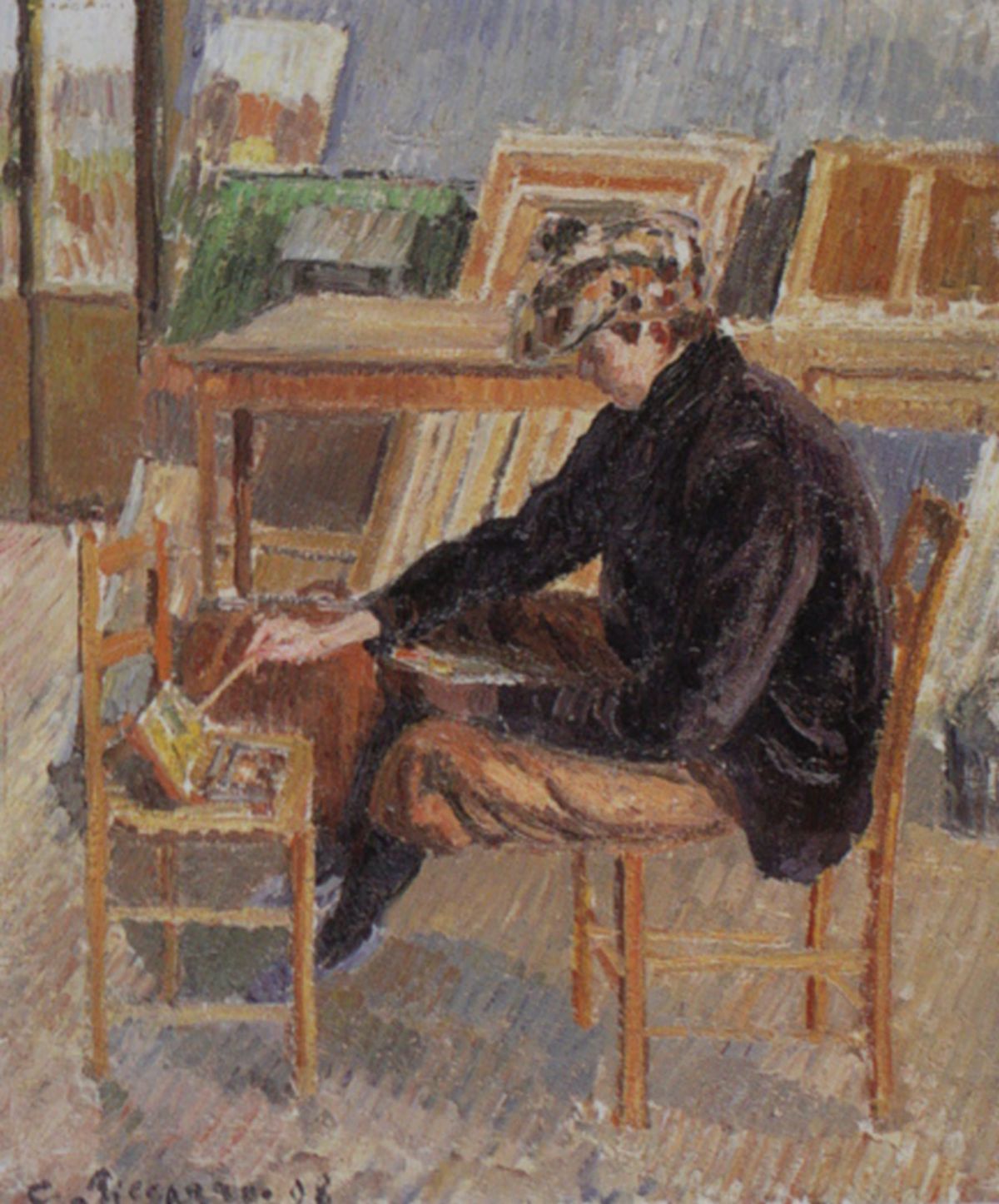
카미유 피사로(Camille Pissarro)가 1898년에 제작한 캔버스 유화 작품입니다. 실제 크기는 약 27 x 22 cm의 아담한 유화 소품이며, 현재 개인 소장(Private Collection)으로 전해지고 있습니다. 화면 좌측 하단에는 화가의 서명과 제작 연도인 'C. Pissarro. 98'이 또렷하게 새겨져 있습니다.
피사로는 유화 스케치(esquisse) 특유의 빠르고 자유분방한 분할 붓터치를 활용해, 작업실 안으로 스며드는 은은한 실내광과 캔버스 앞에서 붓을 쥐고 있는 아들의 생동감 넘치는 움직임을 포착했습니다. 바닥면에 사선으로 깔린 경쾌한 붓질과 뒤편에 겹겹이 쌓인 캔버스 틀, 그리고 모자를 눌러쓴 소년의 짙은 옷자락 위에 얹힌 빛의 반사는 화가의 화실이 지닌 따뜻하고 창의적인 공기감을 여실히 드러냅니다.
이 그림의 주인공은 피사로의 다섯째 아들이자 막내아들인 폴 에밀 피사로(Paul-Émile Pissarro)입니다. 1884년에 태어난 폴 에밀은 아버지가 이 그림을 그릴 당시 열네 살의 감수성 풍부한 소년이었습니다.
당시 피사로는 파리 근교 에라니(Éragny)에 마련한 아늑한 헛간 작업실에서 늘 자녀들과 함께 시간을 보냈습니다. 특히 클로드 모네를 대부로 둔 막내 폴 에밀은 아버지의 곁을 그림자처럼 따르며 어릴 때부터 자연스럽게 물감과 붓을 장난감 삼아 자랐습니다.
이젤 대신 소박한 나무 의자 위에 작은 화판을 올려두고, 왼손에는 팔레트를 든 채 오른손으로 조심스럽게 물감을 칠해 나가는 소년의 진지한 모습은 아버지 피사로에게 더없는 기쁨이자 감동이었습니다. 평생 가난과 비난의 비바람 속에서도 예술적 신념을 굳건히 지켜냈던 노화가는, 자신의 뒤를 이어 캔버스 앞에 당당히 앉은 아들을 바라보며 깊은 부성애와 따스한 자긍심을 담아 이 사랑스러운 순간을 화폭에 영구히 담아냈습니다. 훗날 폴 에밀 역시 훌륭한 후기 인상주의 화가로 성장하여 아버지의 위대한 예술혼을 이어받았습니다.
미술사적으로 이 작품은 인상주의의 시각적 자연스러움과 예술가 가문의 내밀한 역사가 가장 아름답게 교차하는 사적 걸작으로 평가받습니다. 완벽하게 가공된 정형화된 초상화와 달리, 화실이라는 창작의 성소에서 즉흥적인 감흥으로 포착해 낸 붓의 호흡이 살아 숨 쉬기 때문입니다.
후대의 평단과 비평가들은 화려한 기교 대신 아버지와 아들이 예술을 매개로 나누는 무언의 대화와 따스한 유대감을 온전히 빚어낸 피사로의 깊은 휴머니즘에 아낌없는 찬사를 보내고 있습니다.
관람자의 무의식적인 시선은 화면 중앙에서 짙은 색 겉옷을 입고 의자에 편안하게 걸터앉아 있는 소년의 등과 팔의 실루엣에 먼저 친근하게 머뭅니다.
이어 시선은 소년의 손끝을 따라 섬세하게 뻗은 붓과 앞쪽 나무 의자 위에 놓인 작은 화판으로 자연스럽게 흘러가며 창작에 몰입한 순수한 긴장감을 함께 호흡합니다.
이 부드러운 하향 곡선의 시각적 흐름은 분주한 현대 생활 속에서 곤두서 있던 관람객의 뇌파를 순식간에 차분한 알파파 상태로 유도하며, 평온한 예술가의 아틀리에에 머무는 듯한 깊은 심리적 안도감을 선사합니다.
마지막으로 소년의 독특한 무늬 모자와 뒤편에 가지런히 정리된 수많은 나무 액자 틀, 그리고 맑은 빛이 스며드는 벽면을 돌아 다시 소년의 등 뒤로 순환하는 시선의 흐름은, 세상의 소음에서 벗어나 온전히 나만의 창작과 생각에 몰입했던 어린 시절의 기억을 환기하며 깊은 이완과 정서적 치유를 이끌어냅니다.
Paul-Émile Pissarro Painting, Sketch - Paul-Émile Pissarro Painting, Sketch (Paul-Émile Pissarro peignant, esquisse)
Painted in 1898 by Camille Pissarro, this oil on canvas measures approximately 27 by 22 centimeters and is preserved within a private collection. The artist's signature and date, 'C. Pissarro. 98', are distinctly inscribed in the lower left corner.
Employing the spontaneous, vibrant brushwork characteristic of an oil sketch (esquisse), Pissarro captured the soft daylight filtering into his studio and the focused movement of his son working before a miniature canvas. The energetic diagonal strokes across the floor and the tactile layers of paint defining the stacked stretchers behind create an intimate, creative atmosphere filled with warmth.
The subject is Pissarro's fifth and youngest son, Paul-Émile Pissarro, who was fourteen years old at the time of this painting.
During this period, Pissarro spent joyful days working alongside his children inside the converted barn studio at his country home in Éragny. Young Paul-Émile, whose godfather was Claude Monet, was raised in an environment saturated with artistic freedom and had handled brushes since early childhood.
Perched on a simple chair and using a second chair as a makeshift easel, the boy holds his palette while carefully applying pigment to his board. Observing his youngest child's solemn concentration, Pissarro quietly took up his brushes to preserve this tender milestone of artistic initiation. Having weathered decades of financial hardship and critical scorn, the aging patriarch immortalized his son with profound affection and quiet pride. Paul-Émile would indeed fulfill this promise, flourishing into an accomplished Post-Impressionist painter who carried the family's artistic legacy forward.
Art historians celebrate this study as an exquisite gem of Impressionist domestic intimacy, capturing the passing of the creative torch within an extraordinary artistic lineage. Unlike formal portraits, the spontaneous touch of the oil sketch retains a living immediacy where the father’s loving gaze is felt in every vibrant stroke.
Modern critics praise the painting for its emotional warmth, honoring Pissarro's enduring humanist vision that elevated the quiet routines of family and studio life into timeless sanctuaries of peace and inspiration.
The viewer's subconscious gaze is first welcomed by the grounded silhouette of the boy seated calmly at the center of the composition.
The eye then traces along his extended arm toward the delicate brush touching the small canvas resting upon the wooden chair, absorbing the quiet rhythm of artistic concentration.
This gentle visual pathway instantly dissolves mental clutter, replacing modern anxiety with an intuitive feeling of tranquility and restorative calm.
As the gaze circulates past the patterned cap, the stacked picture frames in the background, and the sunlit walls before returning to the young painter, the observer experiences a soothing sensory refuge, wrapped in the comforting stillness of a peaceful studio filled with creative passion and fatherly love.
본 리뷰에서 작품을 제외한 컨텐츠의 저작권은 팔렛트제주에 있습니다.
"퍼블릭도메인 고전명화"를 제외한 모든 창작 콘텐츠는 저작권법 제4조 및 제10조에 의거하여 보호됩니다. 무단 도용시 저작권법 제136조(벌칙)에 의거, 당사의 사전 서면 승인 없는 저작권 침해 행위를 금지합니다.