글을 읽는 수도승(A Monk Reading)
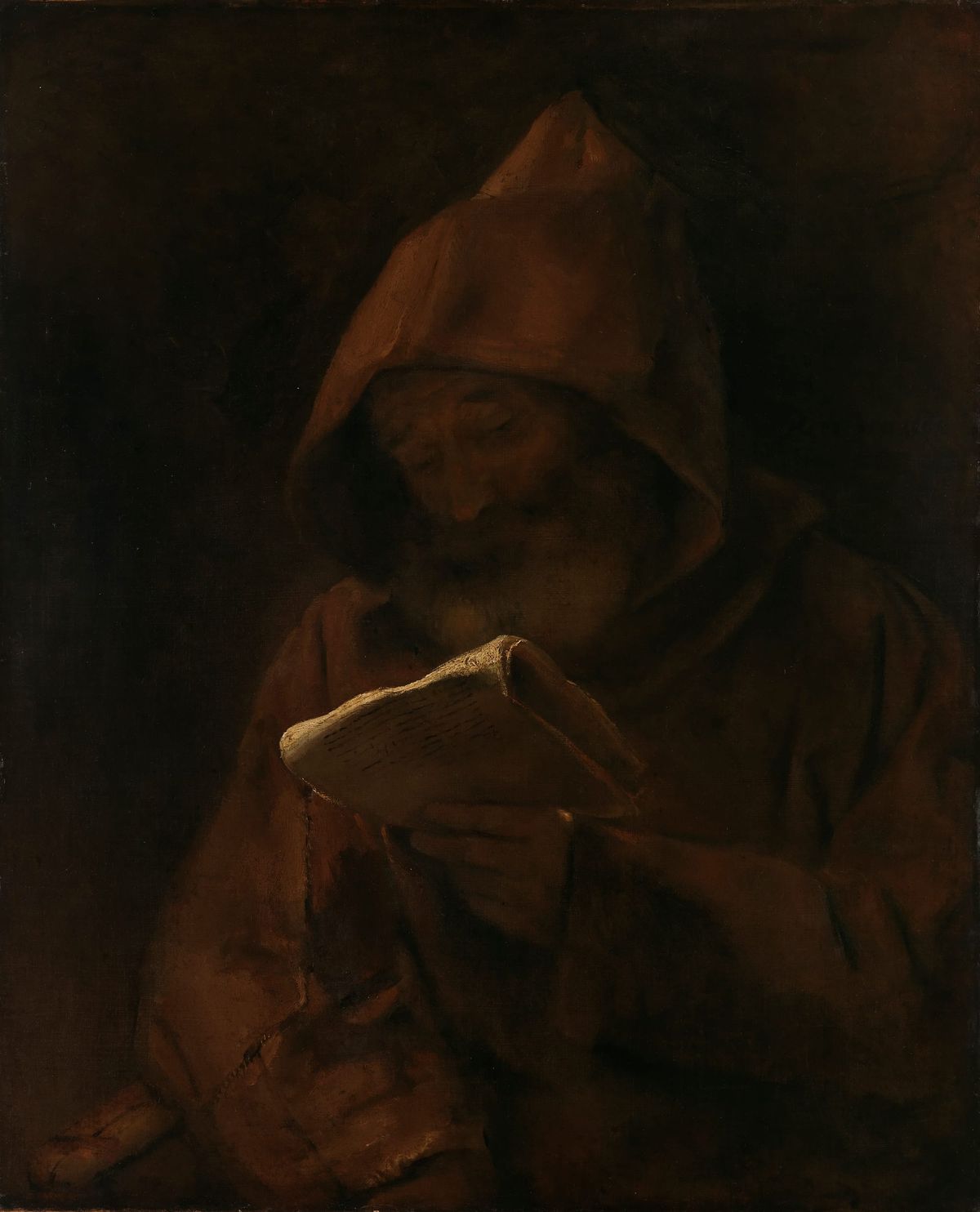
글을 읽는 수도승 - A Monk Reading
1661년경 17세기 네덜란드 미술의 거장 렘브란트 반 레인(Rembrandt van Rijn)이 제작한 유화 작품 《글을 읽는 수도승》은 캔버스에 유채로 그려진 인물 초상 연구작으로, 현재 핀란드 헬싱키 아테네움 미술관(Ateneum Art Museum)에 소장되어 있으며 실제 크기는 약 82 × 66 cm입니다.
이 화면은 깊고 묵직한 어둠 속에서 오직 한 줌의 빛에 의지해 책을 읽고 있는 수도승의 사색적인 순간을 렘브란트 후기 특유의 두터운 붓터치와 극적인 명암법으로 포착해 낸 걸작입니다. 화가는 수도승이 쓰고 있는 갈색 두건과 수도복의 투박한 질감, 그리고 펼쳐진 책면에서 반사되어 노인의 얼굴을 은은하게 비추는 따뜻한 빛의 흐름을 절묘하게 재현해 냈습니다.
작품 속에는 렘브란트가 삶의 단경과 노년에 이르러 탐구했던 고요한 내면 세계에 대한 비하인드 스토리가 담겨 있습니다. 1660년대 초반 경제적 어려움과 개인적 고독을 겪던 렘브란트는 화려한 장식이나 신분을 과시하는 초상화 대신, 조용히 진리를 탐구하는 수도승이나 성자들의 모습을 자주 그렸습니다. 인물의 모델은 그의 아들 티투스(Titus)나 화실 주변의 인물로 추정되며, 세속의 소음에서 벗어나 영적인 고요에 몰입한 인물의 자태는 화가 자신의 정서적 지향과도 깊게 이어져 있습니다.
후대 평단과 관객들은 이 작품을 렘브란트 후기 유화 예술이 지닌 거친 질감 표현과 깊은 정신성이 절묘하게 결합한 명작으로 평가합니다. 빛과 어둠의 대비를 통해 물질적인 형태를 넘어 인물의 깊은 사색과 구도의 자세까지 시각화한 그의 예술적 입지는 시대를 초월하여 깊은 감동을 선물합니다.
이 그림을 마주하는 관람객의 무의식적 시선은 화면 중심에서 가장 환하게 빛을 머금고 있는 펼쳐진 책면과, 그 빛을 받아 은은하게 드러나는 노수도승의 이마와 숙인 눈가로 가장 먼저 끌려갑니다. 진리를 향해 고요히 숙인 인물의 표정은 관람객에게 묵직한 시각적 안정감과 정숙한 평온함을 안겨줍니다.
이어 시선은 책을 받치고 있는 손가락의 투박한 윤곽을 지나, 인물의 어깨와 머리를 포근하게 감싸고 있는 갈색 수도복 두건의 곡선과 묵직한 붓터치의 질감으로 자연스럽게 이동합니다. 거칠고 두껍게 올려진 물감의 층은 화면 전체에 든든한 무게감과 공간적 깊이를 부여합니다.
마지막으로 시선은 인물의 뒤편을 완벽하게 둘러싸고 있는 그윽하고 어두운 배경 속으로 떨어져 정착합니다. 이러한 무의식적 시선의 흐름은 외부의 번잡함을 잊고 진지한 사색과 침묵의 세계로 감상자를 자연스럽게 인도하며, 마음에 닿는 깊고 정갈한 정서적 여운을 오래도록 남깁니다.
In 1661, Rembrandt van Rijn, one of the paramount masters of the Dutch Golden Age, created the evocative oil painting titled "A Monk Reading." Preserved in the esteemed Ateneum Art Museum in Helsinki, Finland, this original canvas measures approximately 82 × 66 cm. This artwork finely captures the quiet spiritual devotion and intellectual solitude of a monk through a rich, impasto-laden application of chiaroscuro.
The painting visually manifests a solitary monk enveloped in a brown cowl, leaning attentively over an illuminated text. Historical context highlights Rembrandt's profound artistic evolution during his later years, marked by a preference for quiet introspection over theatrical grandeur. The warm radiance reflecting off the open pages onto the monk's weathered features serves as a poignant metaphor for divine wisdom and inner peace.
Art historians and critics continuously extol this masterwork for its emotional depth and tactile painterly surface, celebrating Rembrandt's ability to render solemn majesty through broad, expressive brushstrokes. The stark contrast between the luminous manuscript and the surrounding darkness creates an enduring atmosphere of sacred stillness and human dignity.
The moment an observer encounters this artwork, their gaze is subconsciously drawn straight to the brightly lit pages of the book and the softly illuminated brow of the monk bowed over them. His gentle, absorbed expression immediately diffuses tension, instilling a comforting sense of tranquility and reverent calm.
Next, the eye glides smoothly down the rustic, textured folds of his brown monastic habit, tracing the broad impasto work that structures his heavy shoulders and hooded mantle. The tactile density of the oil paint imparts physical weight and dimensional presence to the solitary figure.
Finally, the viewer's gaze drifts into the deep, shadowy realm of the background before coming to rest upon the quiet spatial field surrounding the monk. This natural visual journey guides the spectator into a state of meditative reflection, leaving a lasting impression of wisdom, devotion, and timeless peace.
본 리뷰에서 작품을 제외한 컨텐츠의 저작권은 팔렛트제주에 있습니다.
"퍼블릭도메인 고전명화"를 제외한 모든 창작 콘텐츠는 저작권법 제4조 및 제10조에 의거하여 보호됩니다. 무단 도용시 저작권법 제136조(벌칙)에 의거, 당사의 사전 서면 승인 없는 저작권 침해 행위를 금지합니다.