거센 파도를 가르는 지혜의 탈출과 분노한 거인의 바윗돌, 오디세우스와 폴리페모스 Odysseus and Polyphemus
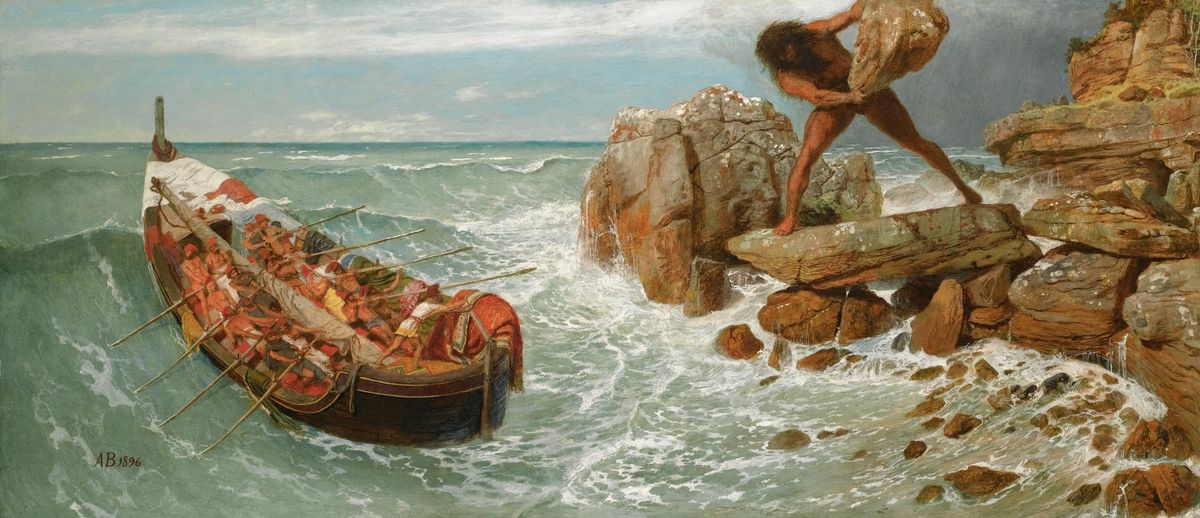
스위스 출신의 상징주의 거장 아놀드 뵈클린(Arnold Böcklin, 1827–1901)이 1896년에 피렌체 인근 산 도메니코에서 완성한 유화 오디세우스와 폴리페모스(Odysseus and Polyphemus, 독일어: Odysseus und Polyphem)는 66.0 cm × 150.0 cm 크기의 가로형 나무 패널에 유채로 그린 대표적인 후기 신화화 걸작입니다. 현재 미국 보스턴 미술관(Museum of Fine Arts, Boston)에 소장되어 있습니다.
노년의 투병 속에서 되살려낸 호메로스 서사시와 인간 승리의 드라마
1890년대 후반 칠순을 바라보던 뵈클린은 뇌졸중 후유증으로 몸의 오른쪽이 마비되는 신체적 시련을 겪으면서도 결코 붓을 내려놓지 않았습니다. 당시 유럽 미술계는 형태를 단순화하는 아르누보와 상징주의의 새로운 바람이 불고 있었고, 보수적인 일부 평론가들은 늙은 화가가 여전히 고대 그리스 신화에 집착한다며 시대에 뒤처졌다고 비판했습니다. 하지만 뵈클린은 호메로스의 위대한 서사시 오디세이아야말로 인간이 마주하는 거대한 자연의 공포와 역경, 그리고 이를 이겨내는 인간 지혜의 숭고함을 보여주는 영원한 무대라고 믿었습니다.
화면은 외눈박이 식인 거인 폴리페모스의 동굴에서 눈을 멀게 한 뒤 가까스로 탈출한 오디세우스와 그의 부하들이 탄 배가 거친 파도를 뚫고 도망치는 긴박한 순간을 포착하고 있습니다. 오른쪽 절벽 위에서 눈이 먼 거인 폴리페모스는 머리끝까지 치솟은 분노를 주체하지 못하고 거대한 바윗돌을 번쩍 들어 올려 바다를 향해 내던지려 합니다. 배의 고물에 선 오디세우스는 붉은 망토를 두르고 거인을 향해 당당하게 자신의 이름을 외치고 있으며, 노를 젓는 선원들은 죽을힘을 다해 바다를 가르고 있습니다. 노년의 병마와 싸우면서도 불굴의 창작열을 불태웠던 뵈클린은 거대한 괴물에 맞서 지혜와 용기로 운명을 개척하는 영웅의 모습을 통해 자신의 예술적 투쟁을 당당하게 증명해 보였습니다.
번쩍 든 거대한 바윗돌에서 필사적으로 젓는 노의 물살로, 시선의 심리적 여정
그림을 마주하는 순간 관람객의 무의식적 시선은 화면 오른쪽 상단 먹구름 낀 절벽 끝에서 두 다리를 벌리고 거대한 바윗돌을 머리 위로 번쩍 치켜든 거인 폴리페모스의 우람한 근육으로 가장 먼저 빨려 들어갑니다. 언제라도 배를 향해 떨어져 내릴 것만 같은 무거운 바위의 무게감과 거인의 폭발적인 분노는 보는 이의 가슴을 서늘하게 옥죄어옵니다.
이어 시선은 하얗게 포말을 일으키며 부서지는 험준한 해안 바위턱을 지나, 화면 왼쪽에서 거센 파도를 뚫고 앞으로 나아가는 목선과 붉은 옷을 입고 거인을 응시하는 오디세우스의 결연한 뒷모습으로 이동합니다. 뱃머리를 높이 들고 출렁이는 파도를 헤쳐 나가는 배의 역동적인 대각선 구도를 확인하는 순간, 관람객은 일촉즉발의 위기 한가운데에 서 있는 듯한 팽팽한 서사적 긴장감을 경험합니다.
마지막으로 시선은 배에 빼곡하게 앉아 사력을 다해 일제히 노를 젓고 있는 붉은 모자의 선원들과, 배 아래로 소용돌이치는 청록빛 바닷물의 깊은 물결에 멈춥니다. 맹목적인 자연의 거대한 폭력과 이에 맞서 필사적으로 삶의 항해를 이어가는 인간들의 끈질긴 생명력을 마주하며, 관람객은 운명의 거센 풍랑을 헤치고 나아가는 영웅의 숭고한 용기를 가슴 깊이 체감하게 됩니다.
신화적 서사성과 자연주의의 완벽한 융합, 미술계의 평가
미술계는 오디세우스와 폴리페모스를 19세기 말 상징주의 회화가 고전 문학의 서사를 가장 박진감 넘치는 극적 긴장감으로 시각화한 기념비적인 걸작으로 평가합니다.
단순한 삽화적 묘사를 뛰어넘어, 지중해 바다의 짙푸른 색채와 부서지는 파도의 생생한 물성, 그리고 거대한 바위와 인간 신체의 해부학적 역동성을 완벽하게 결합했기 때문입니다. 육체의 쇠약 속에서도 굴하지 않고 웅장한 신화의 세계를 장엄하게 완성해 낸 뵈클린의 이 눈부신 화폭은 오늘날까지도 인간의 지혜와 불굴의 의지를 노래하는 불멸의 명작으로 손꼽힙니다.
The Dramatic Odyssey Across the Churning Sea, Odysseus and Polyphemus
Painted in 1896 in San Domenico near Florence by the preeminent Swiss Symbolist master Arnold Böcklin (1827–1901), Odysseus and Polyphemus (German: Odysseus und Polyphem) is an oil on wood panel measuring 66.0 cm × 150.0 cm (26.0 in × 59.1 in), preserved in the permanent collection of the Museum of Fine Arts, Boston, in the United States.
Homeric Epic, Late Physical Tribulation, and the Triumph of Intellect
In the late 1890s, approaching his seventieth year, Arnold Böcklin persevered in his creative labor despite battling the lingering physical paralysis of a stroke. While contemporary European critics favored emerging decorative trends and occasionally dismissed his classical themes as anachronistic, Böcklin remained convinced of the eternal relevance of antiquity. To him, Homer’s Odyssey provided the ultimate narrative framework to express the sublime terror of elemental nature and the triumph of mortal intellect over brute force.
The composition visualizes the climactic escape of Odysseus from the island of the Cyclopes. Having blinded the monstrous Polyphemus within his cave, the Greek hero and his crew desperately row away across the turbulent coastal waves. Perched upon the jagged red cliffs on the right, the blinded giant raises a colossal boulder above his head, preparing to hurl it toward the sound of the departing vessel. Clad in a crimson cloak at the stern, Odysseus defiantly calls out to the monster, while his rowers strain every muscle against the oars. In this heroic confrontation, Böcklin channeled his own resolute struggle against bodily infirmity, celebrating the indomitable courage of humanity navigating a perilous cosmos.
Subconscious Trajectory of the Gaze: From Looming Megalith to Straining Oars
The observer's subconscious gaze is immediately seized by the monumental silhouette of Polyphemus bracing upon the rocky precipice in the upper right. The immense physical tension of the giant raising the jagged stone boulder against the darkening storm clouds delivers an instant jolt of kinetic terror and suspense.
The visual path then descends along the wave-swept shoreline, traveling leftward across the foaming breakers toward the wooden galley pitching violently over the crest of a turquoise wave. Discovering Odysseus in his rich vermilion mantle standing resolute at the stern, the viewer experiences a dramatic transition from primal brute violence to the disciplined courage of the legendary strategist.
Finally, the trajectory sweeps across the synchronized line of rowers in scarlet caps pulling desperately against the current, coming to rest upon the swirling emerald depths beneath the hull. Observing the stark contrast between the blind fury of the titan and the coordinated human endeavor carving a path to freedom, the spectator perceives the timeless nobility of the human spirit confronting the formidable perils of destiny.
The Monument of Late Mythological Drama: Critical Legacy
Art historians celebrate Odysseus and Polyphemus as one of Böcklin’s most exhilarating late masterpieces, perfectly harmonizing Homeric narrative with atmospheric marine realism.
By combining the palpable weight of coastal geology and churning sea spray with rigorous anatomical draftsmanship, Böcklin elevated classical mythology into a modern sensory drama. This sweeping horizontal panel endures as an immortal testament to the master's late creative power, paying homage to human resilience, ingenuity, and the timeless majesty of the sea.
본 컨텐트의 저작권은 팔렛트제주에 있습니다. 허가없는 무단전제를 금지합니다.
Copyright © Palette Jeju. All rights reserved. Unauthorized reproduction or redistribution is strictly prohibited.