거친 파도 속에서 펼쳐지는 바다 요정들의 원초적 유희, 네레에스의 놀이 Play of the Nereides
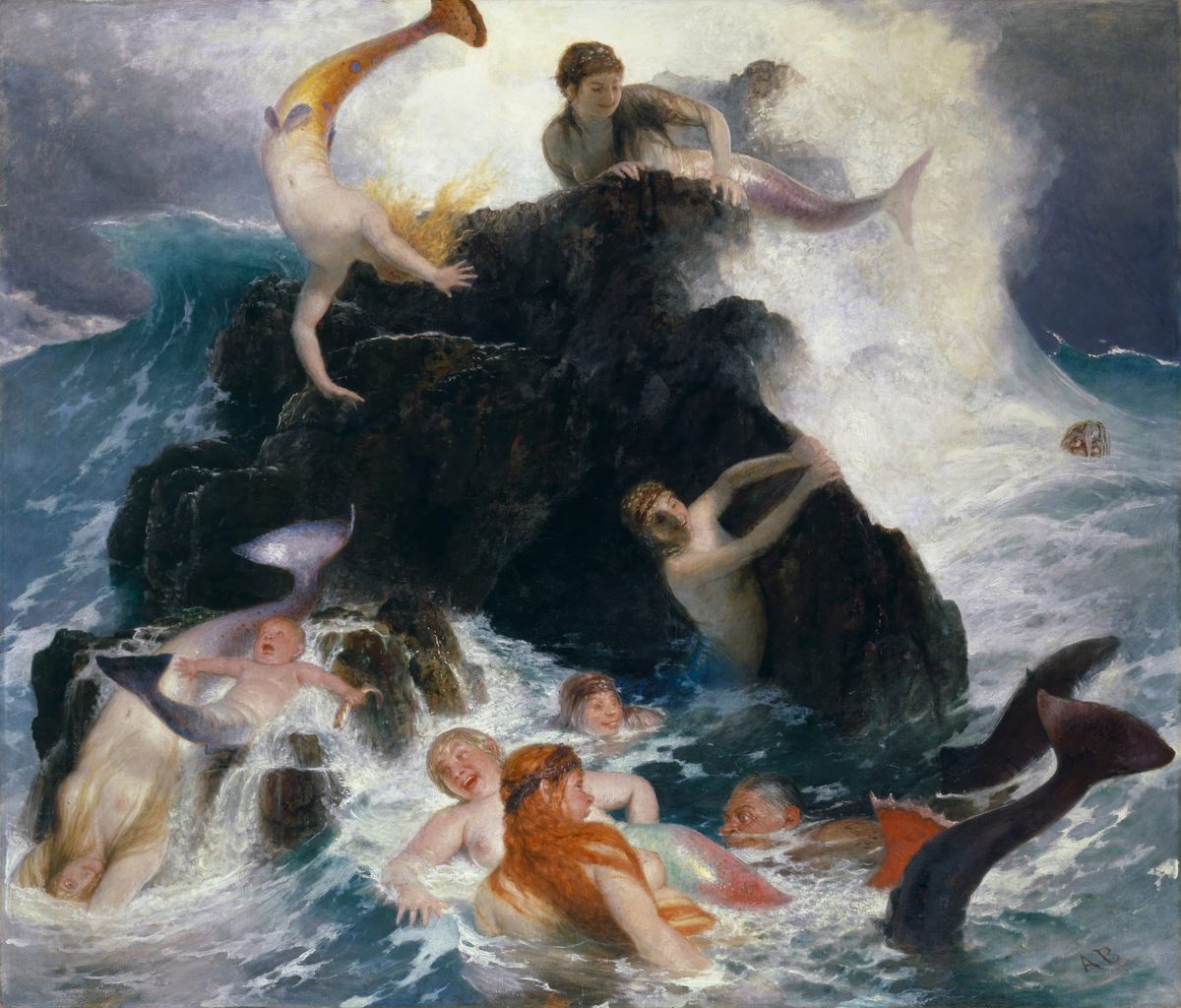
스위스 출신의 상징주의 거장 아놀드 뵈클린(Arnold Böcklin, 1827–1901)이 1886년 스위스 취리히에서 완성한 유화 네레에스의 놀이(Play of the Nereides, 독일어: Das Spiel der Nereïden)는 150.5 cm × 176.4 cm 크기의 캔버스에 유채로 그린 대작입니다. 현재 스위스 바젤 미술관(Kunstmuseum Basel)에 소장되어 있습니다.
지중해 바다에서 건져 올린 생명력과 화단을 뒤흔든 충격
고결하고 정적인 종교화나 엄숙한 신화화가 주를 이루던 19세기 말 유럽 화단에서 뵈클린은 그리스 신화 속 바다의 님프인 네레에스(Nereids)들을 완전히 새로운 시각으로 재해석했습니다. 화가는 요정들을 얌전하고 우아한 여신으로 그리지 않고, 거친 파도가 몰아치는 바위섬에서 물장구를 치며 거침없이 날뛰는 거대하고 원초적인 자연의 생명체로 묘사했습니다.
뵈클린은 젊은 시절부터 이탈리아의 나폴리와 티레니아해를 여행하며 지중해 바다의 푸른 물결과 거친 파도 소리에 깊이 매료되었습니다. 그는 자연을 단순히 아름다운 풍경으로 바라보지 않고, 바위와 파도 하나하나에 살아 숨 쉬는 신화 속 정령들이 깃들어 있다고 믿었습니다. 화면 오른쪽 아래 물속에서 튀어나와 네레에스들을 음흉한 눈빛으로 훔쳐보는 바다 괴물 트리톤의 익살스러운 얼굴은, 화가가 진지한 신화의 틀을 깨고 얼마나 생생하고 유쾌한 상상력을 불어넣었는지 잘 보여줍니다. 당시 보수적인 비평가들은 벌거벗은 바다 요정들이 거꾸로 다이빙을 하고 물고기 꼬리를 흔들며 아이를 놀리는 모습에 경악했지만, 대중과 젊은 화가들은 그 압도적인 역동성과 생명력에 열광했습니다.
거꾸로 솟구치는 물고기 꼬리에서 하얀 물보라로, 시선의 심리적 여정
그림을 마주하는 순간 관람객의 무의식적 시선은 검은 바위 꼭대기에서 하얀 포말을 향해 다이빙하는 네레에스의 노란빛 물고기 꼬리와 매끄러운 등줄기로 가장 먼저 빨려 들어갑니다. 파란 바다 위로 번뜩이는 황금빛 비늘과 허공을 가르는 유연한 신체의 곡선은 보는 이에게 짜릿한 운동감과 시각적 해방감을 선사합니다.
이어 시선은 바위 아래 부서지는 하얀 파도 속에서 울음을 터뜨리는 인어 아기와, 이를 달래듯 뒤집혀 누워 있는 님프, 그리고 붉은 머리채를 휘날리며 헤엄치는 풍만한 여인들의 웃음소리로 쏟아져 내립니다. 오른쪽 물속에서 불쑥 솟아오른 늙은 트리톤의 번뜩이는 눈빛과 거대한 고래 꼬리의 검은 실루엣을 확인하는 순간 관람객은 깊은 바닷속 신비로운 축제 한가운데로 빨려 들어가는 듯한 생생한 현장감을 체감합니다.
마지막으로 시선은 화면 우측 상단에서 하늘 높이 솟구쳐 오르는 거대한 파도의 물기둥과, 바위벽을 타고 올라가는 님프들의 강인한 팔근육으로 확장됩니다. 휘몰아치는 거센 파도 속에서도 두려움 없이 자연의 거대한 힘을 온몸으로 즐기는 신화 속 존재들을 바라보며, 관람객은 문명의 규율을 벗어던진 자연 그대로의 원초적인 자유와 경이로운 생명력을 가슴 깊이 느끼게 됩니다.
신화의 현대적 부활과 역동적 상징주의, 미술계의 평가
미술계는 네레에스의 놀이를 고전 신화의 소재를 19세기 생명주의와 낭만주의적 상상력으로 완벽하게 탈바꿈시킨 상징주의 회화의 최고 걸작 중 하나로 평가합니다.
박제된 고대 미술의 형식을 거부하고 거친 파도와 살결의 온기, 물보라의 차가운 감촉을 눈앞에 만져질 듯 생생한 감각으로 시각화했기 때문입니다. 죽음과 고독을 탐구했던 화가가 삶의 찬란한 에너지와 관능적 기쁨을 거침없이 분출한 이 역동적인 캔버스는 훗날 프란츠 폰 슈투크와 구스타프 클림트 등 아르누보와 분리파 화가들에게 거대한 영감을 주었습니다.
The Primordial Ecstasy of the Tempestuous Sea, Play of the Nereides
Painted in 1886 in Zurich by the preeminent Swiss Symbolist master Arnold Böcklin (1827–1901), Play of the Nereides (German: Das Spiel der Nereïden) is an oil on canvas measuring 150.5 cm × 176.4 cm (59.3 in × 69.4 in), preserved in the permanent collection of the Kunstmuseum Basel in Switzerland.
Mediterranean Vitality and the Demolition of Classical Restraint
Rejecting the rigid, moralizing conventions of late 19th-century European academies, Arnold Böcklin radically revitalized classical mythology by portraying the sea nymphs—the Nereids—not as delicate, passive goddesses, but as robust, untamed elemental creatures thriving amidst the violent ocean spray.
Deeply inspired by the azure waters of Naples and the Tyrrhenian coast, Böcklin perceived nature as an animate, pulsating entity populated by primeval forces. The composition bubbles with pagan vitality: a horned sea centaur emerges with a mischievous, lecherous grin from the churning tide, while voluptuous mermaids plunge into crashing waves without hesitation. Conservative critics were scandalized by the raw sensuality and physical exuberance of the nymphs diving upside down and wrestling with the tide, yet progressive contemporaries celebrated the canvas as a breathtaking triumph of unbridled imagination and bodily liberation.
Subconscious Trajectory of the Gaze: From Golden Scales to the Crashing Surge
The observer's subconscious gaze is instantly seized by the spectacular dive of the nymph perched upon the jagged rock, drawn to the luminous arc of her golden-yellow fish tail slicing through the storm clouds. The dynamic kinetic thrust of her inverted body generates an immediate visceral thrill of motion.
The visual path then plunges into the frothing surf below, encountering the crying mer-baby cradled amidst white water, the sunlit shoulders of the red-haired nymph, and the glistening black tail of a subterranean creature. Catching sight of the weathered, peering face of Triton emerging from the emerald swell, the spectator is pulled directly into the tactile reality of the mythical feast.
Finally, the trajectory sweeps across the colossal wave erupting against the cliff on the right, framing the muscular sirens scaling the wet stones. Witnessing how these creatures exult within the storm rather than cower before it, the viewer experiences a profound aesthetic resonance with the untamed, primordial forces of the natural cosmos.
The Rebirth of Mythological Modernity: Critical Legacy
Art historians revere Play of the Nereides as a monumental achievement of late 19th-century Symbolism and a vital catalyst for the Munich Secession.
By merging visceral naturalism with visionary myth-making, Böcklin transformed academic classical antiquity into a vibrant celebration of sensory experience and erotic freedom. This exhilarating masterpiece profoundly influenced Franz von Stuck, Max Klinger, and the nascent Art Nouveau movement, cementing Böcklin's reputation as a supreme architect of atmospheric fantasy.
본 컨텐트의 저작권은 팔렛트제주에 있습니다. 허가없는 무단전제를 금지합니다.
Copyright © Palette Jeju. All rights reserved. Unauthorized reproduction or redistribution is strictly prohibited.