가시면류관을 쓰신 그리스도 Christ Crowned with Thorns
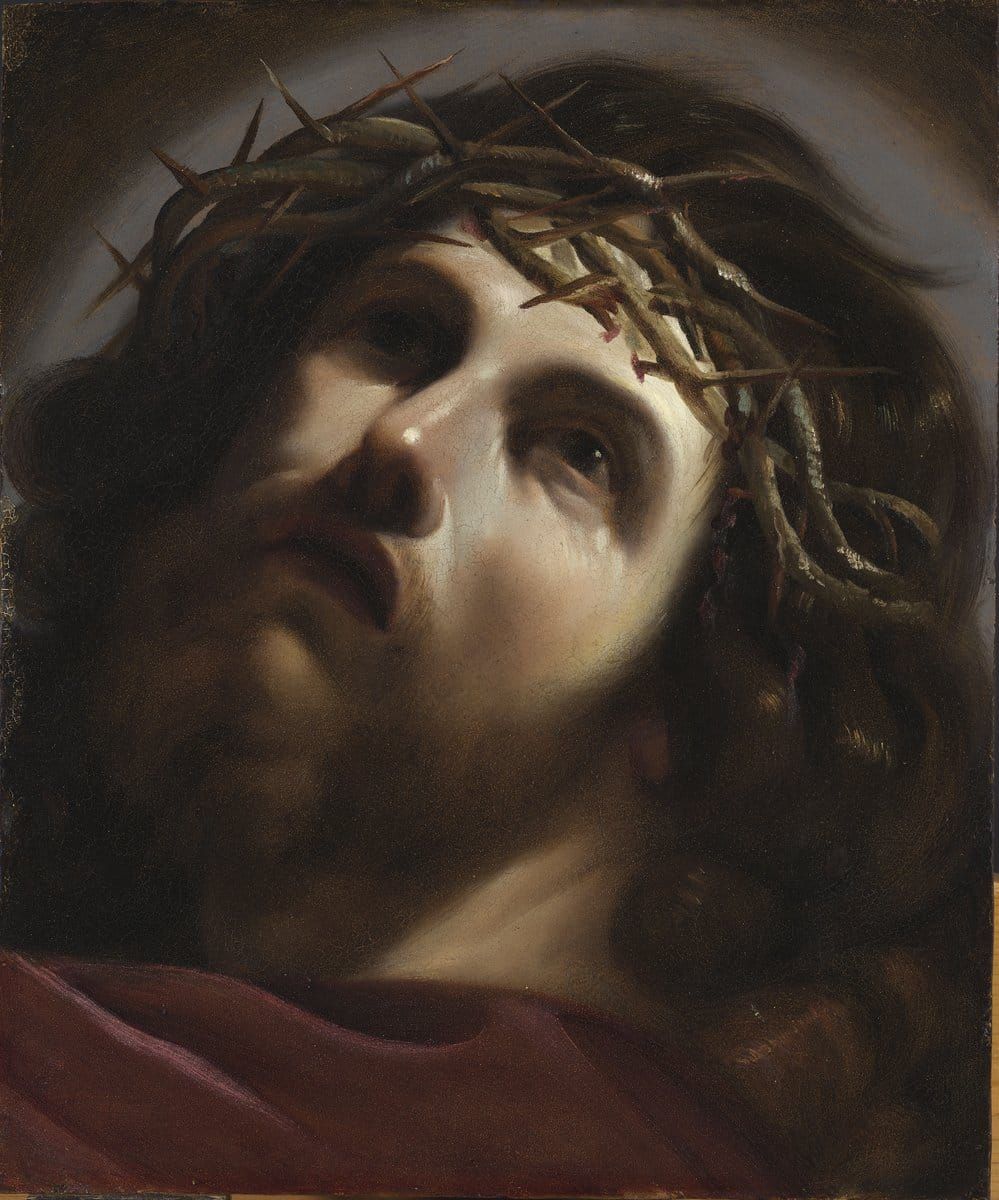
17세기 이탈리아 바로크 회화의 거장 조반니 프란체스코 바르비에리, 널리 귀에르치노(Guercino, 1591–1666)로 불리는 화가가 1647년경 원숙기에 완성한 유화 가시면류관을 쓰신 그리스도(Christ Crowned with Thorns, 또는 Head of Christ, 이탈리아어: Cristo coronato di spine)는 57.0 cm × 47.0 cm 크기의 캔버스에 유채로 그린 대표적인 신약성경 수난 묵상화 최고 걸작입니다. 현재 헝가리 부다페스트의 부다페스트 국립미술관(Museum of Fine Arts, Budapest)에 소장되어 있습니다.
개인 묵상용 성화의 주문과 귀도 레니의 에케 호모를 넘어서려는 고뇌
귀에르치노의 작업 장부인 계정록에는 1647년 볼로냐의 고위 성직자와 귀족 후원자들로부터 개인 기도실에 걸어둘 작은 크기의 그리스도 두상화 주문이 잇따랐다는 기록이 남아 있습니다. 당시 볼로냐에서는 몇 년 전 세상을 떠난 거장 귀도 레니가 완성했던 에케 호모(Ecce Homo, 이 사람을 보라) 연작이 최고의 인기를 끌고 있었습니다. 귀도 레니의 작품들이 하늘을 우러러보는 창백하고 우아한 그리스도의 모습을 강조했다면, 귀에르치노는 관람객이 그리스도의 거룩한 고통과 깊은 숨결을 바로 눈앞에서 대면하는 듯한 강렬한 심리적 밀도를 담아내고자 깊이 번민했습니다.
화가는 복잡한 주변 인물이나 배경을 완전히 지워버리고 오직 고난받는 구원자의 얼굴을 극단적으로 클로즈업하는 과감한 구도를 선택했습니다. 로마 병사들이 씌운 날카로운 가시면류관의 단단한 가시들이 이마를 파고들어 맺힌 붉은 핏방울과, 인간의 모든 죄를 짊어지고 하늘에 계신 아버지를 향해 간절하게 시선을 던지는 예수의 촉촉한 눈망울을 화면 가득 채웠습니다. 귀에르치노는 짙은 갈색 곱슬머리칼 사이로 비치는 은은한 후광과 보랏빛이 감도는 붉은 겉옷의 어두운 음영을 통해, 신체적 고통에 짓눌리지 않고 묵묵히 수난을 받아들이는 신의 어린양의 거룩한 위엄을 완성해 냈습니다.
하늘을 향한 눈물의 눈망울에서 이마의 가시면류관과 붉은 옷자락으로, 시선의 심리적 여정
그림을 마주하는 순간 관람객의 무의식적 시선은 화면 중앙 짙은 어둠 속에서 천상의 빛을 받아 붉게 상기된 예수 그리스도의 뺨과 위를 향해 치켜뜬 촉촉한 눈동자로 가장 먼저 빨려 들어갑니다. 육체의 극심한 고통 속에서도 원망 대신 온 인류를 향한 무조건적인 사랑과 연민을 품고 하늘을 우러러보는 주님의 그윽한 눈빛은 보는 이에게 깊은 시각적 숙연함과 함께 심장을 울리는 거룩한 감동을 선사합니다.
이어 시선은 살짝 벌어진 입술과 턱수염의 어두운 그늘을 지나, 그리스도의 머리를 억세게 짓누르고 있는 날카로운 가시면류관의 엉킨 나뭇가지로 이동합니다. 살갗을 찌르고 들어간 가시 주변으로 흘러내리는 작고 붉은 핏방울들을 확인하는 순간, 관람객은 십자가를 향해 묵묵히 걸어가는 구원자의 외롭고 처절한 수난의 현장 한복판 속으로 온몸이 빨려 들어가게 됩니다.
마지막으로 시선은 그리스도의 머리 뒤편으로 은은하게 번져 나가는 둥근 빛의 고리와 어깨를 감싸고 있는 짙은 자주색 모직 겉옷의 두터운 주름에 멈춥니다. 칠흑 같은 어둠을 뚫고 솟아오르는 신성한 빛과 조용한 침묵을 마주하며, 관람객은 고난을 거룩한 승리로 바꾸는 신앙의 위대한 가치와 귀에르치노가 건네는 묵직한 영혼의 위로를 가슴 깊이 마주하게 됩니다.
17세기 볼로냐 바로크 수난화의 정점과 조형미, 미술계의 평가
미술계는 부다페스트 국립미술관의 가시면류관을 쓰신 그리스도를 귀에르치노가 만년에 도달한 고전적 절제미와 카라바조식 명암법의 깊은 서정성을 가장 순수하게 응축해 낸 대표작으로 평가합니다.
단 하나의 얼굴만을 캔버스 가득 채운 대담한 구성 속에서, 피부의 미세한 땀방울과 눈물의 투명함, 거친 가시나무와 머리칼의 촉각적 질감을 극도로 섬세한 명암법으로 완벽하게 구현했을 뿐만 아니라, 종교적 수난을 자극적인 비극 대신 숭고한 영적 대화로 승화시켰기 때문입니다. 고통 속에서도 빛나는 영혼의 거룩한 아름다움을 장엄한 시각 언어로 완성해 낸 귀에르치노의 이 걸작 화폭은, 오늘날까지도 전 세계 수많은 감상자들에게 깊은 울림과 잊을 수 없는 시각적 안식을 전해주는 불멸의 명작으로 손꼽히고 있습니다.
Christ Crowned with Thorns
Painted around 1647 in Bologna by the preeminent Italian Baroque master Giovanni Francesco Barbieri, universally celebrated as Guercino (1591–1666), Christ Crowned with Thorns (also titled Head of Christ, Italian: Cristo coronato di spine) is an intimate devotional oil on canvas measuring 57.0 cm × 47.0 cm (22.4 in × 18.5 in), preserved in the distinguished permanent collection of the Museum of Fine Arts (Szépművészeti Múzeum) in Budapest, Hungary.
Devotional Commissions, Private Meditation, and Surpassing Guido Reni's Model
Guercino’s studio ledger, the Libro dei Conti, documents numerous commissions during the late 1640s from prominent Bolognese patrons and prelates seeking intimate, close-up heads of the suffering Savior for private chapels and prayer rooms. In Bologna, Guido Reni’s celebrated depictions of Ecce Homo had long established the aesthetic ideal of the pale, upturned countenance of the martyred Christ. Guercino sought to distinguish his work by intensifying the visceral human reality and immediate psychological engagement of the scene, creating a painting that felt intensely close and spiritually arresting.
Eliminating all extraneous narrative elements, secondary figures, and background details, Guercino presented a tightly framed, monumental bust of Christ. The Savior's tilted head, encircled by a thick crown of woven acacia thorns, bears small droplets of blood along the brow without excessive physical violence. His glistening eyes gaze toward heaven in filial surrender, communicating the quiet majesty of a divine being accepting the burden of mortal sin. The subtle circular glow of light defining his dark curls and the heavy folds of his deep plum mantle establish a profound mood of sacred silence and spiritual fortitude.
Subconscious Trajectory of the Gaze: From Weeping Gaze to the Crown of Thorns
The observer's subconscious gaze is immediately magnetized by the central register, drawn to the luminous, upturned countenance of Jesus Christ emerging against the dark background. His moist, tearful eyes reflecting celestial light, parted lips catching a quiet breath of prayer, and the warm flesh tones along his cheek establish an instant focal point of sacred sorrow, unconditional love, and spiritual communion.
The visual path then ascends through the soft modeling of his brow toward the intertwined briars of the crown of thorns. Taking in the sharp points piercing the skin, the delicate drops of crimson blood, and the dark locks of hair framing his temple, the viewer directly experiences the sensory reality of the Passion and the stoic endurance of the Redeemer.
Finally, the visual trajectory sweeps downward past the shadowy cleft of his beard to the deep plum and crimson drapery enveloping his shoulders, before moving into the soft circular halo illuminating the upper background. Observing the harmonious equilibrium between delicate chiaroscuro, tactile material realism, and contemplative stoicism, the spectator perceives the timeless nobility of sacred sacrifice and the profound aesthetic solace Guercino embedded within the canvas.
The Monument of Bolognese Devotional Intimacy: Critical Legacy
Art historians revere this Budapest Christ Crowned with Thorns as a consummate masterpiece of Guercino’s mature career, demonstrating his synthesis of the classical harmony of Guido Reni with his own signature atmospheric naturalism.
By orchestrating delicate textural contrasts between luminous skin, sharp wooden thorns, moist tears, soft beard hair, and heavy woolen drapery within a unified lighting scheme, Guercino elevated a traditional devotional motif into an exquisite aesthetic meditation. This magnificent devotional canvas endures as an inspiring testament to the master's creative genius, celebrating the victory of sacred faith and the transformative grace of living art.
본 컨텐트의 저작권은 팔렛트제주에 있습니다. 허가없는 무단전제를 금지합니다.
Copyright © Palette Jeju. All rights reserved. Unauthorized reproduction or redistribution is strictly prohibited.