간음한 여인과 그리스도 Christ and the Woman Taken in Adultery
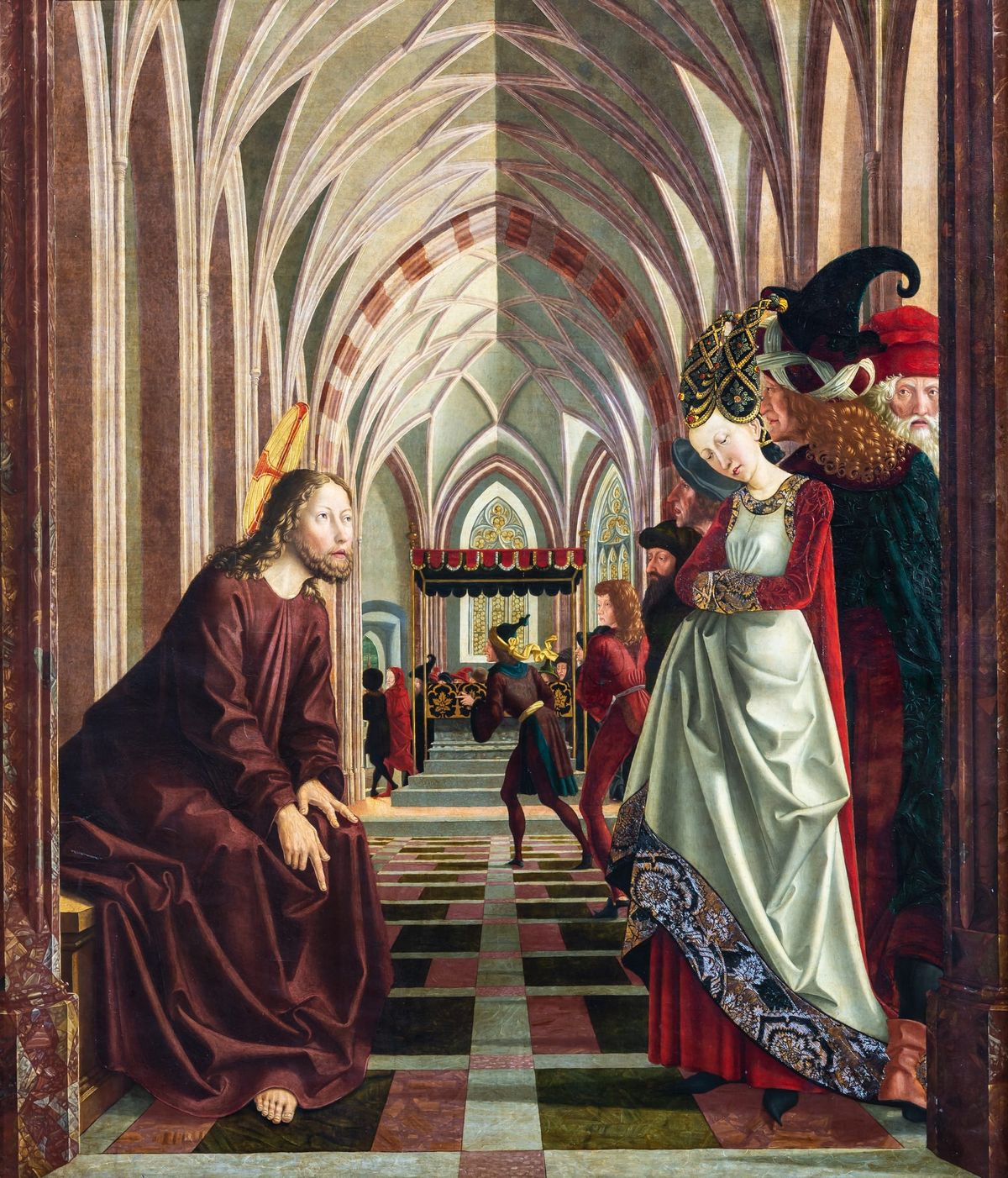
1471년부터 1481년 사이에 오스트리아의 거장 미하엘 파허(Michael Pacher)가 제작한 이 작품은, 성 볼프강 제단화의 연작 중 하나로 엄격한 율법의 칼날 아래 놓인 인간의 연약함과 용서의 자비를 구하는 처절한 실상을 투영합니다.
오스트리아 세인트 볼프강의 순례 성당(Pilgrimage Church, St. Wolfgang)에 소장된 이 작품의 공식 소장품 등록번호는 성 볼프강 제단화 패널이며, 실제 작품의 실측 규격은 높이 215 cm, 너비 165 cm의 목판 유채 및 템페라 패널입니다.
작가의 고뇌/비하인드
작품의 전면 좌측에는 붉은 옷을 입은 예수 그리스도가 낮은 자세로 앉아 손가락으로 바닥을 가리키며 율법학자들의 위선에 조용한 경고를 던지고 있습니다.
그에 맞서는 우측에는 화려한 보석 장식의 두건을 쓰고 고개를 숙인 채 불안하게 선 간음한 여인과, 그녀를 비난하며 심판하려는 바리사이들이 차가운 눈빛으로 에워싸고 있습니다.
특히 중경에는 정교하게 뻗어 나가는 고딕 양식의 아치형 회랑과 격자무늬 바닥이 극적인 원근감을 형성하고 있으며, 원경의 성전 내부로 이어지는 깊은 공간은 단죄의 서슬 퍼런 현장을 묵묵히 대변합니다.
무의식 속 시선 및 심리 흐름
관람객의 시선은 가장 먼저 화면 좌측에서 바닥을 가리키는 예수 그리스도의 단호한 손짓과 깊은 눈빛으로 자연스럽게 꽂힙니다.
이어 시선은 길게 뻗은 홀을 가로질러 화면 우측에서 두려움에 떨며 고개를 떨군 여인의 화려한 예복과 불안한 자세로 이동합니다.
마지막으로 시선은 인물들을 감싸는 웅장한 아치형 실내의 원근법적 공간감으로 확장되며, 죄와 심판의 경계에서 인간이 마주하는 영혼의 무거운 긴장감을 깊이 있게 체감하게 됩니다.
미술계의 평가 및 조형미
미술사학계는 이 작품을 15세기 후반 티롤 고딕 미술의 최고 걸작 중 하나로, 북유럽의 세밀한 사실주의와 이탈리아 르네상스의 원근법적 공간 구도가 가장 완벽하게 융합된 수작으로 평가합니다.
목판 위에 겹겹이 쌓아 올린 템페라와 유채는 그리스도의 묵직한 옷주름과 여인 의복의 금사 자수, 그리고 대리석 바닥의 차가운 질감을 생생하게 살아나게 만듭니다.
인간의 허물과 자비의 구원을 거대한 건축적 공간 속에 웅장하게 담아낸 이 작품은, 영원토록 미술사에서 묵직한 울림을 주는 가치를 지니고 있습니다.
영문 번역본 구성
Christ and the Woman Taken in Adultery
Created between 1471 and 1481 by the Tyrolean master Michael Pacher as part of the St. Wolfgang Altarpiece, this work reflects the vulnerability of humanity beneath the sharp blade of strict law and the harsh reality of seeking mercy in the face of judgment.
Housed in the Pilgrimage Church in St. Wolfgang, Austria, this piece is an integral panel of the St. Wolfgang Altarpiece, and the actual physical dimensions of the oil and tempera wood panel measure 215 cm in height and 165 cm in width.
The Artist's Struggle and Behind-the-Scenes
In the immediate foreground on the left, Jesus Christ is seated in a red robe, leaning forward to point his finger toward the ground as he silently challenges the hypocrisy of the scribes and pharisees.
Facing him on the right, the accused woman stands with a bowed head, wearing an ornate jeweled headdress and an anxious expression, surrounded by accusers whose cold gazes demand judgment.
In the middle ground, meticulously rendered Gothic arches and a checkered floor establish a striking perspective, while the receding depth leading toward the inner sanctuary quietly conveys the severe atmosphere of a tribunal.
Subconscious Gaze and Psychological Flow
The viewer's gaze is initially drawn directly to the commanding gesture and steady expression of Jesus Christ anchored on the left side of the composition.
The eye then shifts across the receding floor tiles toward the right, landing on the ornate garments and troubled posture of the woman trembling under public scrutiny.
Finally, the gaze drifts backward into the monumental vaulted architecture of the interior, evoking a profound psychological resonance before the heavy moral stakes of sin, judgment, and grace.
Art World Evaluation and Formal Beauty
Art historians evaluate this work as a supreme masterpiece of late fifteenth-century Tyrolean Gothic art, successfully fusing the precise realism of the north with the perspective-driven spatial geometry of the Italian Renaissance.
The layered application of tempera and oil on wood brings the heavy folds of Christ's robes, the gold-threaded embroidery of the woman's attire, and the polished texture of the marble floor to vivid life.
Elevating the eternal theme of human flaw and divine mercy framed within a majestic architectural space to the pinnacle of visual mastery, this creation retains an enduring and profound value in art history.
본 컨텐트의 저작권은 팔렛트제주에 있습니다. 허가없는 무단전제를 금지합니다.
Copyright © Palette Jeju. All rights reserved. Unauthorized reproduction or redistribution is strictly prohibited.