가나의 혼인잔치 The Marriage at Cana
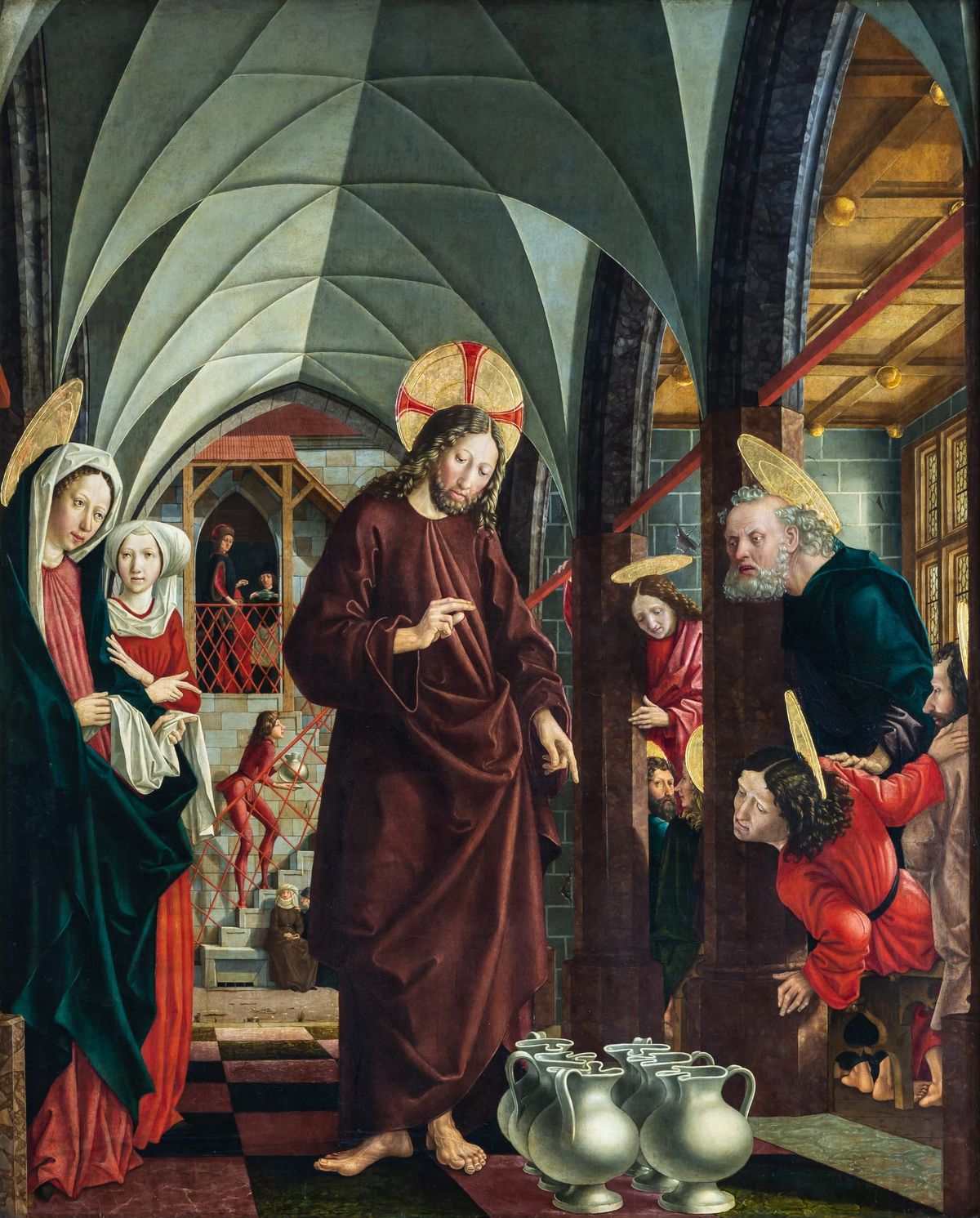
거친 목재를 다루는 공방 안으로 투박한 대팻밥 냄새가 흩날리고, 밤낮없이 이어지는 고된 작업 속에 캔버스와 목판을 마주하던 15세기 후반, 미하엘 파허는 티롤의 고요한 작업실에서 이 거대한 제단화를 마주했습니다. 북유럽 고딕 양식의 세밀하고 묵직한 전통에 이탈리아 르네상스의 공간 원근법을 접목하고자 치열하게 몰두했던 그는, 나무 패널 위에 템페라와 유채를 겹겹이 쌓아 올리며 독창적인 조형 세계를 구축해 나갔습니다.
이 작품은 오스트리아 잘츠캄머구트의 성 볼프강 성당에 소장된 성 볼프강 제단화의 날개 패널 중 하나인 가나의 혼인잔치이며, 제작 시기는 1471년부터 1481년 사이입니다. 정확한 공식 소장처는 성 볼프강 가톨릭 성당이며, 패널의 실제 실측 규격은 높이 173 cm, 너비 140.5 cm의 대형 목판 패널로 구성되어 있습니다.
작가의 고뇌/비하인드
작품의 전면 중앙에는 붉은 옷을 입고 찬란한 후광을 두른 채 서서 손가락으로 물이 담긴 항아리를 가리키는 그리스도가 배치되어 있으며, 그의 발치 앞에는 기적을 기다리는 하얀 물항아리들이 나란히 놓여 있습니다.
화면의 왼쪽에는 푸른 외투를 걸친 성모 마리아와 시녀가 차분한 표정으로 이 상황을 지켜보고 있고, 오른쪽 기둥 뒤편에는 놀라움과 경외가 섞인 표정으로 항아리를 바라보는 하인들과 손님들의 모습이 생생하게 묘사되어 있습니다.
특히 이번 화면의 일부분을 잘라낸 Detail 컷에서는 바닥에 놓인 은빛 물항아리들의 정교한 금속 질감과, 그리스도가 보내는 시선 끝에서 일어날 변화를 암시하는 긴장감 넘치는 세부 묘사가 더욱 선명하게 드러납니다.
중경의 계단과 아치형 회랑 너머로 보이는 공간 속에는 물동이를 나르는 인물들이 작고 세밀하게 표현되어 웅장한 건축적 깊이감을 더해 줍니다.
무의식 속 시선 및 심리 흐름
관람객의 시선은 가장 먼저 화면 한가운데서 기적의 순간을 주도하는 그리스도의 엄숙한 손짓과 그 바로 앞 바닥에 놓인 하얀 항아리들의 선명한 윤곽으로 자연스럽게 집중됩니다.
이어 시선은 왼쪽에서 정숙하게 서 있는 성모 마리아의 모습과, 오른쪽 기둥 뒤에서 놀란 표정으로 몸을 기울이는 인물들의 역동적인 동세로 부드럽게 확산됩니다.
마지막으로 시선은 정교하게 설계된 성전 내부의 아치형 천장과 멀리 원경의 배경으로 깊숙이 확장되며, 일상 속에서 마주한 신성한 기적 앞에 압도되는 깊은 심리적 전율과 평온을 느끼게 됩니다.
미술계의 평가 및 조형미
미술사학계는 이 작품을 북유럽 고딕 미술의 세밀한 묘사력과 이탈리아 르네상스의 과학적 원근법이 가장 극적인 조화를 이룬 걸작으로 높이 평가합니다.
템페라와 유채의 정교한 결합을 통해 구현된 건축물의 웅장한 볼륨감, 의복의 깊고 자연스러운 주름, 그리고 물항아리에 비치는 은은한 빛의 질감은 뛰어난 예술적 완성도를 보여줍니다.
시대와 공간의 한계를 뛰어넘어 삶의 평범한 순간을 가장 거룩한 축복으로 변화시킨 신비로운 메시지를 시각적 예술의 정수로 승화시킨 이 작품은, 영원토록 미술사에서 빛나는 숭고한 가치를 지니고 있습니다.
영문 번역본 구성
The Marriage at Cana
Amidst the scent of rough wood shavings drifting through the workshop and the relentless hours spent before wooden panels in the late fifteenth century, Michael Pacher immersed himself in creation within his quiet studio in Tyrol. Struggling intensely to harmonize the heavy, detailed traditions of Northern Gothic art with the spatial perspective of the Italian Renaissance, he meticulously layered tempera and oil upon a wooden panel to forge a unique visual language.
This work is The Marriage at Cana, a wing panel from the famous St. Wolfgang Altarpiece located in the Pilgrimage Church of St. Wolfgang in the Salzkammergut region of Austria, created between 1471 and 1481. Officially housed in its original location at the Catholic parish church of St. Wolfgang, the actual physical dimensions of the wooden panel measure 173 cm in height and 140.5 cm in width.
The Artist's Struggle and Behind-the-Scenes
In the immediate foreground at the center, Christ is portrayed in a red garment with a radiant halo, pointing His finger toward the white water jars standing neatly at His feet. On the left side of the composition, the Virgin Mary and a handmaid watch the scene with serene expressions, while behind the pillars on the right, servants and guests are vividly rendered gazing at the vessels with a mix of astonishment and awe.
Particularly highlighted in this detailed section of the composition, the refined metallic textures of the silver water jars on the floor and the tense anticipation preceding the miraculous transformation become remarkably clear.
In the middle ground, smaller figures carrying water pitchers are intricately depicted beyond the stairs and vaulted arcades, enhancing the majestic architectural depth.
Subconscious Gaze and Psychological Flow
The viewer's gaze is initially drawn to the solemn gesture of Christ presiding over the miraculous moment at the center and the crisp outlines of the white jars on the floor.
The eye then shifts naturally toward the composed figure of the Virgin Mary on the left and the dynamic postures of the figures leaning forward in shock behind the right pillar.
Finally, the gaze extends deeply along the intricately designed vaulted ceilings toward the distant background, experiencing a profound psychological thrill and inner peace before the sacred miracle unfolding within the everyday space.
Art World Evaluation and Formal Beauty
Art historians evaluate this work as a supreme masterpiece that achieves a dramatic harmony between the meticulous craftsmanship of Northern Gothic art and the scientific perspective of the Italian Renaissance.
Through the seamless integration of tempera and oil, the majestic volumetric presence of the architecture, the deep and natural folds of the garments, and the subtle textures of light reflecting on the water jars demonstrate exceptional artistic mastery.
Elevating the mystical message of transforming an ordinary moment into a sacred blessing across time and space, this creation retains an enduring, sublime value in art history.
본 컨텐트의 저작권은 팔렛트제주에 있습니다. 허가없는 무단전제를 금지합니다.
Copyright © Palette Jeju. All rights reserved. Unauthorized reproduction or redistribution is strictly prohibited.