가난과 슬픔을 함께 견뎌낸 아내를 향한 헌사, 안젤라 뵈클린의 초상 Portrait of Angela Böcklin
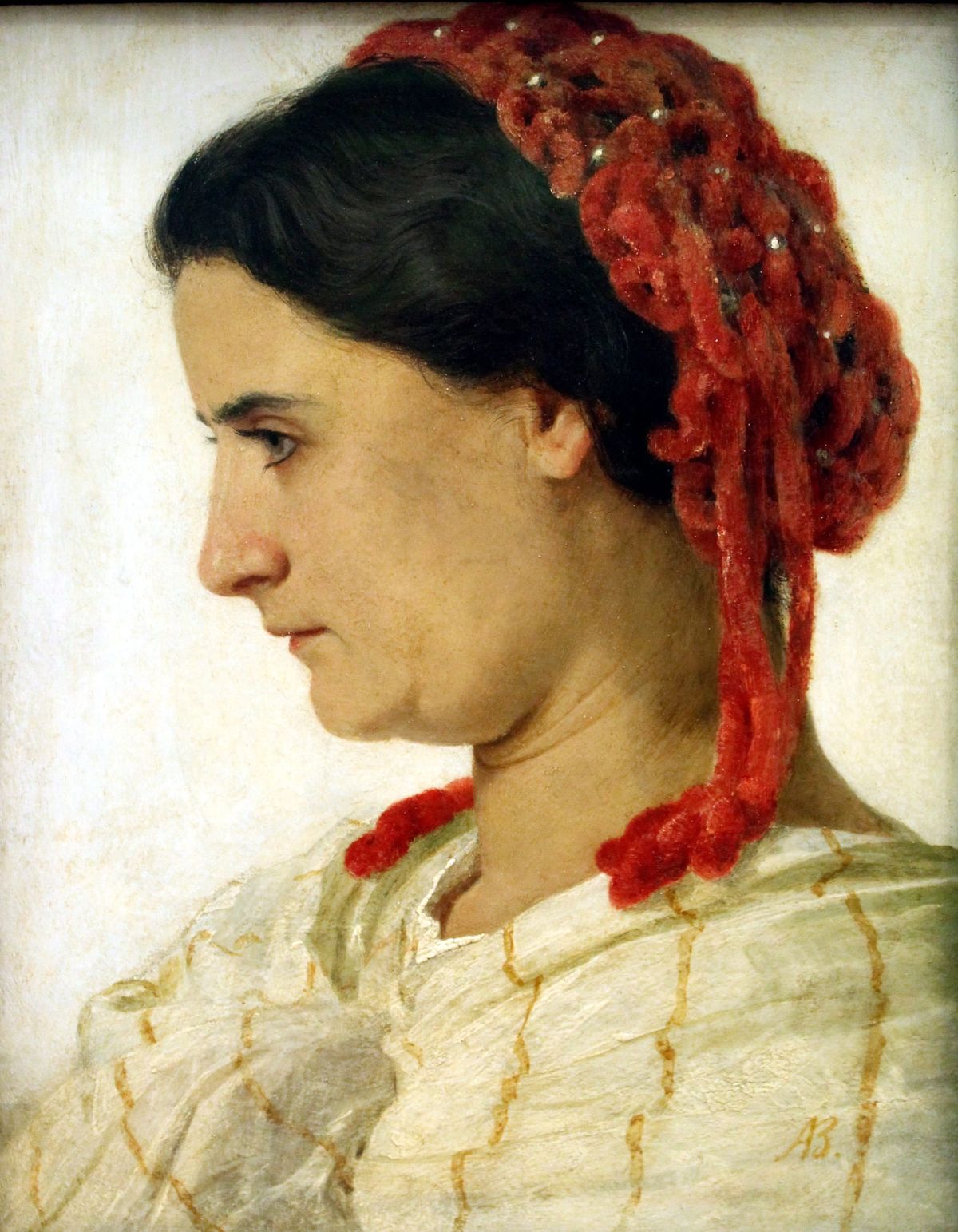
스위스 출신의 상징주의 거장 아놀드 뵈클린(Arnold Böcklin, 1827–1901)이 1863년에 완성한 유화 안젤라 뵈클린의 초상(Portrait of Angela Böcklin, 독일어: Bildnis Angela Böcklin)은 51.5 cm × 41.0 cm 크기의 캔버스에 유채로 그린 대표적인 인물화 걸작입니다. 현재 독일 베를린의 구 국립미술관(Alte Nationalgalerie, Berlin)에 소장되어 있습니다.
로마에서 만난 운명의 여인과 평생을 바친 헌신적 사랑
1853년 가난한 무명 화가였던 스위스 청년 뵈클린은 로마를 여행하던 중 교황청 근위병의 딸이었던 아름다운 이탈리아 여인 안젤라 파스쿠치(Angela Pascucci)를 만나 첫눈에 사랑에 빠졌습니다. 신분과 국적, 종교의 차이뿐만 아니라 극심한 가난 탓에 주변의 반대가 극심했으나 두 사람은 모든 역경을 딛고 결혼했습니다. 뵈클린은 평생 안젤라를 자신의 가장 완벽한 뮤즈이자 영혼의 동반자로 여겼으며, 그녀는 화가의 수많은 신화화와 환상적인 명작들 속에서 바다의 님프, 여신, 그리고 성스러운 여인의 모습으로 끊임없이 다시 태어났습니다.
하지만 두 사람의 결혼 생활은 처절한 고난의 연속이었습니다. 뵈클린의 그림이 팔리지 않아 하루 끼니를 걱정해야 하는 지독한 생활고 속에서도 안젤라는 불평 없이 남편의 예술혼을 지켜주었습니다. 더욱이 두 사람은 평생 낳은 14명의 자녀 중 무려 8명을 어린 나이에 질병과 사고로 먼저 떠나보내는 참척의 고통을 함께 견뎌내야 했습니다. 1863년에 그려진 이 초상화는 청춘의 눈부신 화려함 대신, 거듭되는 출산과 아이를 잃은 슬픔, 그리고 모진 가난의 풍파를 온몸으로 받아낸 서른 살 안젤라의 성숙하고 묵직한 내면을 화가가 가장 진솔하고 애틋한 시선으로 기록한 사랑의 고백입니다.
붉은 머리 장식에서 서글픈 눈동자로, 시선의 심리적 여정
그림을 마주하는 순간 관람객의 무의식적 시선은 짙은 흑발 위를 화려하게 감싸고 있는 붉은색 털실 헤어네트와 알알이 박힌 은빛 구슬로 가장 먼저 빨려 들어갑니다. 밝은 회백색 배경 속에서 타오르듯 강렬한 존재감을 드러내는 붉은 머리 장식의 질감은 보는 이의 시선을 단숨에 사로잡습니다.
이어 시선은 고전적인 로마 여인의 우아한 옆모습을 따라 내려와, 허공을 멍하니 응시하는 깊고 그윽한 눈동자와 굳게 다문 입술에 머뭅니다. 화려한 장식 아래 자리한 안젤라의 차분하면서도 어딘가 서글픈 눈빛을 마주하는 순간, 관람객은 수많은 자식을 먼저 떠나보낸 어머니의 깊은 한과 삶의 무게를 체감하게 됩니다.
마지막으로 시선은 부드러운 목주름을 지나 금빛 줄무늬가 은은하게 들어간 하얀 숄의 결 고운 주름으로 흘러내립니다. 화려한 보석이나 사치스러운 옷차림 대신 소박한 옷을 걸치고 있는 아내의 모습을 확인하면서, 관람객은 지독한 가난과 절망의 세월 속에서도 서로를 의지하며 묵묵히 버텨낸 한 부부의 숭고하고 단단한 사랑을 가슴 깊이 마주하게 됩니다.
르네상스 고전미와 근대적 사실성의 결합, 미술계의 평가
미술계는 안젤라 뵈클린의 초상을 르네상스 메달 초상화의 엄격한 측면 구도를 완벽하게 계승하면서도, 인물의 인간적인 슬픔과 따뜻한 체온을 가장 생생하게 포착한 19세기 인물화의 백미로 평가합니다.
대상을 미화하거나 과장하지 않고 삶의 흔적이 깃든 옆모습을 정직하게 담아내어 깊은 심리적 울림을 이끌어냈기 때문입니다. 죽음의 섬과 같은 신비롭고 어두운 환상성을 창조했던 거장의 마음 밑바닥에 늘 자리하고 있던 따뜻한 안식처이자 예술적 영감의 원천을 보여주는 가장 감동적인 헌사로 손꼽힙니다.
The Resilient Grace of the Beloved Muse, Portrait of Angela Böcklin
Painted in 1863 by the preeminent Swiss Symbolist master Arnold Böcklin (1827–1901), Portrait of Angela Böcklin (German: Bildnis Angela Böcklin) is an oil on canvas measuring 51.5 cm × 41.0 cm (20.3 in × 16.1 in), preserved in the permanent collection of the Alte Nationalgalerie in Berlin, Germany.
Roman Romance, Poverty, and the Shared Grief of Bereavement
In 1853, while wandering as an impoverished painter in Rome, the young Arnold Böcklin fell deeply in love with Angela Pascucci, the daughter of a Papal Guard. Despite severe opposition stemming from economic destitution and religious differences, the couple married. Angela became Böcklin’s lifelong muse, intellectual anchor, and primary model, lending her distinctive Roman features to the sirens, nymphs, and classical goddesses throughout his celebrated oeuvre.
Their decades together were forged in shared adversity. Beyond the chronic poverty that plagued Böcklin’s early career, the couple endured the heartbreaking deaths of eight of their fourteen children in infancy and early childhood. Created when Angela was around thirty years old, this intimate profile portrait captures the quiet maturity of a woman who bore the weight of profound domestic tragedy and unyielding devotion, rendered with absolute tenderness and psychological honesty by her husband.
Subconscious Trajectory of the Gaze: From Crimson Netting to the Introspective Eyes
The observer's subconscious gaze is immediately captivated by the vibrant crimson woolen hairnet intricately woven across her dark hair, studded with delicate silver pearls. The rich textural warmth of the crimson ribbons set against the luminous, off-white background commands instant visual fascination.
The trajectory of sight then descends along the classical Roman profile, settling upon Angela’s somber, heavy-lidded eyes gazing gently into the distance. Perceiving the subtle melancholy etched around her lips and brow, the viewer directly confronts the private sorrow of a mother who weathered immense familial grief without losing her quiet composure.
Finally, the visual path moves down past the natural lines of her neck to the tactile folds of the white shawl patterned with delicate ochre stripes. Observing the absence of ostentatious jewelry and the unvarnished honesty of her attire, the spectator recognizes the enduring bond of mutual reliance and profound respect that sustained the artist and his muse through decades of hardship.
Renaissance Profile and Modern Realism: Critical Legacy
Art historians revere Portrait of Angela Böcklin as an exceptional masterpiece that unites the monumental severity of Quattrocento Italian profile portraits with the emotional warmth of modern psychological realism.
By refusing to flatter or disguise the physical markers of hardship, Böcklin transformed an intimate domestic portrait into a timeless monument to human fortitude and enduring love. This tender canvas provides a vital emotional counterpoint to the haunting mythologies of the artist's larger works, standing as a luminous testament to the woman who anchored his creative soul.
본 컨텐트의 저작권은 팔렛트제주에 있습니다. 허가없는 무단전제를 금지합니다.
Copyright © Palette Jeju. All rights reserved. Unauthorized reproduction or redistribution is strictly prohibited.