감자를 심는 여인 Woman Planting Potatoes
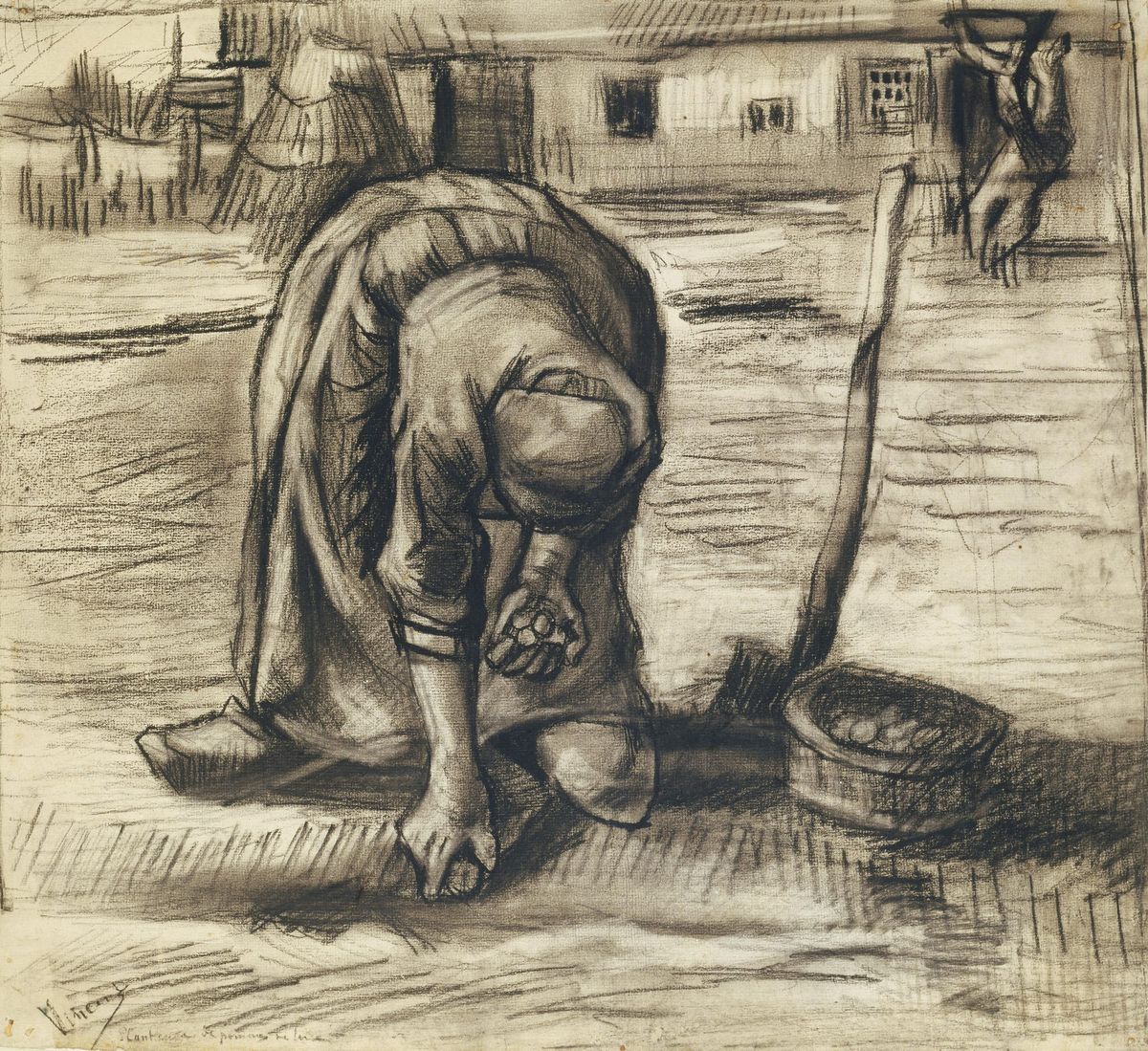
이 작품은 네덜란드의 후기 인상주의 거장 빈센트 반 고흐가 1885년 8월 네덜란드 노이넨 시기에 제작한 드로잉 작품입니다. 공식 소장품 등록번호는 F1272이며, 종이 위에 흑색 분필 등으로 그려진 실제 실측 규격은 47.5 x 54.5 cm입니다. 현재 이 작품은 독일 프랑크푸르트에 위치한 슈테델 미술관(Städel Museum)에 공식적으로 소장되어 있습니다.
작가의 고뇌와 창작 비하인드
노이넨 체류 시절 반 고흐는 농민들과 노동자들의 일상을 사실적으로 기록하는 데 깊은 열정을 쏟았으며, 특히 감자 경작은 그가 삶의 고단함과 대지의 무게를 탐구하는 핵심적인 주제였습니다. 당시 그는 동생 테오에게 보낸 편지에서 땅을 일구고 씨앗을 뿌리는 농민들의 소박하지만 숭고한 노동 속에서 인간 본연의 진솔한 모습을 발견하고자 한다고 전한 바 있습니다.
작품 전경에는 무릎을 꿇고 허리를 깊숙이 숙인 채 밭을 일구며 감자를 심고 있는 농부의 형상이 묵직하게 자리 잡고 있습니다. 중경에는 농부의 오른쪽에 놓인 움푹 파인 바구니와 삽이 노동의 고됨을 시각적으로 뒷받침하고 있으며, 그 너머로 나지막한 농가 건물의 창문과 지붕 실루엣이 스산한 풍경을 더해줍니다.
배경으로는 흐린 대기 아래 농촌의 평원이 아스라이 펼쳐져 있으며, 전체 화면을 지배하는 흑백의 거친 분필 선들은 척박한 대지 위에서 살아가는 하층민의 거친 숨결을 고스란히 전해줍니다.
무의식 속 시선 및 심리 흐름
관람객의 시선은 가장 먼저 땅바닥에 웅크린 채 고개를 숙이고 감자를 심는 여인의 구부정한 등과 팔의 동작으로 향하며, 삶의 무게를 온몸으로 지탱하는 묵직한 고단함을 마주하게 됩니다. 이어지는 시선은 여인 곁에 놓인 바구니와 거친 흙바닥의 중경으로 이동하여, 차가운 현실 속에서 침묵으로 일관하는 노동의 현장을 체감하게 됩니다.
시선이 다시 배경의 낡은 농가와 희뿌연 대기로 확장될 때, 관람객은 화려함 없는 농촌의 풍경 속에서 인간의 실존적 고독과 묵묵한 인내를 깊이 느끼게 됩니다. 이 일련의 시선 이동은 단순한 농민 풍속화의 묘사를 넘어, 삶의 뿌리를 지탱하는 숭고한 희생과 정서적 울림 속으로 깊이 빠져들게 만듭니다.
미술계의 평가 및 조형미
미술사학계와 평단은 본 작품을 고흐가 네덜란드 시기에 달성한 사실주의적 드로잉의 정수이자, 인간의 노동을 존중하는 시선이 가장 진하게 담긴 걸작으로 평가합니다. 흑색 분필의 거친 터치와 농밀한 명암 대비는 인물의 해부학적 구조와 의복의 주름, 그리고 대지의 질감을 입체적이고 극적으로 살려냅니다.
색채가 배제된 단색조의 화면임에도 불구하고 묵직한 양감과 공간감을 완벽하게 구현해 내는 탁월한 조형적 역량을 보여줍니다. 인간의 아픔과 노동의 진정성을 화폭에 담아낸 이 작품은, 거장이 후일 위대한 화가로 거듭나는 밑거름이 된 불멸의 예술적 가치를 증명합니다.
Woman Planting Potatoes
Executed in August 1885 during his period in Nuenen, the Netherlands, this drawing is a powerful and evocative work by the Dutch Post-Impressionist master Vincent van Gogh. Officially cataloged under inventory number F1272, the work is rendered in black chalk on paper. Currently, this masterpiece is housed in the permanent collection of the Städel Museum in Frankfurt am Main, Germany.
The Artist's Turmoil and Creative Background
During his formative years in Nuenen, Van Gogh dedicated himself to chronicling the unvarnished realities of peasant life, viewing agricultural labor as a profound spiritual and physical connection to the earth. In his letters to his brother Theo, he frequently emphasized the dignity of manual toil, seeking to capture the quiet endurance of those who worked the soil from dawn till dusk.
The foreground is dominated by a peasant woman kneeling and bending deeply over the earth, her body intensely focused on the arduous task of planting potatoes. In the middle ground, a rustic basket and a spade rest near her on the textured soil, anchoring the scene in the tangible reality of farm labor, while a modest farmhouse with small windows frames the background.
The background recedes into a hazy, atmospheric expanse under an austere sky, utilizing stark tonal contrasts to convey the somber, unyielding nature of rural existence.
Psychological Flow and the Unconscious Gaze
The viewer's gaze is immediately drawn to the bowed figure of the woman labouring on the ground, establishing an immediate psychological connection to the physical weight of her burden. The eye then migrates toward the surrounding tools and the textured earth of the middle ground, grounding the observer in the raw, unglamorous environment of rural toil.
As the gaze expands outward into the muted horizon and the distant farmhouse, the observer is enveloped in a profound sense of isolation and quiet resilience. This deliberate visual progression moves the viewer from an intimate encounter with human labor into a broader contemplation of endurance and human dignity.
Critical Acclaim and Formal Analysis
Art historians and critics widely celebrate this drawing as a triumph of Van Gogh's Dutch period, recognizing it as a masterclass in psychological depth and draftsmanship. The robust use of black chalk lines creates a rich, textured surface that vividly articulates the heavy folds of the woman's clothing and the rugged texture of the soil.
The masterful command of tone and shadow produces a striking chiaroscuro effect, investing a simple peasant task with monumental gravity. Capturing the austere beauty of human labor with profound emotional resonance, this work endures as an immortal testament to Van Gogh's early genius.
본 컨텐트의 저작권은 팔렛트제주에 있습니다. 허가없는 무단전제를 금지합니다.
Copyright © Palette Jeju. All rights reserved. Unauthorized reproduction or redistribution is strictly prohibited.