감자 먹는 사람들 - The Potato Eaters
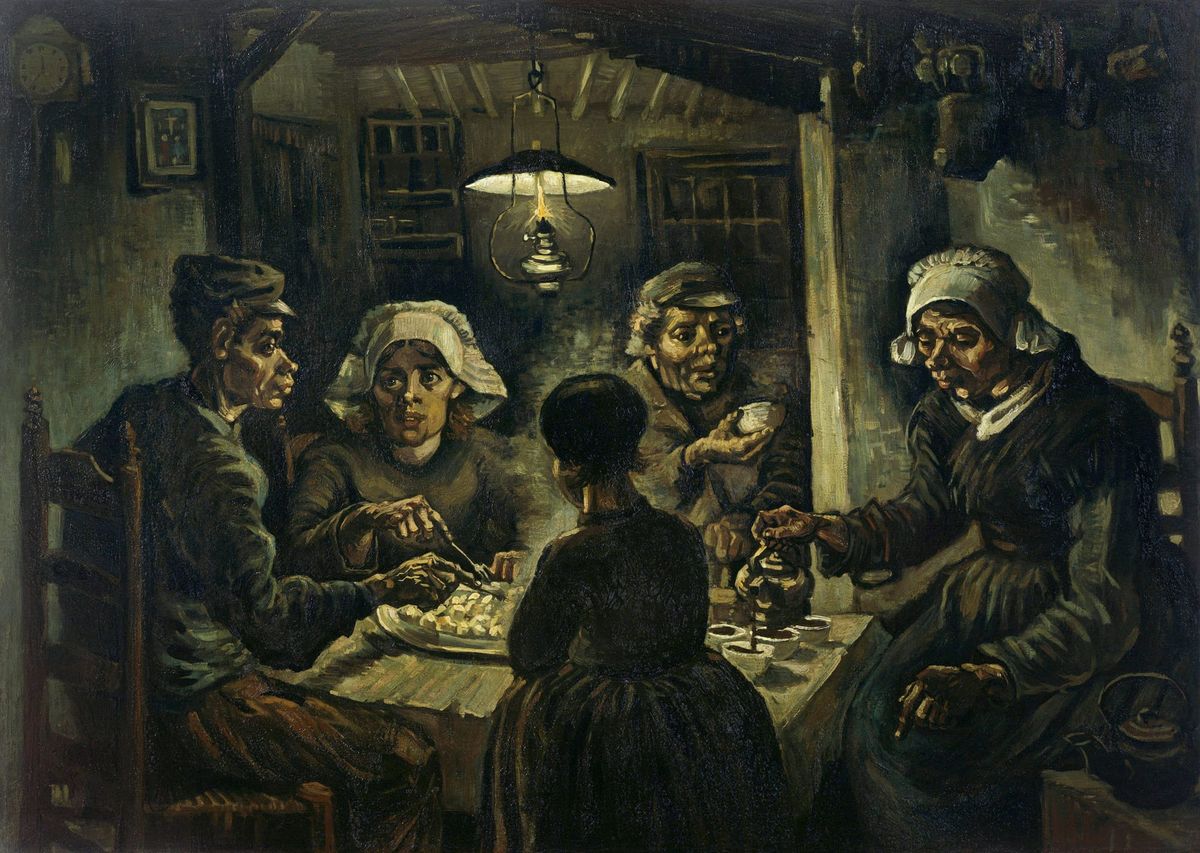
빈센트 반 고흐(Vincent van Gogh, 1853–1890)가 네덜란드 뉘넌(Nuenen) 체류 시절인 1885년 4월에 완성한 '감자 먹는 사람들(The Potato Eaters)'은 캔버스에 유채(Oil on canvas)로 제작된 풍속화입니다. 작품의 실제 규격은 세로 82.0cm, 가로 114.0cm이며, 현재 네덜란드 암스테르담의 반 고흐 미술관(Van Gogh Museum)에 영구 소장되어 있습니다.
고흐는 이 작품에서 거칠고 투박한 임파스토(Impasto) 기법과 함께 흙빛, 어두운 녹색, 그을린 갈색 등 껍질을 벗기지 않은 흙 묻은 감자의 색조를 화면 전체에 묵직하게 배합했습니다. 천장에 매달린 희미한 석유 램프 하나만을 유일한 광원으로 삼아 명암의 대비를 극적으로 연출했으며, 인물들의 굵은 주름과 굳은살 박인 손마디, 뼈대가 드러난 얼굴 윤곽을 타협 없는 거친 필치로 조각하듯 새겨 넣었습니다.
이 그림에는 반 고흐가 가난한 민중의 진솔한 삶을 예술로 증명하고자 했던 처절한 고투와 인간적인 에피소드가 깊게 서려 있습니다. 1885년 초, 고흐는 뉘넌의 가난한 농가였던 드 흐로트(De Groot) 가족의 허름한 오두막을 매일 저녁 찾아갔습니다. 하루 종일 거친 흙밭에서 감자를 캐고 돌아온 가족들이 식탁에 둘러앉아 피어오르는 김 속에서 감자를 나누는 모습을 보며, 고흐는 이것이야말로 거짓 없는 인간의 원초적 숭고함이라고 확신했습니다.
당시 농가 내부는 감자 찌는 냄새와 석유 램프 그을음, 베어 나온 땀 냄새로 숨이 막힐 지경이었지만, 고흐는 좁은 방 한구석에 이젤을 끼워 넣고 수십 차례의 손과 얼굴 드로잉을 거듭하며 작업에 매달렸습니다. 모델을 서주던 딸 고르디나 드 흐로트(Gordina de Groot)와 가족들은 며칠 동안 쉬지도 않고 캔버스에 달려드는 붉은 머리의 고흐를 보며 놀라워했고, 마을에는 고흐가 농가 처녀와 부적절한 관계라는 억울한 헛소문이 돌아 지역 신부가 농민들에게 고흐의 모델을 서지 말라고 금지령을 내리는 소동까지 벌어졌습니다.
하지만 고흐는 이에 굴하지 않고 동생 테오에게 보낸 편지에서 "나는 이 정직한 노동자들의 손이 흙을 파헤쳐 감자를 캐낸 바로 그 손으로 접시의 음식을 집어먹고 있다는 사실을 명백히 보여주고 싶다. 설탕을 바른 듯 매끄럽고 예쁘장한 그림은 역겹다. 땀과 흙먼지의 냄새가 진동하는 진짜 삶의 진실을 그리는 것이 화가의 소명이다"라며 타협 없는 예술혼을 토해냈습니다. 고흐는 파리의 화단에 자신의 존재를 알릴 첫 야심작으로 이 대작을 완성해 보냈으나, 당대 비평가들과 동료 화가 안톤 반 라파르트로부터 "해부학적 기본도 안 된 괴물 같은 졸작"이라는 혹독한 비난과 비웃음을 사며 깊은 마음의 상처를 입기도 했습니다.
후대의 미술사학자들과 평단은 이 작품을 반 고흐의 네덜란드 초기 시절을 총결산하는 위대한 기념비이자 19세기 리얼리즘 회화의 정점으로 평가합니다. 세속적인 미화나 부르주아적 감상을 배제하고 노동의 정직성과 소박한 공동체의 유대를 날것 그대로 포착해 낸 이 걸작은, 인간의 존엄성과 삶의 숭고함을 가장 정직하게 웅변한 서양 미술사의 불멸의 명작으로 칭송받고 있습니다.
관람자의 시선은 가장 먼저 화면 상단 중앙에서 희미하게 불을 밝히는 석유 램프와 그 빛을 받아 김이 모락모락 피어오르는 식탁 중앙의 감자 접시로 쏟아집니다. 이어 접시로 뻗어 나가는 거칠고 투박한 손마디들을 거쳐, 삶의 고단함과 진솔함이 새겨진 가족들의 깊은 눈빛과 주름진 얼굴을 하나씩 훑어보게 됩니다. 이후 주전자로 보리차를 따르는 노파의 손길과 등을 돌린 아이의 실루엣을 지나, 어둠 속에 잠긴 소박한 방안 풍경과 벽면의 작은 시계로 시선이 머물며 화면 전체를 깊이 있게 감상하게 됩니다.
심리적으로 관람자는 어둡고 거친 흙빛의 톤 속에서도 작은 불빛 아래 둘러앉은 가족의 끈끈한 유대감에서 뭉클한 정서적 온기와 심리적 안도감을 느끼게 됩니다. 정직한 땀방울로 일군 소박한 식사를 함께 나누는 장면은 현대인의 마음속에 내재된 허영과 불안, 공허함을 깨끗이 씻어내며, 지친 영혼에 인간적인 진실함과 삶을 지탱하는 본질적인 평온의 힘을 깊이 있게 채워줍니다.
The Potato Eaters
Painted by Vincent van Gogh (1853–1890) in Nuenen in April 1885, The Potato Eaters is a monumental oil on canvas genre painting measuring 82.0 cm in height and 114.0 cm in width. This masterwork is permanently housed in the prestigious collection of the Van Gogh Museum in Amsterdam, Netherlands.
Van Gogh constructed the scene using a heavily textured impasto and an earthy palette dominated by umbers, muddy greens, and scorched browns, capturing the coarse reality of unpeeled potatoes fresh from the soil. The single overhead oil lamp serves as the sole luminous focal point, carving dramatic contrasts of light and shadow across the rugged facial structures, bony features, and weathered hands of the peasant family.
The painting embodies a deeply humane history of intense artistic dedication. Throughout early 1885, Van Gogh spent endless evenings inside the cramped cottage of the De Groot family, an impoverished peasant household in Nuenen. Witnessing them gather around the steaming dish after backbreaking labor in the fields, Van Gogh recognized an unvarnished spiritual nobility in their communal meal.
Working inside the dim, stifling cottage filled with the heavy scent of boiled tubers and lamp soot, Van Gogh executed dozens of detailed anatomical studies of hands and heads. His relentless focus on the daughter, Gordina de Groot, sparked baseless village gossip, prompting the local priest to forbid parishioners from posing for the eccentric Dutch painter.
Undaunted, Van Gogh wrote an impassioned defense to his brother Theo: "I have tried to emphasize that these people, eating their potatoes by the lamplight, have dug the earth with the very hands they put in the dish, and so it speaks of manual labor and how they have honestly earned their food." When he sent this first ambitious masterpiece to Paris, it was fiercely ridiculed by contemporary critics and his friend Anthon van Rappard as clumsy and grotesque, causing Van Gogh immense personal anguish.
Modern art historians and scholars celebrate this painting as the triumphant culmination of Van Gogh's Dutch period and a defining masterpiece of nineteenth-century Realism. By rejecting sentimental bourgeois idealization in favor of raw sociological truth, Van Gogh captured the sacred dignity of honest labor, establishing an immortal testament to the resilience of the human condition.
A viewer’s gaze is drawn immediately to the glowing oil lamp overhead and the steaming platter of potatoes resting in the center of the wooden table. The eyes then trace the calloused, knotty hands reaching into the food before moving across the solemn, expressive faces of the family members illuminated in the warm chiaroscuro. The gaze drifts past the matriarch pouring chicory coffee and the silhouetted child, finally lingering upon the subtle details of the modest interior and the quiet wall clock.
Psychologically, the deep earthen tones and the intimate gathering beneath the solitary light evoke a profound sense of grounded comfort, empathy, and emotional equilibrium. Confronting the authentic honesty of this humble meal dispels modern anxieties and superficial distractions, enriching the observer's mind with enduring solace, mutual warmth, and a deep appreciation for the essential dignity of life.
본 리뷰에서 작품을 제외한 컨텐츠의 저작권은 팔렛트제주에 있습니다.
"퍼블릭도메인 고전명화"를 제외한 모든 창작 콘텐츠는 저작권법 제4조 및 제10조에 의거하여 보호됩니다. 무단 도용시 저작권법 제136조(벌칙)에 의거, 당사의 사전 서면 승인 없는 저작권 침해 행위를 금지합니다.