감자 껍질을 벗기는 여인 - Peasant Woman Peeling Potatoes
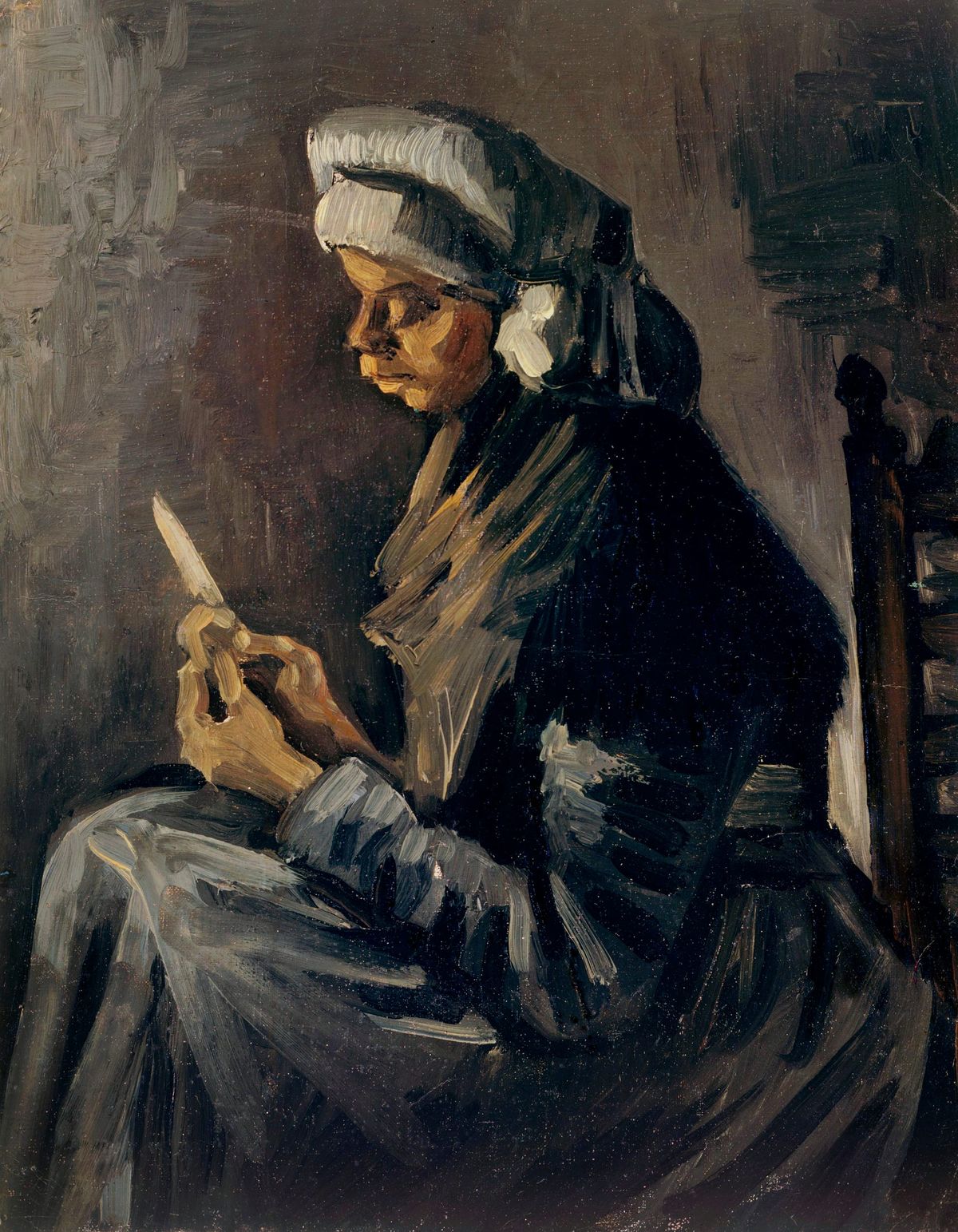
빈센트 반 고흐(Vincent van Gogh)가 1885년 2월에서 3월경 네덜란드 브라반트주 뉘넌(Nuenen)에서 완성한 유화 작품입니다. 현재 프랑스 파리의 오르세 미술관(Musée d'Orsay)에 소장되어 있으며, 작품의 실제 크기는 약 40.5 × 31.5 cm입니다. 캔버스 위에 유채로 제작된 이 인물화는 고흐의 초기 네덜란드 시기를 대표하는 사실주의 명작으로, 두텁고 거친 붓질과 묵직한 명암 대비를 통해 소박한 농촌 여인의 일상을 조각하듯 무게감 있게 구현했습니다.
고흐는 물감을 두껍게 얹어 여인의 얼굴 윤곽과 흰색 보닛 모자, 손에 쥔 칼날의 형태를 입체적으로 조각하듯 묘사했습니다. 짙은 흙빛과 어두운 갈색, 회청색의 묵직한 색채 덩어리들이 캔버스 전면을 감싸고 있으며, 한 줄기 빛이 여인의 얼굴과 손끝에 집중되도록 연출하여 네덜란드 전통 카라바조풍 명암법(테네브리즘)을 현대적인 질감으로 재해석해냈습니다.
이 작품의 배경이 된 뉘넌 시절, 고흐는 농민들의 삶을 가장 가까이에서 정직하게 기록하는 데 온 열정을 바쳤습니다. 그림의 모델은 고흐가 뉘넌에서 자주 찾던 드 흐로트(De Groot) 가문의 여인인 고르디나 드 흐로트(Gordina de Groot, 애칭 '시엔')로 추정됩니다. 고흐는 매일같이 밭일을 하고 집안일을 돌보는 그녀의 거친 손과 굳은 표정 속에서 꾸밈없는 인간의 실존을 보았습니다.
고흐는 동생 테오에게 편지를 보내며 농민을 그릴 때는 결코 부드럽고 매끄러운 붓질로 꾸며내서는 안 되며, 마치 흙으로 빚은 듯한 거친 질감과 진실한 땀방울이 느껴져야 한다고 강조했습니다. 후대 미술사에서는 이 작품을 화려한 기교 대신 노동의 신성함과 인간에 대한 깊은 연민을 담아낸 초기 고흐 사실주의의 정점으로 평가하며, 그의 불멸의 명작 『감자 먹는 사람들』을 완성하기 위해 거쳐 간 가장 중요한 핵심 인물 연구로 꼽습니다.
관람객의 무의식적인 시선은 어둠 속에서 선명하게 빛을 받고 있는 여인의 두 손과 얇은 칼날에서 자연스럽게 출발합니다. 거칠고 투박하게 굳은 손가락이 감자 껍질을 조심스럽게 벗겨내는 정적인 순간에 시선이 머물며, 화면 전체에 감도는 깊은 침묵과 노동의 숭고한 집중 속으로 단숨에 몰입하게 됩니다.
이어 시선은 빛의 경로를 따라 부드럽게 위로 상승하여, 흰색 보닛 모자 아래 드리워진 여인의 그늘진 옆얼굴과 진중한 눈매에 도달합니다. 세파를 견뎌낸 담담하고 단단한 표정을 마주한 관람객은 삶의 무게를 묵묵히 받아들이는 인간의 내면적 강인함에 깊은 정서적 울림과 공감을 느끼게 됩니다.
이후 시선은 여인의 어깨를 감싼 묵직한 어두운 숄과 풍성한 치맛자락의 굵은 붓자국을 타고 내려와, 의자 등받이의 소박한 나무 질감을 거쳐 뒤편의 고요한 배경으로 부드럽게 확장됩니다.
어둠 속에서 은은하게 배어 나오는 질감들을 감상한 시선이 다시금 작은 불빛처럼 빛나는 여인의 손끝으로 편안히 회귀할 때, 복잡한 현대 사회의 피로와 내면의 소음이 정돈되고, 소박한 일상이 건네는 묵직한 위로와 함께 흔들리지 않는 심리적 안도감을 깊이 있게 느끼게 됩니다.
Peasant Woman Peeling Potatoes
Painted by Vincent van Gogh around February to March 1885 during his pivotal residence in Nuenen, North Brabant, Netherlands, this poignant oil painting is housed in the permanent collection of the Musée d'Orsay in Paris, France. Executed on canvas measuring approximately 40.5 × 31.5 cm, the work stands as a quintessential realist masterpiece from Van Gogh’s early Dutch period, employing dense impasto and dramatic chiaroscuro to monumentalize the quiet daily labor of a peasant woman.
Van Gogh applied heavy, sculptural brushstrokes to carve out the angular planes of the woman's face, the textured white bonnet, and the sharp glint of the paring knife. A somber palette dominated by deep earth umbers, charcoal tones, and muted slate-greys fills the composition, while a focused beam of light illuminates her face and hands, translating traditional Netherlandish tenebrism into a raw, tactile modern idiom.
During his time in Nuenen, Van Gogh dedicated himself entirely to capturing the unembellished reality of the working class. The subject of this study is widely believed to be Gordina de Groot, a member of the local farming family whom Van Gogh painted frequently. In her weathered features and coarse, hardworking hands, Van Gogh discovered an authentic human dignity that completely bypassed the sentimental idealization typical of conservative salon painters.
Writing to his brother Theo, Van Gogh insisted that peasant figures should appear as though they were painted with the very soil they worked, carrying the genuine scent of hearth smoke and agricultural toil. Art historians celebrate this intimate portrait as the expressive summit of his early realism and a vital preparatory study that directly informed the conceptual and technical execution of his monumental masterpiece, The Potato Eaters.
A viewer's subconscious gaze is intuitively anchored first by the illuminated focal point of the woman’s weathered hands and the pale glint of the knife peeling a potato in the center foreground. Lingering upon the quiet tension and dexterity of her fingers, the observer is immediately enveloped in an atmosphere of profound stillness, focused labor, and reverent domestic solitude.
The eye is then gently guided upward along the fall of light to her profile, shaded beneath the linen bonnet, resting upon her calm, contemplative expression. Encountering her stoic composure in the midst of routine toil, the viewer experiences an empathetic connection to her inner fortitude and the enduring resilience of the human spirit.
The gaze continues downward through the heavy, textured folds of her dark shawl and voluminous skirt, taking in the rustic wooden upright of the chair before dissolving into the atmospheric, brush-textured shadows of the background.
Completing this introspective circuit and returning once more to the glowing hands at work, the observer feels a distinct psychological release. The noise and superficial anxieties of modern life recede, leaving the viewer grounded in a deeply comforting sense of spiritual elevation, quiet permanence, and enduring psychological solace.
본 리뷰에서 작품을 제외한 컨텐츠의 저작권은 팔렛트제주에 있습니다.
"퍼블릭도메인 고전명화"를 제외한 모든 창작 콘텐츠는 저작권법 제4조 및 제10조에 의거하여 보호됩니다. 무단 도용시 저작권법 제136조(벌칙)에 의거, 당사의 사전 서면 승인 없는 저작권 침해 행위를 금지합니다.