갈릴래아 호수의 폭풍 - The Storm on the Sea of Galilee
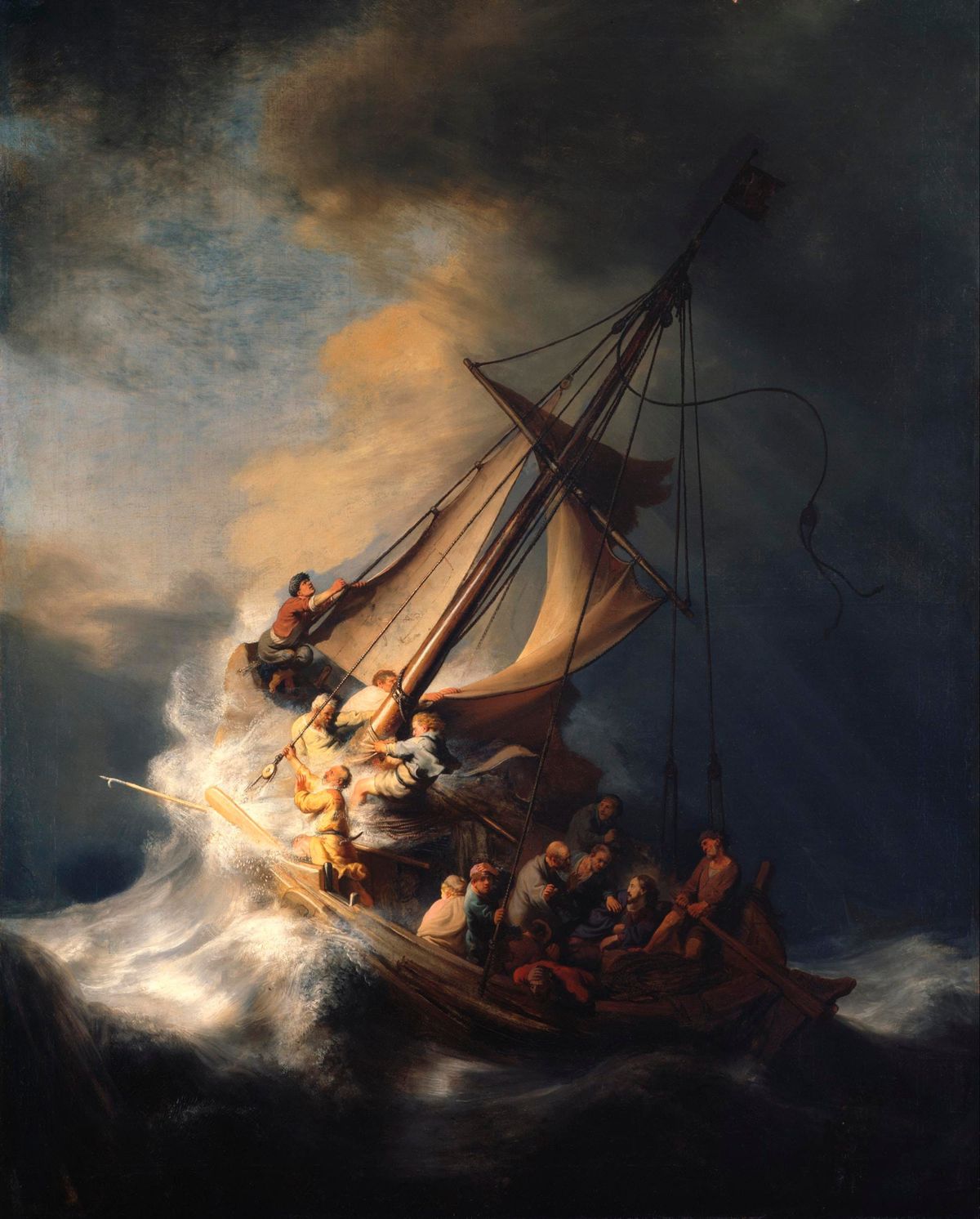
1633년 17세기 네덜란드 황금기를 대표하는 거장 렘브란트 반 레인(Rembrandt van Rijn)이 제작한 유화 작품 《갈릴래아 호수의 폭풍》은 캔버스에 유채로 그려진 종교 역사화이자 해양화로, 원래 미국 보스턴 이자벨라 스튜어트 가드너 미술관(Isabella Stewart Gardner Museum)에 소장되어 있었으나 1990년 도난당해 현재는 빈 액자만 남아 있으며 실제 크기는 약 160 × 128 cm입니다.
이 화면은 신약성경에 기록된 마르코복음 4장의 사건, 즉 성난 거센 파도와 폭풍우에 휩쓸려 뒤집힐 위기에 처한 배 위에서 공포에 떠는 제자들과 이를 고요히 수습하려는 예수 그리스도의 극적인 순간을 렘브란트 특유의 강렬한 키아로스쿠로(명암대비법)와 대담한 대각선 구도로 포착해 낸 명작입니다. 화가는 화면 좌측 상단에서 솟구치는 흰 거품의 파도와 빛을 받는 돛대, 그리고 찢어질 듯 팽팽한 돛의 질감을 역동적인 빛과 그림자의 대조 속에서 생생하게 부각시켰습니다.
작품 속에는 렘브란트가 남긴 유일한 해양화이자 미술사상 가장 유명한 도난 사건의 중심에 서 있는 비하인드 스토리가 흐릅니다. 1633년 렘브란트가 암스테르담에 안착하여 명성을 얻기 시작할 무렵 제작된 이 대작에는 예수와 12제자 외에 14번째 인물이 타고 있는데, 밧줄을 잡고 한 손으로 모자를 누른 채 관람객을 정면으로 바라보는 이 인물은 바로 화가 렘브란트 자신의 자화상입니다. 1990년 3월, 경찰로 위장한 2인조 강도에 의해 박물관에서 도난당한 이후 현재까지 행방이묘연하지만, 화폭 속에 담긴 절박한 생존의 드라마는 여전히 전 세계 관객들에게 강력한 울림을 줍니다.
후대 평단과 관객들은 이 작품을 렘브란트 1630년대 초기 예술이 자랑하는 역동적인 구도와 사투를 벌이는 인간 군상의 극적인 심리 묘사가 정점에 달한 걸작으로 평가합니다. 거친 파도에 대항하는 좌측의 아수라장과, 예수 그리스도를 중심으로 모여든 우측의 고요한 심리적 대조는 관객에게 시대를 초월한 숭고한 감동과 압도적인 긴장감을 선사합니다.
이 그림을 마주하는 관람객의 무의식적 시선은 가장 강렬한 빛을 머금은 채 배를 삼킬 듯 솟구쳐 오르는 화면 좌측의 흰 파도 거품과 수직으로 높게 기울어진 돛대의 윤곽으로 가장 먼저 끌려갑니다. 거친 폭풍우와 팽팽하게 긴장된 돛의 동세는 관람객의 마음에 묵직한 시각적 중심과 강렬한 몰입감을 안겨줍니다.
이어 시선은 밧줄을 붙잡고 사투를 벌이는 제자들의 역동적인 포즈를 지나, 화면 우측 하단의 상대적으로 어둡고 고요한 선실 쪽에서 조용히 잠에서 깨어나 불안해하는 제자들을 안심시키는 예수 그리스도의 차분한 얼굴로 자연스럽게 이동합니다. 거친 자연의 광란과 신성한 평정심이 이루는 구도적 대극은 화면 전체에 팽팽한 서사적 긴장감과 숭고한 안식의 메시지를 더해줍니다.
마지막으로 시선은 화면 좌측 하단 거친 파도의 바닥면과, 우측 상단을 검게 물들인 짙은 폭풍우 구름의 여백 속으로 낙하하여 정착합니다. 이러한 무의식적 시선의 흐름은 인생의 거친 폭풍 속에서 찾아내는 구원과 고요한 안식처로 감상자를 자연스럽게 인도하며, 마음에 닿는 차분하고 정갈한 여운을 오래도록 남깁니다.
In 1633, Rembrandt van Rijn, one of the paramount masters of the Dutch Golden Age, created the legendary oil painting titled "The Storm on the Sea of Galilee." Formerly preserved in the Isabella Stewart Gardner Museum in Boston before its tragic theft in 1990, this original canvas measures approximately 160 × 128 cm. This artwork finely captures the terrifying power of nature and the miraculous calm of faith through a dynamic, early application of chiaroscuro.
The painting visually manifests the biblical miracle from the Gospel of Mark, depicting a small fishing vessel caught in a furious tempest upon the Sea of Galilee. Historical context highlights this work as Rembrandt's only painted seascape, created during his triumphant early Amsterdam period. Among the fourteen figures aboard—comprising Christ and his twelve disciples—Rembrandt famously painted his own self-portrait looking directly out at the viewer while clinging to a stay rope. Plundered in the notorious 1990 Gardner Museum heist, the painting remains unrecovered, yet its dramatic legacy endures worldwide.
Art historians and critics continuously extol this masterwork for its kinetic composition and psychological realism, celebrating Rembrandt's ability to divide the scene into two distinct emotional halves: the frantic chaos of the sailors battling the storm on the left, and the quiet spiritual sanctuary surrounding Christ on the right. The striking contrast between the crashing white waves, the strained rigging, and the dark storm clouds creates an enduring atmosphere of dramatic suspense and sacred hope.
The moment an observer encounters this artwork, their gaze is subconsciously drawn straight to the brilliantly lit, cresting white wave on the left and the sharply tilted mast straining against the gale. The violent kinetic energy of the water and the sheer peril of the vessel immediately diffuses tension, instilling a comforting sense of narrative awe and emotional immersion.
Next, the eye glides smoothly down along the steep diagonal deck to the shadowy stern on the right, tracing the terrified disciples gathering around the serene, awakening figure of Christ. The profound emotional dichotomy between human panic and divine composure adds structural weight and spiritual resonance to the scene.
Finally, the viewer's gaze drifts into the deep, churning waters below and the dark, thunderous sky above before coming to rest upon the surrounding spatial field. This natural visual journey guides the spectator into a state of quiet, reverent reflection, leaving a lasting impression of grace, salvation, and timeless peace.
본 리뷰에서 작품을 제외한 컨텐츠의 저작권은 팔렛트제주에 있습니다.
"퍼블릭도메인 고전명화"를 제외한 모든 창작 콘텐츠는 저작권법 제4조 및 제10조에 의거하여 보호됩니다. 무단 도용시 저작권법 제136조(벌칙)에 의거, 당사의 사전 서면 승인 없는 저작권 침해 행위를 금지합니다.