몽마르트르의 풍차 (Le Moulin de la Galette)
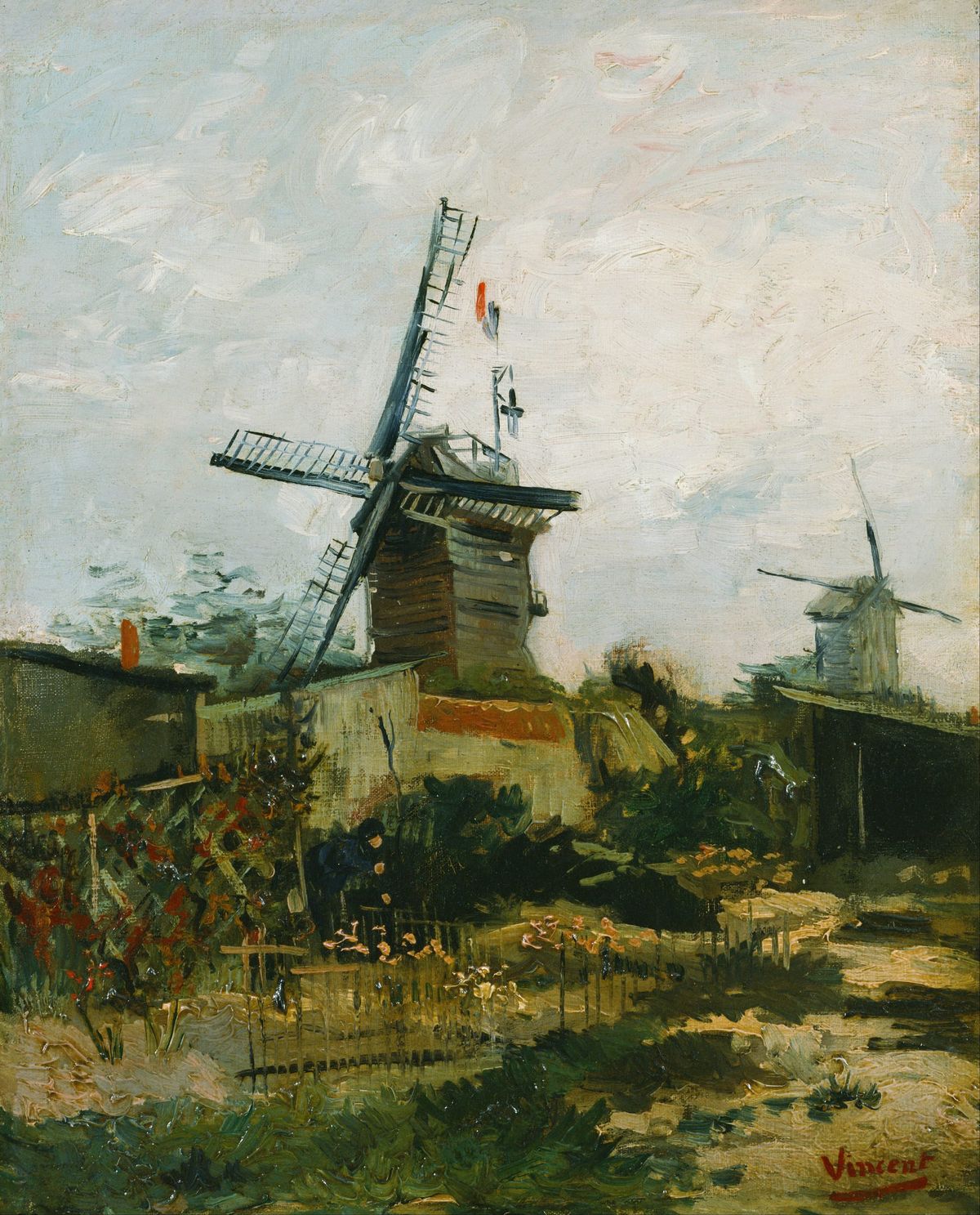
빈센트 반 고흐(Vincent van Gogh)가 파리 체류 시기인 1886년 가을에 완성한 대표적인 풍경화입니다. 현재 독일 베를린의 알테 나치오날갈레리(Alte Nationalgalerie) 등에 소장 및 연구되고 있으며, 캔버스 위에 유채로 제작된 이 작품의 실제 크기는 약 38.0 × 46.5 cm입니다. 네덜란드 시절의 어둡고 묵직한 흙빛 팔레트에서 벗어나 인상주의의 밝은 햇빛과 색채를 흡수하기 시작하던 고흐의 과도기적 기법이 두텁고 경쾌한 임파스토(Impasto) 터치로 고스란히 담겨 있습니다.
고흐는 물감을 두껍게 얹어 목조 풍차의 거친 벽면과 회백색 하늘의 구름 결, 그리고 정원의 수풀을 조각하듯 입체감 있게 묘사했습니다. 화면 상단을 지배하는 은은한 진줏빛 하늘과 대조적으로, 전경의 정원과 흙길에는 짙은 올리브그린과 따스한 황토색 붓자국을 교차시켜 햇살이 스며드는 순간의 생생한 빛의 산란을 포착했습니다. 풍차 꼭대기에 작게 꽂힌 프랑스 삼색기의 붉고 푸른 색점은 차분한 풍경 속에 경쾌한 시각적 활력을 불어넣습니다.
1886년 초 파리로 건너와 몽마르트르의 르픽 거리에 있는 동생 테오의 아파트에 둥지를 튼 고흐는, 도시의 번화함과 시골의 목가적 정취가 공존하던 몽마르트르 언덕 일대를 매일같이 산책하며 그림을 그렸습니다. 당시 몽마르트르에 남아 있던 갈레트 풍차(물랭 드 라 갈레트)는 파리 시민들의 댄스홀과 휴식처로 유명했지만, 고흐는 유흥의 화려함보다는 텃밭과 나무 울타리가 어우러진 언덕 위의 소박한 전원 풍경 자체에 깊은 애정을 느꼈습니다.
그는 정원에서 묵묵히 흙을 만지며 일하는 작은 인물의 실루엣을 정원 한구석에 배치하여, 대도시 파리 한복판에서도 여전히 이어지는 정직한 노동의 온기를 화폭에 담아냈습니다. 미술사에서는 고흐가 파리 아방가르드 화단의 빛과 색채를 주체적으로 받아들이며 자신만의 독창적인 양식으로 진화해 나가는 중요한 전환기 걸작으로 평가합니다.
관람객의 무의식적인 시선은 화면 좌측 상단으로 웅장하게 솟아오른 묵직한 목조 풍차의 몸체와 하늘을 향해 당당히 뻗은 날개의 기하학적 구조에서 자연스럽게 출발합니다. 회백색 구름을 배경으로 우뚝 선 풍차의 단단한 존재감에 시선이 머무는 순간, 보는 이는 세월의 풍파를 견뎌낸 목조 건축물이 주는 깊은 고요함 속으로 단숨에 몰입하게 됩니다.
이어 시선은 풍차 아래로 이어진 흰 벽과 붉은 지붕을 타고 완만한 사선을 그리며 전경의 정원으로 내려옵니다. 울타리 곁에서 허리를 숙인 채 조용히 정원을 가꾸고 있는 작은 인물의 실루엣과 정갈하게 피어난 꽃들의 밝은 붓 터치를 마주할 때, 평온한 일상의 쉼과 소박한 인간적 온기를 깊이 체감하게 됩니다.
이후 시선은 우측 뒤편으로 아스라이 서 있는 또 다른 작은 풍차의 실루엣을 지나, 화면 전체를 부드럽게 감싸고 있는 은은한 가을 하늘의 붓자국을 따라 넓게 확장된 뒤, 다시금 흙길의 따스한 황금빛 질감으로 편안히 내려앉습니다.
몽마르트르 언덕의 맑은 공기와 햇살을 따라 순환한 시선이 안착할 때, 관람객의 내면에는 복잡한 도시의 소음과 피로가 정돈되고, 소박한 전원이 건네는 따스한 평온과 함께 흔들리지 않는 깊은 심리적 안도감이 가득 차오르게 됩니다.
Le Moulin de la Galette
Painted by Vincent van Gogh in the autumn of 1886 during his transformative Paris period, this evocative landscape resides in the collection of the Alte Nationalgalerie in Berlin, Germany. Executed in oil on canvas measuring approximately 38.0 × 46.5 cm, the work illustrates Van Gogh’s critical stylistic shift from the dark earth tones of his Dutch beginnings toward the luminous light and energetic brushwork of the French avant-garde.
Van Gogh applied unmixed paint with rich, tactile impasto, sculpting the weathered wooden grain of the windmill and the drifting clouds across the pearlescent sky. In contrast to the cool tones of the upper atmosphere, the foreground garden and pathway are constructed with rhythmic strokes of olive green, warm ochre, and pale gold, capturing the gentle filtration of autumn sunlight. The tiny touch of the French tricolor flag atop the structure introduces a lively chromatic spark into the tranquil rural setting.
After moving into his brother Theo’s apartment on Rue Lepic in early 1886, Van Gogh spent countless hours roaming the heights of Montmartre, captivated by its unique mixture of rustic countryside and bohemian urban life. While the Moulin de la Galette was celebrated among contemporaries as a fashionable open-air dance hall, Van Gogh favored its quieter, pastoral aspect, finding solace in its surrounding allotments, fences, and working gardens.
By tucking a lone figure tending the soil quietly into the garden foliage, he subtly connected the historic monument to the humble rhythms of daily labor. Art historians celebrate this composition as a foundational turning point in his Parisian oeuvre, where the structured stability of Netherlandish realism began to harmonize with Impressionist lightness and atmospheric sensitivity.
A viewer's subconscious gaze is intuitively anchored first by the commanding silhouette of the main windmill, its heavy wooden frame and diagonal sails cutting proudly across the pale sky. Absorbing the textured presence of the historic mill, the observer is drawn into an atmosphere of quiet permanence, rustic shelter, and timeless dignity.
The eye is then gently guided downward along the masonry walls and tiled rooftops into the sun-dappled foreground garden. Resting upon the small figure tending the vegetable patch amid the delicate dashes of flowers, the viewer experiences a warm sense of domestic tranquility and agrarian peace.
The gaze continues across the open ground to the smaller windmill resting in the right distance, ascending through the soft, sweeping brushwork of the overcast Parisian sky before returning smoothly to the textured path below.
Completing this visual journey across the rustic expanse, the observer feels a profound release of modern tension. The gentle interplay of light and earth leaves the viewer restored with a lasting sense of grounded serenity, warmth, and enduring psychological calm.
본 리뷰에서 작품을 제외한 컨텐츠의 저작권은 팔렛트제주에 있습니다.
"퍼블릭도메인 고전명화"를 제외한 모든 창작 콘텐츠는 저작권법 제4조 및 제10조에 의거하여 보호됩니다. 무단 도용시 저작권법 제136조(벌칙)에 의거, 당사의 사전 서면 승인 없는 저작권 침해 행위를 금지합니다.