가금류 파는 여인 The Poultry Woman
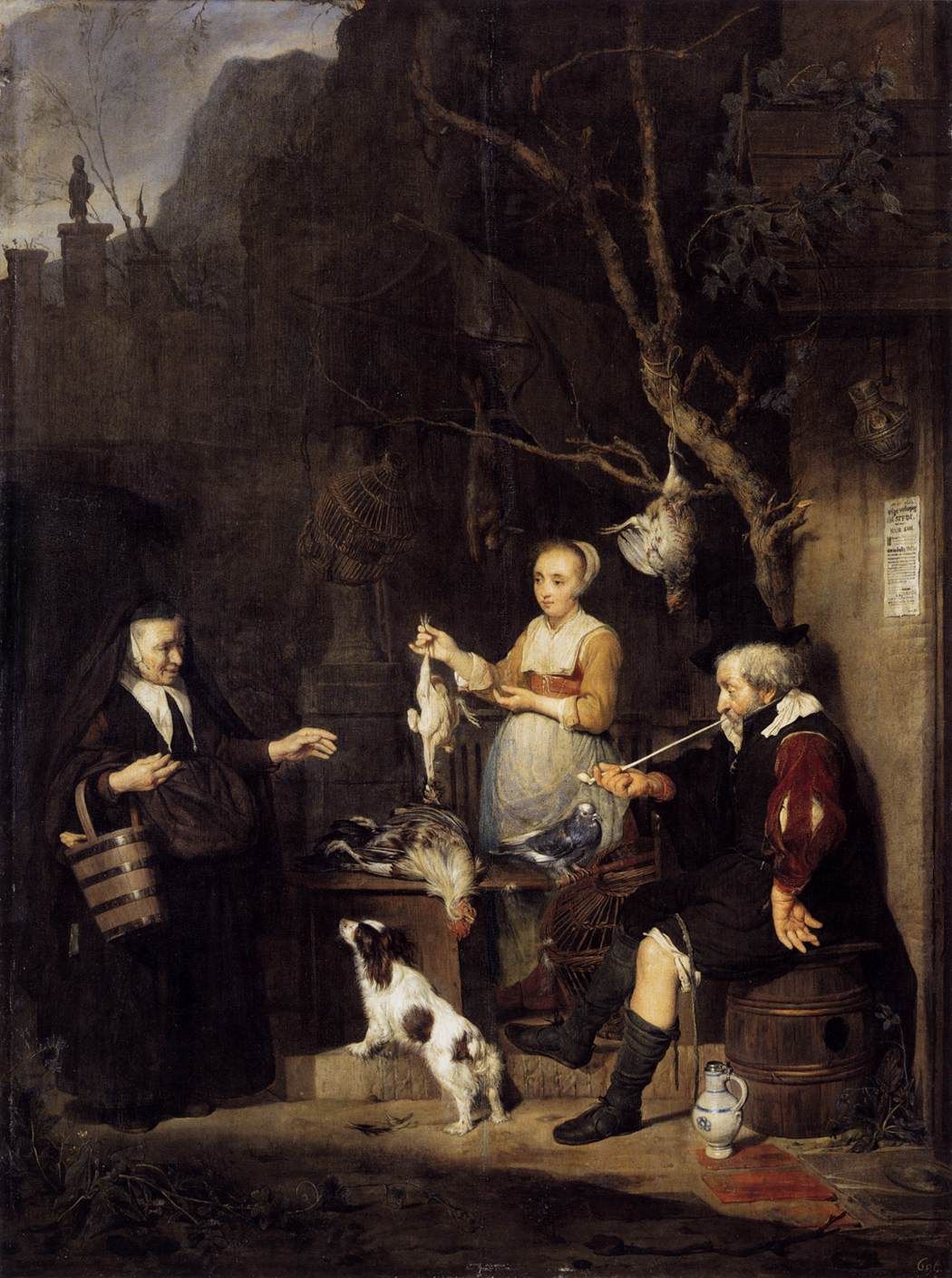
17세기 네덜란드 황금시대의 풍속화 거장 가브리엘 메추(Gabriel Metsu, 1629–1667)가 1662년에 완성한 유화 가금류 파는 여인(The Poultry Woman, 네덜란드어: De poelierster)은 61.0 cm × 45.0 cm 크기의 목판 패널에 유채로 그린 대표적인 시장 풍속화 걸작입니다. 짝을 이루는 작품인 가금류 상인과 함께 현재 독일 드레스덴의 고전 거장 미술관(Gemäldegalerie Alte Meister, Staatliche Kunstsammlungen Dresden)에 소장되어 있습니다.
들려 올린 닭 다리와 긴 파이프 끝에서 번진 화실의 유쾌한 소동
1660년대 초반 암스테르담의 운하 주변 노천시장은 신선한 식재료를 구하려는 서민들과 상류층 가사도우미들로 언제나 활기가 넘쳤습니다. 당시 가브리엘 메추는 시장에서 새를 사고파는 일상적인 행위 이면에 깃든 남녀 간의 은밀한 연애와 인생의 해학적 풍자를 화폭에 담아내고자 깊은 고민에 빠져 있었습니다. 화가는 동네 시장에서 실제로 가금류를 팔던 당찬 젊은 여인과 은퇴한 노인, 그리고 검은 망토를 두른 노파를 화실로 초대해 생생한 시장 노점 풍경을 연출했습니다.
이 그림을 준비하던 날, 화실 바닥에서는 유쾌하면서도 웃음이 절로 나오는 소동이 벌어졌습니다. 젊은 여주인 모델이 닭의 다리를 한 손으로 번쩍 치켜들고 가격을 흥정하는 포즈를 취하고, 옆에 앉은 노인이 긴 점토 파이프를 입에 물고 연기를 뿜어내던 중이었습니다. 그 순간 테이블 위 새장 곁에 앉아 있던 통통한 비둘기 한 마리가 갑자기 날개를 파닥이며 날아올라 노인의 깃털 모자를 건드렸고, 놀란 노인이 손을 휘젓다가 바닥에 놓인 맥주 단지를 발로 툭 차고 말았습니다.
마당에 있던 작은 스패니얼 강아지가 멍멍 짖으며 닭을 향해 두 발로 뛰어오르자, 검은 망토를 쓴 노파는 장바구니를 쥔 채 웃음을 터뜨렸습니다. 메추는 붓을 든 채 껄껄 웃으며 바로 이 소란스럽고 진솔한 활기야말로 그림에 생명을 불어넣을 최고의 순간임을 직감했습니다. 화가는 젊은 여인의 맑은 미소와 붉은 코르셋, 노인의 주름진 이마와 긴 파이프, 그리고 사냥한 토끼와 죽은 수탉의 정교한 깃털 결까지 캔버스에 맹렬한 속도로 담아냈습니다. 잦은 병마 속에서도 삶의 정겨운 활력과 인간에 대한 따스한 애정을 잃지 않으려 했던 메추의 섬세한 예술혼이 이 화려한 화폭 속에 고스란히 살아 숨 쉬고 있습니다.
닭을 든 여인의 맑은 미소에서 노인의 긴 파이프와 장바구니로, 시선의 심리적 여정
그림을 마주하는 순간 관람객의 무의식적 시선은 화면 중앙 밝은 자연광을 한몸에 받아 화사하게 빛나는 젊은 여주인의 둥근 얼굴과 하얀 두건, 그리고 한 손으로 번쩍 들어 올린 닭으로 가장 먼저 빨려 들어갑니다. 손님을 향해 물건의 싱싱함을 자랑하며 부드러운 미소를 짓는 여인의 단아한 자태는 보는 이에게 깊은 시각적 매혹과 함께 기분 좋은 활력을 선사합니다.
이어 시선은 화면 왼쪽에서 나무 바구니를 팔에 걸치고 손을 내밀며 가격을 묻고 있는 검은 옷의 노파에게로 이동합니다. 세월의 깊이가 느껴지는 노파의 주름진 옆모습과 닭의 신선도를 꼼꼼히 따져보는 진지한 손짓을 확인하는 순간, 관람객은 시장 골목에서 펼쳐지는 정겨운 흥정의 순간 속으로 자연스럽게 빠져들게 됩니다.
마지막으로 시선은 화면 오른쪽 나무통 위에 걸터앉아 긴 점토 파이프를 물고 두 여인의 대화를 능청스럽게 관전하는 노인을 지나, 여주인의 발치에서 꼬리를 흔들며 닭을 향해 뛰어오르는 귀여운 강아지와 바닥의 도자기 단지에 멈춥니다. 고풍스러운 네덜란드 건물 아래서 펼쳐지는 소박한 삶의 정취와 풍요로운 시장의 온기를 마주하며, 관람객은 평범한 하루 속에 깃든 진솔한 기쁨과 메추가 건네는 다정한 예술적 위로를 가슴 깊이 마주하게 됩니다.
17세기 네덜란드 시장 풍속화의 정점과 조형적 완성도, 미술계의 평가
미술계는 가금류 파는 여인을 가브리엘 메추가 짝을 이루는 가금류 상인과 더불어 네덜란드 풍속화의 해학적 서사성과 정밀한 질감 묘사를 가장 완벽하게 완성한 대표작으로 평가합니다.
깃털의 보드라움, 나무 바구니의 거친 결, 도자기 저그의 매끄러운 유약, 그리고 인물들의 다채로운 의복 질감을 탁월한 명암 대조로 완벽하게 구현했을 뿐만 아니라, 시장이라는 공간에서 마주치는 다양한 세대의 인간 군상을 따뜻한 시선으로 포착했기 때문입니다. 일상의 소박한 순간을 한 편의 감미롭고 조화로운 연극 무대로 승화시킨 메추의 이 서정적인 화폭은, 오늘날까지도 전 세계 수많은 감상자들에게 깊은 감동과 잊을 수 없는 시각적 안식을 전해주는 불멸의 명작으로 손꼽히고 있습니다.
The Resonant Mirth of the Market Stall, The Poultry Woman
Painted in 1662 in Amsterdam by the preeminent Dutch Golden Age master Gabriel Metsu (1629–1667), The Poultry Woman (Dutch: De poelierster) is an oil on wood panel measuring 61.0 cm × 45.0 cm (24.0 in × 17.7 in), preserved as a celebrated pendant to The Poultry Seller in the permanent collection of the Gemäldegalerie Alte Meister in Dresden, Germany.
The Held Cockerel and the Long Clay Pipe Commotion in the Studio
During the early 1660s in Amsterdam, open-air canal markets bustled with local residents and domestic servants seeking fresh provisions for the household. Gabriel Metsu was deeply captivated by the social theater of the poultry stalls, where the bargaining over fowl carried subtle cultural metaphors of romantic banter and human folly. Seeking to celebrate the unvarnished vitality of working people, the artist invited an assertive young stallholder, an elderly smoker, and an old burgher woman into his atelier to stage an authentic market scene.
A delightful and humorous commotion occurred during the preparatory sitting. As the young woman held a plucked chicken by its legs to demonstrate its quality and the elderly seated man puffed on his long Gouda pipe, a live pigeon perched on a wicker coop fluttered suddenly, brushing against the old man’s brimmed hat. Startled by the flapping wings, the old man shifted abruptly, accidentally kicking over a stoneware beer pitcher resting near the barrel.
The studio spaniel immediately leaped up on its hind legs barking at the bird, prompting the elderly woman holding her shopping bucket to burst into hearty laughter. Metsu smiled warmly from behind his easel, declaring that this spontaneous domestic uproar was the exact emotional soul required for the panel. The master meticulously recorded the radiant smile of the market woman, the weathered wrinkles of the old smoker, the iridescent plumage of the cockerel on the counter, and the soft fur of the hunted hare hanging in the background. Despite wrestling with chronic illness, Metsu captured the good-humored charm of Amsterdam street life, imbuing this panel with profound warmth.
Subconscious Trajectory of the Gaze: From Radiant Stallholder to the Eager Spaniel
The observer's subconscious gaze is immediately magnetized by the central register, drawn to the luminous, welcoming countenance of the young poultry seller framed by a pristine white cap and a warm ochre bodice. Her direct, engaging smile and her right hand holding up the dressed fowl establish an instant focal point of vibrant commerce and domestic grace.
The visual path then shifts leftward to the elderly customer draped in a dark hooded mantle, taking in her weathered profile, the sturdy wooden shopping bucket on her arm, and her outstretched hand negotiating the purchase. Observing the older woman's careful scrutiny and the lively dialogue between the two figures, the viewer directly experiences the sensory theater of the market and the timeless rhythm of community life.
Finally, the visual trajectory sweeps toward the right, resting upon the elderly man in the feathered hat smoking his slender white clay pipe, before descending across the alert spaniel leaping toward the fowl to the glazed stoneware flagon on the ground. Observing the harmonious balance between rich textural nuances, clear ambient daylight, and dynamic human gestures, the spectator perceives the timeless nobility of everyday life and the enduring spiritual solace Metsu embedded within the home.
The Monument of Dutch Market Realism: Critical Legacy
Art historians revere The Poultry Woman as a consummate masterpiece of Metsu’s mature period, illustrating his exceptional ability to unite narrative wit with virtuosic painterly precision alongside its companion piece, The Poultry Seller.
By rendering delicate textural distinctions across downy feathers, coarse wool, woven wicker, aged brickwork, and reflective pottery within a unified lighting scheme, Metsu elevated a humble commercial transaction into an exquisite aesthetic symphony. This captivating cabinet picture stands as an inspiring testament to the master's enduring humanism, celebrating the sacred charm of everyday existence and the transformative power of living art.
본 컨텐트의 저작권은 팔렛트제주에 있습니다. 허가없는 무단전제를 금지합니다.
Copyright © Palette Jeju. All rights reserved. Unauthorized reproduction or redistribution is strictly prohibited.