어린 하녀 - The Little Country Maid (La Petite Bonne de campagne)
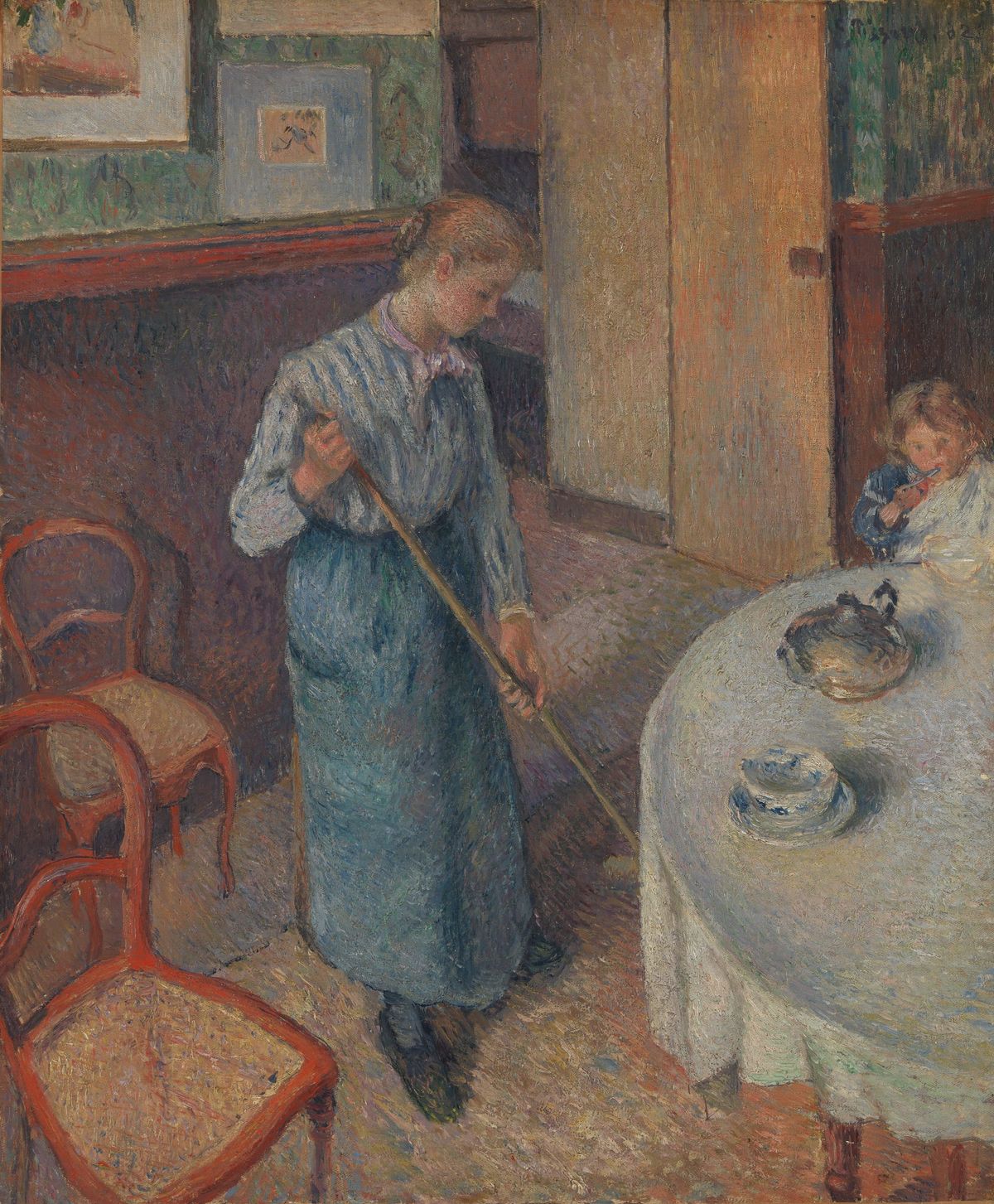
카미유 피사로(Camille Pissarro)가 1882년에 완성한 캔버스 유화 작품입니다. 실제 크기는 약 63.5 x 53 cm이며, 현재 영국 런던의 테이트 국립미술관(Tate, London)에 소장되어 있습니다. 화면 우측 상단에는 화가의 서명과 제작 연도인 'C. Pissarro. 82'가 벽면 위로 단정하게 새겨져 있습니다.
피사로는 특유의 촘촘하고 리드미컬한 직조형 분할 붓터치를 활용해, 창가에서 부드럽게 스며드는 실내 자연광과 일상의 온기를 황홀하게 빚어냈습니다. 긴 빗자루를 쥐고 바닥을 쓰는 어린 하녀의 푸른 앞치마와 줄무늬 블라우스, 둥근 식탁보의 포근한 주름, 그리고 의자의 매끄러운 붉은색 목재 질감은 유화 물감의 풍부한 마티에르와 어우러져 깊은 공간감과 정갈한 서정성을 자아냅니다.
이 작품의 무대는 피사로 가족이 머물던 파리 근교 시골집의 정겨운 식당 풍경입니다. 당시 피사로는 대가족의 생계를 책임져야 하는 가난과 인상주의를 향한 보수 평단의 냉대 속에서도, 일상의 가장 평범한 순간에서 진실한 아름다움을 발견하고자 끊임없이 노력했습니다.
화면 속 주인공은 피사로 집안의 가사를 돕던 어린 시골 하녀이며, 식탁 우측 구석에서 숟가락을 들고 식사를 하는 귀여운 아이는 피사로의 어린 아들입니다. 피사로는 당대 부르주아 화가들이 즐겨 그리던 과장된 화려함이나 위선적인 연출 대신, 묵묵히 제 몫의 일을 해나가는 어린 소녀의 정직한 노동과 어린아이의 무심한 일상을 화면에 담았습니다.
특히 이 시기는 피사로가 에드가 드가의 조형적 시각과 파스텔적 질감에 영감을 받아 실내 인물화의 심리적 깊이를 확장하던 시기였습니다. 화려한 귀족의 저택이 아닌 소박한 식탁과 마룻바닥 위에서 피어나는 인간미를 가장 성스럽고 따뜻한 시선으로 포착했던 거장의 깊은 휴머니즘이 캔버스 전체에 잔잔하게 흐르고 있습니다.
미술사적으로 이 작품은 자연의 빛을 포착하는 인상주의의 시각적 혁신과 실내 풍경의 내밀한 친밀감이 가장 우아하게 결합된 피사로 중기의 대표적인 풍경-인물 복합 걸작으로 평가받습니다. 모네가 찰나의 빛에 의해 형태가 용해되는 순간에 몰두했다면, 피사로는 인물의 소박한 몸짓과 가정이라는 공간의 영속적인 온기를 화면에 단단하게 정초 시켰습니다.
평단과 후대의 비평가들은 평범한 가사 노동의 찰나를 숭고한 평화와 삶의 안식처로 승화시킨 피사로의 독보적인 예술적 성취와 따스한 인간 존중의 시선에 아낌없는 찬사를 보내고 있습니다.
관람자의 무의식적인 시선은 화면 중앙에서 긴 빗자루를 비스듬히 쥔 채 조용히 고개를 숙이고 바닥을 응시하는 어린 하녀의 단정한 옆모습에서 따뜻하게 출발합니다.
이어 시선은 하녀의 팔과 빗자루 손잡이의 부드러운 대각선 축을 따라 바닥면으로 흘러내려, 청량한 푸른 앞치마의 묵직한 곡선과 발밑 마룻바닥의 리드미컬한 붓질로 자연스럽게 이동합니다.
이 안정적인 수직과 대각선의 시각적 흐름은 분주한 도심과 일상의 긴장에 짓눌려 있던 관람객의 뇌파를 순식간에 차분한 알파파 상태로 유도하며, 고요한 집 안의 아늑한 공간에 머무는 듯한 깊은 심리적 안도감과 내면의 평온을 선사합니다.
마지막으로 정갈하게 차려진 둥근 식탁 위의 찻잔과 주전자, 그 곁에서 조용히 밥을 먹는 아이의 정겨운 모습을 지나 붉은 나무 의자들의 우아한 곡선을 돌아 다시 하녀의 차분한 얼굴로 순환하는 시선의 흐름은, 세상의 소음에서 벗어나 따뜻한 가정의 온기를 깊게 들이마시는 듯한 깊은 이완과 온전한 정서적 정화를 안겨줍니다.
The Little Country Maid - The Little Country Maid (La Petite Bonne de campagne)
Painted in 1882 by Camille Pissarro, this oil on canvas measures approximately 63.5 by 53 centimeters and is housed in the permanent collection of the Tate in London. The artist's signature and date, 'C. Pissarro. 82', are inscribed distinctly on the upper right wall.
Employing a dense, woven network of rhythmic and divided brushstrokes, Pissarro masterfully captures the soft indoor daylight filtering across a quiet dining room. The subtle play of light upon the young maid's striped bodice, her deep blue apron, the tactile drape of the circular tablecloth, and the curved cherry-wood chairs creates a rich spatial harmony infused with domestic stillness and textural warmth.
The setting of this intimate painting is the dining room of Pissarro's country residence, recorded during a chapter of intense artistic resolve. Bearing the weight of providing for his large family through relentless financial hardship, Pissarro resolutely turned away from the theatrical vanity of bourgeois portraiture, choosing instead to uncover universal beauty in the unadorned cadence of domestic routines.
The central figure is the family's young maid sweeping the floor, while in the background on the right, one of Pissarro's young sons quietly eats with a spoon at the dining table. Rather than presenting labor as burdensome or decorative, Pissarro elevated the honest, unpretentious posture of the young maid with profound moral dignity.
Influenced by his close dialogue with Edgar Degas during the early 1880s, Pissarro introduced acute structural balance and psychological nuance into domestic scenes. His steadfast devotion to the quiet dignity of working people radiates across every square inch of the canvas.
Art historians celebrate this painting as a pivotal masterwork of Impressionist domestic realism, where natural illumination harmonizes effortlessly with psychological warmth and monumental permanence. While Claude Monet favored the dissolution of physical form in shifting atmosphere, Pissarro anchored the enduring comfort and quiet sanctity of home life onto the canvas.
Modern critics honor the work for its deep emotional sincerity, celebrating Pissarro’s lifelong ability to discover timeless peace, gentle solace, and spiritual renewal within the humblest corners of French rural life.
The viewer's subconscious gaze is first welcomed by the quiet, downcast profile of the young maid standing at the center, holding the diagonal wooden broom.
The eye then glides naturally down the gentle slope of her arms and the rich, resonant drape of her blue apron toward the floorboards, tracing the textured brushwork of the sunlit ground.
This grounding visual journey immediately relieves accumulated nervous tension, replacing modern anxiety with an intuitive feeling of emotional stability, safety, and restorative calm.
As the visual path wanders toward the breakfast table laid with a teapot and bowl, catching the tender vignette of the child eating before sweeping past the graceful curved wooden chairs back to the maid's peaceful countenance, the observer experiences a soothing sensory escape, enveloped in the lasting serenity and quiet grandeur of a tranquil morning at home.
본 리뷰에서 작품을 제외한 컨텐츠의 저작권은 팔렛트제주에 있습니다.
"퍼블릭도메인 고전명화"를 제외한 모든 창작 콘텐츠는 저작권법 제4조 및 제10조에 의거하여 보호됩니다. 무단 도용시 저작권법 제136조(벌칙)에 의거, 당사의 사전 서면 승인 없는 저작권 침해 행위를 금지합니다.