어두운 동굴 속 유령을 부르는 목동의 애절한 피리 소리, 목동의 비가 The Shepherd's Lament
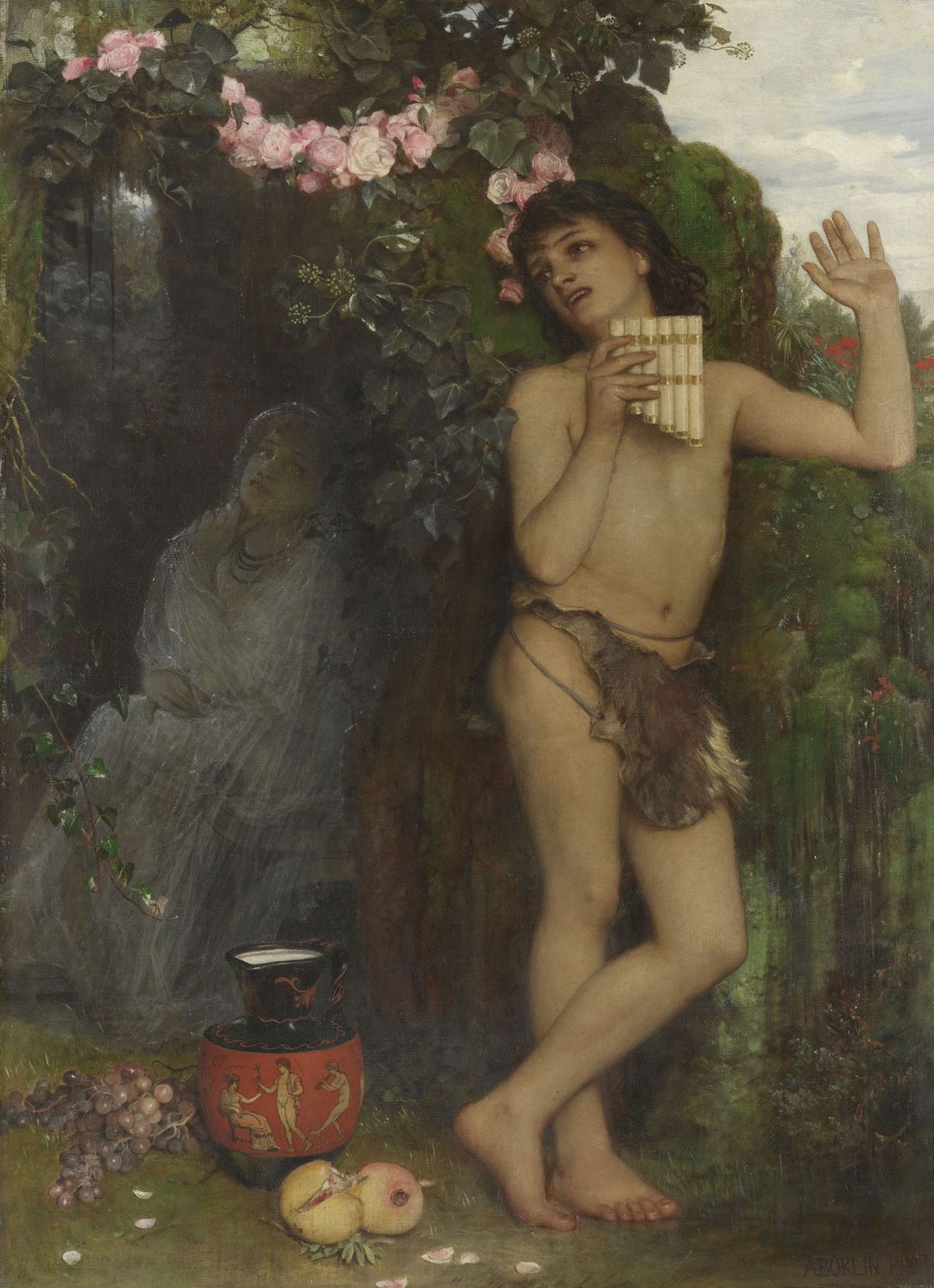
스위스 출신의 상징주의 거장 아놀드 뵈클린(Arnold Böcklin, 1827–1901)이 1866년에 로마에서 완성한 유화 목동의 비가(The Shepherd's Lament, 독일어: Die Klage des Hirten, 또는 Amaryllis)는 137.9 cm × 100.4 cm 크기의 캔버스에 유채로 그린 대표작입니다. 현재 독일 뮌헨의 바이에른 주립 명화관 샤크 미술관(Sammlung Schack, Bayerische Staatsgemäldesammlungen, Munich)에 소장되어 있습니다.
잃어버린 사랑을 노래하는 고대 목가와 화가의 내면적 슬픔
이 서정적이고 신비로운 그림은 고대 로마의 위대한 시인 베르길리우스의 목가에 등장하는 양치기 소년의 슬픈 짝사랑 이야기를 모티브로 삼았습니다. 양치기 소년은 자신이 사랑하는 여인 아마릴리스를 그리워하며 바위 언덕에 기대어 홀로 팬파이프를 불고 있습니다. 장미 넝쿨이 드리워진 어두운 바위 동굴 속에는 소년의 애절한 음악 소리에 이끌려 나타난 투명한 여인의 영혼이 조용히 앉아 피리 소리에 귀를 기울이고 있습니다.
뵈클린은 1860년대 중반 로마에 머물며 고대 그리스와 로마의 신화적 세계관에 깊이 빠져들었습니다. 당시 뵈클린은 어린 자녀들을 잇달아 떠나보내는 지독한 참척의 고통을 겪고 있었으며, 눈에 보이지 않는 죽은 자들의 영혼과 살아남은 자들이 나누는 내밀한 소통에 깊은 관심을 기울였습니다. 화면 앞쪽에 놓인 붉은 그림이 새겨진 그리스식 도자기 화병과 석류, 포도 열매는 지하 세계와 죽음, 그리고 덧없는 사랑을 상징하는 제물입니다. 화가는 손을 들어 허공의 메아리를 느끼는 목동의 몸짓을 통해, 닿을 수 없는 먼 세계로 떠나버린 존재를 향한 인간의 끊임없는 그리움과 예술적 승화를 눈물겹도록 아름답게 담아냈습니다.
피리를 든 목동의 눈빛에서 동굴 속 반투명한 영혼으로, 시선의 심리적 여정
그림을 마주하는 순간 관람객의 무의식적 시선은 햇살을 받아 부드럽게 빛나는 목동의 어린 얼굴과 멍하니 허공을 응시하는 애절한 눈동자로 가장 먼저 빨려 들어갑니다. 팬파이프를 입술에 댄 채 왼손을 들어 보이지 않는 소리의 울림을 느끼는 소년의 섬세한 몸짓은 보는 이의 마음을 단숨에 사로잡습니다.
이어 시선은 바위 뒤편 어둠이 짙게 깔린 동굴 내부로 깊숙이 파고듭니다. 덩굴 잎 사이로 은은한 달빛처럼 모습을 드러내는 반투명한 흰옷을 입은 여인의 실루엣과, 턱을 괴고 피리 소리를 듣고 있는 그녀의 아련한 표정을 확인하는 순간 관람객은 현실과 환상이 겹쳐지는 신비로운 정적을 경험합니다.
마지막으로 시선은 화면 아래쪽으로 내려와 발치에 놓인 붉은 무늬의 고대 그리스 도자기, 벌어진 석류와 포도 송이, 그리고 바위 위를 화려하게 수놓은 분홍빛 장미꽃 덩굴에 멈춥니다. 삶의 싱그러운 생명력과 죽음의 신비로운 그림자가 공존하는 제단의 흔적들을 확인하면서, 관람객은 사랑하는 대상을 향한 영원한 그리움이 만들어낸 음악과 시의 세계를 가슴 깊이 마주하게 됩니다.
낭만적 목가시와 상징주의의 서정적 결합, 미술계의 평가
미술계는 목동의 비가를 고전 문학의 목가적 전통을 19세기 상징주의 특유의 몽환적이고 심리적인 깊이로 재창조한 뛰어난 명작으로 평가합니다.
단순한 자연 풍경이나 신화 일화의 묘사를 넘어서, 음악이라는 보이지 않는 청각적 요소를 투명한 유령의 형상과 빛의 대조를 통해 완벽한 시각 예술로 전환했기 때문입니다. 고대 신화의 서정성과 인간의 근원적인 상실감을 완벽한 조화로 엮어낸 뵈클린의 이 감미로운 화폭은 오늘날까지도 수많은 문학과 예술 애호가들에게 깊은 서정적 울림을 전해주고 있습니다.
The Melodic Echo of Longing and Shadows, The Shepherd's Lament
Painted in 1866 in Rome by the visionary Swiss Symbolist master Arnold Böcklin (1827–1901), The Shepherd's Lament (German: Die Klage des Hirten, also titled Amaryllis) is an oil on canvas measuring 137.9 cm × 100.4 cm (54.3 in × 39.5 in), preserved in the permanent collection of the Sammlung Schack (Bayerische Staatsgemäldesammlungen) in Munich, Germany.
Pastoral Elegy, Roman Antiquity, and the Translucent Muse
This evocative composition draws its poetic resonance from the classical pastoral eclogues of the Roman poet Virgil. Resting against a moss-covered grotto crowned with wild pink roses, an adolescent shepherd clad in animal pelts plays a panpipe to soothe his unrequited longing for his beloved Amaryllis. Within the shadowy cavern behind him, summoned by the ethereal melody, the translucent apparition of the maiden sits enveloped in pale drapery, listening in silent introspection.
During his fertile Roman residency in the mid-1860s, Arnold Böcklin was deeply immersed in ancient Mediterranean myth while enduring private domestic bereavements, having lost multiple children to early illness. The still life arranged at the youth's feet—a classical red-figure terracotta amphora, split pomegranates, and ripe grapes—serves as an ancient votive offering invoking themes of the underworld, transience, and memory. Through the shepherd’s raised left hand catching the reverberating acoustic air, Böcklin visualized the invisible bridge between mortal longing and the spiritual realm.
Subconscious Trajectory of the Gaze: From Sunlit Musician to the Grotto Phantom
The observer's subconscious gaze is immediately arrested by the illuminated, youthful profile of the shepherd, drawn to his parted lips against the reed pipes and his upturned, mournful eyes. The delicate gesture of his raised hand feeling the musical vibrations creates an immediate sense of lyrical intimacy.
The visual path then penetrates the dark recess of the grotto behind the curtain of ivy, discovering the spectral figure of Amaryllis seated amidst the shadows. Witnessing her semi-transparent form and introspective gaze bathed in soft moonlight, the viewer experiences a transition from pastoral tranquility into a mystical reverie.
Finally, the trajectory descends to the damp earth in the foreground, taking in the red-figure ceramic vase, the fallen rose petals, and the cracked pomegranates before rising back toward the blooming floral bower above. Realizing that the floral beauty and votive fruit frame a poignant encounter between the living and the departed, the spectator recognizes the timeless power of art and music to preserve memory against the ravages of time.
Lyrical Symbolism and Classical Antiquity: Critical Legacy
Art historians revere The Shepherd's Lament as a quintessential triumph of atmospheric Symbolism that revitalized ancient bucolic literature.
By translating auditory resonance and psychological grief into a shimmering visual dialogue between light, stone, and spectral form, Böcklin established an evocative aesthetic far removed from academic dry classicism. This enchanting masterpiece endures as a luminous testament to the artist's poetic sensitivity and his mastery over the subtle harmonies of human emotion.
본 컨텐트의 저작권은 팔렛트제주에 있습니다. 허가없는 무단전제를 금지합니다.
Copyright © Palette Jeju. All rights reserved. Unauthorized reproduction or redistribution is strictly prohibited.