어두운 밤바다를 뒤흔든 격정의 세레나데와 화실의 유쾌한 난투, 트리톤과 네레이드 Triton and Nereid
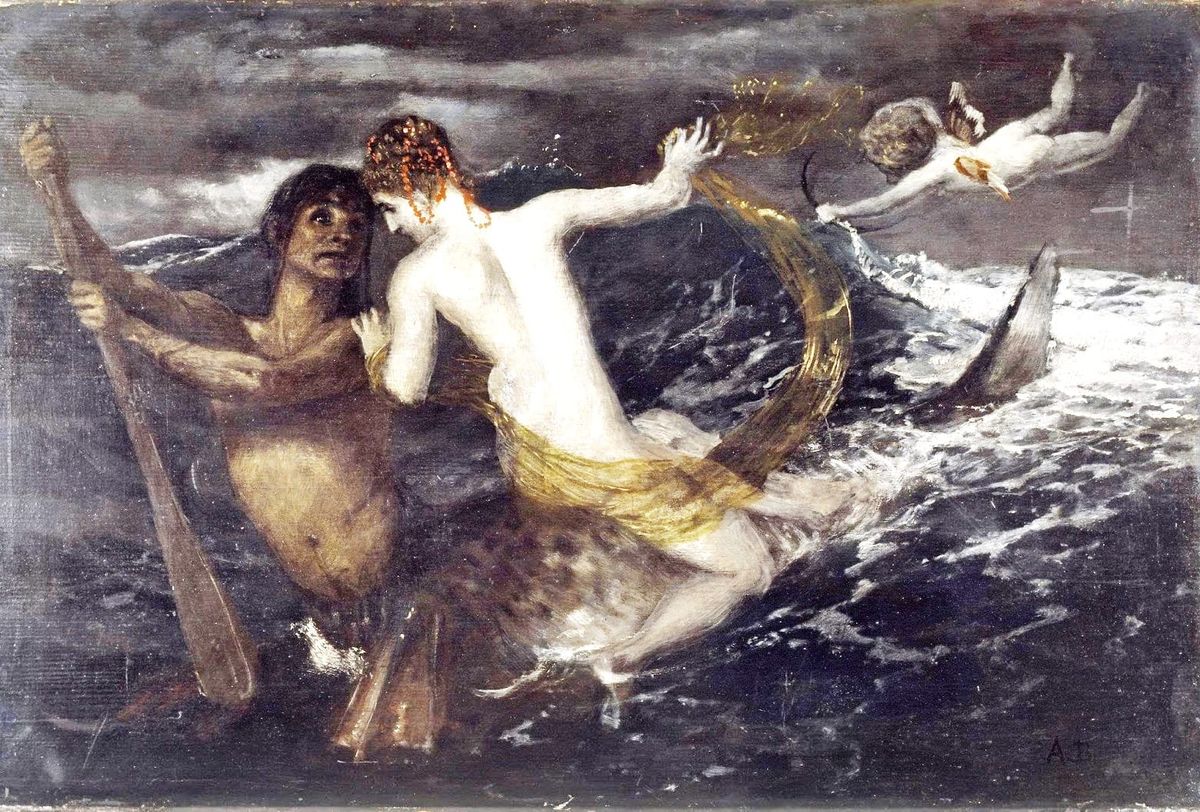
스위스 출신의 상징주의 거장 아놀드 뵈클린(Arnold Böcklin, 1827–1901)이 1877년에 피렌체에서 완성한 유화 트리톤과 네레이드(Triton and Nereid, 독일어: Triton und Nereide)는 66.0 cm × 99.5 cm 크기의 캔버스에 유채로 그린 대표적인 신화적 상징주의 걸작입니다. 현재 스위스 바젤 미술관(Kunstmuseum Basel)에 소장되어 있습니다.
화실에 물을 들이붓던 괴짜 화가와 생선 비늘을 관찰하던 밤
1870년대 중반 피렌체에 머물던 뵈클린의 작업실은 날마다 기괴하고 유쾌한 소동으로 가득했습니다. 화가는 박제된 그리스 조각상이나 얌전한 화실 모델들을 보고 그리는 아카데미의 방식을 극도로 혐오했습니다. 그는 살아 숨 쉬는 바다 괴물의 미끄러운 피부와 튀는 물보라를 진짜처럼 그리기 위해, 매일 아침 피렌체 수산 시장으로 달려가 갓 잡은 거대한 장어와 숭어를 바구니째 사 들고 화실로 돌아왔습니다. 썩어가는 생선 비늘의 번뜩이는 빛을 코를 쥐어 막고 관찰하는가 하면, 모델들에게 나무통에 든 바닷물을 끼얹으며 파도에 흠뻑 젖은 피부의 번들거림을 캔버스에 담아내느라 화실 바닥을 온통 물바다로 만들기 일쑤였습니다.
하루는 친하게 지내던 후원자가 찾아와 신화 속 여신을 왜 이렇게 야성적이고 뻔뻔스러운 표정으로 그리느냐고 묻자, 뵈클린은 껄껄 웃으며 벼락이라도 칠 듯 소리쳤습니다. 점잖은 척 빼는 신들은 책 속에나 있는 가짜들이며, 진짜 바다의 정령들은 비린내 나는 소금물 속에서 날것 그대로의 욕망을 품고 날뛰어야 제맛이라는 것이었습니다. 화면 속에서 노를 쥔 트리톤의 눈동자가 잔뜩 겁을 집어먹은 채 휘둥그레진 이유도 바로 여기에 있습니다. 바다의 괴물 남성이 연약한 여인을 겁주는 진부한 신화의 클리셰를 뒤집어, 거칠고 거대한 트리톤조차 황금빛 스카프를 날리며 거침없이 덮쳐오는 야성적인 네레이드의 대담한 유혹 앞에서는 꼼짝없이 당황해 쩔쩔매는 유쾌한 반전 드라마를 완성해 낸 것입니다.
백옥 같은 네레이드의 등선에서 겁에 질린 트리톤의 눈망울로, 시선의 심리적 여정
그림을 마주하는 순간 관람객의 무의식적 시선은 칠흑 같은 밤바다의 물결 속에서 은은한 달빛을 받아 눈부신 우윳빛으로 떠오르는 네레이드의 매끄러운 나체와 등선으로 가장 먼저 빨려 들어갑니다. 황금빛 머리 장식을 반짝이며 등을 돌려 다가가는 여인의 유혹적인 자태는 보는 이에게 숨 막히는 관능미와 시각적 긴장감을 동시에 선사합니다.
이어 시선은 그녀의 손끝에서 밤바람을 타고 펄럭이는 황금빛 비단 스카프를 지나, 화면 왼쪽에서 나무 노를 두 손으로 꼭 쥔 채 뒤로 엉거주춤 물러서는 구릿빛 트리톤의 얼굴로 이동합니다. 억센 근육질 몸을 가졌으면서도 갑작스러운 여인의 적극적인 스킨십에 눈을 동그랗게 뜨고 굳어버린 트리톤의 표정을 확인하는 순간, 관람객은 거친 신화의 장엄함 이면에 숨겨진 유쾌하고 인간미 넘치는 웃음을 터뜨리게 됩니다.
마지막으로 시선은 화면 오른쪽 위에서 둘의 사랑을 부추기듯 장난스럽게 활을 겨누고 날아가는 아기 천사 에로스의 통통한 날개와, 물살을 가르며 솟구친 괴수의 꼬리 지느러미, 그리고 하얗게 부서지는 파도의 거품에 멈춥니다. 위험하게 요동치는 밤바다 한가운데서 펼쳐지는 두 남녀의 짜릿한 밀고 당기기를 바라보며, 관람객은 문명의 가식을 시원하게 벗어던진 대자연의 원초적인 생명력과 화가가 화폭에 쏟아부은 거침없는 에너지를 가슴 깊이 마주하게 됩니다.
고전 신화의 통쾌한 전복과 에로티시즘의 정점, 미술계의 평가
미술계는 트리톤과 네레이드를 19세기 유럽 화단을 짓누르던 고전 신화의 엄숙주의를 유쾌한 해학과 원초적인 에로티시즘으로 통쾌하게 뒤엎은 기념비적인 걸작으로 평가합니다.
단순한 상상화의 차원을 넘어, 생선 비늘과 젖은 피부를 집요하게 관찰하여 완성한 생생한 질감 묘사와 남녀 인물의 전복된 심리적 긴장감을 독보적인 조형 언어로 풀어냈기 때문입니다. 고루한 아카데미의 훈계를 비웃듯 대자연의 날것 그대로의 본능과 위트 있는 드라마를 완벽하게 조화시킨 뵈클린의 이 대담한 화폭은, 훗날 표현주의와 초현실주의 거장들에게도 신선한 충격과 끝없는 영감을 안겨준 불멸의 명작으로 손꼽힙니다.
The Primeval Seduction on the Churning Sea, Triton and Nereid
Painted in 1877 in Florence by the preeminent Swiss Symbolist master Arnold Böcklin (1827–1901), Triton and Nereid (German: Triton und Nereide) is an oil on canvas measuring 66.0 cm × 99.5 cm (26.0 in × 39.2 in), preserved in the permanent collection of the Kunstmuseum Basel in Switzerland.
The Sloshing Studio of Florence and the Fish Market Studies
During the mid-1870s in Florence, Arnold Böcklin’s workshop was notorious for bizarre and lively studio antics. Disgusted by the prevailing academic habit of copying sterile plaster casts and posing polite studio models, Böcklin sought visceral realism for his mythological creatures. To capture the iridescent shimmer of sea scales and the slick texture of wet flesh, the artist made early-morning excursions to the Florentine fish market, hauling back baskets of freshly caught eels and sea bream. He would endure the pungent stench of decaying marine life to study the optical reflection of scales, often splashing buckets of saltwater over shivering models until his studio floor was completely submerged.
When an aristocratic patron once questioned why the sea nymph was rendered with such brazen, feral forwardness rather than modest classical poise, Böcklin laughed boisterously and retorted that respectable, decorous gods belonged in dusty books, whereas true spirits of the deep possessed untamed appetites smelling of brine and wild instinct. This rebellious mindset explains the wide-eyed, comical terror of the bronze-skinned Triton. Subverting the tired classical trope of a ferocious sea beast preying upon a helpless maiden, Böcklin staged a delightful role reversal: the massive, muscular sea god clings desperately to his wooden oar, thoroughly bewildered and flustered as the daring Nereid sweeps over the foaming waves to claim him.
Subconscious Trajectory of the Gaze: From Luminous Spine to the Startled Sea God
The observer's subconscious gaze is instantly magnetized by the central register, drawn to the radiant modeling of the Nereid’s bare back gleaming like polished marble against the nocturnal oceanic swell. Her sinuous spine and the shimmering amber hairpins woven through her auburn braids establish an immediate atmosphere of classical sensuality and dynamic tension.
The visual trajectory then follows the arch of the golden scarf billowing in the sea wind before traveling leftward to the sun-darkened torso of Triton. Taking in his rigid grip upon the wooden oar and his comical expression of wide-eyed astonishment, the viewer experiences a delightful transition from mythic majesty to intimate psychological humor.
Finally, the visual path sweeps toward the upper right to discover the mischievous silhouette of Cupid soaring through the storm clouds with his miniature bow, before descending past the dark fin of the sea beast into the frothing crests of the breaking waves. Observing the interplay between the perilous tumult of the nocturnal sea and the playful romantic pursuit unfolding upon the water, the spectator perceives Böcklin’s extraordinary ability to unite elemental power with unvarnished human charm.
The Subversion of Classical Myth: Critical Legacy
Art historians revere Triton and Nereid as a triumphant masterpiece that dismantled the dry didacticism of 19th-century academic classicism through raw vitality and sparkling wit.
By uniting tactile physiological realism derived from direct oceanic studies with a subversive narrative of female agency, Böcklin expanded the visual boundaries of modern Symbolism. This electrifying canvas endures as an inspiring testament to the master's boundless imaginative freedom, celebrating the sacred vitality of the natural cosmos and the eternal humor of mortal attraction.
본 컨텐트의 저작권은 팔렛트제주에 있습니다. 허가없는 무단전제를 금지합니다.
Copyright © Palette Jeju. All rights reserved. Unauthorized reproduction or redistribution is strictly prohibited.