어두운 밤 촛불처럼 타오르는 붉은 머리칼과 죽음의 응시, 참회하는 막달라 마리아 The Penitent Magdalene
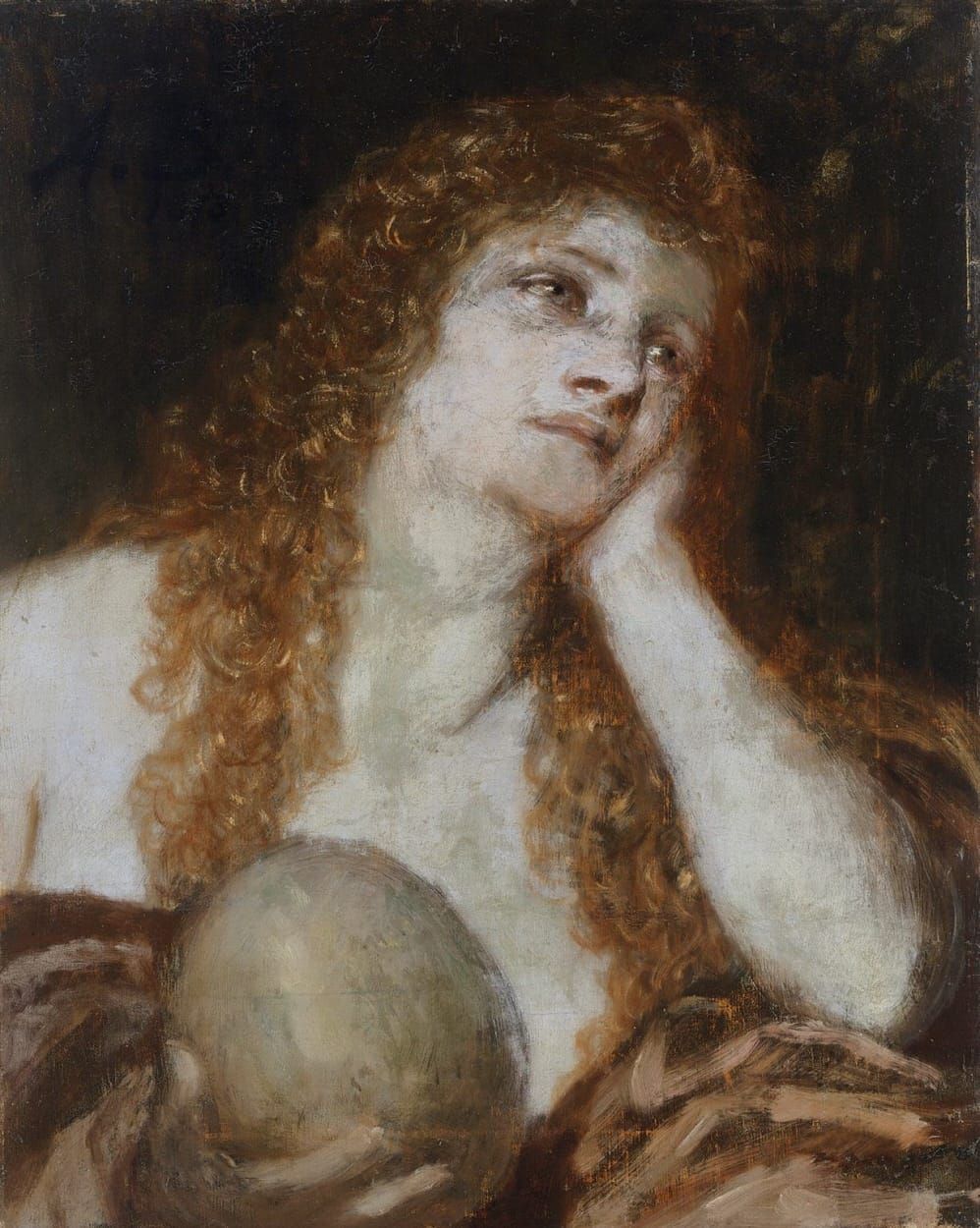
스위스 출신의 상징주의 거장 아놀드 뵈클린(Arnold Böcklin, 1827–1901)이 1873년에 독일 뮌헨에서 완성한 유화 참회하는 막달라 마리아(The Penitent Magdalene, 독일어: Die büßende Maria Magdalena)는 58.0 cm × 47.0 cm 크기의 캔버스에 유채로 그린 대표적인 종교적 상징주의 명작입니다. 현재 스위스 바젤 미술관(Kunstmuseum Basel)에 소장되어 있습니다.
뮌헨 시절의 가난과 가족의 상실 속에서 길어 올린 인간적 참회
1870년대 초반 뵈클린은 독일 뮌헨에서 극심한 생활고와 보수적인 비평가들의 냉담한 평가 속에서 힘겨운 나날을 보내고 있었습니다. 더욱이 화가는 평생 동안 14명의 자녀 중 무려 8명을 어린 나이에 병과 사고로 먼저 떠나보내는 가슴 찢어지는 비극을 겪어야 했습니다. 화실 구석에서 차갑게 식어가는 어린 생명들을 지켜보며 죽음의 무자비함과 삶의 허무함을 뼈저리게 통감했던 뵈클린에게, 성경 속 죄를 뉘우치고 평생 광야에서 참회하며 살았다는 막달라 마리아의 이야기는 단순한 종교적 설화가 아니라 화가 자신의 찢긴 가슴을 달래는 성스러운 거울이었습니다.
뵈클린은 화려한 보석이나 값비싼 향유병 대신, 오직 인간의 덧없는 운명을 상징하는 둥근 해골만을 마리아의 손에 쥐여주었습니다. 어두운 동굴 속에서 턱을 괴고 허공을 멍하니 응시하는 마리아의 얼굴에는 오랜 슬픔과 눈물로 굳어버린 인간 실존의 깊은 고뇌가 서려 있습니다. 어깨 위로 풍성하게 흘러내리는 붉은 곱슬머리는 타오르는 생명력의 불꽃처럼 빛나지만, 그녀의 손끝에 닿아 있는 싸늘한 해골은 결국 모든 살아있는 것이 돌아가야 할 영원한 침묵을 웅변합니다. 화가는 삶의 찬란한 온기와 피할 수 없는 죽음의 그림자를 한 화면에 완벽하게 대비시킴으로써, 상처 입은 인간의 영혼이 마주할 수밖에 없는 가장 순수하고 처절한 영적 위로를 화폭에 담아냈습니다.
넋을 잃은 눈동자에서 창백한 해골로, 시선의 심리적 여정
그림을 마주하는 순간 관람객의 무의식적 시선은 칠흑 같은 어둠 속에서 창백하게 빛나는 마리아의 턱을 괸 뺨과 허공을 멍하니 응시하는 깊고 서글픈 눈동자로 가장 먼저 빨려 들어갑니다. 눈가에 짙게 드리운 그늘과 체념한 듯 살짝 벌어진 입술은 보는 이에게 형언할 수 없는 슬픔과 깊은 긴장감을 안겨줍니다.
이어 시선은 그녀의 이마와 목덜미를 타고 부드럽게 흘러내리는 풍성한 붉은빛 갈색 곱슬머리의 화려한 물결로 이동합니다. 어둠 속에서 등불처럼 타오르는 머리칼의 온기와 대비되는 창백한 목선의 질감을 확인하는 순간, 관람객은 삶의 원초적인 관능미와 비극적인 참회의 정서가 뒤섞이는 묘한 시각적 전율을 경험합니다.
마지막으로 시선은 마리아의 품 안에서 은은한 빛을 반사하고 있는 둥근 해골의 이마와, 이를 부드럽게 감싸 쥔 가녀린 손끝에 멈춥니다. 생명이 약동하는 여인의 살결과 차갑게 식어버린 죽음의 상징이 맞닿아 있는 모습을 바라보며, 관람객은 유한한 인간 존재가 지닌 덧없음과 그 슬픔을 딛고 영원한 구원을 갈망하는 인간 내면의 숭고한 침묵을 가슴 깊이 마주하게 됩니다.
바로크 바니타스의 현대적 부활, 미술계의 평가
미술계는 참회하는 막달라 마리아를 17세기 바로크 시대의 바니타스(인생무상)와 메멘토 모리(죽음을 기억하라)의 전통을 19세기 상징주의 회화의 정점으로 끌어올린 걸작으로 평가합니다.
단순한 성녀의 묘사를 넘어서, 빛과 어둠의 파격적인 명암 대비와 인물의 섬세한 심리 묘사를 통해 인간 실존의 고독과 영적 고뇌를 가장 솔직하게 시각화했기 때문입니다. 죽음의 섬과 같은 신비롭고 어두운 명작들을 탄생시킨 거장의 내면에 늘 자리하고 있던 깊은 슬픔과 구원에 대한 갈망을 보여주는 이 감동적인 화폭은 오늘날까지도 수많은 감상자들에게 깊은 울림을 전하고 있습니다.
The Sacred Vigil of Flesh and Bone, The Penitent Magdalene
Painted in 1873 in Munich by the preeminent Swiss Symbolist master Arnold Böcklin (1827–1901), The Penitent Magdalene (German: Die büßende Maria Magdalena) is an oil on canvas measuring 58.0 cm × 47.0 cm (22.8 in × 18.5 in), preserved in the permanent collection of the Kunstmuseum Basel in Switzerland.
Munich Adversity, Domestic Bereavement, and the Archetype of Penance
During the early 1870s in Munich, Arnold Böcklin endured severe financial destitution alongside the persistent hostility of conservative art critics. Compounding these professional trials, the painter suffered the profound personal tragedy of losing eight of his fourteen children to childhood illnesses. Haunted by the constant presence of mortality and the fragility of human existence, Böcklin turned toward the biblical narrative of Mary Magdalene in the wilderness, transforming the traditional Christian figure into a vessel for his own private grief and existential introspection.
Böcklin eliminated the customary attributes of vanity and worldly luxury, reducing the symbolic narrative to a singular memento mori: a smooth, weathered skull held within the penitent's lap. Resting her cheek against her left hand, Mary Magdalene stares into the dark pictorial void with heavy, tear-worn eyes. Her cascading auburn curls fall like liquid fire across her bare, luminous shoulders, creating a stark visual contrast between the radiant vitality of living flesh and the immutable silence of the bone. Through this intimate composition, the artist articulated the universal human struggle to find transcendent spiritual peace amidst the harrowing shadows of mortal loss.
Subconscious Trajectory of the Gaze: From Weary Visage to the Polished Cranium
The observer's subconscious gaze is immediately captivated by Mary Magdalene’s pale, moonlit face and her distant, heavy-lidded eyes gazing upward into the darkness. The delicate posture of her hand supporting the weary jaw and the melancholic resignation etched around her lips establish an atmosphere of profound psychological intimacy.
The trajectory of sight then tracks the dynamic cascade of richly textured reddish-brown ringlets spilling across her neck and chest. Taking in the warm chromatic luminosity of her hair juxtaposed against the cool, marble pallor of her skin, the viewer experiences a visceral encounter with the beauty of living physical form set against subterranean gloom.
Finally, the visual path descends into the lower left quadrant, coming to rest upon the polished contours of the human skull cradled within her gentle embrace. Observing the intimate contact between the living hand and the relic of decay, the spectator perceives Böcklin’s profound philosophical thesis: the fragile beauty of mortal existence achieves its ultimate dignity only when confronting the eternal reality of mortality.
The Pinnacle of Introspective Symbolism: Critical Legacy
Art historians celebrate The Penitent Magdalene as a masterful revitalization of the Baroque vanitas tradition, reinterpreted through a modern psychological lens.
By harmonizing radical chiaroscuro with intense emotional interiority, Böcklin avoided moralizing didacticism, presenting instead an authentic portrait of spiritual endurance and mourning. This poignant masterwork stands as an essential key to understanding the artist's introspective soul, demonstrating his extraordinary capacity to translate human sorrow into timeless visual poetry.
본 컨텐트의 저작권은 팔렛트제주에 있습니다. 허가없는 무단전제를 금지합니다.
Copyright © Palette Jeju. All rights reserved. Unauthorized reproduction or redistribution is strictly prohibited.