어둠 속에서 빛나는 거울과 젊음의 고요한 관조, 거울 앞의 여인 Woman at a Mirror
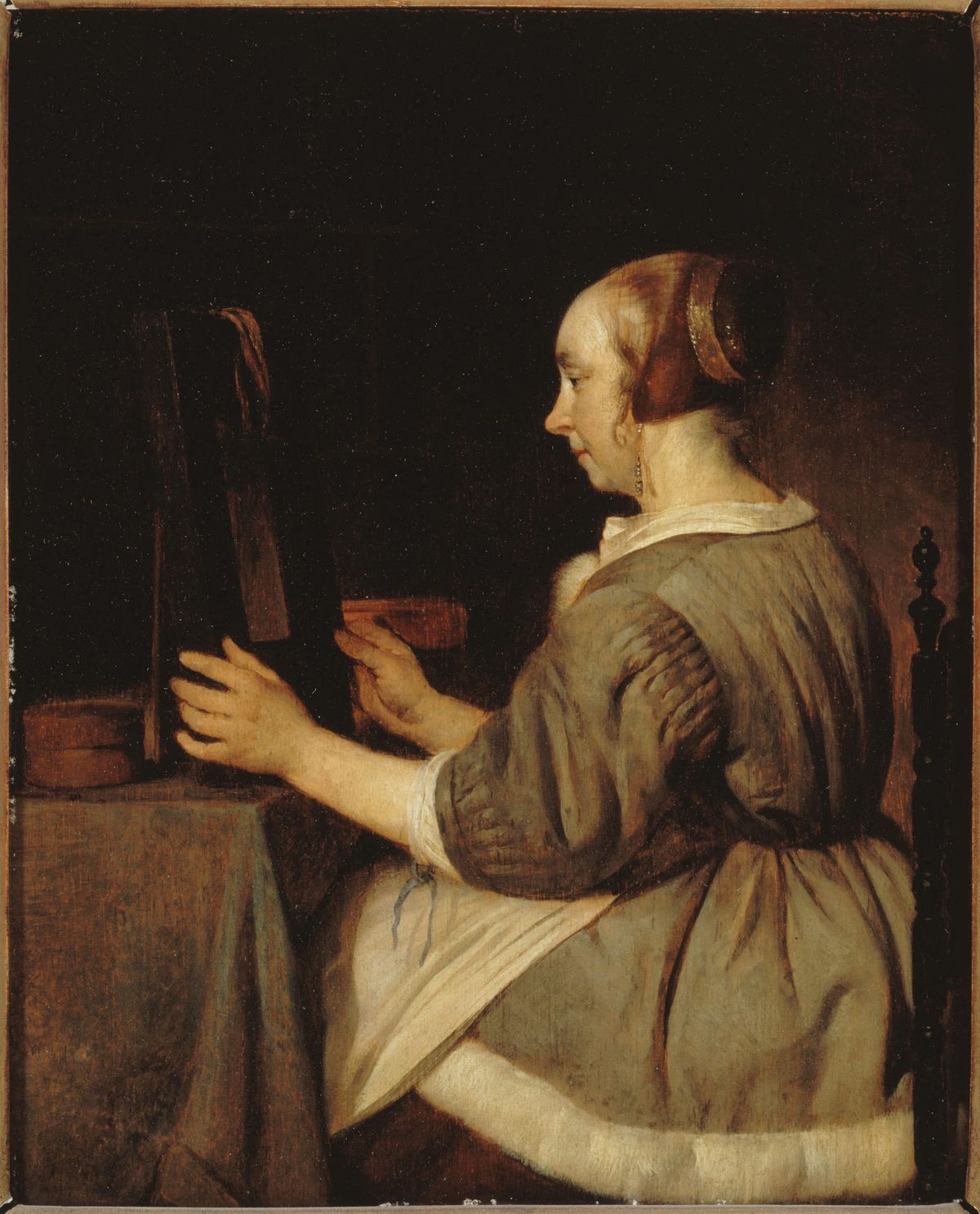
17세기 네덜란드 황금시대의 풍속화 거장 가브리엘 메추(Gabriel Metsu, 1629–1667)가 1662년경에 완성한 유화 거울 앞의 여인(Woman at a Mirror, 이탈리아어: Ragazza allo specchio)은 35.0 cm × 28.0 cm 크기의 목판 패널에 유채로 그린 대표적인 실내 풍속 초상화 걸작입니다. 현재 독일 베를린의 회화관(Gemäldegalerie, Berlin)에 소장되어 있습니다.
아내의 거울을 훔쳐보던 화가의 비밀스러운 스케치와 화실의 웃음소리
1660년대 초반 암스테르담에 머물던 메추는 당시 귀족들의 거만하고 뻣뻣한 주문 초상화를 그리느라 심신이 완전히 지쳐 있었습니다. 돈 많은 주문자들은 주름 하나 없이 팽팽하고 화려한 비단옷을 입은 가짜 얼굴만을 원했습니다. 거짓된 껍데기 그림에 깊은 환멸을 느낀 메추는 붓을 던져버리고 아내 이사벨라와 함께 사는 조용한 화실 구석으로 도망치듯 숨어들었습니다.
어느 늦은 오후, 화실 한구석에서 무거운 나무 거울을 양손으로 단단히 붙잡고 머리 모양을 매만지는 아내의 진지한 옆모습을 본 순간 화가는 벼락을 맞은 듯 멈춰 섰습니다. 화려하게 꾸며내지 않은 자연스러운 아내의 표정과 어둠 속에서 은은하게 빛나는 이마는 세상 그 어떤 귀부인보다 눈부시게 아름다웠습니다. 메추는 아내가 눈치채지 못하게 발소리를 죽이고 살금살금 다가가 종이 위에 잉크 펜을 맹렬한 속도로 놀리기 시작했습니다.
한참 동안 집중하던 화가가 신이 나서 숨을 헐떡이자, 인기척을 느낀 아내가 거울을 든 채 돌아보며 도대체 뒤에서 뭘 훔쳐보느냐고 핀잔을 주었습니다. 메추는 아내의 손에 거울을 꼭 쥐여주며 제발 십 분만 그대로 있어 달라고 애원했고, 두 사람은 어두운 화실 안에서 마주 보며 한바탕 웃음을 터뜨렸습니다. 당시 잦은 병치레로 자신의 몸이 쇠약해짐을 느끼던 화가에게, 거울을 들여다보는 아내의 따뜻한 온기와 일상의 소박한 순간은 죽음의 그림자를 잊게 만드는 가장 성스럽고 값진 위로였습니다.
부드러운 이마의 온기에서 거울을 쥔 다정한 두 손으로, 시선의 심리적 여정
그림을 마주하는 순간 관람객의 무의식적 시선은 칠흑 같은 어둠을 배경으로 부드러운 햇살을 받아 우윳빛으로 빛나는 여인의 매끄러운 이마와 오뚝한 콧날, 그리고 귓가에서 은은하게 반짝이는 눈물 모양의 진주 귀걸이로 가장 먼저 빨려 들어갑니다. 자신의 모습을 묵묵히 들여다보는 여인의 차분한 옆모습과 고요한 눈빛은 보는 이에게 깊은 평온함과 나지막한 설렘을 선사합니다.
이어 시선은 여인의 시선 끝에 놓인 묵직한 탁상 거울의 어두운 표면과, 거울 틀의 양쪽 모서리를 살포시 감싸 쥔 그녀의 부드러운 두 손으로 이동합니다. 차갑고 단단한 거울의 나무 질감과 그 위를 지탱하는 손가락들의 따스한 온기를 확인하는 순간, 관람객은 거울 속 자신을 바라보는 여인의 내밀한 심리 속으로 조용히 빠져들게 됩니다.
마지막으로 시선은 여인이 입고 있는 푸른빛 감도는 회색 겉옷의 풍성한 주름과 밑단을 포근하게 감싼 흰 털 장식, 그리고 테이블 위의 붉은 상자를 지나 화면 전체를 아늑하게 감싸는 배경의 깊은 어둠에 멈춥니다. 번잡한 세상을 잊게 해주는 고요한 실내의 정적과 그 안에서 평범한 일상을 성실하게 살아가는 인간의 순수한 기품을 마주하며, 관람객은 유한한 시간 속에서 빛나는 일상의 소중한 아름다움과 메추가 바친 정직한 예술적 사랑을 가슴 깊이 마주하게 됩니다.
네덜란드 실내 풍속화의 정점과 바니타스적 관조, 미술계의 평가
미술계는 거울 앞의 여인을 가브리엘 메추가 17세기 네덜란드 회화의 정수인 정교한 빛의 조율과 섬세한 질감 묘사를 가장 완벽하게 조화시킨 최고의 대표작으로 평가합니다.
단순한 일상 풍경의 모사를 뛰어넘어, 거울이라는 바니타스 상징을 통해 덧없는 젊음과 시간의 흐름을 조용히 관조하는 깊이 있는 철학적 서사를 담아냈기 때문입니다. 과장된 몸짓이나 연출 없이 오직 부드러운 명암 대조와 인물의 진솔한 내면을 포착해 낸 메추의 이 서정적인 화폭은, 오늘날까지도 보는 이의 마음을 따뜻하게 물들이는 불멸의 명작으로 손꼽히고 있습니다.
The Intimate Solace of the Looking Glass, Woman at a Mirror
Painted around 1662 in Amsterdam by the preeminent Dutch Golden Age master Gabriel Metsu (1629–1667), Woman at a Mirror (Italian: Ragazza allo specchio) is an oil on wood panel measuring 35.0 cm × 28.0 cm (13.8 in × 11.0 in), preserved in the permanent collection of the Gemäldegalerie (Staatliche Museen zu Berlin) in Berlin, Germany.
The Secret Sketch of Isabella and the Laughter in the Amsterdam Studio
During the early 1660s in Amsterdam, Gabriel Metsu grew utterly weary of fulfilling stiff, highly flattering portrait commissions for pretentious patrician patrons. Wealthy clients routinely demanded smooth, unblemished complexions and ostentatious silks devoid of authentic feeling. Desperately longing to capture genuine human emotion, Metsu frequently retreated from the public market into the quiet tranquility of his private atelier, shared with his beloved wife, Isabella de Wolff.
One late afternoon, observing Isabella sitting absorbed in thought before a heavy wooden dressing mirror to adjust her coiffure, the master froze in admiration. The unpretentious concentration on her face and the luminous radiance of her brow glowing against the shadows struck him with profound poetic force. Tiptoeing across the floorboards so as not to disrupt her reverie, Metsu seized a pen and began furiously capturing her contours onto paper.
When the artist's excited breathing gave him away, Isabella turned around with an amused reprimand, asking why he was secretly spying on her daily toilette. Metsu laughed heartily, begging her to hold the pose for just a few moments longer while he completed the study. Constantly battling delicate health and acutely conscious of mortal transience, the painter found in this quiet domestic vignette a sacred sanctuary against time, immortalizing the tender truth of the woman he loved.
Subconscious Trajectory of the Gaze: From Luminous Brow to the Cradled Frame
The observer's subconscious gaze is immediately captivated by the upper-right register, drawn to the luminous, ivory contours of the maiden's forehead and delicate nose bathed in soft directional light against the dark background. Her downward glance, refined profile, and the subtle gleam of the teardrop pearl earring establish an instant atmosphere of meditative tranquility and intimate grace.
The visual path then shifts forward to the dark plane of the dressing mirror, following the gentle placement of her hands cradling the wooden frame. Observing the contrast between the rigid, dark timber and the warm, living flesh of her fingertips, the viewer directly experiences the physical quiet of the room and the tender psychology of self-reflection.
Finally, the visual trajectory sweeps past the voluminous, silver-blue folds of her fur-trimmed morning jacket and the rustic wooden vanity table, dissolving into the warm, enveloping chiaroscuro of the domestic interior. Confronting the delicate balance between the ephemeral radiance of youth and the quiet expanse of the surrounding shadows, the spectator perceives the timeless nobility of everyday life and the profound affection Metsu embedded within the panel.
The Monument of Dutch Genre Realism: Critical Legacy
Art historians revere Woman at a Mirror as a consummate masterpiece of Metsu’s mature period, demonstrating his extraordinary command of domestic intimacy, subtle psychological observation, and refined textural modeling.
By synthesizing the moral contemplation of the classical vanitas mirror motif with exquisite tonal harmonies of slate, white fur, and luminous flesh, Metsu elevated a modest genre scene into a timeless visual poem. This intimate panel endures as an inspiring testament to the master's enduring humanism, celebrating the quiet sanctity of ordinary existence and the restorative grace of living art.
본 컨텐트의 저작권은 팔렛트제주에 있습니다. 허가없는 무단전제를 금지합니다.
Copyright © Palette Jeju. All rights reserved. Unauthorized reproduction or redistribution is strictly prohibited.