두 소년의 누드 연구(Studies of the Nude Two Male Nudes Two Male Nudes Standing and Seated)
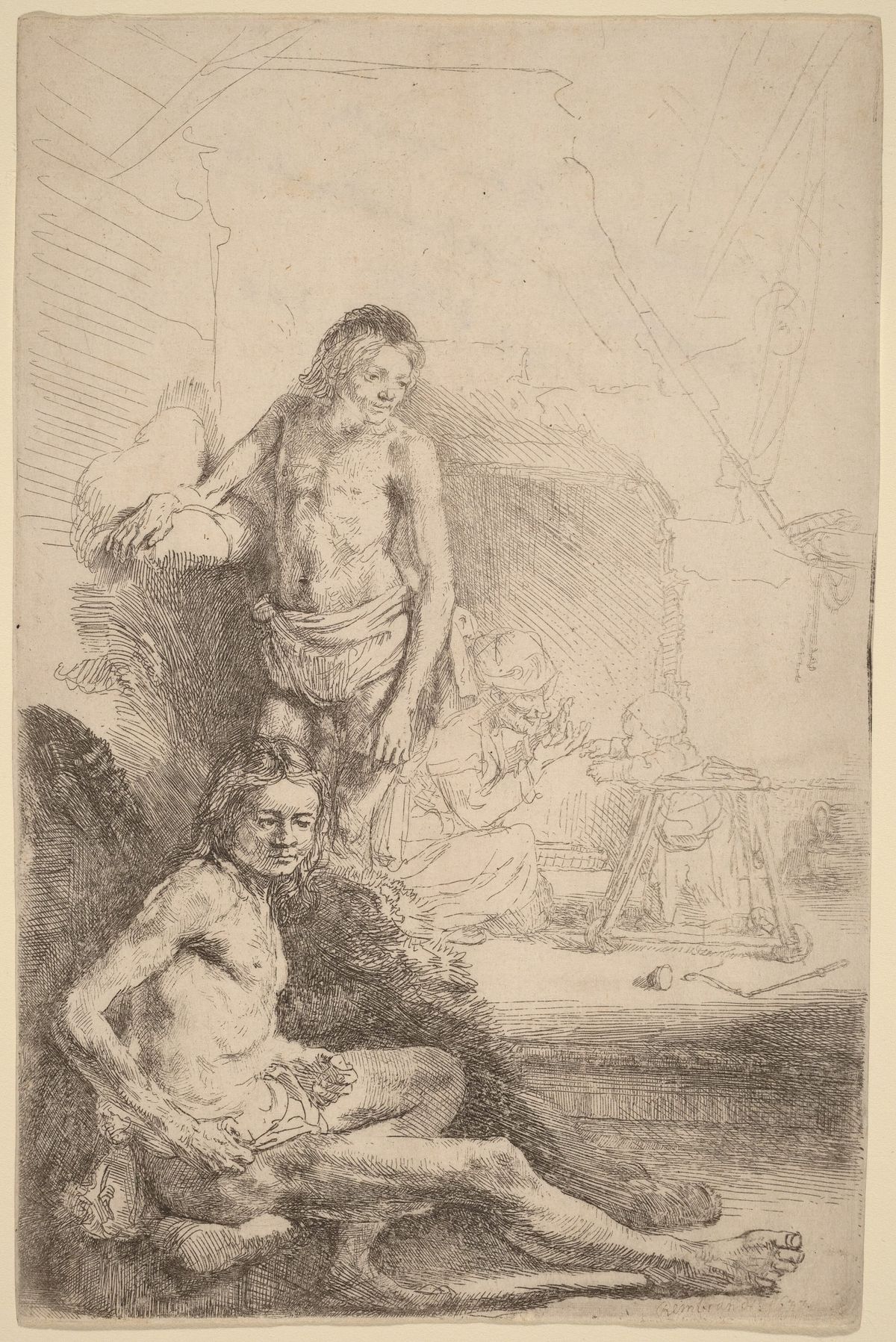
두 소년의 누드 연구 - Studies from the Nude: Two Male Nudes
1646년경 17세기 네덜란드 미술의 거장 렘브란트 반 레인(Rembrandt van Rijn)이 제작한 판화 작품 《두 소년의 누드 연구(Studies from the Nude: Two Male Nudes)》는 에칭 기법으로 제작된 작품으로, 현재 암스테르담 국립미술관(Rijksmuseum)과 런던 대영박물관(British Museum) 등에 원본 판화가 소장되어 있으며 실제 크기는 약 19.4 × 12.8 cm입니다.
이 화면은 인체의 신체 구조와 해부학적 미세함을 관찰하기 위해 제작된 정교한 연구작(Study)입니다. 렘브란트는 당시 이상화된 고전적 인체 비율을 그대로 따르기보다는, 눈앞에 있는 모델의 실제 체형과 명암에 따른 해부학적 변화를 솔직하고 생생하게 에칭 선으로 담아냈습니다.
이 작품에는 흥미로운 비하인드 스토리가 전해집니다. 렘브란트는 화실에서 제자들과 함께 인체 모델을 두고 스케치 수업을 진행하곤 했는데, 이 판화는 그러한 작업실의 생생한 분위기를 반영하고 있습니다. 화면 중앙 배경을 자세히 살펴보면 앉아 있는 누드 모델 뒤편으로 걸음마 보조기를 타고 있는 어린 아이와 그 옆에서 아이를 보살피는 인물의 모습이 아주 옅은 선으로 그려져 있습니다. 작업실이라는 공간 내부의 일상적 삶과 예술적 연습이 한 화폭 안에서 자연스럽게 교차하는 렘브란트 특유의 서정적 연출을 보여주는 대목입니다.
후대 평단과 관객들은 이 작품을 렘브란트가 고전주의적 관습에 매몰되지 않고 인체라는 대상을 얼마나 사실적이고 따뜻한 시선으로 탐구했는지 보여주는 명작으로 평가합니다. 특히 굵고 옅은 선의 농담 조절만으로 입체감과 빛의 흐름을 구현해 낸 에칭 기술의 정수를 잘 보여줍니다.
이 그림을 마주하는 관람객의 무의식적 시선은 화면 하단에 짙은 해칭 음영을 배경으로 앉아 있는 첫 번째 소년의 얼굴과 상체로 가장 먼저 향합니다. 강하게 대비되는 밝은 빛과 정면을 향한 차분한 표정은 시각적 안정감을 주며, 감상자로 하여금 관찰의 몰입으로 자연스럽게 들어서게 만듭니다.
이어 시선은 하단의 소년이 뻗고 있는 다리의 선을 따라 위로 올라가, 화면 중상단에 서 있는 두 번째 소년의 몸체로 이동합니다. 서 있는 소년의 부드러운 포즈와 어깨너머로 떨어지는 빛의 윤곽은 앞선 인물의 묵직한 음영과 대조를 이루며 시각적 리듬감을 선사합니다.
마지막으로 시선은 배경에 아주 옅은 드로잉 선으로 남아있는 어린 아이의 형상과 여백으로 이동하여 정착합니다. 이러한 시선의 흐름은 단순한 인체 연구를 넘어, 화면 전체에 흐르는 온화하고 인간적인 작업실의 온기를 무의식적으로 느끼게 하며 깊은 정서적 여운을 전해줍니다.
In 1646, Rembrandt van Rijn, one of the paramount masters of the Dutch Golden Age, created the etching titled "Studies from the Nude: Two Male Nudes." Preserved in esteemed institutions such as the Rijksmuseum in Amsterdam and the British Museum in London, this original print measures approximately 19.4 × 12.8 cm. This artwork finely captures the subtle anatomical contours of the human form through a masterful application of delicate etched lines.
Unlike the stylized classicism prevalent in his era, Rembrandt sought an unvarnished realism, capturing the authentic physiques of his studio models. Historical context reveals that this print likely originated during life-drawing sessions conducted with his workshop apprentices. Remarkably, in the softly etched background behind the seated nude, one can discern a faint figure of a toddler in a walking frame alongside an attendant. This subtle inclusion seamlessly weaves the warmth of daily life into an academic artistic practice.
Art historians and critics continuously extol this study for its profound honesty and technical brilliance. Rembrandt's adept manipulation of line density allows light and shadow to articulate the physical reality of the body, offering a striking example of his humanist approach to draftsmanship.
The moment an observer encounters this artwork, their gaze is subconsciously drawn straight to the illuminated face and torso of the seated youth in the foreground, anchored by dense cross-hatching behind him. This strong tonal contrast provides an immediate point of focus, inviting the spectator into a state of quiet observation.
Next, the eye glides along the resting leg of the seated figure and ascends toward the standing youth positioned above. The softer contours and gentle posture of the standing figure balance the heavy shadows below, creating a harmonious visual rhythm across the composition.
Finally, the viewer's eyes drift into the delicate background, discovering the faint lines of the child and the open space of the studio. This natural visual path transforms a technical anatomical study into an intimate reflection on life, leaving a lasting impression of warmth and contemplative depth.
본 리뷰에서 작품을 제외한 컨텐츠의 저작권은 팔렛트제주에 있습니다.
"퍼블릭도메인 고전명화"를 제외한 모든 창작 콘텐츠는 저작권법 제4조 및 제10조에 의거하여 보호됩니다. 무단 도용시 저작권법 제136조(벌칙)에 의거, 당사의 사전 서면 승인 없는 저작권 침해 행위를 금지합니다.