도시의 텃밭에 핀 해바라기 - Allotment with Sunflower (Montmartre: Allotments with a Sunflower)
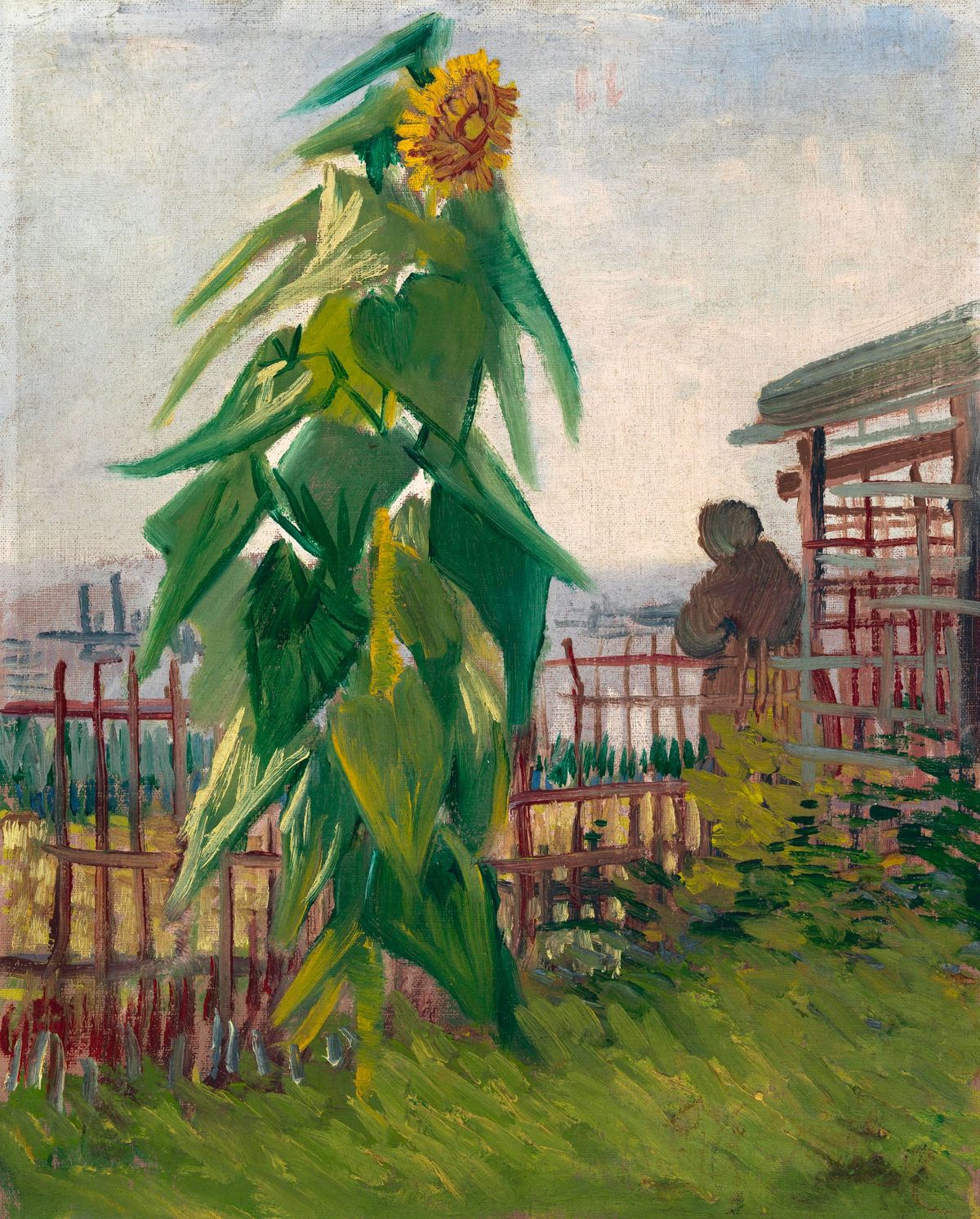
빈센트 반 고흐(Vincent van Gogh, 1853–1890)가 1887년 여름 프랑스 파리 체류 시절 완성한 '도시의 텃밭에 핀 해바라기(Allotment with Sunflower)'는 캔버스에 유채(Oil on canvas)로 제작된 풍경화입니다. 작품의 실제 규격은 세로 42.8cm, 가로 35.4cm이며, 현재 네덜란드 암스테르담의 반 고흐 미술관(Van Gogh Museum)에 영구 소장되어 있습니다.
고흐는 이 작품에서 화면 좌측을 시원하게 가로지르며 하늘 높이 솟구친 한 그루 해바라기의 역동적인 수직 구도를 대담하게 포착했습니다. 캔버스를 긁어내듯 빠르고 거칠게 얹어 올린 임파스토(Impasto) 기법은 무성하게 뻗은 청록빛 잎사귀들의 생명력을 조각하듯 살려내며, 상단에서 타오르는 황금빛 꽃송이는 은은한 파스텔조의 회청색 하늘과 강렬한 색채 대비를 이룹니다. 나무 울타리와 오두막 옆에 기대선 인물의 실루엣, 그리고 발아래로 펼쳐진 풀밭의 사선 붓 터치는 정형화되지 않은 자연스러운 공간감을 완성합니다.
이 그림에는 반 고흐가 파리 몽마르트르 언덕의 소박한 풍경 속에서 '해바라기'라는 평생의 상징을 발견해 나가던 소중한 순간과 따뜻한 인간적 에피소드가 깃들어 있습니다. 1887년 여름, 번잡한 대도시 파리의 소음에 지쳐 있던 고흐는 동생 테오와 함께 살던 아파트 뒤편의 몽마르트르 언덕을 매일같이 산책했습니다. 당시 몽마르트르는 화려한 파리 중심가와 달리, 가난한 서민들과 노동자들이 손수 가꾸던 소박한 텃밭과 작은 오두막들이 옹기종기 모여 있는 정겨운 시골 마을의 정취를 간직하고 있었습니다.
도시의 척박한 흙더미 속에서도 울타리를 뚫고 당당하게 키를 키워 태양을 향해 고개를 든 거대한 해바라기를 발견한 순간, 고흐는 깊은 감동과 전율에 휩싸였습니다. 비싼 모델을 살 돈이 없어 자연과 들풀을 벗 삼아 그림을 그리던 가난한 무명 화가 고흐에게, 메마른 텃밭 귀퉁이에서 홀로 피어난 이 한 그루 해바라기는 낯선 이방인 도시에서 예술혼을 불태우던 자기 자신의 모습 그 자체였습니다.
고흐는 이젤을 텃밭 울타리 옆에 펼쳐두고 바람에 흔들리는 잎사귀 하나하나를 맹렬하게 캔버스에 옮겨 담았습니다. 당시 텃밭을 일구던 몽마르트르 주민들은 뙤약볕 아래서 땀을 뻘뻘 흘리며 해바라기 앞에 달라붙어 붓을 휘두르는 붉은 머리의 고흐를 신기하게 바라보았고, 어떤 주민은 그림 속 우측처럼 오두막 난간에 기대어 화가의 작업을 흥미롭게 지켜보기도 했습니다. 고흐는 훗날 이 소박한 야외 텃밭 스케치와 연구를 토대로 파리의 '잘린 해바라기' 연작을 거쳐, 마침내 아를의 불멸의 '해바라기' 대작들을 탄생시키게 되었습니다.
후대의 미술사학자들과 평단은 이 작품을 반 고흐가 어두운 네덜란드 시절의 사실주의를 완전히 벗어던지고 파리의 눈부신 인상주의 야외광(Plein-air)을 완벽하게 소화해 낸 중요한 전환기 걸작으로 평가합니다. 웅장한 건축물이나 귀족들의 화려한 정원이 아닌 가난한 도시 노동자들의 텃밭 구석에서 피어난 생명의 숭고함을 포착한 이 시선은, 평생 소외된 자들과 자연의 원초적 생명력을 사랑했던 화가의 따뜻한 인도주의적 세계관을 웅변하고 있습니다.
관람자의 시선은 가장 먼저 화면 상단에서 마치 작은 태양처럼 찬란한 황금빛으로 타오르는 해바라기 꽃송이에 머뭅니다. 이어 아래로 시원하게 뻗어 내리는 굵직하고 싱그러운 청록빛 잎사귀들의 율동감을 타고 내려온 뒤, 텃밭을 가로지르는 붉은 갈색 나무 울타리와 풀밭의 경쾌한 초록 붓 터치로 이동합니다. 마지막으로 오두막 난간에 기대어 서 있는 인물의 고즈넉한 실루엣을 지나, 캔버스 상단의 맑고 은은한 파리 하늘의 결을 따라 화면 전체로 유려하게 순환하게 됩니다.
심리적으로 관람자는 텃밭 한구석에서 꿋꿋하게 솟아오른 해바라기의 싱그러운 생명력과 소박한 시골 정경의 온기 속에서 깊은 정서적 안정감과 내적 위안을 경험하게 됩니다. 척박한 도시의 흙 속에서도 하늘을 향해 당당하게 꽃을 피워내는 해바라기의 순수한 에너지는 현대인의 마음에 쌓인 피로와 무기력함을 부드럽게 씻어내 주며, 일상의 어떤 고단함 속에서도 자신만의 푸른 희망을 잃지 않는 단단한 회복 탄력성과 깊은 평온을 풍성하게 채워줍니다.
Allotment with Sunflower (Montmartre: Allotments with a Sunflower)
Painted by Vincent van Gogh (1853–1890) in Paris in the summer of 1887, Allotment with Sunflower is an iconic oil on canvas landscape measuring 42.8 cm in height and 35.4 cm in width. This masterwork is permanently preserved in the renowned collection of the Van Gogh Museum in Amsterdam, Netherlands.
Van Gogh established a commanding vertical composition dominated by a solitary, towering sunflower rising proudly from a rustic community garden. Setting the plant against a soft, pale grey-blue Parisian sky, he deployed dynamic, directional impasto strokes to chisel the dense, sweeping architecture of the emerald and viridian foliage. The warm golden blossom crowns the stem like a blazing beacon, while the textured wooden picket fences, a modest wooden shed, and a lone figure in the background introduce a grounded, harmonious sense of rustic human presence.
The canvas holds an intimate history of creative discovery and personal connection during Van Gogh's pivotal Parisian residency. In the summer of 1887, living in Montmartre with his brother Theo, Van Gogh routinely sought refuge from the noisy urban core by wandering the rustic heights of the hill. At the time, Montmartre retained an agrarian, semi-rural character filled with modest garden allotments cultivated by local artisans and working-class families.
Encountering a robust sunflower thriving amidst the humble garden plots, Van Gogh was profoundly inspired. Penniless and unable to afford traditional studio models, he saw in this solitary, unyielding bloom a kindred spirit—an emblem of resilience maintaining its solar vitality within an indifferent metropolis. Setting up his easel directly by the wooden fence, he painted with rapid vigor as curious allotment workers paused at their sheds to watch the intense painter at work.
This vibrant plein-air study represents a foundational milestone in Van Gogh’s artistic trajectory. It was precisely through these intimate studies of living plants on the slopes of Montmartre that he mastered the structural rhythm of the sunflower, laying the groundwork for his celebrated Paris cut-sunflower series and the incandescent masterworks later realized in Arles.
Modern art historians celebrate this landscape as a vital bridge in Van Gogh’s stylistic development. By elevating a modest allotment corner into a radiant monument of natural growth and human perseverance, Van Gogh dissolved traditional salon conventions, offering an enduring visual testament to the restorative power of nature and the working-class spirit.
A viewer’s gaze instinctively settles upon the radiant amber disc of the sunflower blossom near the top of the frame. The eyes then journey downward along the muscular, cascading rhythm of the textured green leaves, before traversing the rustic wooden stakes of the picket fence and the sunlit grassy ground below. Finally, the gaze drifts toward the tranquil figure resting by the trellis on the right and expands into the soft atmospheric currents of the sky, circulating continuously through the unified composition.
Psychologically, immersion in this verdant harmony of fresh greens, warm earthen fences, and bright golden yellows evokes an immediate sensation of emotional grounding, clarity, and gentle uplift. The quiet strength and honest simplicity woven into each brushstroke dissolve subconscious fatigue and mental clutter, enveloping the observer in an enduring atmosphere of humble growth, creative hope, and restorative peace.
본 리뷰에서 작품을 제외한 컨텐츠의 저작권은 팔렛트제주에 있습니다.
"퍼블릭도메인 고전명화"를 제외한 모든 창작 콘텐츠는 저작권법 제4조 및 제10조에 의거하여 보호됩니다. 무단 도용시 저작권법 제136조(벌칙)에 의거, 당사의 사전 서면 승인 없는 저작권 침해 행위를 금지합니다.