도시를 집어삼킨 검은 날개의 공포와 절규, 페스트 The Plague
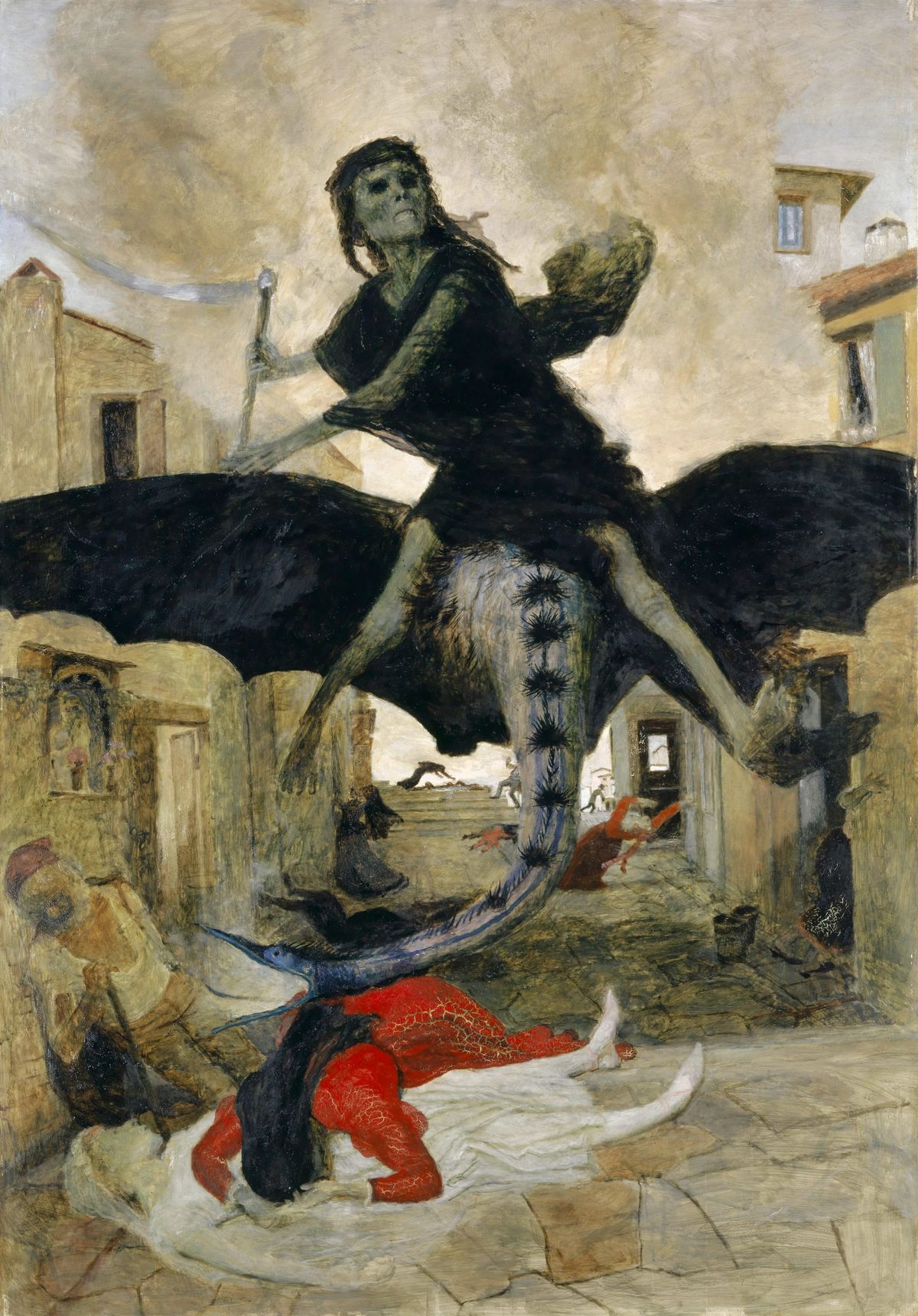
스위스 출신의 상징주의 거장 아놀드 뵈클린(Arnold Böcklin, 1827–1901)이 1898년에 완성한 유화 페스트(The Plague, 독일어: Die Pest)는 149.5 cm × 104.5 cm 크기의 나무 패널에 템페라로 그린 대작입니다. 현재 스위스 바젤 미술관(Kunstmuseum Basel)에 소장되어 있습니다.
19세기 말 콜레라의 공포와 세상을 떠난 자식들을 향한 통곡
이 소름 끼치도록 생생한 그림의 배경에는 19세기 유럽을 휩쓸었던 끔찍한 전염병의 공포와 화가 자신의 뼈아픈 가족사가 자리 잡고 있습니다. 뵈클린이 살던 시대는 위생 시설이 열악하여 콜레라와 티푸스 같은 전염병이 한 번 돌면 온 마을이 순식간에 시체로 가득 차던 비극적인 시절이었습니다. 화가 역시 평생 낳은 14명의 자녀 중 무려 8명을 어린 나이에 병과 사고로 잃는 참혹한 슬픔을 겪었습니다.
뵈클린은 70대의 노년에 접어들어 중세의 흑사병 전설을 모티브로 삼아, 인류가 감염병 앞에서 느끼는 원초적인 공포를 시각화했습니다. 뼈만 앙상한 죽음의 사신이 박쥐 날개를 활짝 펼친 채 날아다니는 기괴한 파충류 괴물의 등 위에 올라타 좁은 중세 도시의 골목길을 거침없이 날아다니는 장면입니다. 사신이 휘두르는 낫과 괴물이 내뿜는 독기는 죄 없는 시민들을 차례로 쓰러뜨립니다. 화가는 눈에 보이지 않는 바이러스와 전염병의 잔인함을, 피할 수도 없고 막을 수도 없는 초자연적인 괴물의 습격으로 형상화하여 인간의 연약한 운명을 고발했습니다.
길바닥에 쓰러진 붉은 여인에서 사신의 눈빛으로, 시선의 심리적 여정
그림을 마주하는 순간 관람객의 무의식적 시선은 화면 아래쪽 차가운 돌바닥 위에 꺾여 쓰러진 여인의 강렬한 붉은 드레스와 하얀 천으로 가장 먼저 곤두박질칩니다. 얼굴을 바닥에 파묻은 채 싸늘하게 식어가는 여인의 처참한 모습은 보는 이에게 거대한 시각적 충격과 비극적인 슬픔을 안겨줍니다.
이어 시선은 여인의 몸뚱이 바로 위로 뻗어 내려온 괴물의 길고 징그러운 목과, 허공을 가르며 날아오르는 거대한 검은 박쥐 날개로 치솟아 오릅니다. 골목길 전체를 가득 메울 만큼 거대한 날개와 그 위에 올라탄 잿빛 피부의 사신이 낫을 치켜들고 매서운 눈빛으로 허공을 노려보는 모습을 확인하는 순간 관람객은 숨이 턱 막히는 압도적인 공포를 경험합니다.
마지막으로 시선은 짙은 연기와 독가스로 뒤덮인 골목길 안쪽, 공포에 질려 비명을 지르며 도망치는 사람들과 문간에 주저앉아 절망하는 노인의 굳어버린 표정에 멈춥니다. 아무도 빠져나갈 수 없는 죽음의 골목길에 갇힌 사람들의 절규를 확인하며, 관람객은 한순간에 모든 평화를 앗아가는 재앙의 참혹함과 유한한 인간 존재의 나약함을 뼈저리게 실감하게 됩니다.
세기말 상징주의가 낳은 최고의 악몽, 미술계의 평가
미술계는 페스트를 서양 미술사에서 질병과 죽음의 공포를 가장 파격적이고 독창적인 환상성으로 시각화한 상징주의 회화의 최고 걸작으로 평가합니다.
단순한 역사적 재현을 뛰어넘어, 인간 내면에 깊이 자리한 불안과 무의식적인 공포를 거친 붓 터치와 기괴한 괴물의 형상으로 완벽하게 형상화했기 때문입니다. 훗날 초현실주의 거장들과 20세기 판타지 및 공포 영화의 시각 디자인에 막대한 영향을 미친 뵈클린의 이 어두운 대작은 오늘날까지도 인류가 마주했던 가장 처절한 악몽의 기록으로 생생하게 남아 있습니다.
The Black-Winged Specter of Devastation, The Plague
Painted in 1898 by the visionary Swiss Symbolist master Arnold Böcklin (1827–1901), The Plague (German: Die Pest) is a tempera on fir wood panel measuring 149.5 cm × 104.5 cm (58.9 in × 41.1 in), preserved in the permanent collection of the Kunstmuseum Basel in Switzerland.
Cholera Epidemics, Bereavement, and the Personification of Pestilence
The visceral terror vibrating through this apocalyptic composition stems from Arnold Böcklin's firsthand exposure to lethal European cholera and typhoid outbreaks, alongside his profound personal tragedies. Throughout his life, the artist endured the heartbreaking loss of eight of his fourteen children to childhood illnesses.
In his seventies, Böcklin synthesized medieval Black Death folklore with his deepest existential anxieties to create a terrifying allegory of infectious devastation. Riding astride a grotesque, winged reptilian hybrid soaring through a claustrophobic medieval street, the skeletal personification of Death brandishes a scythe amidst clouds of noxious vapor. Rather than depicting disease as an abstract scientific phenomenon, Böcklin materialized it as an inescapable, predatory beast swooping upon vulnerable humanity, giving physical shape to the helplessness of civilization before natural calamity.
Subconscious Trajectory of the Gaze: From Fallen Crimson to the Phantom Scythe
The observer's subconscious gaze is instantly wrenched down to the foreground, arrested by the brilliant crimson dress and white shroud of a lifeless woman sprawled upon the cobblestones. Her sudden, violent demise delivers an immediate emotional shock and establishes the tragic gravity of the scene.
The visual path then surges upward along the sinuous, spiky neck of the flying beast and across the monumental expanse of its leathery black wings spanning the architectural chasm. Discovering the pale, corpse-like visage of Death mounted above, gripping the executioner's scythe with piercing, hollow eyes, the spectator experiences suffocating terror.
Finally, the trajectory sweeps across the smoke-filled alleyway in the background, where terrified citizens flee in panic and an aged man collapses in despair against a doorway. Witnessing the inescapable containment of the narrow street and the indiscriminate slaughter of young and old alike, the viewer confronts the ultimate fragility of human life in the presence of overwhelming catastrophe.
The Monument of Fin-de-Siècle Symbolism: Critical Legacy
Art historians revere The Plague as one of the most powerful and horrifying masterpieces of late 19th-century Symbolism, directly prefiguring modern cinematic horror and Expressionist nightmare imagery.
By abandoning conventional romantic sentimentality in favor of raw grotesque realism, Böcklin forged an indelible visual language of trauma and collective dread. This monumental vision remains a timeless testament to human vulnerability, immortalizing the eternal struggle against the invisible forces of mortality.
본 컨텐트의 저작권은 팔렛트제주에 있습니다. 허가없는 무단전제를 금지합니다.
Copyright © Palette Jeju. All rights reserved. Unauthorized reproduction or redistribution is strictly prohibited.