동굴 속 성 예로니모 - St. Jerome Praying in a Cave
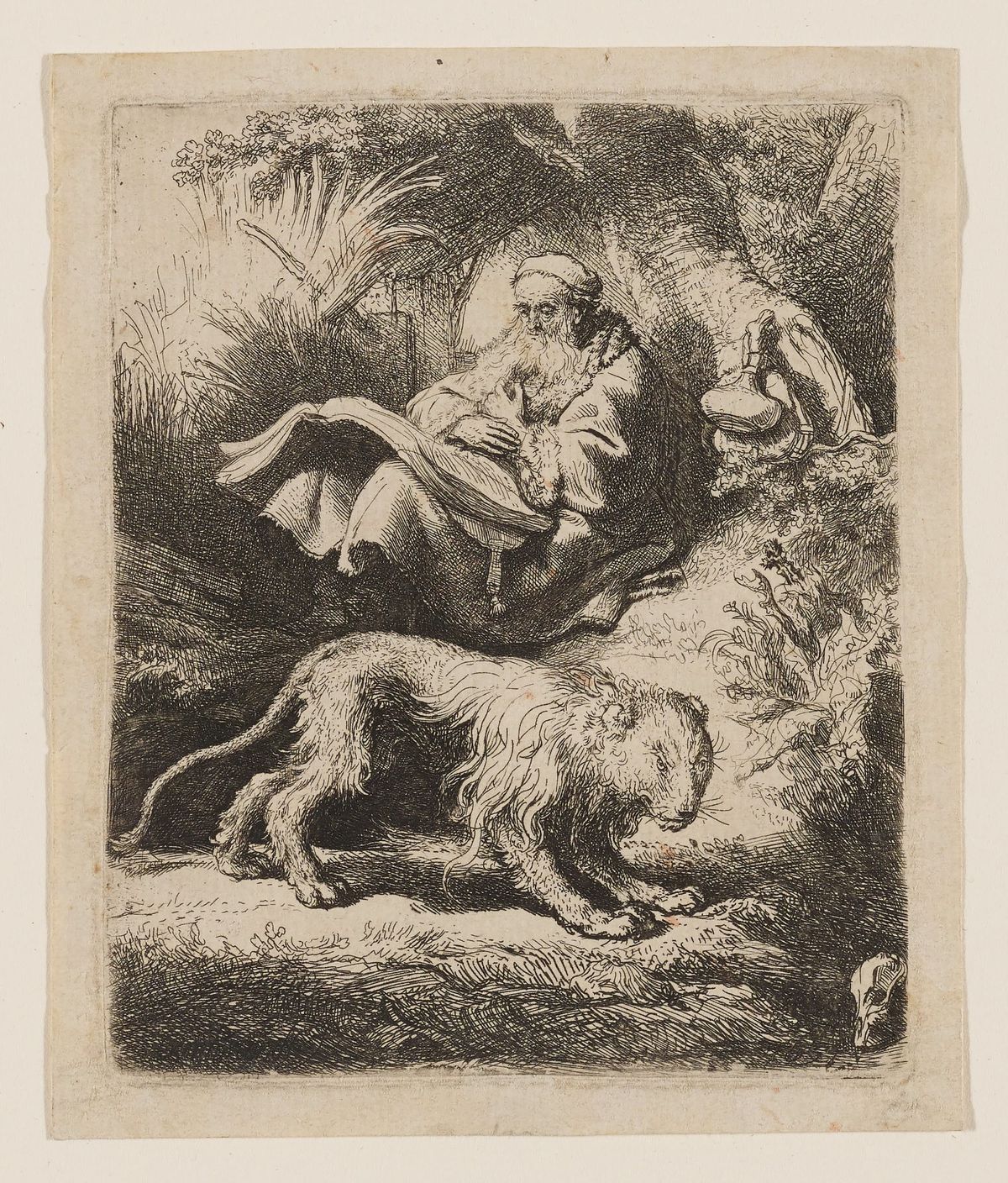
1634년 17세기 네덜란드 미술의 거장 렘브란트 반 레인(Rembrandt van Rijn)이 제작한 판화 작품 《동굴 속 성 예로니모》는 에칭 기법으로 완성된 종교 역사화 판화의 명작으로, 현재 암스테르담 국립미술관(Rijksmuseum)과 런던 대영박물관(British Museum), 뉴욕 메트로폴리탄 미술관(The Metropolitan Museum of Art) 등에 원본 판화가 소장되어 있으며 실제 크기는 약 10.9 × 9.0 cm입니다.
이 화면은 동굴 입구 아래에 자리를 잡고 앉아 두툼한 성경 책자를 펼쳐 든 채 학구적인 탐구와 기도에 몰두하고 있는 성 예로니모(St. Jerome)와, 그의 전설적인 수호자이자 동반자인 사자가 전경을 호위하듯 웅크리고 있는 순간을 렘브란트 특유의 대담하고 세밀한 에칭 선으로 포착해 낸 수작입니다. 화가는 무성한 풀과 나무로 둘러싸인 동굴 속 어둠과, 바깥에서 스며드는 자연광을 받아 환하게 밝혀진 성인의 흰 수염 및 펼쳐진 책장, 그리고 낮게 웅크린 사자의 역동적인 털 질감을 강렬한 명암 대조 속에서 부각시켰습니다.
작품 속에는 광야와 동굴에서 은둔하며 라틴어 성경(불가타 성경)을 번역한 성 예로니모의 고독한 수행과 신앙적 집념을 담아낸 비하인드 스토리가 흐릅니다. 전설에 의하면 성 예로니모는 발에 가시가 박혀 고통받던 사자를 치료해 준 뒤 사자를 충실한 동반자로 얻었다고 전해집니다. 렘브란트는 사자의 모습을 위엄 있고 무서운 맹수가 아닌, 약간은 기괴하면서도 충직한 모습으로 재해석하여 성인의 영적 세계를 지키는 파수꾼으로 배치했습니다. 동굴 바위와 풀숲의 촘촘한 해칭 선은 화면에 서정적인 자연미와 고요한 은둔의 분위기를 배가시킵니다.
후대 평단과 관객들은 이 소형 판화를 렘브란트 1630년대 에칭 기법이 보여주는 자연스러운 선의 드로잉 감각과 정숙한 은둔의 분위기를 유감없이 발휘한 수작으로 평가합니다. 동판 위를 자유롭게 가로지르는 세밀한 해칭 선과 고요함 속에 잠긴 성인의 자태는 관객에게 시대를 초월한 영적 안식과 깊은 미학적 감동을 선사합니다.
이 그림을 마주하는 관람객의 무의식적 시선은 화면 중앙, 밝은 빛을 받으며 두툼한 성경 책자를 펼쳐 들고 있는 성 예로니모의 긴 흰 수염과 집중된 얼굴 표정으로 가장 먼저 끌려갑니다. 진리 탐구와 기도에 몰두한 노성인의 차분한 모습은 관람객의 마음에 묵직한 시각적 중심과 숙연한 평온함을 안겨줍니다.
이어 시선은 성인의 발치 아래로 내려와, 낮게 몸을 낮춘 채 전경을 가로지르듯 웅크리고 있는 사자의 기다란 몸통과 뻗은 다리, 그리고 날카로운 털의 윤곽으로 자연스럽게 이동합니다. 전경에 배치된 사자의 묵직한 조형감은 화면 전체에 시각적 안정감과 든든한 보호의 기운을 더해줍니다.
마지막으로 시선은 성 예로니모를 에워싸고 있는 동굴 입구의 거친 바위 질감과 수목의 에칭 선들, 그리고 화면 우측 상단의 그늘진 여백 속으로 낙하하여 정착합니다. 이러한 무의식적 시선의 흐름은 대자연과 영성이 교차하는 고요한 은둔의 안식처로 감상자를 자연스럽게 인도하며, 마음에 닿는 차분하고 정갈한 여운을 오래도록 남깁니다.
In 1634, Rembrandt van Rijn, one of the paramount masters of the Dutch Golden Age, created the intimate and atmospheric etching titled "St. Jerome Praying in a Cave" (also known as St. Jerome in a Cave). Preserved in distinguished global collections such as the Rijksmuseum in Amsterdam, the British Museum in London, and the Metropolitan Museum of Art in New York, this original print measures approximately 10.9 × 9.0 cm. This artwork finely captures the quiet scholarly devotion and hermit solitude of Saint Jerome through a brilliant matrix of etched lines.
The print visually manifests Saint Jerome seated within the mouth of a rocky cave, deeply absorbed in reading an open holy volume, while his legendary companion, the lion, prowls low in the foreground as a watchful guardian. Historical context highlights the beloved Christian tradition of Saint Jerome taming a lion by removing a thorn from its paw. Rather than depicting a terrifying beast, Rembrandt rendered the lion with expressive, naturalistic vitality, framing the saint's wilderness retreat with dense, organic foliage and delicate cross-hatching.
Art historians and critics continuously extol this sheet for its graphic spontaneity and peaceful atmospheric tone, celebrating Rembrandt's ability to imbue a miniature copperplate format with monumental quietude. The striking contrast between the sunlit pages of scripture, the long white beard of the scholar, and the surrounding shadowy rock textures creates an enduring atmosphere of sacred sanctuary and emotional permanence.
The moment an observer encounters this artwork, their gaze is subconsciously drawn straight to the brightly illuminated figure of Saint Jerome sitting in the center with his open book. His serene, contemplative posture immediately diffuses tension, instilling a comforting sense of spiritual elevation and reverent stillness.
Next, the eye glides smoothly down toward the foreground to trace the extended body and detailed mane of the lion crouching along the earth. The tactile definition of the lion's fur and sturdy stance endows the scene with structural balance and protective warmth.
Finally, the viewer's gaze drifts along the gnarled roots, leafy bushes, and shadowy cave walls framing the upper arch before coming to rest upon the surrounding spatial field. This natural visual journey guides the spectator into a state of quiet contemplation, leaving a lasting impression of devotion, nature, and timeless peace.
본 리뷰에서 작품을 제외한 컨텐츠의 저작권은 팔렛트제주에 있습니다.
"퍼블릭도메인 고전명화"를 제외한 모든 창작 콘텐츠는 저작권법 제4조 및 제10조에 의거하여 보호됩니다. 무단 도용시 저작권법 제136조(벌칙)에 의거, 당사의 사전 서면 승인 없는 저작권 침해 행위를 금지합니다.