동방박사의 경배 The Adoration of the Magi
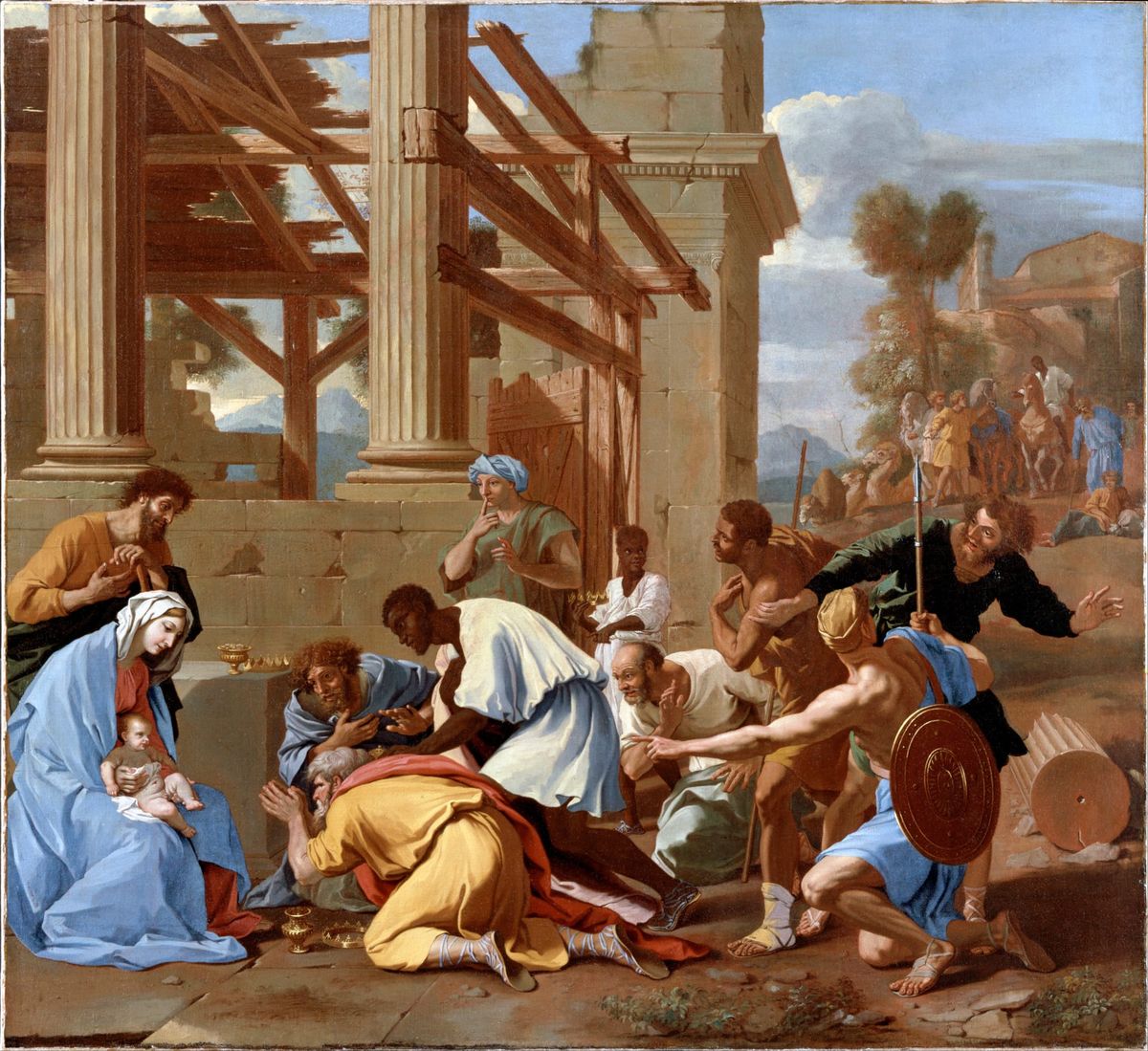
17세기 프랑스 고전주의 회화의 시조이자 서양 미술사 불멸의 거장 니콜라 푸생(Nicolas Poussin, 1594–1665)이 1633년 로마에서 완성한 기념비적 성경 역사화 유화 동방박사의 경배(The Adoration of the Magi, 프랑스어: L'Adoration des Mages, 독일어: Die Anbetung der Könige, 소장품 번호: Gal.-Nr. 720)는 160.0 cm × 182.0 cm 크기의 웅장한 대형 캔버스에 유채로 그린 대표적인 신약 성서화 최고 걸작입니다.
현재 독일 드레스덴의 드레스덴 국립미술관 옛 거장 회화관(Gemäldegalerie Alte Meister, Dresden)에 소장되어 있습니다.
무너진 고대 신전의 폐허와 새 시대의 구원을 향한 화가의 깊은 고뇌
1630년대 초반 로마에서 자신의 독창적인 고전주의 양식을 완성해가던 서른 후반의 푸생은, 시칠리아의 명망 높은 귀족이자 예술 애호가였던 파브리치오 발구아르네라의 주문을 받아 성경의 가장 성스러운 순간을 화폭에 담았습니다.
당시 로마 화단은 화려한 금빛 장식과 인물들의 과장된 감정 분출이 유행하고 있었지만, 푸생은 이 거룩한 신비를 단순한 궁정식 축제로 묘사하고 싶지 않았습니다.
화가는 이교도 고대 문명의 붕괴 위에 새롭게 세워지는 기독교 신앙의 탄생을 어떻게 고대 건축의 엄격한 기하학적 비례와 조화시킬지 치열하게 번민했습니다.
화가는 무너져 내린 고대 로마 신전의 대리석 기둥과 거친 목조 가설물 아래에서 아기 예수를 경배하는 동방박사들과 수행원들의 장엄한 행렬을 화폭에 담았습니다.
화면 왼쪽에는 맑은 하늘빛 푸른 망토를 두른 성모 마리아가 무릎 위에 알몸의 아기 예수를 조심스럽게 안아 들고 있고, 그 뒤에서 성 요셉이 깊은 생각에 잠겨 있습니다.
그 앞에서는 황금빛 겉옷을 입은 늙은 동방박사가 왕관을 바닥에 내려놓고 엎드려 두 손을 모아 경배하고 있으며, 붉은 옷과 흰 옷을 입은 다른 박사들이 황금과 유향, 몰약을 바치며 차례로 다가옵니다.
화면 오른쪽에서는 방패를 든 병사와 수행원들이 웅성거리며 자리를 정돈하고, 입에 손가락을 대고 조용히 하라는 신호를 보내는 터번 쓴 인물의 모습은 성스러운 침묵 속에서 펼쳐지는 구원의 첫걸음을 손에 잡힐 듯 생생하게 웅변합니다.
무릎 꿇은 동방박사의 손끝에서 성모자의 온화한 빛과 웅장한 대리석 기둥으로, 시선의 심리적 여정
그림을 마주하는 순간 관람객의 무의식적 시선은 화면 왼쪽 아래에서 찬란한 빛을 받아 눈부시게 빛나는 성모 마리아의 맑고 푸른 망토와 무릎 위 아기 예수의 사랑스러운 나체로 가장 먼저 빨려 들어갑니다.
어머니의 품에 기대어 동방박사를 내려다보는 아기 예수의 천진난만한 표정과 성모의 단아한 옆얼굴은 보는 이에게 깊은 시각적 온기와 함께 인간으로 오신 구원자의 순수한 사랑을 선사합니다.
이어 시선은 바닥에 놓인 황금 보물과 왕관을 지나, 황금빛 옷을 입고 바닥에 무릎을 꿇은 채 공손히 두 손을 모은 늙은 동방박사의 경건한 몸짓으로 옮겨갑니다.
세속의 권세를 상징하는 왕관을 스스로 벗어 던지고 가장 겸손한 자세로 엎드린 박사의 굳은 신앙심을 확인하는 순간, 관람객은 지상의 왕들이 천상의 왕에게 바치는 거룩한 복종의 한복판 속으로 온몸이 빨려 들어가게 됩니다.
마지막으로 시선은 화면 오른편에서 방패와 창을 들고 질서를 유지하려는 병사들의 역동적인 몸짓과 저 멀리 낙타를 몰고 언덕을 넘어오는 수행원들의 행렬을 지나, 화면 상단을 굳건하게 지탱하는 고대 신전의 거대한 대리석 기둥과 파란 하늘에 멈춥니다.
수직의 석조 건축물과 인물들의 유기적인 대각선 배치가 빚어내는 완벽한 기하학적 균형을 마주하며, 관람객은 낡은 시대를 넘어선 새로운 구원의 거룩한 질서와 거장 푸생이 건네는 묵직한 지적 감동을 가슴 깊이 마주하게 됩니다.
17세기 프랑스 고전주의 종교 역사화의 정점과 조형미, 미술계의 평가
미술계는 드레스덴 미술관의 동방박사의 경배를 푸생이 30대 후반에 이룩한 고전주의 대형 역사화의 절대적인 최고봉이자, 라파엘로의 완벽한 군상 구성과 티치아노의 색채 감각을 완벽하게 계승한 걸작으로 평가합니다.
단순한 성탄 삽화를 넘어 고대 신전의 폐허와 인물들의 동세를 정교한 연극 무대처럼 수학적 원근법 속에 완벽하게 배치했을 뿐만 아니라, 푸른색, 노란색, 붉은색 의복의 선명한 삼원색 조화, 대리석과 목재의 거친 질감, 금속 방패의 반사광을 극도로 섬세한 고전주의 명암법으로 완벽하게 구현했기 때문입니다.
인류 역사의 거대한 전환점을 가장 품격 높은 시각 교향곡으로 완성해 낸 푸생의 이 걸작 화폭은, 오늘날까지도 전 세계 수많은 감상자들에게 깊은 감탄과 잊을 수 없는 시각적 전율을 전해주는 불멸의 명작으로 손꼽히고 있습니다.
The Adoration of the Magi
Painted in 1633 in Rome by the founder of French classicism and immortal master Nicolas Poussin (1594–1665), The Adoration of the Magi (French: L'Adoration des Mages, German: Die Anbetung der Könige, Inventory No. Gal.-Nr. 720) is a monumental scriptural masterpiece in oil on canvas measuring 160.0 cm × 182.0 cm (63.0 in × 71.7 in).
It is preserved in the distinguished permanent collection of the Gemäldegalerie Alte Meister in Dresden, Germany.
Ruined Pagan Temples, Valguarnera's Commission, and the Architecture of Salvation
During the early 1630s in Rome, having fully consolidated his disciplined classical style, Nicolas Poussin received an ambitious commission from the Sicilian nobleman Fabrizio Valguarnera to paint the sacred Epiphany narrative.
While Roman contemporaries favored dazzling ornamental gold and theatrical melodrama, Poussin sought to translate this biblical encounter into an enduring architectural treatise on the dawn of Christian revelation over ancient pagan decline.
The master staged the scene of devotion amidst the weathered ruins of a monumental Roman temple braced by rustic timber scaffolding.
To the left, the Virgin Mary, draped in a magnificent azure mantle, cradles the infant Christ upon her lap as Saint Joseph stands quietly in paternal contemplation behind them.
Before the Christ Child, the elderly King Caspar kneels prostrate in radiant saffron drapery, having laid his golden crown upon the flagstones, while King Melchior and King Balthazar approach with gifts of gold, frankincense, and myrrh.
To the right, armored guards and attendants maintain order amidst the pressing crowd, while a turbaned figure gestures for silence with a finger to his lips, orchestrating an unforgettable narrative of sacred serenity and disciplined reverence.
Subconscious Trajectory of the Gaze: From Mary and Christ to the Ruined Colonnade
The observer's subconscious gaze is immediately magnetized by the lower-left register, drawn to the luminous, sunlit flesh of the infant Jesus and the cool ultramarine folds of Mary’s classical mantle.
The tender interaction between mother and child and Christ’s gentle downward gaze establish an instant focal point of sacred incarnation, maternal serenity, and divine grace.
The visual path then follows the discarded golden crown across the floor tiles toward the prostate figure of the elderly magus kneeling in golden robes.
Taking in his clasped hands, weathered devotion, and the rich textures of the gifts offered by the surrounding kings, the viewer directly experiences the profound spiritual humility of earthly monarchs kneeling before celestial authority.
Finally, the visual trajectory sweeps past the dynamic Roman guard holding a bronze buckler on the right and the distant caravan of camels descending the hill, before ascending into the massive fluted columns of the classical peristyle against the open sky.
Observing the harmonious equilibrium between linear perspective, balanced primary colors, and antique relief staging, the spectator perceives the timeless nobility of sacred faith and the profound aesthetic solace Poussin embedded within the monumental canvas.
The Monument of French Classical History Painting: Critical Legacy
Art historians revere the Dresden Adoration of the Magi as a supreme pinnacle of Poussin’s mature historical style, illustrating his total mastery of grand narrative orchestration, archaeological accuracy, and classical stoicism.
By orchestrating delicate textural contrasts between sunlit marble columns, heavy woolen draperies, polished bronze armor, and rough wooden beams within a unified geometric scheme, Poussin elevated a traditional gospel narrative into an exquisite aesthetic treatise on cosmic history.
This grand historical canvas endures as an inspiring testament to the master's creative fortitude, celebrating the triumph of sacred reason and the transformative grace of living art.
본 컨텐트의 저작권은 팔렛트제주에 있습니다. 허가없는 무단전제를 금지합니다.
Copyright © Palette Jeju. All rights reserved. Unauthorized reproduction or redistribution is strictly prohibited.