돌아온 탕자 The Return of the Prodigal Son
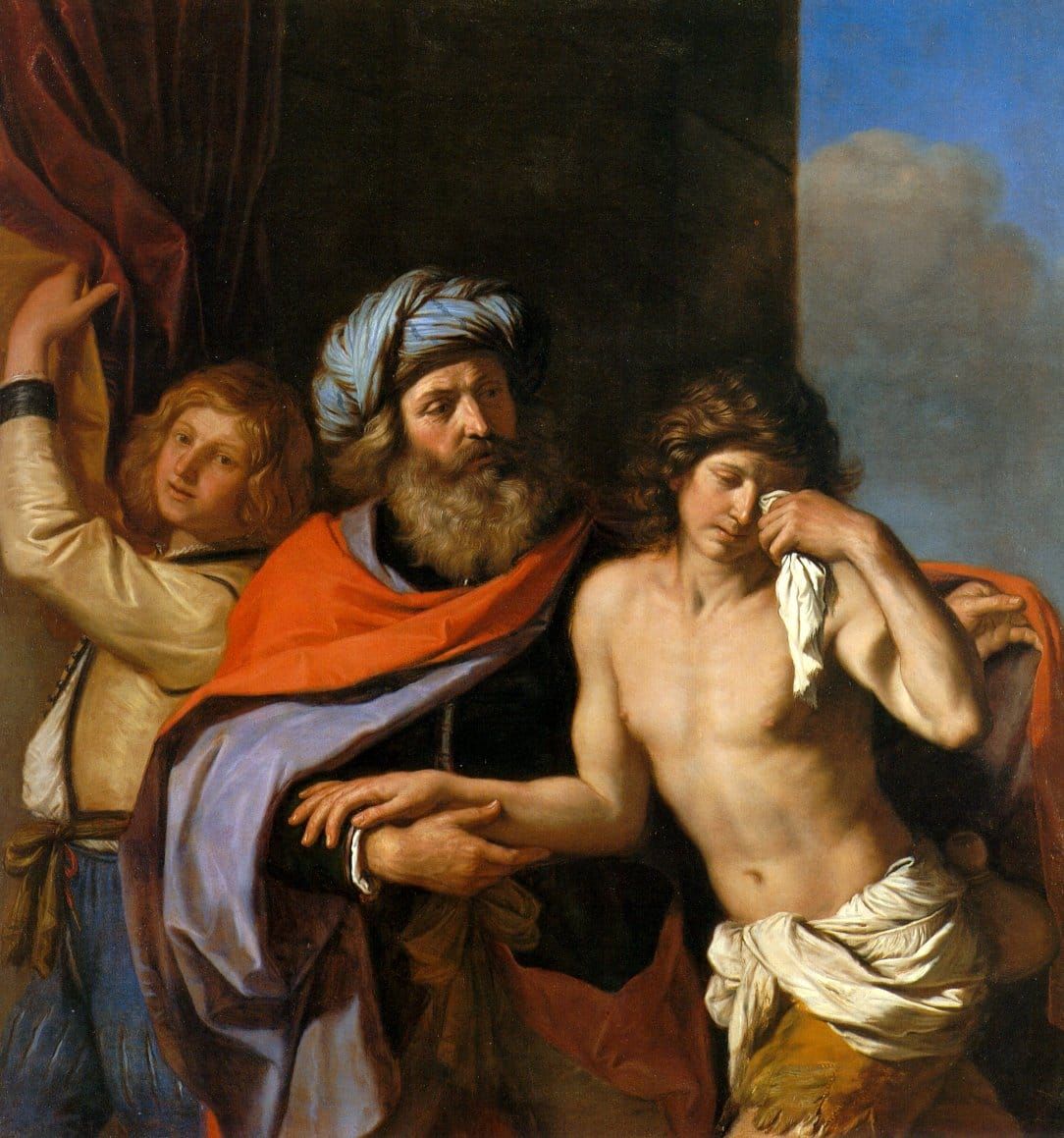
17세기 이탈리아 바로크 회화의 거장 조반니 프란체스코 바르비에리, 널리 귀에르치노(Guercino, 1591–1666)로 불리는 화가가 1654년에서 1655년경 완성한 유화 돌아온 탕자(The Return of the Prodigal Son, 이탈리아어: Il ritorno del figliol prodigo)는 155.0 cm × 146.0 cm 크기의 캔버스에 유채로 그린 대표적인 신약성경 비유화 최고 걸작입니다. 현재 이탈리아 로마의 티미스피에라 국립고전미술관 바르베리니 궁전(Gallerie Nazionali di Arte Antica - Palazzo Barberini, Rome)에 소장되어 있습니다.
바르베리니 궁전의 걸작과 회한의 눈물을 닦는 손수건의 비하인드
귀에르치노의 작업 장부인 계정록에는 1655년 1월 12일과 4월 26일, 산토 스테파노의 지롤라모 판돌피(Girolamo Pandolfi)로부터 이 작품의 대금으로 110두카트를 지급받았다는 기록이 명확하게 남아 있습니다. 1650년대 중반 볼로냐에서 원숙한 후기 고전주의 양식을 꽃피우던 귀에르치노는 20대와 30대 시절에도 여러 번 다루었던 탕자의 귀향 주제를 다시 의뢰받았을 때, 이전의 구도와는 전혀 다른 깊은 내면적 슬픔과 인간적인 화해의 순간을 시각화하고자 깊이 고뇌했습니다.
화가는 단순히 부자간의 상봉이라는 줄거리를 묘사하는 데 머물지 않고, 자신의 죄를 뼈저리게 깨닫고 어린아이처럼 오열하는 아들과 이를 조건 없이 감싸 안는 아버지의 숭고한 사랑을 정면으로 마주하게 했습니다. 상체를 벗은 채 하얀 손수건으로 눈물을 훔치며 울먹이는 젊은 아들의 부끄러운 표정은 보는 이의 마음을 직접적으로 울립니다. 푸른 터번과 붉은 망토를 두른 동방풍의 위엄 있는 아버지는 한 손으로 아들의 지친 팔을 부드럽게 붙잡아 이끌고, 다른 손으로는 자신의 붉은 겉옷을 넓게 펼쳐 아들의 차가운 어깨를 덮어줍니다. 왼쪽에서 커튼을 젖히며 놀란 눈으로 둘을 바라보는 소년 하인의 생생한 시선은, 집 안으로 들어서는 순간 모든 죄와 허물이 용서받는 감격스러운 구원의 순간을 극적으로 완성합니다.
눈물을 훔치는 손수건에서 아버지가 덮어주는 붉은 망토로, 시선의 심리적 여정
그림을 마주하는 순간 관람객의 무의식적 시선은 화면 오른쪽 은은한 자연광을 받아 환하게 빛나는 탕자의 가녀린 상체와 눈물을 닦고 있는 하얀 손수건으로 가장 먼저 빨려 들어갑니다. 고개를 떨군 채 서러운 눈물을 훔치는 청년의 붉어진 뺨과 떨리는 입술은 보는 이에게 깊은 시각적 연민과 함께 죄책감을 씻어내는 진실한 회개의 감정을 선사합니다.
이어 시선은 아들의 왼팔을 조심스럽게 감싸 쥔 아버지의 주름진 두 손을 따라 화면 중앙으로 이동하여, 푸른 터번을 쓴 늙은 부친의 따뜻하고 그윽한 옆얼굴로 옮겨갑니다. 오랜 방황 끝에 만신창이가 되어 돌아온 자식을 질책하지 않고 안도와 자비가 가득한 눈빛으로 바라보는 아버지의 풍성한 은빛 수염을 확인하는 순간, 관람객은 조건 없는 용서가 주는 거룩한 평온 속으로 온몸이 빨려 들어가게 됩니다.
마지막으로 시선은 아들의 등을 따스하게 감싸며 둘러쳐진 강렬한 주홍빛 붉은 망토의 유려한 주름을 지나, 화면 왼쪽에서 방 안의 자주색 커튼을 걷어 올리며 호기심 어린 눈빛으로 바라보는 어린 하인의 얼굴에 멈춥니다. 칠흑 같은 벽면의 어둠과 푸른 하늘이 빚어내는 빛의 조화 속에서, 관람객은 상처받은 영혼을 치유하는 가족의 거룩한 사랑과 귀에르치노가 건네는 묵직한 영혼의 위로를 가슴 깊이 마주하게 됩니다.
17세기 볼로냐 후기 바로크 고전주의의 정점과 조형미, 미술계의 평가
미술계는 바르베리니 궁전의 돌아온 탕자를 귀에르치노가 만년에 완성한 가장 우아하고 서정적인 신약성경 명작으로 손꼽습니다.
어두운 실내 배경과 밝은 인물들의 대비 속에서, 청년의 매끄러운 피부와 늙은 아버지의 주름진 손, 화려한 터번의 직물감과 붉은 망토의 풍성한 음영을 극도로 정교한 명암법으로 완벽하게 구현했을 뿐만 아니라, 성경의 복잡한 신학적 비유를 눈물과 포옹이라는 가장 보편적인 인간의 감정으로 승화시켰기 때문입니다. 인간에 대한 깊은 이해와 숭고한 용서의 가치를 완성도 높은 조형 언어로 승화시킨 귀에르치노의 이 걸작 화폭은, 오늘날까지도 전 세계 수많은 감상자들에게 깊은 감동과 잊을 수 없는 시각적 안식을 전해주는 불멸의 명작으로 평가받고 있습니다.
The Return of the Prodigal Son
Painted around 1654–1655 in Bologna by the preeminent Italian Baroque master Giovanni Francesco Barbieri, universally celebrated as Guercino (1591–1666), The Return of the Prodigal Son (Italian: Il ritorno del figliol prodigo) is an oil on canvas measuring 155.0 cm × 146.0 cm (61.0 in × 57.5 in), preserved in the permanent collection of the Gallerie Nazionali di Arte Antica - Palazzo Barberini in Rome, Italy.
The Pandolfi Ledger Account and the Psychology of Forgiveness
Documented precisely in Guercino’s workshop account ledger, the Libro dei Conti, this painting was commissioned by Girolamo Pandolfi of Santo Stefano, with payments totaling 110 ducats recorded between January and April of 1655. Having explored the parable of the Prodigal Son in his earlier career, the mature master approached this commission with refined psychological depth, moving beyond physical prostration to emphasize the emotional intimacy of reconciliation.
Guercino arranged the figures in a tight, frieze-like horizontal composition. The returning youth, stripped of his fine garments and reduced to a white loincloth and a humble traveler's flask, weeps bitterly while pressing a white kerchief to his eyes. The venerable father, crowned with an oriental blue-and-white turban and clad in rich robes, reaches forward with tender paternal care. With his left hand, the patriarch guides his weeping son, while his right arm extends his own scarlet mantle to shelter the youth's bare shoulders. On the far left, a young servant pulls aside a heavy velvet curtain to welcome the master and son, creating an emotionally charged threshold between the harsh outside world and the forgiving shelter of the home.
Subconscious Trajectory of the Gaze: From Weeping Youth to the Paternal Mantle
The observer's subconscious gaze is immediately magnetized by the right-central register, drawn to the luminous, sunlit flesh of the returning son and the stark white cloth held to his face. His downcast, weeping brow, parted lips, and vulnerable, bare torso establish an instant focal point of raw remorse, physical exhaustion, and profound humility.
The visual path then follows the clasp of the father's hands guiding the boy's arm, shifting leftward to the venerable profile of the father framed by his blue turban and flowing grey beard. Taking in the patriarch’s steady, compassionate gaze and the gentle inclination of his head, the viewer directly experiences the profound emotional gravity of unconditional forgiveness and spiritual homecoming.
Finally, the visual trajectory sweeps across the voluminous, sculptural folds of the scarlet mantle draping around the youth’s shoulders, ascending toward the servant drawing back the curtain on the left and the open sky beyond. Observing the harmonious equilibrium between classical monumental clarity, warm directional light, and psychological truth, the spectator perceives the timeless nobility of sacred mercy and the profound aesthetic solace Guercino embedded within the monumental canvas.
The Monument of Bolognese Mature Classicism: Critical Legacy
Art historians celebrate this Palazzo Barberini Return of the Prodigal Son as a consummate masterpiece of Guercino’s late period, demonstrating his mastery of Bolognese classical poise balanced with deep human empathy.
By orchestrating delicate textural contrasts between weathered hands, supple youthful skin, rich coral-red drapery, porous linen, and woven turbans within a unified lighting scheme, Guercino elevated a familiar biblical narrative into an exquisite aesthetic meditation. This magnificent historical canvas endures as an inspiring testament to the master's creative genius, celebrating the poetic power of redemption and the transformative grace of living art.
본 컨텐트의 저작권은 팔렛트제주에 있습니다. 허가없는 무단전제를 금지합니다.
Copyright © Palette Jeju. All rights reserved. Unauthorized reproduction or redistribution is strictly prohibited.