도기, 병, 그릇이 있는 정물 Still Life with Earthenware Pot, Bottle and Bowl
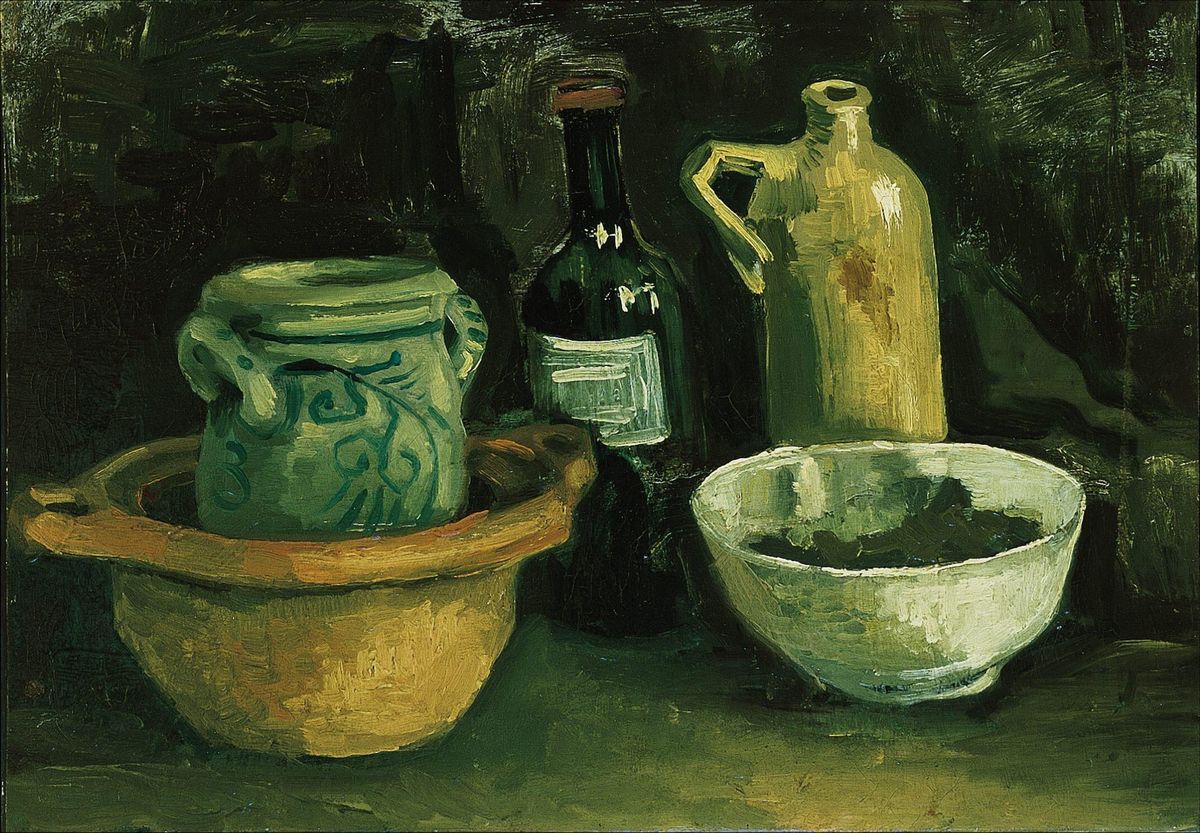
빈센트 반 고흐(Vincent van Gogh, 1853–1890)는 1885년 네덜란드 브라반트 지역의 누에넨에 체류하던 시기에 서민들의 소박한 일상 용품을 주제로 삼아 어둡고 묵직한 필치로 사물의 본질을 탐구하는 정물화를 제작했습니다.
이 작품은 그가 누에넨에 머물던 1885년 3월에서 4월 사이에 완성한 유채화로, 야콥 바르트 드 라 파이유의 전작 도록 기준 공식 등록번호는 F66이며 실제 작품의 실측 규격은 38.5 × 55.5 cm입니다.
현재 네덜란드 암스테르담에 위치한 반 고흐 미술관에서 소장하고 있습니다.
작가의 고뇌와 비하인드
작품을 제작할 당시 누에넨의 좁은 작업실에는 차가운 봄바람이 스며들고 있었으며, 특히 지역 주민들과의 걷잡을 수 없는 갈등이 화가의 숨통을 조여오고 있었습니다.
당시 고흐는 마을의 가난한 소작농 여인인 고르디나 데 흐로트와의 스캔들 및 임신 소문으로 인해 마을 주민들과 교회로부터 거센 비난과 보이콧을 당하며 극심한 사회적 고립 속에 처해 있었고, 여기에 아버지의 갑작스러운 죽음까지 겹쳐 깊은 슬픔에 휩싸여 있었습니다.
매서운 추위와 누적된 생활고, 그리고 인간관계의 파탄이라는 가혹한 물리적 환경 속에서도 그는 화려한 대상 대신 주변의 투박한 주방 도구들을 바라보며 가난한 삶의 묵직한 진실을 화폭에 담아내고자 붓을 쥐었습니다.
화면 전면에는 흙빛의 거친 그릇과 그 안에 담긴 푸른 무늬의 독특한 도기 항아리가 묵직한 중량감을 뽐내며 자리 잡고 있습니다.
중경에는 어두운 녹색 톤의 유리병과 노르스름한 질감의 투박한 주전자, 그리고 내용물이 담긴 하얀 그릇이 나란히 배치되어 소박한 일상의 질서를 형성합니다.
원경의 배경에는 모든 빛이 가라앉은 어두운 톤의 벽면이 촘촘한 붓질로 채워져 있어, 일상적인 사물들 뒤로 감도는 쓸쓸하고 차분한 대기의 깊이감을 완성합니다.
무의식 속 시선 및 심리 흐름
관람객의 시선은 가장 먼저 화면 왼쪽 하단에 묵직하게 놓인 흙빛 그릇과 그 위에 담긴 푸른 장식의 도기 항아리의 거친 질감에 닿으며 묵직한 무게감을 느끼게 됩니다.
이어지는 시선은 중앙에 나란히 세워진 어두운 병과 노란빛 주전자를 거쳐, 오른쪽 아래에 놓인 하얀색 그릇의 부드러운 곡선으로 자연스럽게 이동합니다.
마지막으로 화면 전체를 감싸는 어두운 배경의 적막 속으로 시선이 넓게 퍼져나가며, 화려하지 않은 일상의 도구들이 자아내는 묵묵한 위로와 고요한 정서적 몰입을 체감하게 됩니다.
미술계의 평가와 조형미
미술사학계에서는 이 작품을 두고 고흐가 초기 네덜란드 시기에 어두운 갈색과 녹색의 톤을 활용하여 평범한 사물에 생명력을 불어넣고 인간의 묵직한 실존을 시각화한 수작으로 평가합니다.
화면 전체를 지배하는 차분한 암색 계열의 조화와 두터운 붓질은 사물이 지닌 질감과 양감을 극대화합니다.
눈에 보이는 정물의 재현을 넘어, 화가가 가혹한 현실 속에서 사물의 침묵을 통해 건져 올린 영혼의 깊은 울림을 캔버스 위에 영원히 아로새긴 위대한 미술사적 성취입니다.
Still Life with Earthenware Pot, Bottle and Bowl
Vincent van Gogh captured the austere and unpretentious beauty of peasant daily life through a series of somber still lifes created during his stay in Nuenen in the spring of 1885.
Created between March and April 1885, this oil on canvas is cataloged as F66 in J.B. de la Faille's catalogue raisonné and measures 38.5 × 55.5 cm.
The painting is currently housed in the Van Gogh Museum in Amsterdam.
During the period of its creation, a bitter spring chill lingered in Nuenen while Van Gogh endured intense emotional isolation, exacerbated by a bitter community backlash and hostile village rumors surrounding the local peasant woman Gordina de Groot, whom he was accused of impregnating. Shunned by the local townspeople and church leaders who viewed him as a disruptive outcast, and reeling from the sudden passing of his father, he found himself utterly alienated in the rigid rural society. Amidst this harsh physical environment marked by severe poverty, social ostracism, and profound personal grief, he sought quiet psychological refuge by turning his intense focus away from grand subjects and toward the humble, worn kitchen utensils of ordinary people. The foreground is anchored by a heavy earthenware bowl cradling a patterned green pot, rendered with thick, tactile brushstrokes that convey a profound sense of material weight. In the middle ground, a dark wine bottle, a yellowish ceramic jug, and a white bowl filled with dark contents are arranged horizontally, establishing a grounded rhythm of domestic objects. In the distant background, a deeply shadowed wall composed of dark, dense brushwork wraps around the still life, establishing a quiet and melancholy atmospheric depth.
The viewer's gaze is initially drawn toward the textured earthenware bowl and the patterned pot in the lower left register.
The perspective then follows the arrangement of objects inward toward the central bottle and jug, before drifting to the white bowl on the right.
Finally, the eye diffuses into the dark, enclosing background, allowing the observer to experience a tranquil psychological transition from simple visual observation to a heavy, contemplative stillness.
Art historians regard this canvas as a masterwork of Van Gogh's Dutch period, where dark earth tones and heavy impasto elevate humble household items into powerful symbols of human endurance.
The sophisticated interplay between subdued greens, browns, and whites generates an exceptional visual gravity and emotional resonance.
It stands as an enduring artistic monument that immortalizes the artist's empathetic vision and his profound ability to find poetry in the simplest artifacts of daily life.
본 컨텐트의 저작권은 팔렛트제주에 있습니다. 허가없는 무단전제를 금지합니다.
Copyright © Palette Jeju. All rights reserved. Unauthorized reproduction or redistribution is strictly prohibited.