도비니의 정원 - Daubigny's Garden
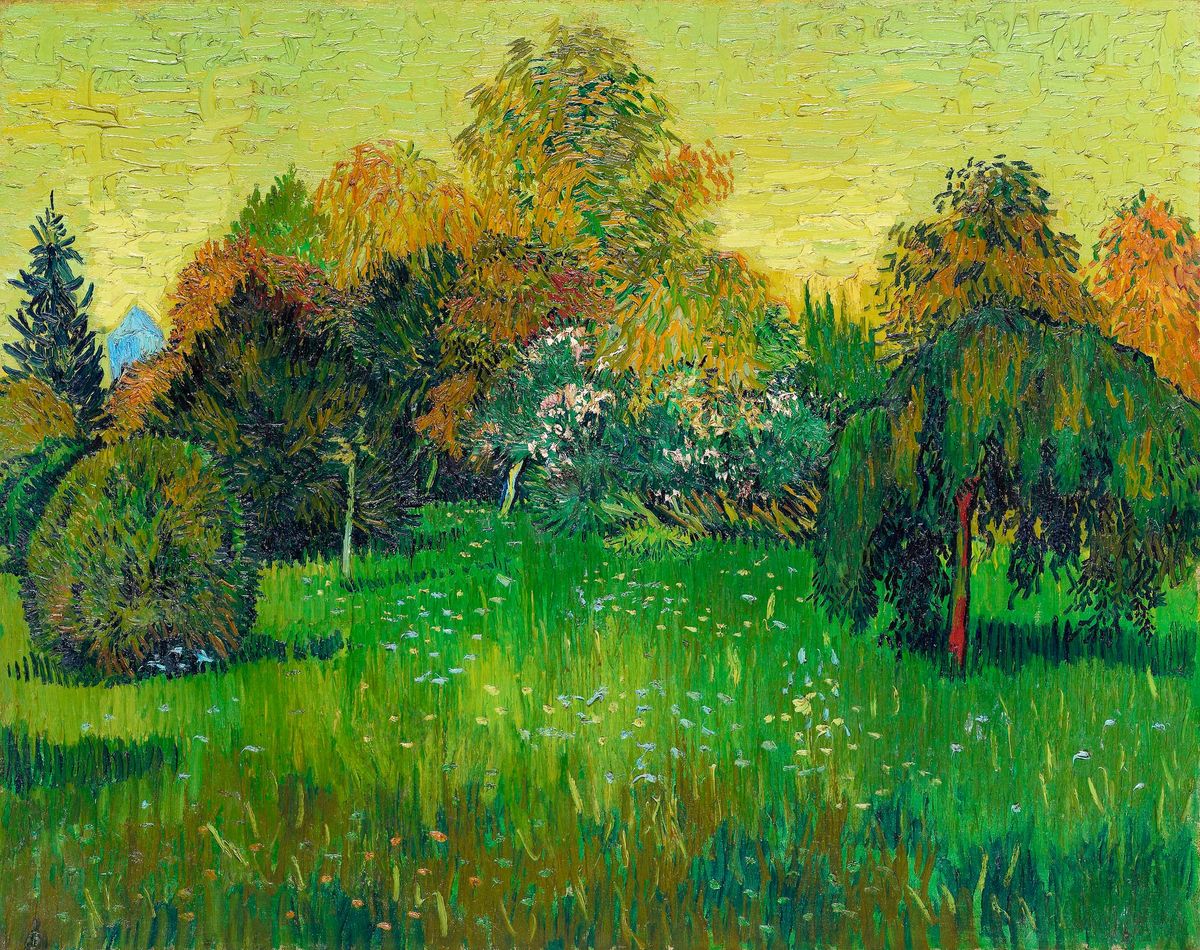
빈센트 반 고흐(Vincent van Gogh)가 생의 마지막 머물렀던 파리 근교 오베르 쉬르 우아즈(Auvers-sur-Oise)에서 1890년 6월에 완성한 대표적인 유화 풍경화입니다. 현재 네덜란드 암스테르담의 반 고흐 미술관(Van Gogh Museum)에 소장되어 있으며, 캔버스 위에 유채로 제작된 이 작품의 실제 사이즈는 약 51.0 × 51.0 cm(정방형 구도 버전)입니다. 존경하던 바르비종파의 거장 샤를 프랑수아 도비니(Charles-François Daubigny)의 저택 정원을 배경으로, 화면을 가득 채운 다채로운 녹색과 황금빛 필선, 그리고 두텁고 리드미컬한 임파스토(Impasto) 기법을 통해 대자연의 풍요로운 생명력과 서정적 평온을 완벽하게 구현해냈습니다.
고흐는 물감을 캔버스 위에 두껍게 얹어 전경에 잔잔하게 흩뿌려진 들꽃들과 촘촘한 풀잎의 결, 울창하게 우거진 수목의 풍성한 잎사귀들을 조각하듯 입체적으로 빚어냈습니다. 전경을 가득 메운 눈부신 에메랄드그린과 연둣빛 잔디밭은 뒤편 수목의 깊은 암록색, 따스한 황토색 및 주황빛 단풍들과 어우러져 찬란한 시각적 리듬을 형성합니다. 상단을 은은하게 채우고 있는 연노란빛 하늘과 굽이치는 붓자국들의 유기적인 조화는 정적인 정원 풍경에 살아 숨 쉬는 대지의 숨결을 촉각적으로 전달합니다.
1890년 5월 오베르 쉬르 우아즈에 도착한 고흐는 평소 깊이 흠모하던 풍경화가 도비니가 생전에 가꾸었던 유서 깊은 정원을 자주 찾아가 화폭에 담았습니다. 고흐에게 도비니의 정원은 단순한 자연 풍경을 넘어, 선배 예술가에 대한 깊은 경의와 함께 자신의 고단한 영혼을 뉘일 수 있는 지상의 낙원이자 성소였습니다. 그는 동생 테오에게 보낸 편지에서 "이곳에서 도비니의 정원을 그릴 때 내 마음속에 가장 맑고 순수한 평화가 찾아온다"며 작품에 대한 각별한 애정과 몰입을 드러냈습니다.
화면 우측에 자리 잡은 붉은 기둥의 수양버들과 둥근 덤불, 그리고 꽃들이 만발한 화단은 자연과 인간이 빚어낸 궁극의 조화를 상징합니다. 미술사에서는 고흐가 생의 마지막 순간까지 예술적 탐구를 멈추지 않고, 색채와 붓질의 완전한 해방을 통해 자연의 영원한 생명력을 찬미한 후기 인상주의의 기념비적 유작으로 높이 평가하고 있습니다.
관람객의 무의식적인 시선은 화면 하단 전면을 싱그럽게 채우며 바람에 살랑이는 연둣빛 잔디밭과 그 사이에 총총히 피어난 작고 하얀 들꽃들의 점묘 터치에서 자연스럽게 출발합니다. 햇살을 가득 머금은 풀잎들의 촉촉한 생기와 화사한 색채에 시선이 머무는 순간, 보는 이는 찰나의 침묵과 함께 초여름 정원의 고요한 정적과 상쾌한 공기 속으로 단숨에 몰입하게 됩니다.
이어 시선은 화면 우측에서 붉은 줄기를 곧게 세우고 유려하게 가지를 늘어뜨린 수양버들의 짙푸른 잎사귀를 타고 상승하여, 정원 중앙에 겹겹이 솟아오른 울창한 나무들의 풍성한 황금빛, 주황빛 나뭇잎 군락에 도달합니다. 대지의 양분을 듬뿍 머금고 눈부시게 타오르는 수목의 웅장한 볼륨감과 마주하며, 자연이 품은 거대한 생명력과 벅찬 온기를 깊이 체감하게 됩니다.
이후 시선은 좌측 뒤편으로 아스라이 보이는 푸른 지붕의 가옥 실루엣과 캔버스 상단을 포근하게 감싸고 있는 따스한 레몬빛 하늘을 훑은 뒤, 좌측의 둥근 관목 덤불을 거쳐 다시금 전경의 넓은 들판으로 유연하게 내려앉습니다.
대지의 싱그러운 녹음과 찬란한 황금빛이 빚어내는 장엄한 색채의 순환을 따라 순환한 시선이 편안히 안착할 때, 관람객의 내면에는 복잡한 일상의 번뇌와 피로가 깨끗하게 정돈되고, 자연의 영원한 안식처가 건네는 깊은 위로와 함께 흔들리지 않는 심리적 안도감이 가득 차오르게 됩니다.
Daubigny's Garden
Painted by Vincent van Gogh in June 1890 during his final creative months in Auvers-sur-Oise, France, this celebrated landscape is preserved in the permanent collection of the Van Gogh Museum in Amsterdam, Netherlands. Executed in oil on canvas, the actual size of the work is approximately 51.0 × 51.0 cm. Capturing the lush enclosed garden of the revered Barbizon painter Charles-François Daubigny, the composition orchestrates a luminous symphony of rhythmic impasto, vibrant greens, and golden autumnal hues that embody both natural vitality and serene contemplation.
Van Gogh applied unmixed paint with dense, directional brushstrokes, sculpting the tactile surface of the foreground lawn dotted with delicate blossoms and the dense foliage of the mature trees. The luminous emerald and lime-green tones across the grass establish an organic chromatic harmony with the deeper viridian, ochre, and warm amber tones of the canopy. Set beneath a soft, pale yellow sky, the continuous weaving brushwork imparts a rhythmic vitality to the quiet sanctuary.
Arriving in Auvers in May 1890, Van Gogh was deeply inspired by the legacy of Daubigny, a master whom he had admired since his youth. To him, Daubigny’s preserved homestead and blooming garden represented an earthly sanctuary of artistic integrity, spiritual shelter, and restorative beauty amidst his ongoing struggles. In letters to his brother Theo, he wrote enthusiastically about the peaceful atmosphere of the grounds and his ambition to capture the essence of this historic landscape in a series of dedicated canvases.
With the graceful weeping tree anchored on the right, the sculpted rounded shrubs, and the blooming garden beds, the painting transcends traditional landscape to become a heartfelt tribute to artistic kinship and natural permanence. Art historians celebrate this late masterpiece as an expressive summit of Van Gogh's Auvers period, illustrating his unwavering dedication to translating emotional truth and the enduring vitality of nature through pure color and sculptural form.
A viewer's subconscious gaze is intuitively anchored first by the vibrant expanse of lime and emerald green grass carpeting the foreground, animated by delicate flecks of white and pale blue blossoms. Absorbing the radiant freshness and tactile density of the sunlit lawn, the observer is drawn into an immediate atmosphere of springtime renewal, fragrance, and emotional stillness.
The eye is then carried toward the right middle ground along the upright red trunk and weeping branches of the willow, ascending naturally into the layered, billowing crowns of the surrounding trees glowing with amber and golden light. Lingering upon the rich textural variety of the foliage, the viewer experiences a reassuring sense of natural abundance and sheltering peace.
The gaze continues across the canopy toward the faint blue roof nestled in the background on the left and the pale, luminous sky above, before drifting down past the sculpted rounded shrub and returning smoothly to the open grass below.
Completing this visual and psychological circulation, the observer feels a profound release of modern tension. The timeless harmony and quiet permanence of the artist's garden leave the viewer restored with a lasting sense of inner clarity, emotional renewal, and enduring psychological peace.
본 리뷰에서 작품을 제외한 컨텐츠의 저작권은 팔렛트제주에 있습니다.
"퍼블릭도메인 고전명화"를 제외한 모든 창작 콘텐츠는 저작권법 제4조 및 제10조에 의거하여 보호됩니다. 무단 도용시 저작권법 제136조(벌칙)에 의거, 당사의 사전 서면 승인 없는 저작권 침해 행위를 금지합니다.