디도의 죽음 속 날아오르는 에로스 The Death of Dido: Flying Eros
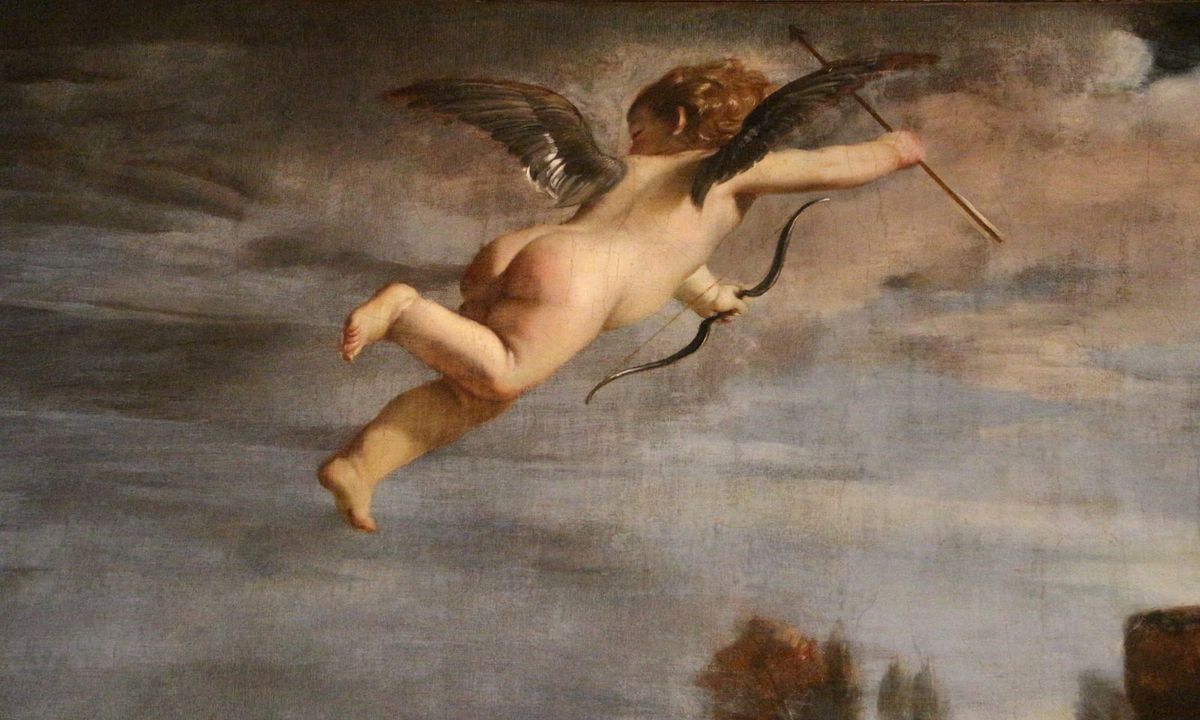
17세기 이탈리아 바로크 회화의 거장 조반니 프란체스코 바르비에리, 널리 귀에르치노(Guercino, 1591–1666)로 불리는 화가가 1631년에 완성한 대작 유화 디도의 죽음(The Death of Dido, 이탈리아어: La morte di Didone)의 상단 세부 묘사인 날아오르는 에로스(Flying Eros, 또는 Cupid in Flight)는 전체 287.0 cm × 335.0 cm 크기의 거대한 캔버스에 유채로 그린 대표적인 신화 역사화 걸작의 핵심 부분입니다. 현재 이탈리아 로마의 스파다 미술관(Galleria Spada, Rome)에 소장되어 있습니다.
화실 천장에 매단 밧줄과 화살을 떨어뜨린 아기 천사 소동
1630년대 초반 이탈리아 볼로냐와 첸토에서 최고의 전성기를 누리던 귀에르치노는 고대 로마의 시인 베르길리우스의 서사시 아이네이스에 등장하는 비극적인 사랑 이야기를 화폭에 담아달라는 주문을 받았습니다. 트로이의 영웅 아이네아스가 로마 건국의 사명을 위해 떠나버리자, 배신감과 절망 속에서 스스로 칼을 꽂고 장작더미 위에서 숨을 거두는 카르타고의 여왕 디도의 비극이었습니다. 화가는 지상에서 벌어지는 참혹한 죽음의 고통과 대비하여, 모든 비극의 원인이었던 사랑의 신 에로스가 화살과 활을 든 채 먹구름 속으로 날아 달아나는 얄궂은 운명을 극적으로 표현하고자 깊은 고민에 빠졌습니다.
이 그림을 준비하던 날, 화실에서는 뭉클하면서도 웃음이 절로 나오는 소동이 벌어졌습니다. 귀에르치노는 공중에 둥둥 떠서 날아가는 아기 천사의 통통하고 부드러운 몸짓을 실감 나게 관찰하기 위해, 화실 천장 서까래에 넓은 비단 천을 튼튼하게 매달고 동네의 귀여운 어린아이를 조심스럽게 올려 뉘었습니다. 아이의 양손에 작은 모조 활과 화살을 쥐여주고 날아가는 자세를 연출하던 중, 아이가 천장 쪽에서 날아다니는 나비를 보고 신이 나서 발버둥을 치다가 그만 손에 쥐고 있던 나무 화살을 아래로 툭 떨어뜨리고 말았습니다.
화살은 바닥에서 물감을 개고 있던 제자의 머리에 가볍게 맞았고, 제자가 화들짝 놀라 소리를 지르자 공중에 매달려 있던 아이는 꺄르르 웃음을 터뜨렸습니다. 그 천진난만한 모습을 본 귀에르치노는 호탕하게 웃으며, 바로 그 부드럽게 굽이치는 다리의 곡선과 장난기 어린 날갯짓이야말로 사랑의 덧없음과 잔인한 운명을 보여줄 최고의 조형미라며 감탄했습니다. 화가는 검은 독수리 깃털 날개의 날렵한 질감, 햇살을 받아 발그레하게 빛나는 통통한 아기 천사의 엉덩이와 발꿈치 살결, 그리고 활시위를 팽팽하게 쥔 앙증맞은 손가락 마디까지 맹렬한 속도로 캔버스에 담아냈습니다. 사시라는 신체적 약점을 딛고 빛과 어둠의 완벽한 조화를 이룩한 거장의 불꽃 같은 예술혼이 이 역동적인 하늘 풍경 속에 영롱하게 빛나고 있습니다.
허공을 가르는 통통한 발끝에서 팽팽한 활시위와 검은 날개로, 시선의 심리적 여정
그림을 마주하는 순간 관람객의 무의식적 시선은 화면 왼쪽 아래 잿빛 먹구름 속에서 한 줄기 강렬한 빛을 받아 눈부시게 밝게 빛나는 에로스의 통통한 엉덩이와 부드러운 허벅지 곡선으로 가장 먼저 빨려 들어갑니다. 발그레한 홍조를 띤 어린아이의 순수한 살결과 허공을 차고 날아오르는 듯한 앙증맞은 발끝의 생생한 움직임은 보는 이에게 깊은 시각적 매혹과 함께 생동감 넘치는 공간감을 선사합니다.
이어 시선은 에로스의 등을 타고 올라가 양쪽으로 넓게 펼쳐진 짙은 갈색 깃털 날개의 날렵한 곡선과, 맹렬하게 바람을 가르는 날개깃의 입체적인 결로 이동합니다. 천진난만한 아기의 몸에 돋아난 맹금류의 날카로운 날개를 확인하는 순간, 관람객은 한순간에 타올랐다 비극으로 끝나버린 사랑의 잔인함과 돌이킬 수 없는 운명의 덧없음을 공감각적으로 느끼게 됩니다.
마지막으로 시선은 에로스가 두 손으로 쥐고 있는 가느다란 검은색 활과 하늘을 향해 뻗어 있는 날카로운 화살촉을 지나, 아기 천사의 뒤편으로 소용돌이치며 흩어지는 잿빛 구름과 노을빛 하늘에 멈춥니다. 비극의 현장을 뒤로하고 무심하게 날아가는 사랑의 신의 뒷모습을 마주하며, 관람객은 인간의 영혼을 뒤흔드는 운명의 숭고한 무게와 귀에르치노가 건네는 묵직한 고전적 감동을 가슴 깊이 마주하게 됩니다.
17세기 이탈리아 바로크 신화화의 정점과 조형적 역동미, 미술계의 평가
미술계는 디도의 죽음에 등장하는 날아오르는 에로스를 귀에르치노가 카라바조의 강렬한 명암 대조와 볼로냐 고전주의의 완벽한 해부학적 소묘력을 공중의 역동적인 인체 묘사로 극대화해 낸 대표적인 걸작으로 평가합니다.
단축법을 완벽하게 구사하여 허공으로 솟아오르는 인체의 입체감을 탁월하게 포착했을 뿐만 아니라, 부드러운 피부의 촉감과 거친 깃털의 질감을 정교한 빛의 조율로 완벽하게 대비시켰기 때문입니다. 고대 신화의 비극적인 서사를 사랑의 신이라는 상징적 존재를 통해 시적이고도 웅장한 시각 언어로 승화시킨 귀에르치노의 이 역동적인 화폭은, 오늘날까지도 전 세계 수많은 감상자들에게 깊은 경탄과 잊을 수 없는 시각적 전율을 전해주는 불멸의 명작으로 손꼽히고 있습니다.
The Death of Dido: Flying Eros
Painted in 1631 in Cento by the preeminent Italian Baroque master Giovanni Francesco Barbieri, universally celebrated as Guercino (1591–1666), the soaring figure of Flying Eros (also titled Cupid in Flight) is the pivotal upper celestial detail of the grand masterpiece The Death of Dido (Italian: La morte di Didone), a monumental oil on canvas measuring 287.0 cm × 335.0 cm (113.0 in × 131.9 in), preserved in the prestigious permanent collection of the Galleria Spada in Rome, Italy.
The Studio Ropes, the Ostrich Feathers, and the Fallen Arrow Commotion
During the early 1630s in Cento and Bologna, Guercino undertook a major historical commission illustrating the tragic climax of Virgil's epic, the Aeneid. Having been abandoned by the Trojan hero Aeneas, who set sail to fulfill his imperial destiny in Rome, Queen Dido of Carthage surrendered to despair and took her own life upon a funeral pyre. Guercino sought to balance the harrowing earthly tragedy below with the elusive presence of the winged god of love soaring away into the overcast heavens, carrying his fateful bow and arrow after igniting the destructive passion.
A delightfully memorable incident occurred while preparing the sittings for this flying figure. To observe the foreshortened weight and dimpled contours of a floating infant, Guercino suspended a wide silk sling from the heavy oak beams of his atelier ceiling, gently placing a young neighborhood child within the harness. As the child held a miniature prop bow and wooden arrow, he grew excited watching a butterfly flutter near the rafters and kicked his bare legs playfully, accidentally dropping the wooden shaft directly onto the floor.
The prop struck the shoulder of a studio assistant mixing earth pigments below, causing the youth to cry out in surprise while the suspended infant dissolved into joyous giggles. Guercino burst into hearty laughter, declaring that this spontaneous kick and playful twist of the limbs captured the exact capricious nature of romantic destiny. The master worked with extraordinary speed, rendering the dark texture of the eagle-feathered wings, the soft rosiness of the infant's heels and buttocks catching the golden sidelight, and the delicate grip of the tiny hands clutching the bow. Transforming an ancient mythological lament into a dynamic visual poem, Guercino imbued this passage with profound emotional resonance and vitality.
Subconscious Trajectory of the Gaze: From Dimpled Flesh to the Swift Bow
The observer's subconscious gaze is immediately magnetized by the lower-left register, drawn to the luminous, warmly modeled flesh of the infant's rounded back, buttocks, and dangling legs illuminated against the stormy grey clouds. The delicate flush of pink across the skin and the weightless, floating posture establish an instant focal point of youthful innocence and dynamic aerial movement.
The visual path then ascends diagonally along the boy’s spine toward the pair of large, dark feathered wings spread wide across the atmospheric sky. Taking in the tactile contrast between the soft baby flesh and the sharp, aerodynamic quills of the dark wings cutting through the wind, the viewer directly experiences the bittersweet departure of passion and the cruel detachment of fate.
Finally, the visual trajectory sweeps past the child’s small hands holding the slender dark recurve bow and pointing the arrow toward the upper right, before resting upon the billowing storm clouds and the faint warmth of the distant horizon. Observing the harmonious balance between dramatic foreshortening, clear directional daylight, and mythological allegory, the spectator perceives the timeless nobility of high art and the enduring aesthetic solace Guercino embedded within the monumental canvas.
The Monument of Baroque Aerial Dynamics: Critical Legacy
Art historians revere the soaring Eros in The Death of Dido as a consummate masterpiece of Guercino’s mature Bolognese period, illustrating his flawless mastery of foreshortening (di sotto in sù) and naturalistic light.
By orchestrating delicate textural contrasts between tender skin, coarse eagle plumage, taut cord, and atmospheric vapor within a unified chiaroscuro scheme, Guercino elevated an allegorical deity into a vital, living presence. This magnificent composition stands as an inspiring testament to the master's enduring creative genius, celebrating the poetic power of classical myth and the transformative grace of living art.
본 컨텐트의 저작권은 팔렛트제주에 있습니다. 허가없는 무단전제를 금지합니다.
Copyright © Palette Jeju. All rights reserved. Unauthorized reproduction or redistribution is strictly prohibited.