달이 뜨는 밀밭의 건초더미 - Wheat Field with Stacks of Hay and Moonrise
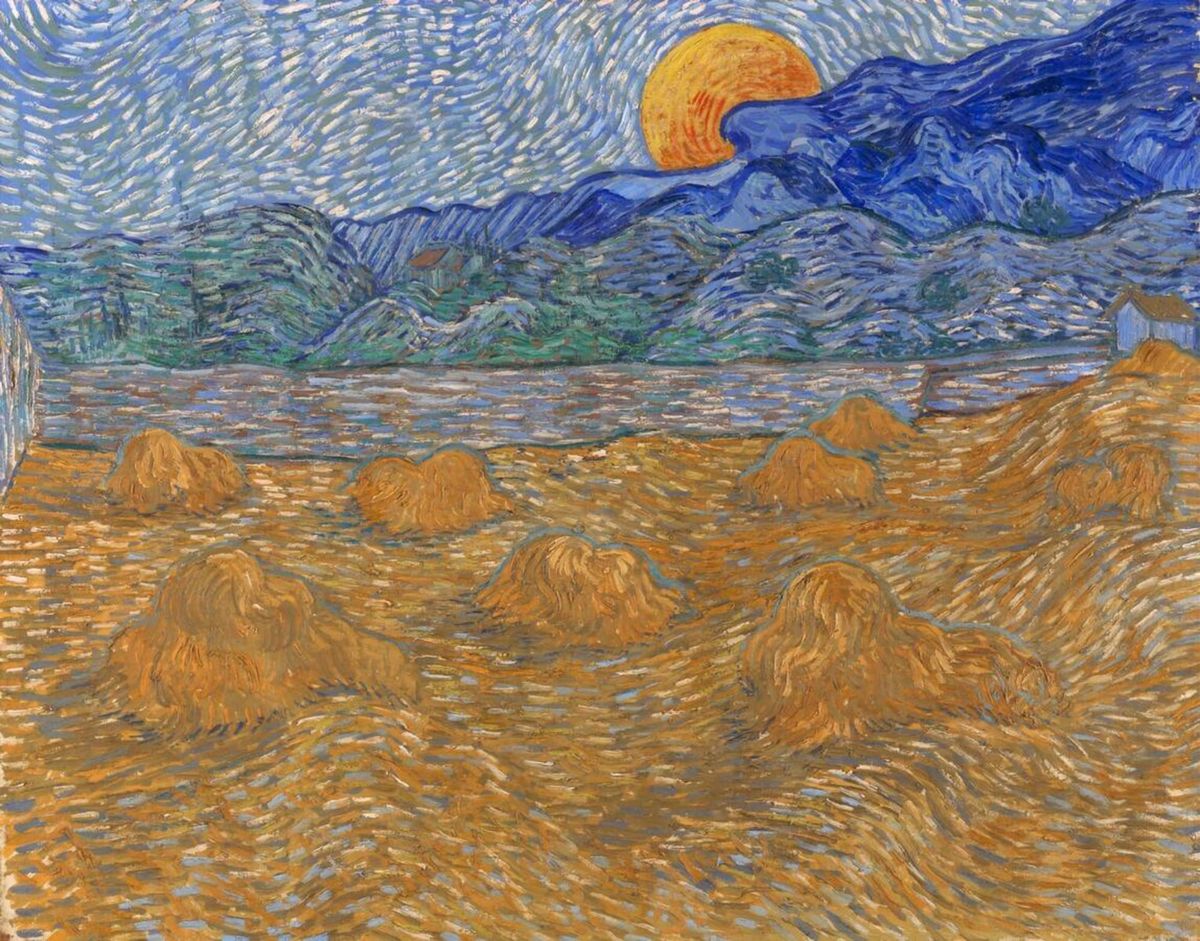
빈센트 반 고흐(Vincent van Gogh)가 1889년 7월 프랑스 생레미의 생폴 드 모졸 요양원에서 완성한 유화 풍경화입니다. 현재 네덜란드 오테를로의 크뢸러 뮐러 미술관(Kröller-Müller Museum)에 소장되어 있으며, 캔버스 위에 유채로 제작된 이 작품의 실제 크기는 약 72.0 × 91.3 cm입니다. 요양원 창문 너머로 바라본 알피유 산맥과 황금빛 밀밭을 배경으로, 소용돌이치는 역동적인 임파스토(Impasto) 기법과 강렬한 보색 대비를 통해 자연의 원초적 생명력을 담아낸 대표작입니다.
고흐는 물감을 두껍게 얹어 황금빛 밀짚더미의 둥글고 풍성한 질감과 물결치듯 흔들리는 대지의 결을 촉각적으로 조각해냈습니다. 화면 전면을 가득 채운 따뜻한 황토빛과 노란색의 짧은 붓터치들은, 뒤편 알피유 산맥의 짙은 코발트블루 및 소용돌이치는 하늘의 연푸른 붓자국과 극적인 보색 대비를 이룹니다. 산등성이 뒤로 웅장하게 솟아오르는 거대한 주황빛 보름달은 화면 전체에 신비롭고 숭고한 에너지를 불어넣습니다.
1889년 여름, 스스로 생레미 요양원에 입원한 고흐는 쇠창살이 달린 방 창문 너머로 계절의 변화에 따라 모습을 바꾸는 들판을 매일같이 관찰했습니다. 수확을 마친 뒤 들판에 옹기종기 쌓인 밀짚더미들은 고흐에게 인간의 정직한 노동이 맺은 결실이자 대지가 인간에게 베푸는 풍요로운 안식을 상징했습니다. 그는 해 질 무렵 푸른 산맥 위로 솟아오르는 달을 보며 자연의 영원한 순환과 생명의 위대함에 깊이 감응했습니다.
동생 테오에게 보낸 편지에서 고흐는 "밀밭과 건초더미를 그릴 때 내 마음속에 깃드는 평화는 그 무엇과도 비교할 수 없다"고 고백했습니다. 미술사에서는 고흐가 깊은 고립과 내면의 고통 속에서도 자연에 대한 숭고한 경외심을 잃지 않고, 빛과 색채를 감정의 순수한 분출로 승화시켜 현대 표현주의의 문을 활짝 연 기념비적인 수작으로 평가합니다.
관람객의 무의식적인 시선은 화면 하단 전면에 흩뿌려지듯 다채로운 결을 그리며 굽이치는 황금빛 밀밭의 역동적인 붓자국에서 자연스럽게 출발합니다. 햇살과 흙의 온기를 머금은 밭의 질감을 따라 안쪽으로 이동한 시선은, 화면 곳곳에 둥글고 단단하게 자리 잡은 황금빛 밀짚더미들에 머물며 풍요로운 수확의 결실과 묵직한 포근함에 깊이 몰입하게 됩니다.
이어 시선은 밀밭을 둘러싼 낮은 돌담을 넘어, 화면 상단 우측에서 묵직한 존재감을 드러내는 짙푸른 알피유 산맥의 능선을 타고 상승합니다. 푸른 산맥의 장엄한 굴곡을 따라 올라간 시선은 산등성이 뒤편에서 찬란한 주황빛 광채를 뿜어내며 솟아오르는 거대한 보름달에 도달하여, 화면 가득 번지는 숭고한 빛의 울림을 마주하게 됩니다.
이후 시선은 소용돌이치듯 유려하게 흐르는 하늘의 연푸른 붓 터치를 타고 캔버스 전체를 부드럽게 감싼 뒤, 다시금 따뜻한 온기가 머무는 전경의 밀짚더미들로 편안히 내려앉습니다.
대지의 황금빛과 하늘의 푸른빛이 만들어내는 장엄한 조화 속에 시선이 안착할 때, 관람객의 내면에는 복잡한 일상의 불안과 피로가 씻겨 내려가고, 자연의 영원한 순환이 건네는 깊은 위로와 함께 흔들리지 않는 심리적 안도감이 가득 차오르게 됩니다.
Wheat Field with Stacks of Hay and Moonrise
Painted by Vincent van Gogh in July 1889 during his stay at the Saint-Paul-de-Mausole asylum in Saint-Rémy-de-Provence, France, this magnificent landscape is preserved in the permanent collection of the Kröller-Müller Museum in Otterlo, Netherlands. Executed in oil on canvas measuring approximately 72.0 × 91.3 cm, the work depicts the enclosed wheat field outside the artist's studio window set against the rugged backdrop of the Alpilles mountains, rendered with rhythmic impasto and monumental complementary color harmonies.
Van Gogh applied dense, rhythmic strokes of paint to sculpt the rounded volumes of the haystacks and the undulating surface of the harvested earth. The radiant golden yellows and ochres dominating the foreground stand in powerful chromatic vibration against the deep cobalt blues of the mountains and the pale, swirling rhythms of the twilight sky. Rising majestically from behind the alpine ridge, the colossal golden-orange moon infuses the physical landscape with a radiant, cosmic presence.
During the summer of 1889, while enduring confinement and health struggles at the asylum, Van Gogh found profound spiritual solace in contemplating the walled field just beyond his window. To him, the gathered haystacks represented the sacred culmination of agricultural labor and the comforting abundance granted by the earth. Watching the full moon rise over the ancient hills at dusk, he perceived a grand harmony in the eternal cycles of nature.
In his letters to his brother Theo, Van Gogh expressed that painting the wheat fields brought an unmatched sense of calm to his spirit. Art historians celebrate this composition as one of the expressive summits of his Saint-Rémy period, where direct observation of the Provençal countryside was transformed into a profound anthem of cosmic vitality and human resilience, laying foundational ground for modern Expressionism.
A viewer's subconscious gaze is intuitively anchored first by the dynamic, woven weave of golden ochre brushstrokes sweeping across the foreground field. Traveling through this rich textural tapestry, the eye rests upon the rounded, solid forms of the haystacks resting in quiet harmony, drawing the observer into an atmosphere of domestic warmth, harvest abundance, and grounded peace.
The gaze then moves past the low stone enclosure, ascending the muscular, deep blue slopes of the Alpilles that frame the horizon. Guided upward along the mountain crest, the eye arrives at the glowing orb of the golden moon rising above the ridge, enveloped in a transcendent atmosphere of celestial light.
Expanding outward into the fluid, rhythmic currents of the pale blue and turquoise sky, the gaze takes in the full atmospheric breadth before descending smoothly back to the warm embrace of the sun-drenched hay below.
Completing this visual and emotional circulation, the observer feels a profound psychological release. The noise and anxieties of the exterior world dissolve into the enduring rhythms of nature, leaving the viewer restored with a lasting sense of spiritual elevation, grounding warmth, and deep psychological serenity.
본 리뷰에서 작품을 제외한 컨텐츠의 저작권은 팔렛트제주에 있습니다.
"퍼블릭도메인 고전명화"를 제외한 모든 창작 콘텐츠는 저작권법 제4조 및 제10조에 의거하여 보호됩니다. 무단 도용시 저작권법 제136조(벌칙)에 의거, 당사의 사전 서면 승인 없는 저작권 침해 행위를 금지합니다.