달빛 아래 잠든 하얀 저택과 고요한 밤의 산책, 오베르의 하얀 집 White House at Night
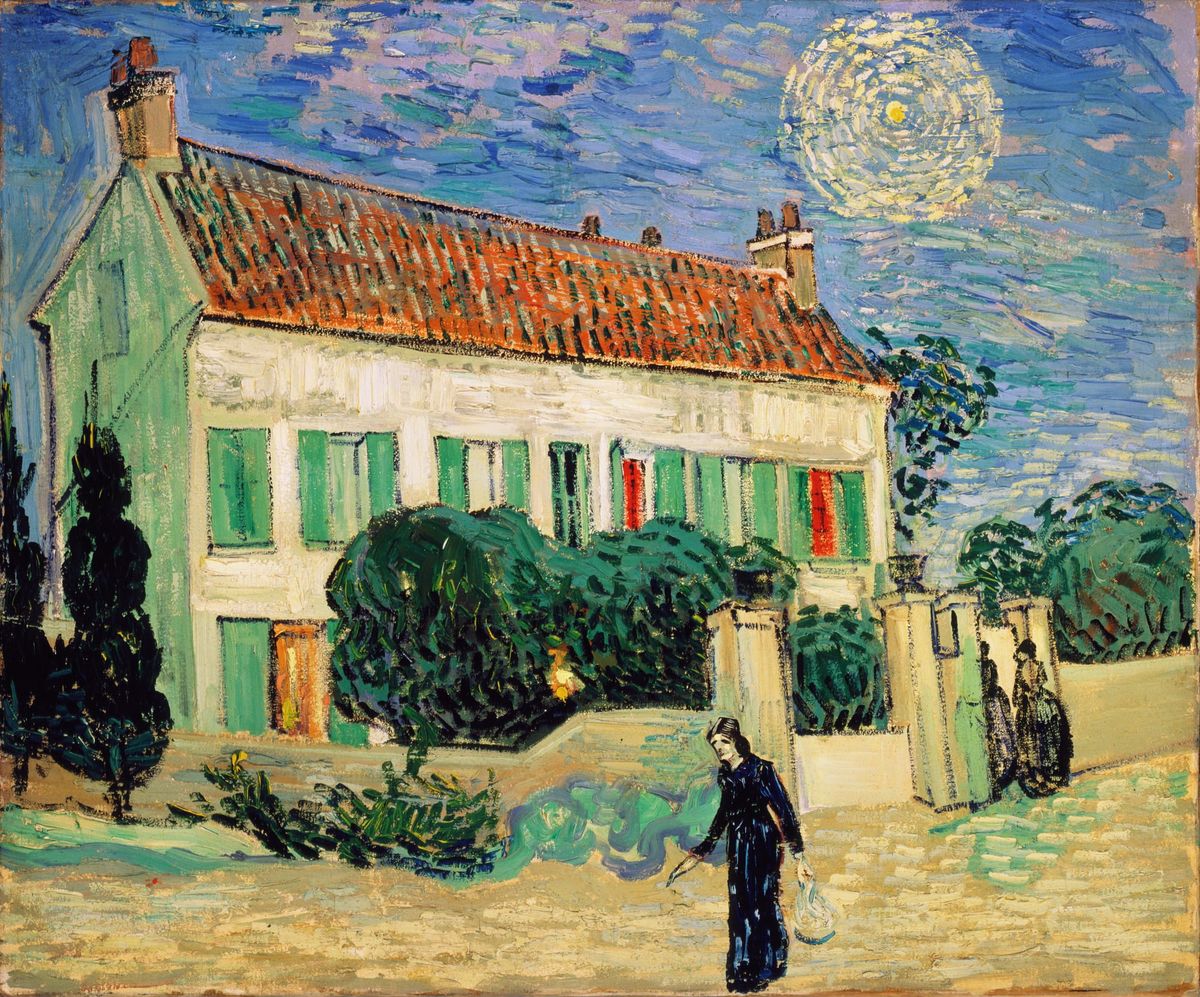
후기 인상주의 거장 빈센트 반 고흐(Vincent van Gogh, 1853–1890)가 세상을 떠나기 약 6주 전인 1890년 6월 16일 밤 프랑스 오베르 쉬르 우아즈(Auvers-sur-Oise)에서 완성한 유화 오베르의 하얀 집(White House at Night, 또는 밤의 하얀 집)은 59.5 cm × 72.5 cm 크기의 캔버스에 유채로 그린 대표작입니다. 제2차 세계대전의 혼란 속에 반세기 넘게 자취를 감추었다가 극적으로 다시 세상에 모습을 드러낸 이 작품은 현재 러시아 상트페테르부르크의 에르미타시 미술관(State Hermitage Museum)에 영구 소장되어 있습니다.
오베르의 어둠 속에서 마주한 신비로운 불빛과 사라졌던 명작의 귀환
1890년 5월 말 남프랑스를 떠나 오베르에 짐을 푼 반 고흐는 하루에 한 점 꼴로 그림을 쏟아내며 마지막 불꽃을 태우고 있었습니다. 6월의 어느 날 밤, 고흐는 마을 길을 걷다가 황혼과 밤의 경계 속에서 신비롭게 빛나는 커다란 2층 저택을 발견했습니다.
그는 어두운 밤하늘과 대비되는 하얀 벽, 초록색 덧문, 붉은 기와지붕의 강렬한 색채에 매료되어 곧바로 이젤을 펼쳤습니다. 특히 창문 안쪽에서 뿜어져 나오는 붉은빛 불빛과 하늘에 거대한 빛무리(오라)를 그리며 떠 있는 천체는 고흐 특유의 낭만적이고 시적인 상상력을 자극했습니다.
이 작품은 흥미진진한 비하인드 스토리와 천문학적 에피소드를 간직하고 있습니다. 제2차 세계대전 당시 독일의 한 은행가 소장품에서 약탈되어 오랫동안 행방이 묘연했으나, 1995년 에르미타시 미술관의 비밀 수장고 전시를 통해 무려 50년 만에 기적처럼 대중 앞에 다시 공개되었습니다. 또한 2001년 미국 텍사스 주립대학교 천문학 연구팀은 고흐가 그린 하늘의 빛나는 별이 단순한 달이 아니라, 1890년 6월 16일 저녁 8시경 프랑스 오베르의 밤하늘에서 가장 밝게 빛났던 '금성(Venus)'이었음을 정확한 위치 계산을 통해 밝혀내며 큰 화제를 모았습니다.
무의식 속 시선의 공간 여행과 차분한 마음의 안정
작품을 마주하는 순간 감상자의 무의식적 시선은 오른쪽 밤하늘에서 거대한 소용돌이처럼 하얗게 부서지는 눈부신 금성의 빛무리로 가장 먼저 빨려 들어갑니다. 어둠을 밝히는 별의 둥근 빛 파동은 보는 이의 마음에 조용한 감탄과 함께 신비로운 공간감을 선물합니다.
이어 시선은 밤하늘의 푸른 붓 터치를 타고 내려와, 화면의 중심을 당당하게 차지하고 있는 하얀 집의 붉은 기와지붕과 초록색 덧문으로 이동합니다. 닫힌 덧문 사이로 선명하게 빛나는 붉은 창문은 따뜻한 온기를 전하며 시선을 오래도록 머물게 합니다.
그 후 시선은 집 앞 정원의 짙푸른 덤불을 지나 길 위를 걸어가는 검은 옷을 입은 여인의 뒷모습에 닿았다가, 흙길의 따스한 모래빛 위로 편안하게 내려앉습니다. 하늘의 짙푸른 어둠과 저택의 밝은 하얀색, 그리고 흙길의 포근한 노란빛이 만들어내는 조화 속에서 감상자는 마음속 불안을 내려놓고 하루를 마감하는 마을의 아늑한 평온에 깊이 젖어들게 됩니다.
밤 풍경화의 새로운 지평과 감정의 시각화, 미술계의 평가
미술계는 오베르의 하얀 집을 반 고흐가 생의 마지막 순간까지 탐구했던 '빛과 어둠의 서정적 대화'가 완벽하게 무르익은 걸작으로 평가합니다.
단순히 어두운 밤을 사실적으로 묘사하는 데 그치지 않고, 두터운 물감과 율동적인 선을 사용하여 밤의 대기가 품고 있는 따뜻한 생명력을 시각화했습니다. 불안한 현실 속에서도 별빛과 저택의 불빛을 통해 인간적인 온기를 끝내 놓지 않았던 반 고흐의 맑은 영혼이 담긴 이 작품은, 오늘날 현대 미술사에서 가장 시적이고 감동적인 밤의 명작으로 높이 평가받고 있습니다.
A Luminous Sanctuary Beneath the Celestial Halo, White House at Night
Painted on the evening of June 16, 1890, in Auvers-sur-Oise by Vincent van Gogh (1853–1890) just weeks before his death, White House at Night (also known as The White House at Night) is an oil on canvas measuring 59.5 cm × 72.5 cm (23.4 in × 28.5 in), preserved in the permanent collection of the State Hermitage Museum in Saint Petersburg, Russia.
A Nocturne in Auvers: Mystery, Recovery, and the Star of Venus
Arriving in Auvers-sur-Oise in late May 1890, Van Gogh produced paintings with astonishing speed and expressive intensity. Walking through the quiet village during twilight, he was struck by the sight of a substantial two-story manor rising against the darkening sky, its pale facade illuminated by the soft evening air.
Vincent was immediately drawn to the clear geometric balance of the white walls, green shutters, and warm tile roof. The composition gained extraordinary poetic power through the glowing red accent in the upstairs window and the large, pulsing celestial orb radiating in the sky.
The painting carries a dramatic history and a remarkable scientific discovery. Looted from a private collection during World War II, the canvas disappeared for over fifty years before re-emerging in 1995 from the secret storage vaults of the Hermitage Museum. In 2001, a team of astronomers from Texas State University analyzed the exact date and location of the scene, proving that the glowing celestial body in the upper right was not the moon, but Venus, shining with dazzling magnitude at approximately eight in the evening on June 16, 1890.
Psychological Trajectory of the Gaze and Subconscious Solace
The observer’s subconscious gaze is immediately welcomed by the luminous halo of the evening star radiating across the upper-right corner. The concentric, circular impasto surrounding the celestial body instills an instinctive feeling of wonder and expansive quiet.
From this radiant apex, visual attention descends through the dynamic blue brushstrokes of the sky onto the solid architecture of the manor, guided along the warm terracotta roofline to the vibrant emerald shutters. The solitary window glowing in vermilion provides a warm human anchor that holds the eye in contemplative stillness.
The gaze then travels past the dark ornamental shrubbery and encounters the solitary silhouette of a woman walking along the sun-bleached road, before settling upon the gentle ochre tones of the foreground lane. Balancing the cool atmospheric twilight with the protective warmth of the home, the viewer subconsciously internalizes a profound sense of domestic peace, stillness, and emotional rest.
Expressive Nocturnes and Modern Lyricism: Critical Significance
Art historians celebrate White House at Night as a supreme achievement of Van Gogh's late Auvers period, showcasing his unmatched ability to turn architectural form into a vessel of emotional truth.
Rather than rendering darkness as cold absence, Vincent used thick, directional strokes and saturated complementary hues to reveal the living pulse of the night. Preserving a fragile yet enduring hope through the twin lights of hearth and star, this masterwork stands as one of the most poetic and comforting nocturnal landscapes in modern art history.
본 컨텐트의 저작권은 팔렛트제주에 있습니다. 허가없는 무단전제를 금지합니다.
Copyright © Palette Jeju. All rights reserved. Unauthorized reproduction or redistribution is strictly prohibited.