대패질하는 사람들 The Floor Scrapers
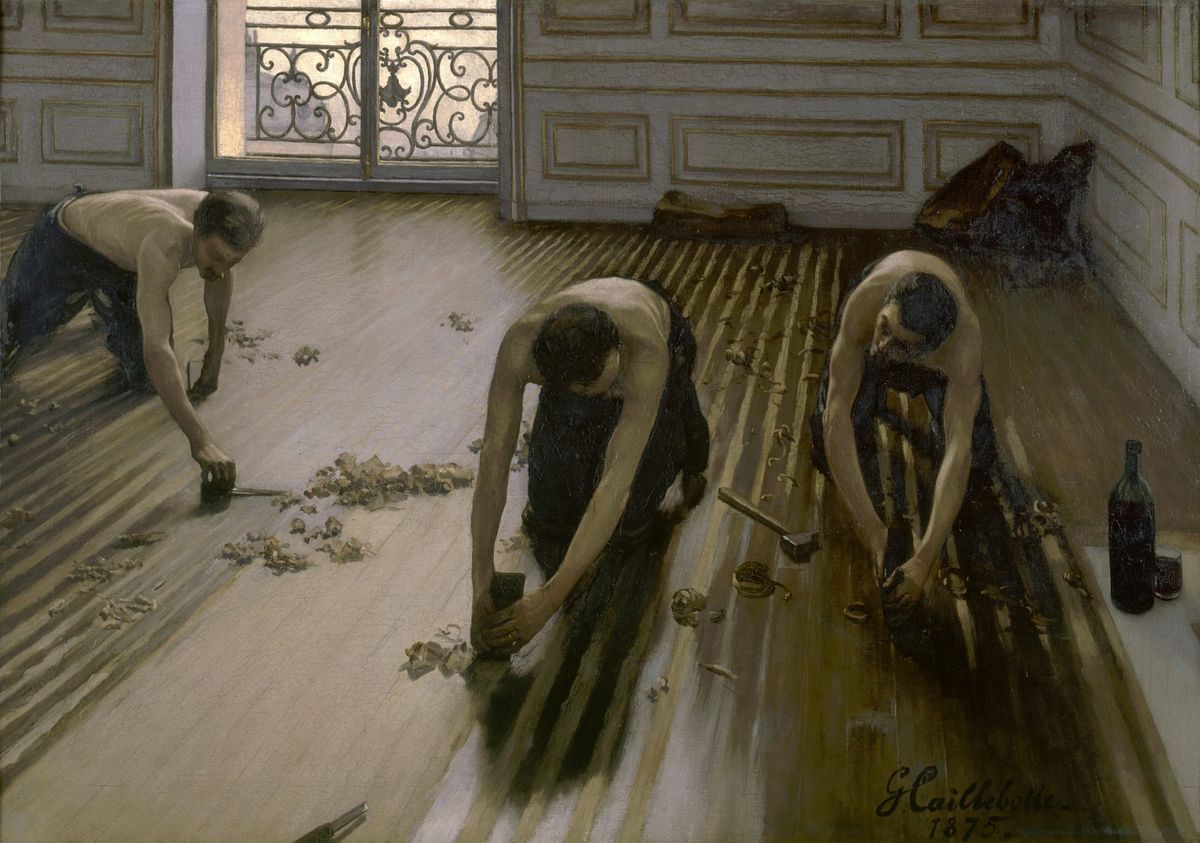
도시의 화려함 이면에 숨겨진 노동의 거친 숨결을 화면 가득 생생하게 끌어올린 이 작품은, 귀스타브 카유보트가 1875년에 완성한 명작입니다. 세로 102cm, 가로 146.5cm의 실제 크기를 지닌 이 유화는 당시 근대화된 파리 부르주아 아파트의 실내를 배경으로, 바닥을 깎아내는 노동자들의 모습을 사진처럼 치밀하게 포착해 냈습니다.
그림을 마주한 감상자의 시선은 가장 먼저 화면 뒤쪽의 우아한 발코니 창문과 정교한 벽면 장식으로 향하게 됩니다. 밝은 빛이 스며드는 이 세련된 실내 공간은 19세기 파리의 부유한 상류층이 누리던 쾌적한 삶의 표면이자, 잘 정돈되고 통제 가능한 이성적 의식의 세계를 상징합니다.
하지만 이내 우리의 눈길은 화면을 묵직하게 가로지르는 마룻바닥의 강렬한 원근법을 타고, 윗옷을 벗어 던진 채 바닥에 엎드린 세 명의 남성들에게로 빠르게 미끄러져 내려옵니다. 이들의 굽은 등과 팽팽하게 긴장한 팔 근육, 그리고 바닥에 어지럽게 흩어진 나무 부스러기들은 화려한 도시의 장막 아래에 억눌려 있던 날것 그대로의 육체적 무의식과 거친 현실의 무게를 시각적으로 분출시킵니다.
마침내 시선은 화면 우측 구석에 무심하게 놓인 싸구려 와인병과 유리잔에 가닿습니다. 우아한 저택 한가운데에 놓인 이 투박한 사물들은 고단한 노동자의 갈증을 달래주는 유일한 위안거리로서, 감상자로 하여금 꾸며진 사회적 계급장을 떼어내고 생존을 위해 땀 흘리는 인간 본연의 진실하고 취약한 내면과 정면으로 마주하게 합니다.
이처럼 파격적인 노동의 풍경이 탄생한 비하인드 스토리에는 당시 주류 미술계의 오만한 편견에 맞선 카유보트의 굳건한 신념이 있습니다. 이 그림은 1875년 파리 살롱전에 출품되었으나, 상류층의 우아한 삶이나 신화가 아닌 ‘상의를 탈의한 하층민 노동자’를 다루었다는 이유로 천박하다는 거센 비난을 받으며 낙선하고 말았습니다.
그러나 카유보트는 이에 굴하지 않고 이듬해 열린 제2회 인상파 전시회에 이 작품을 당당히 내걸었습니다. 자신의 새 아파트를 단장하던 실제 인부들을 모델로 삼아, 빛을 받아 빛나는 마룻바닥과 노동자들의 땀방울을 완벽한 사실주의 기법으로 묘사하며 시대의 진실을 화폭에 아로새긴 것입니다.
오늘날 미술사학자들은 이 작품을 인상주의와 사실주의가 빚어낸 가장 위대한 성취 중 하나로 칭송합니다. 아카데미즘의 엄격한 원근법과 인체 데생 능력을 바탕으로 하면서도, 빛의 반사와 근대 도시 노동자들의 삶이라는 지극히 현대적인 주제를 훌륭하게 결합해 냈기 때문입니다. 이 그림은 예술의 주제를 고상한 신화에서 평범한 일상의 노동으로 끌어내린 결정적인 전환점이자, 이름 없는 도시 노동자들에게 예술적 헌사를 바친 기념비적인 걸작으로 확고히 인정받고 있습니다.
Bringing the rough breath of labor hidden behind the city's glamour vividly to the forefront of the canvas, this artwork is a masterpiece completed by Gustave Caillebotte in 1875. With actual dimensions of 102 by 146.5 centimeters, this oil painting meticulously captures the floor scrapers at work inside a modernized Parisian bourgeois apartment, almost like a photograph.
Upon facing the painting, the viewer's gaze is first directed toward the elegant balcony window and elaborate wall moldings in the background. This refined indoor space, infused with bright light, symbolizes the pleasant surface of the wealthy upper-class life in 19th-century Paris, representing a well-ordered and controllable world of rational consciousness.
However, riding the intense perspective of the floorboards that heavily intersect the canvas, our eyes soon slide down rapidly to the three bare-chested men kneeling on the floor. Their hunched backs, tightly tensed arm muscles, and the wood shavings chaotically scattered on the floor visually erupt the raw physical unconsciousness and the weight of harsh reality that had been suppressed beneath the veil of the glamorous city.
Finally, the gaze reaches the cheap wine bottle and glass placed casually in the bottom right corner of the canvas. These unrefined objects, sitting in the middle of an elegant mansion, serve as the only comfort to soothe the weary laborers' thirst. They compel the observer to strip away fabricated social hierarchies and confront the genuine, vulnerable inner core of human beings sweating for survival.
The behind-the-scenes story of how such a remarkably unconventional scene of labor was born lies in Caillebotte's firm conviction against the arrogant prejudices of the mainstream art world at the time. This painting was submitted to the Paris Salon in 1875 but was rejected and fiercely criticized as vulgar because it depicted "shirtless lower-class laborers" rather than the elegant lives of the upper class or mythological figures.
Unfazed, Caillebotte proudly displayed this work at the second Impressionist exhibition held the following year. Using the actual workmen renovating his new apartment as models, he engraved the truth of the era onto the canvas, depicting the glistening, light-reflecting floorboards and the sweat of the laborers with flawless realism.
Today, art historians highly praise this piece as one of the greatest achievements forged by Impressionism and Realism. It is because he brilliantly combined a highly modern subject—the reflection of light and the lives of modern urban workers—while maintaining the strict perspective and anatomical drawing skills of Academicism. This painting is firmly recognized as a decisive turning point that brought the subject of art down from noble myths to ordinary, everyday labor, serving as a monumental masterpiece that pays an artistic tribute to the unnamed workers of the city.
ⓒ 본 리뷰의 저작권은 "팔렛트제주"에 있으며, 무단 전재 및 재배포를 엄격히 금합니다. / Copyright 2026 by Palette Jeju. All rights reserved. Unauthorized reproduction or distribution is strictly prohibited.