초가집이 있는 풍경 - Thatched Cottage
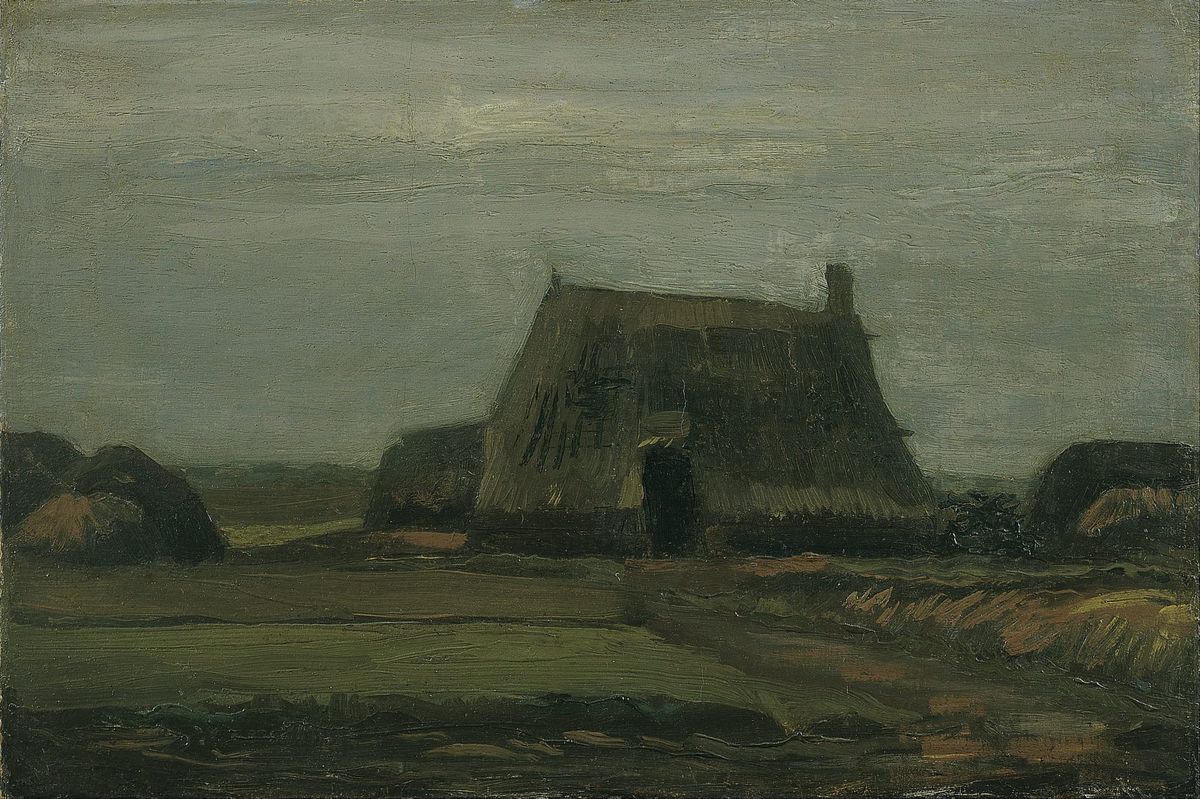
빈센트 반 고흐(Vincent van Gogh)가 네덜란드 뉘어넨(Nuenen)에 머물던 1885년 7월에서 8월 사이에 완성한 대표적인 초기 유화 풍경화(Thatched Cottage in the Fields / Cottage with Peasant)입니다. 현재 네덜란드 암스테르담의 반 고흐 미술관(Van Gogh Museum)에 소장되어 있으며, 캔버스 위에 유채로 제작된 이 작품의 실제 사이즈는 약 44.0 × 67.5 cm입니다. 흐린 하늘 아래 묵묵히 대지 위에 엎드려 있는 소박한 초가지붕 농가와 뉘어넨 들판의 어둡고 묵직한 흙빛 정취를 두터운 임파스토(Impasto) 기법과 깊이 있는 토속적 색채로 담아냈습니다.
고흐는 물감을 캔버스 위에 두껍게 얹어 이끼와 짚으로 덮인 초가지붕의 거친 결, 들판 흙이랑의 단단한 질감, 그리고 낮게 깔린 북유럽 하늘의 묵직한 구름층을 조각하듯 입체적으로 빚어냈습니다. 화면 전체를 지배하는 깊은 암갈색과 올리브 그린, 짙은 흙빛 톤은 화면 상단의 창백한 회청색 하늘과 은은한 명암 대비를 이루며, 지평선을 따라 낮고 넓게 퍼진 구도는 고요한 전원 속에 깃든 원초적인 대지의 무게감을 촉각적으로 전달합니다. 거칠고 투박한 붓 터치는 화려한 기교를 배제한 채 자연과 맞닿은 삶의 진솔한 결을 생생하게 뿜어냅니다.
1885년 뉘어넨 시절, 고흐는 대지를 터전 삼아 살아가는 농민들의 정직한 삶과 그들의 소박한 보금자리를 화폭에 기록하는 일에 깊이 몰두했습니다. 그에게 들판 한가운데 굳건히 서 있는 초가집은 비바람을 막아주는 단순한 가옥을 넘어, 고된 노동 끝에 인간이 온전히 쉴 수 있는 가장 원초적인 안식처이자 자연과 하나 된 성소였습니다. 그는 17세기 네덜란드 회화의 흙빛 사실주의 전통과 장 프랑수아 밀레의 농촌 휴머니즘을 계승하며, 척박한 토양 위에 뿌리내린 인간 실존의 숭고한 침묵을 캔버스에 담아냈습니다.
화면 중앙을 묵직하게 차지한 초가집의 견고한 삼각형 실루엣과 지평선의 수평적 조화는 대지와 인간의 영원한 유대감을 증명합니다. 미술사에서는 고흐가 빛과 색채의 극적인 탐구로 나아가기 전, 대상의 구조와 물질성을 깊이 있게 탐구하며 자신만의 독창적인 조형적 뼈대를 완성한 뉘어넨 시기의 가장 묵직하고 서정적인 풍경 수작으로 평가하고 있습니다.
관람객의 무의식적인 시선은 화면 중앙에 묵직하고 당당하게 솟아 있는 초가지붕 농가의 짙은 암갈색 윤곽선과 짚으로 엮은 지붕의 두터운 질감에서 자연스럽게 출발합니다. 비바람을 견뎌낸 소박한 보금자리의 단단한 조형미와 거친 붓 터치에 시선이 머무는 순간, 보는 이는 찰나의 침묵과 함께 19세기 네덜란드 들판의 고요하고 차분한 공기 속으로 단숨에 몰입하게 됩니다.
이어 시선은 지붕 처마 아래 어둡게 열려 있는 작은 문과 굴뚝의 투박한 실루엣을 지나, 집 양옆으로 완만하게 펼쳐진 들판과 흙더미들의 짙은 올리브빛 밭이랑을 타고 화면 전경으로 이동합니다. 흙냄새를 가득 머금은 대지의 묵직한 결을 마주하며, 묵묵히 삶을 지탱해 온 자연의 깊은 인내와 생명력을 체감하게 됩니다.
이후 시선은 캔버스 상단 전체를 낮고 무겁게 감싸고 있는 창백한 회회색 구름 하늘의 수평 붓자국들을 훑은 뒤, 좌우 지평선 너머로 아스라이 이어지는 평원의 경계를 타고 다시금 중앙의 초가집으로 부드럽게 내려앉습니다.
대지의 묵직한 어둠과 하늘의 은은한 여운이 빚어내는 장엄한 흙빛의 순환을 따라 순환한 시선이 편안히 안착할 때, 관람객의 내면에는 복잡한 일상의 번뇌와 피로가 정돈되고, 대지의 품이 건네는 깊은 위로와 함께 흔들리지 않는 굳건한 심리적 안도감이 가득 차오르게 됩니다.
Thatched Cottage
Painted by Vincent van Gogh between July and August 1885 during his pivotal residency in Nuenen, Netherlands, this somber yet deeply evocative landscape is preserved in the permanent collection of the Van Gogh Museum in Amsterdam. Executed in oil on canvas, the actual size of the work is approximately 44.0 × 67.5 cm. Capturing a solitary, heavy-roofed thatched dwelling standing firmly against the expansive overcast sky of Brabant, the composition orchestrates dense impasto, earthy chiaroscuro, and broad horizontal planes into a profound tribute to rustic shelter.
Van Gogh applied unmixed, opaque paint with physical weight, sculpting the weathered thatch of the steep roof, the damp ridges of the surrounding soil, and the layered strata of the northern sky. The deep umber, charcoal, and moss-green tones dominating the foreground and architecture establish a quiet, solemn contrast against the pale slate-grey atmosphere above. The low horizon and grounded triangular silhouette of the cottage lend the composition an enduring sense of stability, permanence, and earthy tactile presence.
During the summer of 1885, Van Gogh was intensely committed to depicting the authentic environment of peasant life, seeing the humble cottage not merely as rustic architecture, but as a living symbol of refuge, resilience, and the primal bond between mankind and the earth. Drawing deep inspiration from the 17th-century Dutch masters and the humanitarian realism of Jean-François Millet, he embraced a restricted palette of rich earth tones to capture the dignity and solemn quietude of rural existence.
The seamless harmony between the weathered dwelling and the dark, fertile landscape demonstrates Van Gogh's mastery of structural gravity. Art historians celebrate this composition as one of the definitive achievements of his Dutch period, marking a crucial stage where material texture and emotional truth were synthesized into a powerful visual monument.
A viewer's subconscious gaze is intuitively anchored first by the solid, triangular mass of the central thatched cottage rising firmly against the horizon. Lingering upon the dense, directional brushstrokes that sculpt the thick thatch and dark entryway, the observer is drawn into an immediate atmosphere of rustic permanence, quietude, and contemplative stillness.
The gaze is then guided downward along the broad horizontal bands of the olive-brown fields and the damp furrows of the rural lane in the foreground. Absorbing the deep warmth and earthen stability of the soil, the viewer experiences a reassuring sense of grounded endurance, shelter, and agrarian peace.
The eye ascends into the pale, muted grey tones of the overcast northern sky, taking in the sweeping atmospheric expanse before returning smoothly to the sheltering form of the cottage.
Completing this visual and psychological circulation, the observer feels a profound release of modern tension. The timeless fortitude and quiet serenity of the earth leave the viewer restored with a lasting sense of emotional grounding, comfort, and enduring psychological peace.
본 리뷰에서 작품을 제외한 컨텐츠의 저작권은 팔렛트제주에 있습니다.
"퍼블릭도메인 고전명화"를 제외한 모든 창작 콘텐츠는 저작권법 제4조 및 제10조에 의거하여 보호됩니다. 무단 도용시 저작권법 제136조(벌칙)에 의거, 당사의 사전 서면 승인 없는 저작권 침해 행위를 금지합니다.