최후의 만찬 The Last Supper
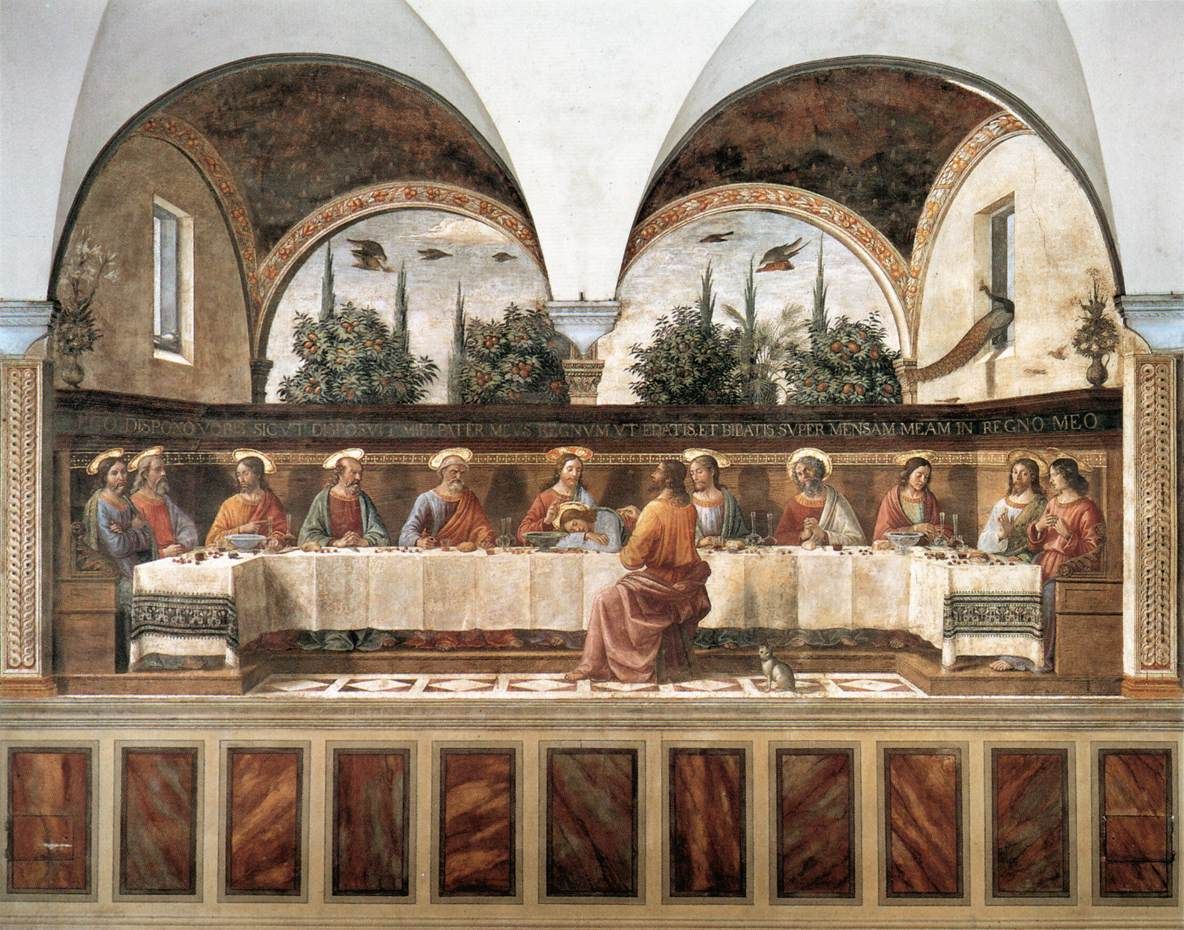
15세기 이탈리아 르네상스의 거장 도메니코 기를란다요가 1486년에 완성한 기념비적 프레스코 벽화 작품 최후의 만찬은 이탈리아 피렌체에 위치한 산 마르코 수도원 식당에 제작된 높이 400 cm, 너비 800 cm 크기의 초기 르네상스 벽화 최고 걸작입니다.
수도원의 손님 식당을 위해 제작되어 오랜 세월 동안 원본 소장처인 이탈리아 피렌체의 산 마르코 수도원에 영구 소장되어 안전하게 보존되어 오고 있습니다.
이 작품은 일부분만 잘라낸 세부 컷이 아니라, 산 마르코 수도원 식당 벽면에 그려진 원본 전체 화면을 온전하게 감상할 수 있는 거대한 벽화입니다.
작가의 고뇌/비하인드
1486년 이탈리아 피렌체에서 활동하던 도메니코 기를란다요는 산 마르코 수도원의 게스트 식당 벽면 장식을 맡아 그리스도와 제자들이 나누는 엄숙한 최후의 만찬 순간을 어떻게 하면 가장 평화롭고 지적인 영적 교감으로 빚어낼지 깊은 몰두에 빠졌습니다.
화가는 단순히 성경 속 비극적 예언의 장면을 자극적으로 묘사하는 데 그치지 않고, 예수의 부드러운 축복의 손길과 제자들의 고요한 표정을 템페라와 프레스코의 은은한 질감 속에서 극적으로 조화시키고자 치열하게 번민했습니다.
산 마르코 수도원의 공식 학술 기록 및 미술사 도록에 따르면 이 작품은 테이블 반대편에 홀로 앉아 있는 유다의 모습, 그리스도의 가슴에 기대어 사색에 잠긴 사도 요한, 그리고 배경 아치 너머로 그려진 과일 나무와 새들의 도상학적 구성을 통해 배신과 성찬의 신비를 동시에 상징하는 핵심 장치로 분석됩니다.
화가는 수도원 식당의 건축 구조와 자연스럽게 이어지는 웅장한 아치형 실내를 배경으로, 영원한 진리가 오가는 거룩한 만찬의 순간을 화폭에 담았습니다.
화면 중앙에는 길게 놓인 식탁을 중심으로 제자들이 나란히 앉아 있으며, 그 앞쪽으로 유다가 홀로 떨어져 앉아 있는 긴장감 넘치는 배치가 포근하게 자리하고 있어 깊은 인상을 자아냅니다.
몸에는 당시의 품격 있는 복식을 갖춰 입고 각자의 내면적 감정을 차분하게 드러내는 인물들의 동작이 섬세하게 묘사되어 있습니다.
이어 화면 배경 위쪽의 열린 아치 창문 너머로 보이는 측백나무와 오렌지나무, 그리고 그 사이를 노니는 새들의 세밀한 풍경은 화가가 추구했던 15세기 르네상스의 공간적 원근법과 대기감을 생생하게 웅변합니다.
무의식 속 시선 및 심리 흐름
그림을 마주하는 순간 관람객의 무의식적 시선은 화면 중앙에서 제자들과 둘러앉아 평온한 눈빛으로 성찬을 주관하는 예수의 숭고한 얼굴과 섬세한 프레스코 질감으로 가장 먼저 빨려 들어갑니다.
세속의 번뇌를 초월한 채 제자들을 감싸 안는 인물의 표정은 보는 이에게 강렬한 시각적 몰입감과 함께 마음 깊은 곳에서 우러나는 묵직한 평안의 감정을 선사합니다.
이어서 시선은 식탁 위에 정갈하게 놓인 빵과 유리잔, 그리고 하얀 식탁보의 기하학적 문양과 텍스처로 자연스럽게 이동합니다.
신성한 영감과 인간적인 신뢰가 교차하는 성소의 공기를 체감하는 순간 관람객은 15세기 플로렌스의 찬란한 예술적 성소 속으로 온몸이 빨려 들어가게 됩니다.
마지막으로 시선은 인물들의 묵직한 어깨 실루엣을 거쳐 화면 상단의 아치형 개방 공간과 배경을 에워싸는 깊이 있는 대기감으로 멈춥니다.
전면 인물들의 매혹적인 심리적 깊이와 후면 자연 풍경의 조화를 마주하며 관람객은 거룩한 성찬의 서사를 최고의 시각 예술로 승화시킨 거장 기를란다요의 압도적인 조형 의지를 가슴 깊이 마주하게 됩니다.
미술계의 평가 및 조형미
미술계와 산 마르코 수도원 공식 도록은 이 작품을 기를란다요가 화력의 정점에서 이뤄낸 가장 평화롭고 정서적 교감이 뛰어난 종교화의 정수이자 15세기 플로렌스 회화의 심리학적 완성도가 집약된 최고봉 마스터피스로 평가합니다.
단순한 성경 이야기의 전달을 넘어 15세기 후반 이탈리아 회화가 지닌 극도의 사실주의적 인물 묘사, 부드러운 명암 대조, 그리고 건축 공간과 자연의 유기적 결합을 가장 완벽한 프레스코 벽화 기법으로 융합해 냈기 때문입니다.
인간의 영원한 신앙과 거룩한 성찬의 메시지를 가장 격조 높은 시각 예술로 승화시킨 이 소중한 화폭은 오늘날까지도 전 세계 수많은 감상자들에게 깊한 감탄과 잊을 수 없는 시각적 전율을 전해주는 불멸의 명작으로 손꼽히고 있습니다.
The Last Supper
Painted in 1486 by the early Renaissance master Domenico Ghirlandaio (1448–1494), The Last Supper is a monumental masterpiece executed in fresco within the refectory of the Convent of San Marco in Florence, measuring 400 cm in height and 800 cm in width.
Commissioned for the guest refectory of the Dominican convent, this celebrated fresco has been preserved in its original sacred location in Florence.
This independent fresco painting presents the complete, undivided original composition in its entirety.
Historic Context & Arcadian/Genre Depth
During the mid-1480s in Florence, Domenico Ghirlandaio drew profound inspiration from the spiritual environment of the San Marco convent, seeking to capture the serene and contemplative moment of the Last Supper within a unified architectural setting.
Moving beyond dramatic turmoil, the master meditated deeply on how to portray the quiet dignity of Christ and the tender devotion of the apostles, utilizing brilliant fresco pigments and balanced composition to achieve deep psychological verisimilitude.
According to official art historical records and monastic documentation, this exquisite fresco incorporates rich symbolic elements such as Judas isolated on the opposite side of the table, John leaning against Christ's chest, and the lush garden landscape visible through the upper arches, serving as powerful iconographic emblems of betrayal, the Eucharist, and divine grace.
Ghirlandaio staged the composition against the solemn architectural walls of the San Marco refectory, seamlessly extending the real room into the painted space.
In the foreground, Christ and the apostles are seated along a long table, while Judas sits isolated on the near side.
The figures are rendered with warm skin tones and individualized expressions reflecting the peak of Quattrocento naturalism.
In the background, the open loggia reveals detailed fruit trees and birds, completing a solemn visual allegory of sacred communion and natural harmony.
Subconscious Trajectory of the Gaze
The observer's subconscious gaze is immediately magnetized by the central register, drawn to the radiant countenance of Christ and the gentle, introspective postures of the surrounding apostles.
Their profound emotional resonance and striking realism establish an instant focal point of psychological intensity, raw spiritual grace, and dramatic narrative weight.
The visual path then shifts outward along the fine textures of the embroidered tablecloth, glassware, and colored garments.
Taking in the tactile qualities of the fine fresco paint, subtle shading, and soft flesh tones, the viewer directly experiences the solemn, meditative atmosphere of Quattrocento Florence.
Finally, the visual trajectory moves toward the surrounding architectural boundaries, before absorbing the expansive atmospheric background framing the scene through the open arches.
Observing the harmonious equilibrium between narrative symbolism, figural emotion, and precise Renaissance draftsmanship, the spectator perceives the timeless poetry of communion and the profound aesthetic brilliance Ghirlandaio embedded within the plaster.
Critical Legacy
Art historians revere the Convent of San Marco's The Last Supper as a supreme milestone in Ghirlandaio’s oeuvre, illustrating his consummate ability to unite emotional calm with breathtaking fresco mastery on wall.
By orchestrating delicate textural contrasts between rich garments, organic skin tones, expressive facial features, and shifting tonal density within a unified format, Ghirlandaio transformed a sacred devotional scene into an exquisite aesthetic treatise on humanism, memory, and divine grace.
This magnificent historical fresco endures as an inspiring testament to the master's creative fortitude, celebrating the quiet poetry of human existence and the transformative grace of living art.
본 컨텐트의 저작권은 팔렛트제주에 있습니다. 허가없는 무단전제를 금지합니다.
Copyright © Palette Jeju. All rights reserved. Unauthorized reproduction or redistribution is strictly prohibited.