치마를 입은 펠릭스의 초상 - Portrait of Félix in a Skirt
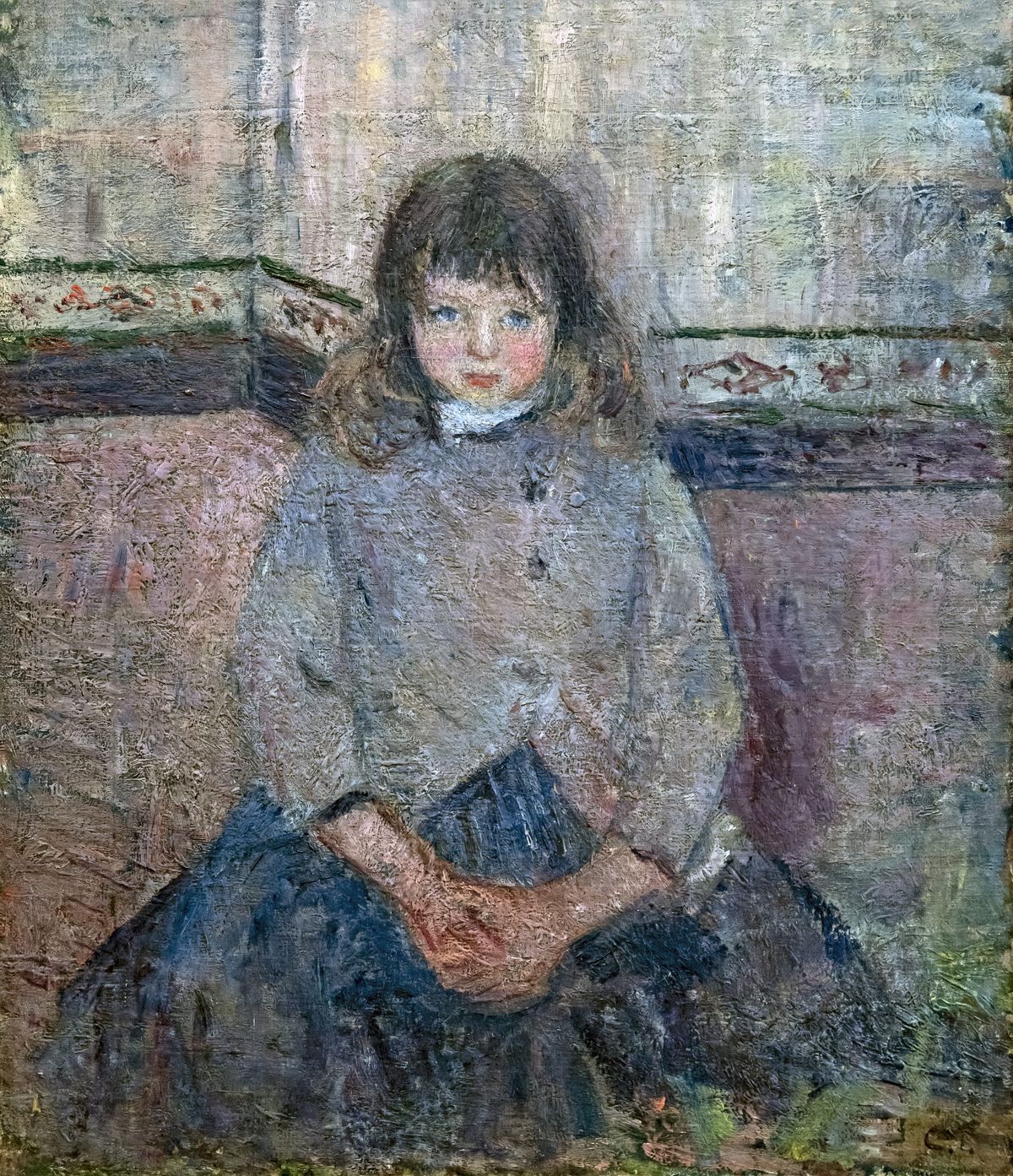
인상주의의 따뜻한 구심점이자 아버지 같았던 카미유 피사로(Camille Pissarro)가 1883년에 완성한 '치마를 입은 펠릭스의 초상(Portrait de Félix en jupe)'은 캔버스에 유채(Oil on canvas)로 그려진 감성적인 초상화 걸작입니다. 가로 38cm, 세로 46cm 크기의 캔버스에 담긴 이 작품은 현재 프랑스 툴루즈에 위치한 벰베르크 재단 미술관(Fondation Bemberg)에 소장되어 있습니다.
이 그림의 주인공은 1874년에 태어난 피사로의 넷째 아들 펠릭스 피사로(Félix Pissarro, 애칭 '티티(Titi)')입니다. 남자아이에게 치마를 입히고 긴 머리를 유지하게 한 모습은 현대의 시각에서는 다소 낯설게 보일 수 있지만, 19세기 유럽에서는 어린 남아들의 배변 훈련과 활동 편의, 그리고 유아기 액운을 막는다는 전통적 관습에 따라 일정 연령까지 치마(Breeching 이전의 유아복)를 입히는 풍습이 흔했습니다.
가족에 대한 애정이 남달랐던 피사로는 어린 자녀들을 아틀리에의 가장 훌륭한 모델이자 예술적 영감의 원천으로 삼았습니다. 펠릭스는 어릴 적부터 아버지의 화구를 장난감 삼아 놀며 그림에 천부적인 재능을 보였고, 훗날 '장 로슈(Jean Roch)'라는 필명으로 판화가이자 화가로 활동하며 피사로 가문의 예술적 재능을 물려받은 촉망받는 청년으로 성장했습니다. 그러나 안타깝게도 펠릭스는 1897년 불과 스물셋이라는 젊은 나이에 결핵으로 세상을 떠나 아버지 피사로에게 평생 씻을 수 없는 슬픔을 안겨주기도 했습니다.
이 작품을 제작할 당시 피사로는 극심한 생활고와 화풍의 변혁 사이에서 고뇌하던 시기였습니다. 풍경화 위주로 작업하던 피사로는 인물 내면의 본질을 탐구하고자 거칠고 두터운 붓 터치와 긁어내는 듯한 질감을 실험했습니다. 훗날 평단은 이 초상화를 두고 단순한 인물 묘사를 넘어, 한순간도 가만히 있지 못하는 어린아이의 순진무구한 눈망울과 부모의 애틋한 시선을 두터운 유채의 질감 속에 영원히 박제해 놓은 가장 내밀하고 따뜻한 걸작으로 평가하고 있습니다.
작품을 마주할 때 관람자의 시선은 가장 먼저 정면을 물끄러미 응시하는 아이의 맑고 푸른 눈동자와 발그레한 뺨에 자연스럽게 닿습니다. 아이의 맑은 시선과 교감한 눈길은 단정하게 모은 조그마한 두 손과 회갈색 겉옷의 부드러운 명암을 타고 아래로 부드럽게 흐릅니다.
이어 묵직하게 자리 잡은 짙은 남색 치마의 질감을 거쳐, 배경의 벽지와 몰딩 장식이 빚어내는 은은한 분홍빛과 베이지톤의 층위로 시선이 편안하게 확산됩니다.
이러한 시각적 흐름은 관람자의 무의식 속에 포근한 정서적 안정과 잃어버린 유년 시절의 노스탤지어를 불러일으킵니다. 과장되지 않은 소박한 공간감과 정성스럽게 겹쳐 올린 물감의 두터운 온기는 관람자의 복잡한 내면을 어루만져 주며, 가족에 대한 무조건적인 사랑과 따스한 보호의 감정을 마음 깊은 곳에 전해줍니다.
Portrait of Félix in a Skirt - Portrait de Félix en jupe
Painted in 1883 by Camille Pissarro, the beloved mentor and paternal pillar of French Impressionism, Portrait of Félix in a Skirt (Portrait de Félix en jupe) is an evocative oil on canvas masterpiece measuring 46 by 38 cm. This deeply intimate portrait is permanently preserved in the prestigious collection of the Fondation Bemberg in Toulouse, France.
The charming sitter in this portrait is Pissarro's fourth son, Félix Pissarro (born in 1874, fondly nicknamed 'Titi'). While seeing a young boy dressed in a skirt and wearing long curls may appear curious to modern viewers, it was a widespread nineteenth-century European custom to dress young boys in skirts prior to the age of breeching for practical comfort and cultural tradition.
Renowned for his profound devotion to family, Pissarro frequently found his most truthful and tender subjects in his children. Félix grew up surrounded by his father's paint tubes and canvases, naturally inheriting a brilliant artistic sensitivity; he later became a promising painter and printmaker under the pseudonym Jean Roch. Tragically, Félix's bright future was cut short when he succumbed to tuberculosis in 1897 at the tender age of twenty-three, leaving an everlasting wound in his father's heart.
At the time of this creation, Pissarro was experimenting with dense, tactile brushwork and textured layering to capture psychological depth beyond mere optical impressions. Art historians and critics have long treasured this painting as one of Pissarro's most poignant domestic works, praising how it encapsulates the fragile innocence of childhood and the deep, protective tenderness of a father within its rich, textured surfaces.
Upon viewing the canvas, the spectator's gaze is immediately drawn to the child's bright, inquisitive blue eyes and rosy cheeks glowing softly from the center. After connecting with the boy's candid expression, our attention gently flows downward past his neatly folded little hands and the quiet folds of his grey woolen jacket.
The eye then travels across the weighty dark navy skirt and expands outward into the subtle, textured tones of rose, cream, and muted patterns lining the interior background.
This rhythmic visual journey inspires a profound sense of emotional warmth and nostalgic serenity within the subconscious. The harmonious, grounded palette and honest brushwork soften daily stress, wrapping the viewer in an atmosphere of unconditional familial love, quiet innocence, and timeless domestic peace.
본 리뷰에서 작품을 제외한 컨텐츠의 저작권은 팔렛트제주에 있습니다.
"퍼블릭도메인 고전명화"를 제외한 모든 창작 콘텐츠는 저작권법 제4조 및 제10조에 의거하여 보호됩니다. 무단 도용시 저작권법 제136조(벌칙)에 의거, 당사의 사전 서면 승인 없는 저작권 침해 행위를 금지합니다.