칠흑 같은 어둠 속에서 하얗게 드러난 이빨과 불타는 담배 한 개비, 담배를 문 해골 Skull of a Skeleton with Burning Cigarette
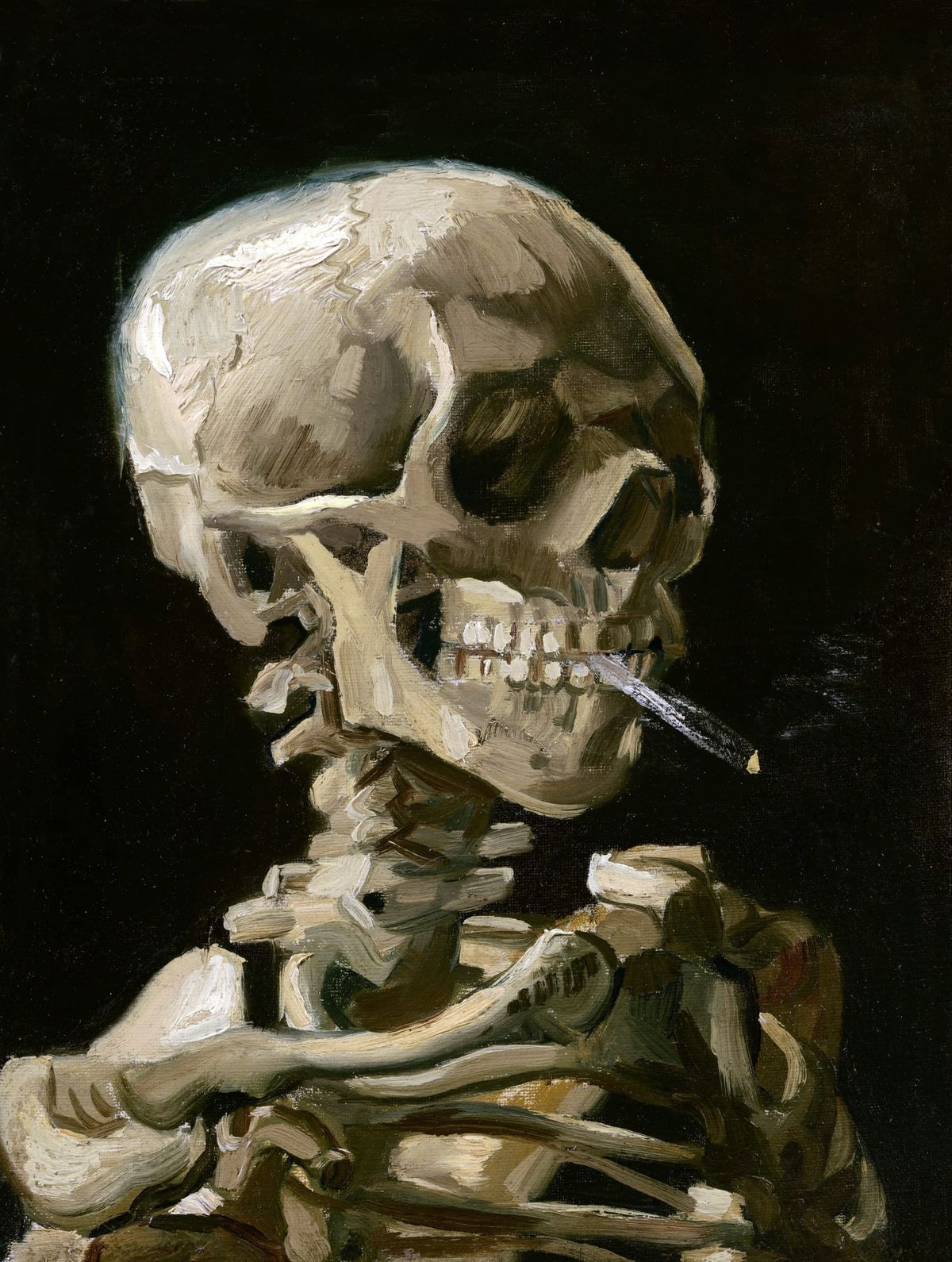
네덜란드 출신의 후기 인상주의 거장 빈센트 반 고흐(Vincent van Gogh, 1853–1890)가 1885년 겨울에서 1886년 초 벨기에 안트베르펜(Antwerp) 왕립 미술 아카데미 재학 시절 완성한 유화 담배를 문 해골(Skull of a Skeleton with Burning Cigarette, 네덜란드어: Kop van een skelet met brandende sigaret)은 32.5 cm × 24.0 cm 크기의 캔버스에 유채로 그린 대표적인 초기 풍자적 걸작입니다. 현재 네덜란드 암스테르담의 반 고흐 미술관(Van Gogh Museum, Amsterdam)에 소장되어 있습니다.
지루한 해부학 강의실을 발칵 뒤집은 화가의 장난과 반항의 담뱃불
1885년 겨울, 반 고흐는 정식 미술 교육을 받아보겠다는 마음으로 벨기에 안트베르펜 왕립 미술 아카데미에 입학했습니다. 하지만 교실에서 마주한 현실은 끔찍할 정도로 지루하고 메말라 있었습니다. 아카데미 교수들은 학생들에게 몇 달 동안이나 먼지 쌓인 해골 모형과 뼈대를 자로 재어가며 한 치의 오차도 없이 꼼꼼하게 선을 따서 그리는 지루한 해부학 소묘만을 강요했습니다. 살아 숨 쉬는 인간의 감정과 생명력을 표현하고 싶었던 반 고흐에게 이런 기계적인 수업 방식은 숨이 막히는 고문과 같았습니다.
어느 날 오후, 늙은 교수가 잠시 자리를 비운 틈을 타 반 고흐는 교실 한구석에 놓여 있던 먼지 쌓인 해골 모형의 벌어진 이빨 사이에 자신이 피우던 담배 한 개비를 쑥 꽂아 넣었습니다. 불이 붙은 채 하얀 연기를 뻐끔뻐끔 뿜어내는 해골을 본 동기 학생들은 배를 잡고 웃음을 터뜨렸습니다. 다시 교실로 돌아온 교수가 이 해괴망측한 광경을 보고 얼굴이 시뻘개져서 고함을 지르자, 반 고흐는 껄껄 웃으며 지루한 뼈다귀도 담배 한 대를 피워 물어야 비로소 살아있는 인간처럼 활기를 띠지 않겠느냐며 능청스럽게 대꾸했습니다.
그는 화실로 돌아와 그 기발한 반항의 순간을 캔버스 위에 일필휘지로 옮겨 담았습니다. 두꺼운 유채 물감으로 뼈마디의 거친 질감을 빚어 올리고, 해골의 이빨에 타오르는 담뱃불의 노란 불씨와 피어오르는 연기를 그려 넣었습니다. 당시 위장병과 치통에 시달리면서도 담배와 커피로 하루를 버티던 화가 자신의 위태로운 자화상이자, 낡은 아카데미의 훈계를 비웃으며 죽음조차 두려워하지 않는 불멸의 예술혼을 선언한 유쾌하고도 서늘한 블랙코미디 명작입니다.
번뜩이는 이빨 사이의 하얀 담배에서 둥근 두개골의 하이라이트로, 시선의 심리적 여정
그림을 마주하는 순간 관람객의 무의식적 시선은 칠흑 같은 검은 배경 속에서 허옇게 드러난 해골의 입술 없는 이빨과 그 사이에 비스듬히 물린 한 개비 담배로 가장 먼저 빨려 들어갑니다. 담배 끝에서 노랗게 타오르는 작은 불씨와 허공으로 흩어지는 희미한 연기의 흔적은 보는 이에게 기괴한 충격과 함께 헛웃음이 터져 나오는 묘한 해학을 선사합니다.
이어 시선은 담배를 문 턱뼈를 타고 올라가 이마와 관자놀이에 굵은 붓 터치로 두껍게 얹힌 우윳빛 하이라이트와 텅 빈 눈구멍의 깊은 암흑으로 이동합니다. 빛을 받아 단단하게 솟아오른 둥근 두개골의 입체감과 감정을 읽을 수 없는 어두운 눈빛을 확인하는 순간, 관람객은 웃음 뒤에 도사린 죽음의 서늘한 정적을 온몸으로 체감하게 됩니다.
마지막으로 시선은 해골의 목뼈를 따라 촘촘하게 엮인 척추와 쇄골, 그리고 갈비뼈의 굵은 물감 덩어리들을 지나 화면 전체를 짓누르는 검은 배경의 어둠에 멈춥니다. 뼈만 남은 시신의 처절한 침묵과 그 속에서 타오르는 담배의 작은 온기를 마주하며, 관람객은 유한한 인생의 덧없음을 노래하는 바니타스 정물화의 전통과 그 모든 굴레를 비웃듯 당당하게 예술의 불꽃을 피워 올린 반 고흐의 뜨거운 자유를 가슴 깊이 마주하게 됩니다.
초기 아카데미즘의 전복과 바니타스 상징의 현대적 부활, 미술계의 평가
미술계는 담배를 문 해골을 반 고흐가 전통적인 17세기 네덜란드 바니타스 정물화의 도상을 19세기 말 가장 파격적인 블랙유머와 표현주의적 필치로 재해석한 독보적인 초기 걸작으로 평가합니다.
단순한 해부학적 소묘를 넘어서, 두껍게 물감을 발라 올린 임파스토 기법과 어둠 속에서 빛나는 절제된 갈색, 크림색의 명암 조화를 통해 해골이라는 무생물에 살아있는 인격과 심리적 반항심을 완벽하게 부여했기 때문입니다. 박제된 교실의 규율을 깨부수고 삶과 죽음의 경계를 위트 있게 넘나들었던 반 고흐의 이 대담한 화폭은, 오늘날까지도 거장의 번뜩이는 유머 감각과 독창적인 천재성을 증명하는 불멸의 명작으로 손꼽히고 있습니다.
The Black Comedy of the Smoldering Bone, Skull of a Skeleton with Burning Cigarette
Painted between winter 1885 and early 1886 in Antwerp by the preeminent Dutch Post-Impressionist master Vincent van Gogh (1853–1890), Skull of a Skeleton with Burning Cigarette (Dutch: Kop van een skelet met brandende sigaret) is an oil on canvas measuring 32.5 cm × 24.0 cm (12.8 in × 9.4 in), preserved in the permanent collection of the Van Gogh Museum in Amsterdam, Netherlands.
The Rebellious Prank in the Anatomy Class and the Smoldering Counter-Attack
In late 1885, Vincent van Gogh enrolled in the Royal Academy of Fine Arts in Antwerp, seeking structured academic training to refine his draftsmanship. However, the instructional atmosphere was suffocatingly pedantic. Professors insisted that students spend weeks laboriously measuring lifeless skeletons and plaster casts with calipers, executing precise linear contours without conveying human emotion or dynamic vitality. To Van Gogh, whose artistic creed centered on the raw pulse of lived experience, these rigid anatomical drills felt like meaningless torment.
One afternoon, seizing an opportunity while the instructor stepped out of the studio, Van Gogh placed a lit cigarette between the bare teeth of the classroom skeleton. When his fellow students burst into uproarious laughter at the sight of the smoking skull, the returning professor turned crimson with fury and demanded an explanation. Van Gogh laughed openly, retorting that even a dusty pile of bones required a smoke to acquire a spark of human life.
Returning to his private quarters, the master captured the satirical defiance onto a small canvas in a single, impassioned sitting. Using thick strokes of oil paint, he sculpted the chalky texture of bone, painting the glowing amber ember and a faint wisp of smoke curling into the void. Suffering from acute dental agony and stomach ailments at the time—subsisting mainly on coffee, cheap bread, and endless tobacco—the artist created an ironic, gallows-humor self-portrait that challenged academic dogma with a bold declaration of artistic independence.
Subconscious Trajectory of the Gaze: From Smoldering Cigarette to the Illuminated Cranium
The observer's subconscious gaze is immediately seized by the lower-central register, arrested by the stark, toothy grin of the jawbone firmly clamping the white cigarette cylinder. The glowing orange-yellow ember at its tip and the translucent trace of rising smoke establish an instant visual shock, sparking both macabre humor and theatrical tension.
The visual trajectory then ascends along the cheekbone to the heavy, impasto highlight applied across the forehead and temporal bone, before dropping into the hollow blackness of the empty eye sockets. Taking in the sculptural volume of the cranium gleaming against the pitch-black backdrop, the viewer experiences a swift transition from dark comedic amusement to the chilling reality of physical mortality.
Finally, the visual path sweeps downward along the articulated vertebrae, collarbones, and rib cage, framed by vigorous, sweeping strokes of ochre, bistre, and bone white, before dissolving into the surrounding dark void. Observing the stark contrast between the absolute stillness of death and the ephemeral glow of the burning ember, the spectator confronts both the classical vanitas tradition of earthly transience and the defiant vitality underlying Van Gogh’s early expressive genius.
The Monument of Early Subversive Realism: Critical Legacy
Art historians revere Skull of a Skeleton with Burning Cigarette as a singular early masterpiece that brilliantly subverted 17th-century Dutch vanitas conventions through modern psychological wit and proto-expressionist brushwork.
By replacing mechanical academic draftsmanship with expressive impasto modeling, dramatic chiaroscuro, and satirical humor, Van Gogh elevated a student exercise into a profound visual manifesto. This captivating canvas endures as an iconic testament to the artist's rebellious spirit, celebrating the invincible freedom of the creative mind over dry institutional constraints.
본 컨텐트의 저작권은 팔렛트제주에 있습니다. 허가없는 무단전제를 금지합니다.
Copyright © Palette Jeju. All rights reserved. Unauthorized reproduction or redistribution is strictly prohibited.