첫걸음 First Steps (after Millet)
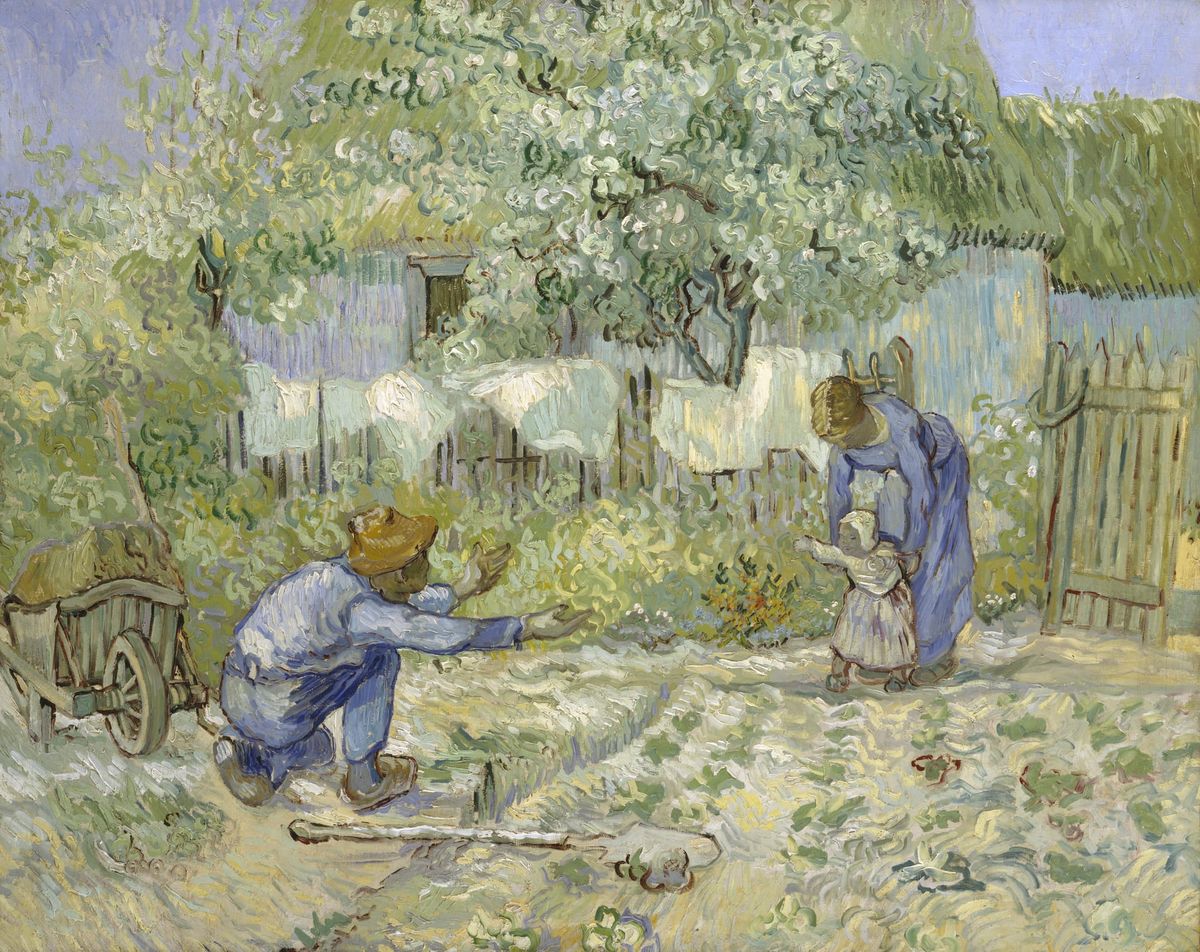
빈센트 반 고흐(Vincent van Gogh, 1853–1890)는 1890년 1월 프랑스 생레미 요양원에 체류하던 시기에 자신이 깊이 존경하던 화가 장프랑수아 밀레의 작품을 자신만의 색채 언어로 재해석하여 이 유채화를 완성했습니다.
이 작품의 야콥 바르트 드 라 파이유 전작 도록 기준 공식 등록번호는 F668이며, 실제 작품의 실측 규격은 72.4 × 91.1 cm입니다.
현재 미국 뉴욕에 위치한 메트로폴리탄 미술관에서 소장하고 있습니다.
작가의 고뇌와 비하인드
요양원에서의 고립된 생활과 발작의 공포 속에서 모델을 구하기 어려웠던 고흐는 동생 테오가 보내준 밀레의 작품 사진을 바탕으로 과거의 걸작들을 다시 캔버스에 옮기는 작업에 몰두했습니다.
당시 조카의 탄생을 앞두고 있던 그는 가족의 따뜻한 풍경을 담은 이 주제에 깊은 애정을 가졌으며, 흑백 사진 위에 자신만의 생동하는 색채를 입혀 새로운 생명을 불어넣고자 했습니다.
화면 전면에는 낡은 밀레풍의 의복을 입은 아버지가 무릎을 꿇고 두 팔을 벌려 아이를 향해 환한 미소를 지으며 첫걸음을 독려하는 모습이 묵직하게 자리 잡고 있습니다.
중경에는 푸른 드레스를 입은 어머니가 아기의 두 손을 다정하게 붙잡고 걸음을 보조하고 있으며, 그 뒤로 하얗게 널린 빨래들과 싱그러운 초록빛 정원이 포근한 전원 풍경을 완성합니다.
원경의 배경에는 짙은 초록빛의 울타리와 나무들이 소박한 농가의 풍경을 감싸 안으며 평화롭고 따스한 대기감을 전달합니다.
무의식 속 시선 및 심리 흐름
관람객의 시선은 가장 먼저 화면 왼쪽 전면에 무릎을 꿇고 팔을 벌린 아 아버지의 다정한 몸짓과 시선에 닿으며 마음이 따뜻해지는 친밀감을 느끼게 됩니다.
이어지는 시선은 아기를 붙잡고 서 있는 어머니의 푸른 옷자락을 거쳐, 두려움을 이겨내고 아장아장 걸음을 내딛는 아이의 작은 발걸음으로 자연스럽게 이동합니다.
마지막으로 화면 배경을 가득 채운 화사한 꽃나무와 정원의 싱그러운 초록빛 대기감으로 시선이 넓게 퍼져나가며, 새로운 생명이 시작되는 순간의 감격과 깊은 심리적 평온을 차분하게 체감하게 됩니다.
미술계의 평가와 조형미
미술사학계에서는 이 작품을 두고 고흐가 거장에 대한 단순한 모방을 넘어 자신만의 두터운 임파스토 붓질과 감성적인 색채 조화를 통해 원작에 새로운 영혼을 불어넣은 최고의 번역이자 명작으로 평가합니다.
아버지가 입은 옷의 부드러운 푸른 톤과 주변을 감싼 자연의 초록빛, 그리고 따스한 대지의 색채가 이루는 조화는 화면 전체에 깊은 시각적 울림을 부여합니다.
눈에 보이는 풍경의 재현을 뛰어넘어, 화가가 평생토록 갈망했던 따뜻한 가정의 온기와 인간 삶의 눈부신 희망을 캔버스 위에 영원히 아로새긴 위대한 예술적 성취입니다.
First Steps (after Millet)
Vincent van Gogh created this touching oil on canvas in January 1890 while staying at the asylum in Saint-Rémy, translating a black-and-white photograph of Jean-François Millet’s composition into his own vibrant visual language.
Cataloged as F668 in J.B. de la Faille's catalogue raisonné, the painting measures 72.4 × 91.1 cm.
The artwork is currently housed in the Metropolitan Museum of Art in New York.
During a period of profound physical confinement and psychological vulnerability, Van Gogh turned to copying works by artists he deeply admired, using photographs sent by his brother Theo to improvise rich color harmonies.
Anticipating the birth of his nephew, the artist found deep emotional resonance in this intimate domestic scene of a child learning to walk.
The foreground is anchored by a kneeling father in rustic work clothes, stretching out his open arms and encouraging the hesitant toddler with gentle warmth.
In the middle ground, a mother dressed in a vibrant blue gown supports the child's tiny hands, guiding her forward amidst a lush, blossoming spring garden and hanging laundry that evoke the rhythm of rural life.
In the distant background, protective fences and rich foliage frame the rustic cottage, establishing a serene and comforting atmospheric depth.
The viewer's gaze is initially drawn toward the welcoming posture and outstretched hands of the kneeling father in the lower left foreground.
The perspective then follows the central axis upward to the supporting mother and the tiny, courageous steps of the child.
Finally, the eye expands into the surrounding garden and luminous background, allowing the observer to experience a tranquil psychological transition from personal vulnerability to an overwhelming sense of domestic joy and renewal.
Art historians regard this canvas as a masterwork of Van Gogh's interpretive phase, where he successfully elevated a traditional genre scene into a deeply personal statement through expressive brushwork and luminous color.
The harmonious interplay between the cool blues of the parents' garments and the warm, earthy tones of the soil generates a profound optical and emotional resonance.
It stands as an enduring artistic monument that immortalizes the universal wonder of human growth and the artist's unyielding yearning for familial connection and peace.
본 컨텐트의 저작권은 팔렛트제주에 있습니다. 허가없는 무단전제를 금지합니다.
Copyright © Palette Jeju. All rights reserved. Unauthorized reproduction or redistribution is strictly prohibited.