천사의 반신상 Half Figure of an Angel (after Rembrandt)
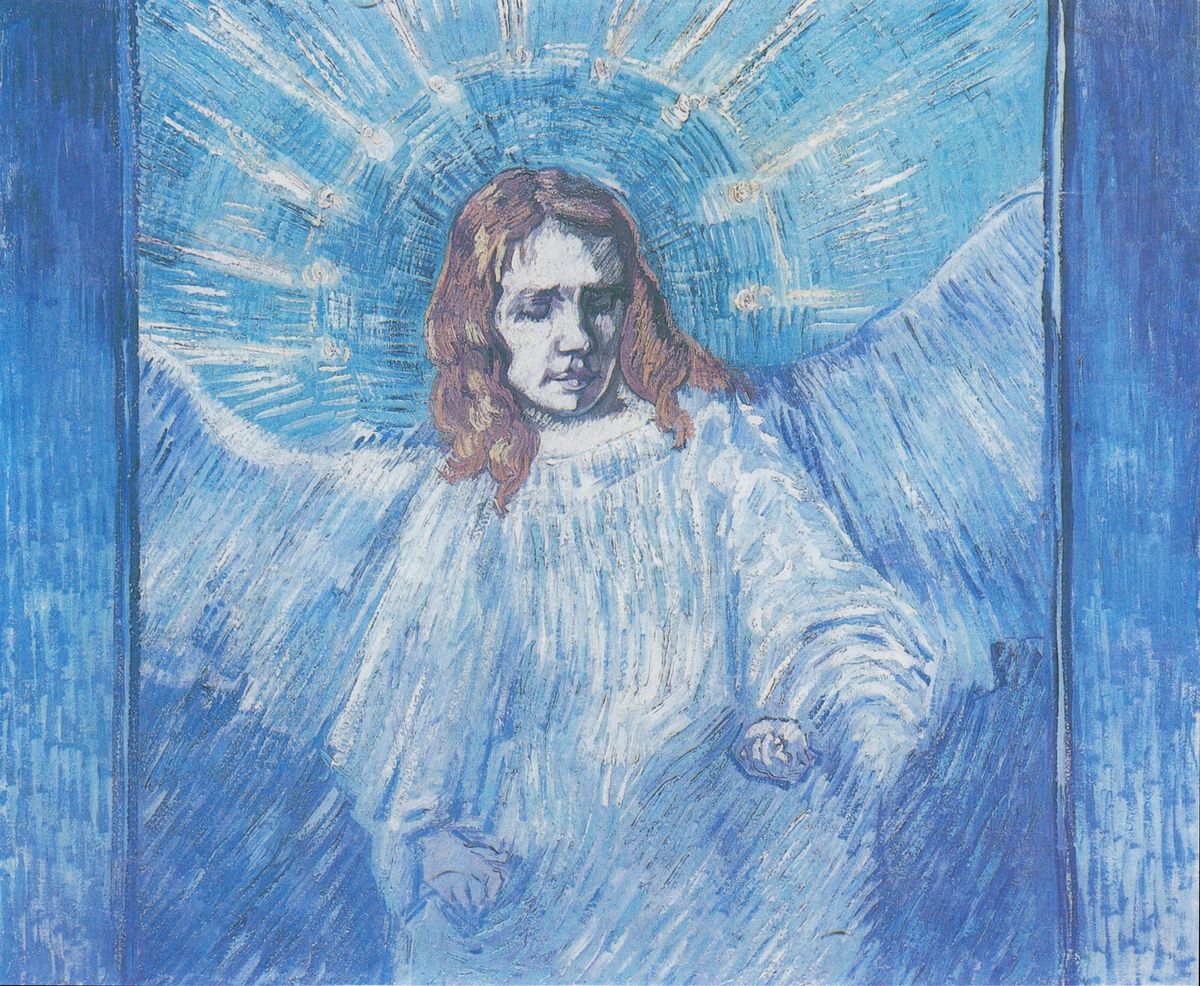
이 작품은 네덜란드의 후기 인상주의 거장 빈센트 반 고흐가 1889년 9월 프랑스 생레미드프로방스의 요양원에 머물던 시기에 제작한 유화입니다. 공식 소장품 등록번호는 F633이며, 캔버스 위에 유채로 그려진 실제 실측 규격은 54 x 64 cm입니다. 현재 이 작품은 개인 소장으로 관리되고 있으며, 고흐가 렘브란트의 판화 작품을 모사하여 자신만의 독창적인 색채와 감성으로 재해석한 대표적인 종교화입니다.
작가의 고뇌와 창작 비하인드
생레미 요양원 시절 반 고흐는 극심한 정신적 고통과 외부 세계로부터의 단절 속에서 위안을 찾기 위해 과거 거장들의 판화를 바탕으로 한 모사 작업에 깊이 몰두했습니다. 당시 그는 동생 테오에게 보낸 편지에서 거장들의 작품을 자신만의 색채 언어로 번역해 보는 일이 삶의 커다란 구원이자 예술적 돌파구였다고 언급한 바 있습니다.
작품 전경에는 하얀색 옷을 입고 양 날개를 펼친 채 고개를 숙이고 있는 천사의 상반신이 화면 중앙에 묵직하게 자리 잡고 있습니다. 천사의 얼굴은 부드러운 갈색 머리칼과 차분한 표정으로 그려져 있으며, 두 손을 가슴 앞에 모은 채 깊은 상념에 잠긴 듯한 경건한 동작을 취하고 있습니다.
배경과 주변 전체는 강렬하고 신비로운 푸른빛 계열로 채워져 있으며, 천사의 머리 위로는 방사형태의 빛줄기가 뿜어져 나와 마치 성스러운 후광처럼 화면 전체에 영적인 에너지를 불어넣고 있습니다.
무의식 속 시선 및 심리 흐름
관람객의 시선은 가장 먼저 화면 중앙에 돋보이는 천사의 차분한 얼굴과 붉은 갈색 머리결로 향하며, 인간적이면서도 신비로운 분위기 속에서 묘한 경외감을 느끼게 됩니다. 이어지는 시선은 아래로 이동하여 양옆으로 펼쳐진 거대한 날개와 두 손을 단정히 모은 하얀 상의의 중경으로 닿으며, 고요한 침묵 속에서 전해지는 정서적 안정감과 평온을 체감하게 됩니다.
시선이 다시 천사의 머리 위로 강렬하게 뻗어 나가는 푸른빛의 후광과 배경의 대기감으로 확장될 때, 관람객은 속세의 고통을 초월하려는 듯한 영원한 안식과 구원의 기운을 마주하게 됩니다. 이 일련의 시선 이동은 단순한 종교적 인물 묘사를 넘어, 고통받던 작가가 내면의 평화를 찾아가는 치열하고도 거룩한 심리적 여정으로 관람객을 이끕니다.
미술계의 평가 및 조형미
미술사학계와 평단은 본 작품을 고흐가 생레미 시기에 남긴 모사화 중 가장 깊은 영적 울림을 주는 걸작으로 평가하며, 렘브란트의 구도에 자신만의 독창적인 푸른 색채 조화를 완벽하게 결합한 성과로 인정합니다. 캔버스 위에 두껍고 거친 붓터치인 임파스토 기법을 사용하여 천사의 의복과 깃털의 질감을 입체적으로 살려내며 물질적 완성도를 높여줍니다.
화면 전반을 지배하는 깊고 신비로운 푸른색과 흰색의 대비는 시각적인 생동감과 동시에 엄숙하고도 신성한 분위기를 극대화합니다. 거장의 시선을 빌려 자신의 영혼을 구원하고자 했던 예술적 투혼이 담긴 이 작품은, 시대를 초월해 관람객의 마음에 깊은 울림을 전하는 영원한 가치를 지닙니다.
Half Figure of an Angel (after Rembrandt)
Executed in September 1889 during his confinement at the asylum in Saint-Rémy-de-Provence, France, this oil painting is a profound and compelling work by the Dutch Post-Impressionist master Vincent van Gogh. Officially cataloged under inventory number F633 and measuring 54 x 64 cm on canvas, the work is currently in a private collection. It stands as a remarkable masterclass in how Van Gogh reinterpreted the engraved works of old masters through his own intensely personal chromatic and emotional lens.
The Artist's Turmoil and Creative Background
During his difficult months at the Saint-Rémy asylum, facing severe psychological distress and isolation, Van Gogh turned to copying prints by past masters like Rembrandt as a therapeutic exercise and a vital connection to the artistic tradition. In his letters to his brother Theo, he explained that translating these historical compositions into his own palette provided him with a sense of purpose and spiritual grounding amidst his suffering.
The foreground is dominated by the half-figure of an angel clad in a white robe, bowing its head slightly with a gentle, introspective expression. The angel's hands are delicately clasped near its chest, while expansive wings reach outward to frame the composition in a gesture of divine protection.
The background and surrounding atmosphere are saturated in rich, luminous shades of blue, punctuated by a radiant, star-like halo of dashed brushstrokes that emanate from behind the angel's head, infusing the entire space with an unearthly, spiritual energy.
Psychological Flow and the Unconscious Gaze
The viewer's gaze is initially drawn to the serene face and reddish-brown hair of the angel, establishing an immediate focal point characterized by quiet contemplation and sacred calm. The eye then migrates downward to the voluminous white garments and the expansive wings in the middle ground, invoking a profound sense of physical presence and ethereal grace.
As the gaze expands outward into the vibrant, haloed blue background, the observer is enveloped in a cooling, transcendent atmosphere that mirrors a yearning for spiritual deliverance. This deliberate visual progression moves the viewer from physical observation into an empathetic resonance with the creator's quest for inner peace.
Critical Acclaim and Formal Analysis
Art historians and critics widely celebrate this painting as one of Van Gogh's most moving religious interpretations from his Saint-Rémy period, recognizing it as a brilliant synthesis of Rembrandt's compositional framework and modern expressionist color. The vigorous application of paint through a tactile impasto technique enlivens the texture of the angel's clothing and wings, giving sculptural weight to the flat canvas.
The striking orchestration of cool blues against crisp whites creates a dynamic visual harmony that enhances the painting's sacred, dreamlike ambiance. Transmuting historical reverence into a personal beacon of hope, this masterpiece endures as an immortal testament to Van Gogh's visionary depth.
본 컨텐트의 저작권은 팔렛트제주에 있습니다. 허가없는 무단전제를 금지합니다.
Copyright © Palette Jeju. All rights reserved. Unauthorized reproduction or redistribution is strictly prohibited.