창문가의 소녀(Girl at a Window, 렘브란트 원작에 따른 판화/드로잉 재현)
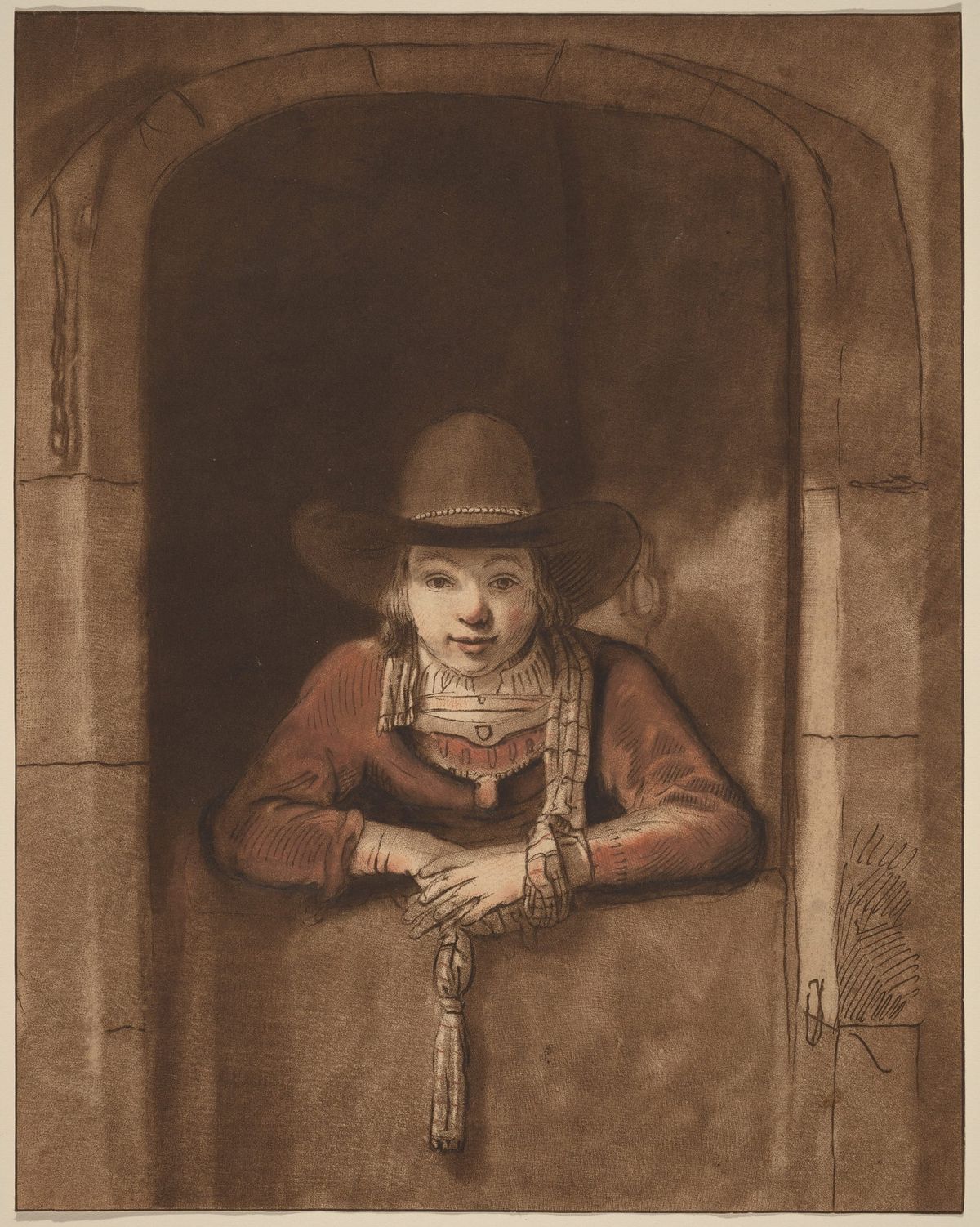
창가의 소녀 - Girl at a Window
1645년 17세기 네덜란드 황금기를 대표하는 거장 렘브란트 반 레인(Rembrandt van Rijn)이 제작한 유화 작품 《창가의 소녀(Girl at a Window)》는 현재 영국 런던의 덜리치 픽처 갤러리(Dulwich Picture Gallery)에 소장되어 있으며, 원작의 실제 크기는 81.8 × 66.2 cm입니다.
이 화면은 렘브란트 원작 특유의 빛과 명암 조화를 드로잉 및 판화 기법으로 정교하게 재해석하여 담아낸 작품입니다. 렘브란트는 이 시기 일상의 순간을 극적이면서도 친근한 시선으로 포착하는 데 탁월한 감각을 보여주었습니다.
작품 속 소녀의 정체에 대해서는 여러 이야기가 전해집니다. 렘브란트의 집에서 일하던 하녀라는 설부터 일상의 모델, 혹은 단순한 기술 연습을 위한 가상의 인물이라는 추측까지 존재합니다. 재미있는 비하인드 스토리로 프랑스의 미술 사학자 로제 드 피일(Roger de Piles)은 렘브란트가 이 그림을 실제 창문에 올려두어 지나가던 사람들이 진짜 살아있는 소녀가 밖을 내다보는 것으로 착각하게 만들었다는 기록을 남기기도 했습니다.
후대 평단과 관객들은 이 작품을 렘브란트가 지닌 특유의 인간미와 서정성이 유감없이 발휘된 걸작으로 평가하며, 눈에 보이는 물리적 형태를 넘어 인물의 감정과 따뜻한 내면까지 끌어낸 눈부신 명암법의 정수로 기억하고 있습니다.
이 그림을 마주하는 순간, 감상자의 시선은 자신도 모르게 가장 강한 빛이 모여 있는 소녀의 뺨과 이마로 직행합니다. 어둡고 묵직한 석조 아치 배경 속에서 환하게 떠오르는 명암 효과는 관람객의 무의식에 일종의 '초점 효과'를 일으키며 시각적 안정감을 선사합니다.
이어 시선은 소녀의 다정한 눈빛과 살짝 올려 맺힌 입꼬리로 이동합니다. 정면을 응시하는 인물의 시선은 감상자와의 사이에 존재하는 심리적 거리를 찰나에 허물어버립니다. 이때 감상자의 무의식 속에서는 낯선 작품을 감상할 때 발동하는 경계심이 사라지고, 마치 오래 알고 지낸 이와 친밀한 대화를 나누는 듯한 안도감과 온기를 느끼게 됩니다.
얼굴에 머물던 시선은 목 둘레의 세밀한 레이스 주름과 스카프 장식을 따라 아래로 차분하게 낙하합니다. 그리고 마침내 돌 창턱 위에 수줍게 겹쳐 놓은 두 손과 그 아래로 느슨하게 늘어진 태슬(수술) 장식에 도달하여 정착합니다.
이러한 시선의 이동 경로 속에서 감상자의 무의식은 창틀이라는 구조물을 단지 안과 밖을 가르는 차단막이 아니라, 밖(감상자의 공간)과 안(소녀의 공간)을 연결해 주는 따뜻한 매개체로 재인식합니다. 어둡고 깊은 아치 프레임과 온기 어린 인물의 대조는 감상자의 시선을 중심부로 지속적으로 재집중시키며 깊은 심리적 몰입감과 정서적 여운을 남깁니다.
In 1645, Rembrandt van Rijn, one of the paramount masters of the Dutch Golden Age, created "Girl at a Window." This iconic oil painting is housed in the Dulwich Picture Gallery in London and measures 81.8 × 66.2 cm. This artwork finely captures the master's sublime harmony of light and shadow through a meticulously crafted print and drawing reproduction.
During this period, Rembrandt displayed an extraordinary penchant for rendering candid everyday moments with dramatic depth and warmth. Historical anecdotes surrounding the piece speculate on the sitter's identity, suggesting she may have been a servant in Rembrandt's household, a local model, or an idealized figure created for technical practice.
Art theorist Roger de Piles famously recounted that Rembrandt placed the completed canvas in his window, so convincing passersby that they mistook the painted figure for a real girl peering outside. Art historians and critics continuously extol this masterpiece for its profound human empathy and lyrical intimacy, regarding it as a brilliant example of Rembrandt's ability to evoke emotional soulfulness through subtle light and shade.
The moment an observer encounters this artwork, their eyes are subconsciously drawn straight to the girl's brightly illuminated forehead and glowing cheeks. The striking chiaroscuro, emerging from the dark stone archway, triggers a focal stabilization within the viewer's mind, creating an immediate sense of visual serenity.
Next, the gaze drifts naturally toward her gentle, candid eyes and the soft curve of her lips. This direct eye contact instantly dismantles any psychological distance, causing the viewer to subconsciously lower their guards and experience an comforting sense of intimate dialogue.
From her face, the gaze glides smoothly downward along the delicate folds of her lace collar and scarf, finally coming to rest upon her hands neatly rested on the stone ledge and the dangling tassel below.
Throughout this subtle visual journey, the spectator's subconscious reinterprets the stone window frame not as a rigid barrier separating two worlds, but as a warm, welcoming bridge between them. The contrast between the deep, shadowed arch and the soft radiance of the subject continuously draws the eyes back to the center, enveloping the viewer in a state of profound psychological reflection and emotional tranquility.
본 리뷰에서 작품을 제외한 컨텐츠의 저작권은 팔렛트제주에 있습니다.
"퍼블릭도메인 고전명화"를 제외한 모든 창작 콘텐츠는 저작권법 제4조 및 제10조에 의거하여 보호됩니다. 무단 도용시 저작권법 제136조(벌칙)에 의거, 당사의 사전 서면 승인 없는 저작권 침해 행위를 금지합니다.