창가의 젊은 남자 Young Man at His Window
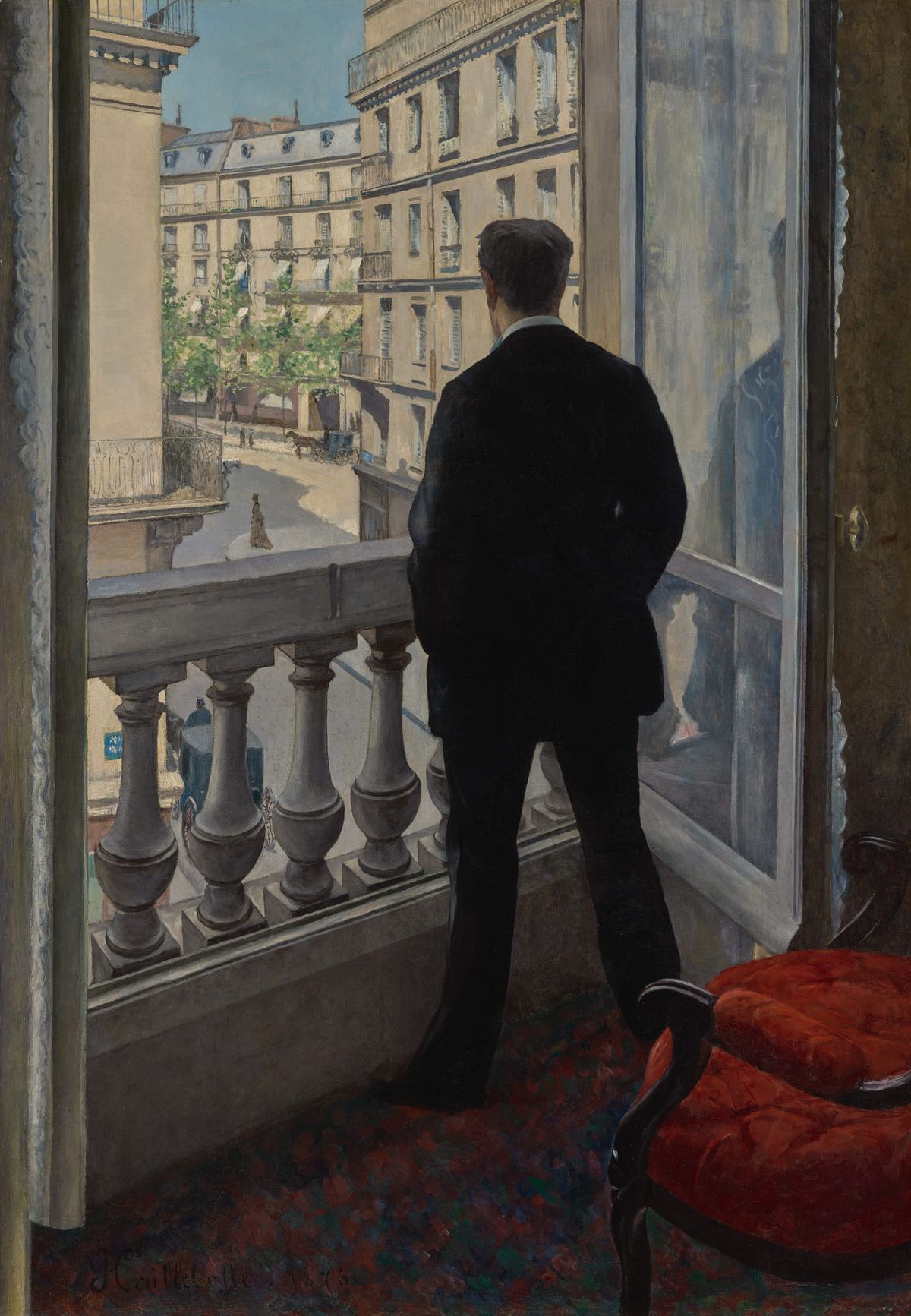
거대한 창문을 경계로 밝게 빛나는 도시의 풍경과 어두운 실내의 정적이 강렬한 대조를 이루는 이 작품은, 귀스타브 카유보트가 1876년에 완성한 명작입니다. 세로 116.2cm, 가로 80.9cm의 실제 크기를 지닌 이 유화는 19세기 후반 눈부시게 근대화된 파리의 일상과, 그 속에 놓인 현대인의 복잡한 내면을 한 편의 영화처럼 완벽하게 교차시키고 있습니다.
작품을 마주한 관람자의 시선은 가장 먼저 창밖으로 쏟아지는 눈부신 햇살과, 저 멀리 거리를 지나는 마차와 여인의 활기찬 풍경으로 향하게 됩니다. 정밀한 원근법으로 묘사된 오스만 양식의 밝은 건물들과 이 역동적인 거리는 우리가 일상에서 다른 사람들과 부대끼며 살아가는 사회적이고 통제 가능한 의식의 세계를 상징합니다.
하지만 이내 우리의 눈길은 밝은 외부 세계를 등지고 선 남성의 짙고 묵직한 검은색 뒷모습으로 옮겨갑니다. 군중 속에 섞이지 않은 채 안전한 발코니 안쪽에서 세상을 내려다보는 이 남성의 자세는, 화려한 도시를 관망하면서도 어딘가 온전히 소속되지 못한 현대인의 짙은 소외감과 심리적 고립감을 시각적으로 극대화합니다.
그리고 마침내 시선은 화면 우측 하단에 놓인 푹신한 붉은색 벨벳 의자와 어두운 패턴의 융단으로 자연스럽게 흘러들어옵니다. 바깥세상의 소음이 차단된 이 안락하고 서늘한 실내 공간은, 감상자로 하여금 타인의 시선에서 벗어나 다듬어지지 않은 자신의 가장 깊고 비밀스러운 무의식의 심연으로 조용히 침잠하게 이끕니다.
이토록 고독하고 세련된 시선이 탄생한 비하인드 스토리에는 카유보트의 개인적인 슬픔과 대담한 예술적 전복이 깃들어 있습니다. 그림 속 짙은 양복을 입은 남성은 바로 화가의 남동생 르네(René)이며, 배경은 그들이 함께 살던 미로메닐 거리의 아파트입니다. 원래 미술사에서 '창가의 인물'은 주로 집 안에 갇혀 누군가를 기다리는 수동적인 여성의 전유물이었습니다. 카유보트는 이를 부르주아 남성으로 뒤집어 표현함으로써 전통을 깼고, 공교롭게도 이 그림을 완성한 직후인 1876년 가을, 모델이었던 동생 르네가 26세의 젊은 나이로 갑작스럽게 세상을 떠나면서 이 작품은 더욱 짙은 우수와 그리움을 품게 되었습니다.
오늘날 미술사학자들은 이 작품을 인상주의와 사실주의가 결합한 19세기 최고의 도시 심리 풍경화로 칭송합니다. 1876년 제2회 인상파 전시회에 출품되었을 당시 문호 에밀 졸라로부터 극찬을 받았으며, 빛의 일시적인 흐름을 포착하면서도 사진기 렌즈처럼 정교하게 잘라낸 이 파격적인 구도는 현대 시각 예술에 큰 영감을 주었습니다. 특히 최근 미국 게티 미술관(Getty Museum)에 인상파 초상화 역사상 최고가 수준으로 소장되면서, 카유보트가 단순한 후원자를 넘어 현대인의 내면을 가장 날카롭게 해부한 진정한 천재 화가였음을 전 세계에 다시 한번 확고히 증명했습니다.
Striking a powerful contrast between the brightly illuminated cityscape and the silence of the dark interior with a massive window as the boundary, this artwork is a masterpiece completed by Gustave Caillebotte in 1876. With actual dimensions of 116.2 by 80.9 centimeters, this oil painting flawlessly intersects the brilliant daily life of modernized late-19th-century Paris with the complex inner mind of the modern individual, much like a scene from a film.
Upon facing the painting, the viewer's gaze is first drawn to the dazzling sunlight pouring in from outside the window, and the vibrant scenery of a carriage and a woman passing on the distant street. The brightly colored Haussmann-style buildings and this dynamic street, depicted with precise perspective, symbolize the social, controllable world of consciousness where we interact with others in our daily lives.
However, our eyes soon shift to the deep, heavy black figure of the man seen from behind, standing against the bright external world. The posture of this man, looking down at the world from the safety of his balcony without blending into the crowd, visually maximizes the profound sense of alienation and psychological isolation of the modern individual who observes the glamorous city yet feels completely unattached to it.
Finally, the gaze flows naturally into the plush red velvet chair and the darkly patterned rug placed in the lower right corner of the canvas. This comfortable, cool indoor space, shielded from the noise of the outside world, quietly leads the observer to retreat from the eyes of others and sink into the abyss of their deepest, most unrefined, and secret unconsciousness.
The behind-the-scenes story of how such a solitary and sophisticated gaze was born is imbued with Caillebotte's personal sorrow and a bold artistic subversion. The man in the dark suit in the painting is the artist's younger brother, René, and the setting is the apartment on the rue de Miromesnil where they lived together. Originally in art history, the "figure at a window" motif was primarily the exclusive domain of passive women confined indoors, waiting for someone. Caillebotte broke tradition by reversing this with a bourgeois man. Coincidentally, shortly after completing this painting in the autumn of 1876, his brother René, the model, passed away suddenly at the young age of 26, imbuing this artwork with an even deeper melancholy and longing.
Today, art historians highly praise this piece as the finest urban psychological landscape painting of the 19th century, brilliantly combining Impressionism and Realism. When exhibited at the second Impressionist exhibition in 1876, it received high acclaim from the great literary figure Émile Zola. This unconventional composition, which captures the fleeting flow of light while being precisely cropped like a camera lens, provided immense inspiration to modern visual art. Recently, as it was acquired by the J. Paul Getty Museum for a record-breaking price in the history of Impressionist portraits, it once again firmly proved to the world that Caillebotte was not merely a patron, but a true genius painter who most sharply dissected the inner mind of modern humanity.
ⓒ 본 리뷰의 저작권은 "팔렛트제주"에 있으며, 무단 전재 및 재배포를 엄격히 금합니다. / Copyright 2026 by Palette Jeju. All rights reserved. Unauthorized reproduction or distribution is strictly prohibited.