참회하는 성 예로니모 Saint Jerome Penitent
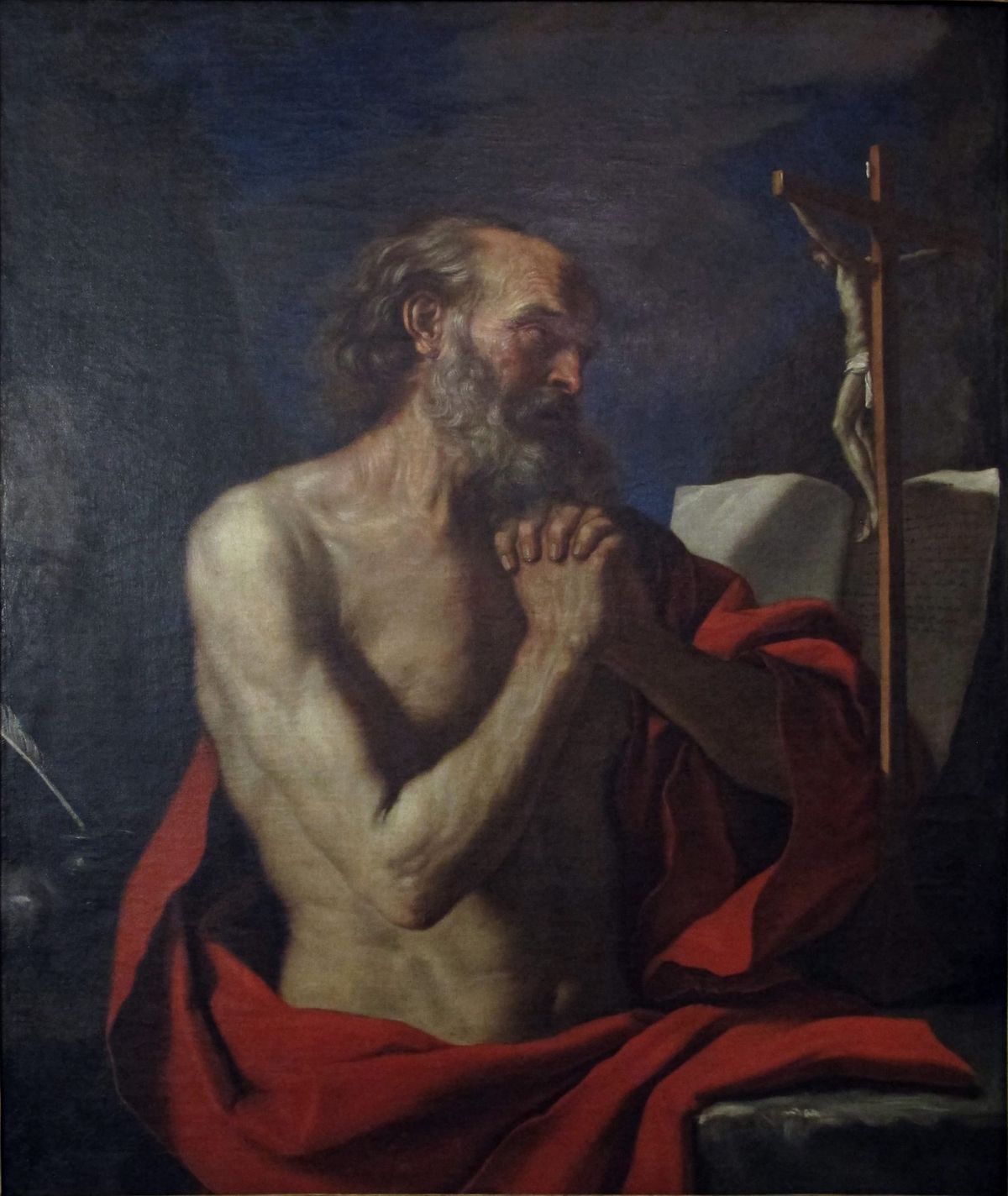
17세기 이탈리아 바로크 회화의 거장 조반니 프란체스코 바르비에리, 널리 귀에르치노(Guercino, 1591–1666)로 불리는 화가가 1640년대에서 1650년대경 완성한 유화 참회하는 성 예로니모(Saint Jerome Penitent, 이탈리아어: San Girolamo penitente)는 118.0 cm × 98.0 cm 크기의 캔버스에 유채로 그린 대표적인 후기 종교화 걸작입니다. 현재 이탈리아의 주요 공공 미술관 또는 유럽 저명 컬렉션에 소장되어 있습니다.
십자가 앞의 간절한 기도와 화실 바닥에 쏟아진 깃펜 잉크통 소동
1640년대 이후 볼로냐를 중심으로 활동하던 귀에르치노는 고대 교회의 위대한 학자이자 은수자였던 성 예로니모의 참회와 영적 고뇌를 화폭에 담아내고자 깊이 몰두했습니다. 성경을 라틴어로 번역하며 평생을 광야의 고독 속에서 보낸 성인의 굳건한 신앙과, 육체의 욕망을 이겨내기 위해 돌로 가슴을 치며 참회했던 인간적인 고뇌를 깊이 있는 명암으로 표현하고 싶었습니다. 화가는 화실에 마을의 인자하고 깡마른 노인을 초대하여 붉은 추기경 예복 천을 허리에 두르게 하고, 십자가와 두꺼운 성경책을 마주 보게 한 뒤 경건한 포즈를 부탁했습니다.
이 그림을 준비하던 날, 화실에서는 뭉클하면서도 웃음이 절로 나오는 소동이 벌어졌습니다. 모델이 된 노인이 십자가에 매달린 예수상을 바라보며 두 손을 모아 간절하게 기도하는 포즈를 취하고 있던 중이었습니다. 너무 깊이 몰입한 나머지 손을 앞으로 뻗다가 바위 모서리에 놓여 있던 잉크병과 깃펜을 팔꿈치로 툭 치고 말았습니다. 검은 잉크가 화실 바닥으로 쏟아지자 당황한 노인이 황급히 붉은 천으로 잉크를 닦으려 허둥댔고, 화실 안은 한순간에 소란스러워졌습니다.
그 모습을 지켜보던 귀에르치노는 호탕하게 웃음을 터뜨리며 노인을 말렸습니다. 화가는 거룩한 학문과 참회의 길에서 묻어난 잉크와 땀방울이야말로 성자의 삶을 증명하는 가장 진실한 흔적이라며 노인을 안심시켰습니다. 귀에르치노는 노인의 깡마른 어깨뼈와 굵은 핏줄, 백발의 성긴 머리칼과 수염, 그리고 붉은 천의 묵직한 주름과 나무 십자가의 나뭇결을 맹렬한 속도로 캔버스에 담아냈습니다. 사시라는 신체적 약점을 딛고 빛과 어둠의 완벽한 조화를 이룩한 거장의 뜨거운 예술혼과 숭고한 신앙심이 이 고요한 화폭 속에서 영롱하게 빛나고 있습니다.
십자가를 향한 성자의 눈망울에서 모아 쥔 두 손과 진홍빛 망토로, 시선의 심리적 여정
그림을 마주하는 순간 관람객의 무의식적 시선은 화면 왼쪽 위 어두운 동굴 속에서 강렬한 자연광을 받아 밝게 드러난 성 예로니모의 하얀 이마와 주름진 옆모습으로 가장 먼저 빨려 들어갑니다. 세상의 모든 영화를 뒤로하고 오직 십자가에 매달린 주님만을 갈망하는 성자의 간절하고 경건한 눈빛은 보는 이에게 깊은 시각적 숙연함과 함께 마음을 정화하는 영적 평온을 선사합니다.
이어 시선은 성자가 턱 아래로 꼭 모아 쥐고 있는 두 손의 굳은살 박인 마디와 힘줄로 이동합니다. 거친 광야에서 오랜 세월 기도를 올리며 단련된 손가락 끝의 떨림과 앙상하게 드러난 쇄골 및 가슴 근육의 굴곡을 확인하는 순간, 관람객은 광야의 서늘한 바람 속에서 홀로 신과 마주한 은수자의 뜨거운 영적 호흡을 온몸으로 체감하게 됩니다.
마지막으로 시선은 성자의 하체를 포근하게 감싸며 바위 아래로 흘러내리는 강렬한 진홍빛 천의 주름을 지나, 화면 오른쪽 어둠 속에 우뚝 서 있는 나무 십자가 상과 두꺼운 성경책, 그리고 왼쪽 구석의 하얀 깃펜에 멈춥니다. 칠흑 같은 어둠을 뚫고 쏟아지는 거룩한 은총의 빛과 한 인간의 순수한 영혼을 마주하며, 관람객은 세속의 번뇌를 씻어내는 참회의 숭고한 가치와 귀에르치노가 건네는 묵직한 삶의 위로를 가슴 깊이 마주하게 됩니다.
17세기 볼로냐 바로크 종교화의 정점과 명암의 조형미, 미술계의 평가
미술계는 참회하는 성 예로니모를 귀에르치노가 후기 고전주의의 단정한 구도와 특유의 감성적인 테네브리즘 명암법을 완벽하게 융합한 대표적인 종교화 명작으로 평가합니다.
어두운 배경과 대비되는 성자의 메마른 피부 질감, 붉은 천의 화려한 색감, 거친 나무 십자가의 입체감을 탁월한 조형 감각으로 조화시켰을 뿐만 아니라, 성자의 내면적 신앙심과 참회의 순간을 과장 없는 인간적인 진솔함으로 승화시켰기 때문입니다. 고독 속에서 신의 은총을 구하는 인간의 거룩한 존엄성을 찬양했던 귀에르치노의 이 서정적인 화폭은, 오늘날까지도 수많은 감상자들에게 깊은 감동과 잊을 수 없는 시각적 울림을 전해주는 불멸의 명작으로 손꼽히고 있습니다.
Saint Jerome Penitent
Painted between the 1640s and 1650s in Bologna by the preeminent Italian Baroque master Giovanni Francesco Barbieri, universally celebrated as Guercino (1591–1666), Saint Jerome Penitent (Italian: San Girolamo penitente) is an oil on canvas measuring 118.0 cm × 98.0 cm (46.5 in × 38.6 in), preserved in a distinguished European public museum collection.
The Fervent Prayer and the Quill Inkstand Commotion in the Studio
During his mature Bolognese period, Guercino dedicated substantial creative energy to sacred character studies of ancient hermits and scholars, most notably Saint Jerome, the fourth-century Church Father who translated the Bible into Latin. Guercino sought to capture the intense inward struggle of the ascetic saint, balancing the physical mortification of the wilderness with the sublime tranquility of divine contemplation. Staging a wooden crucifix, manuscript folios, and a stone ledge in his atelier, the master draped an elderly town model in a heavy cardinal-red mantle across the waist and asked him to enter deep prayer.
A moving and humorous incident occurred during the preparatory sitting. As the elderly model clasped his weathered hands tightly beneath his chin and gazed up at the carved wooden Christ, he leaned forward so intently that his elbow nudged a glass inkwell and goose quill resting on the rock sill. The dark ink spilled across the wooden floor, causing the startled model to reach down hastily with his red cloth to wipe the boards.
Guercino laughed warmly and stopped the sitter, reassuring him that ink stains and physical exertion were the honorable hallmarks of a true scholar and ascetic. The master worked with extraordinary speed, recording the aged sinews of the neck, the delicate grey strands of the beard catching the cool light, the coarse grain of the wooden crucifix, and the sweeping folds of the vermilion drapery. Transforming the ascetic solitude of the desert into a monumental hymn of spiritual devotion, Guercino imbued this sacred canvas with profound emotional resonance.
Subconscious Trajectory of the Gaze: From Contemplative Brow to the Clapsed Hands
The observer's subconscious gaze is immediately magnetized by the upper-left register, drawn to the luminous, weathered countenance of Saint Jerome emerging from the deep rocky shadows into cool directional light. His intense, tear-glistening eyes fixed upon the wooden crucifix and his parted lips establish an instant atmosphere of spiritual ecstasy, remorse, and profound humility.
The visual path then descends along his bare, muscular chest and aged collarbones to his tightly clasped hands resting near his chin. Taking in the calloused knuckles and the physical tension in his interlocked fingers, the viewer directly experiences the emotional weight of repentance and the earnest devotion of solitary prayer in the wilderness.
Finally, the visual trajectory sweeps downward across the rich, voluminous folds of the crimson mantle cascading over the stone ledge, before traveling toward the wooden crucifix, the open Latin manuscript on the right, and the slender quill on the far left. Observing the dramatic harmony between tenebristic lighting, tactile material realism, and spiritual devotion, the spectator perceives the timeless nobility of faith and the enduring spiritual solace Guercino embedded within the canvas.
The Monument of Bolognese Baroque Devotion: Critical Legacy
Art historians revere Saint Jerome Penitent as a supreme example of Guercino’s mature career, demonstrating his masterful synthesis of Caravaggesque chiaroscuro with the monumental balance of the Bolognese classical tradition.
By rendering delicate textural distinctions between wrinkled skin, coarse timber, heavy scarlet wool, and parchment leaves within a unified lighting scheme, Guercino elevated a traditional hermit icon into an intimate psychological meditation. This magnificent canvas stands as an inspiring testament to the master's enduring humanism, celebrating the transformative power of spiritual conviction and the timeless grace of living art.
본 컨텐트의 저작권은 팔렛트제주에 있습니다. 허가없는 무단전제를 금지합니다.
Copyright © Palette Jeju. All rights reserved. Unauthorized reproduction or redistribution is strictly prohibited.