붓꽃 - Irises
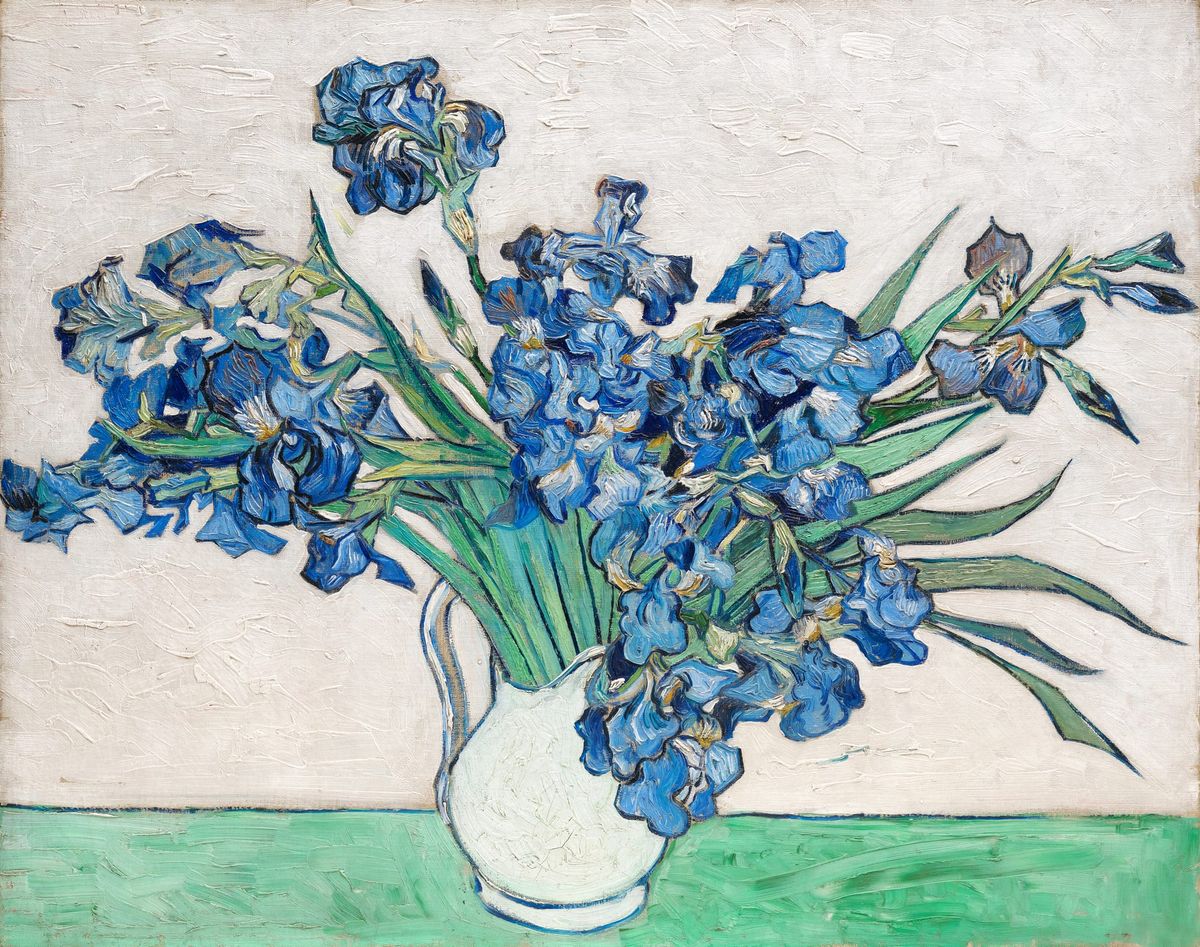
빈센트 반 고흐(Vincent van Gogh)가 프랑스 생레미의 생폴 드 모졸 요양원에서 퇴원하기 직전인 1890년 5월에 완성한 대표적인 유화 정물화입니다. 현재 미국 뉴욕의 메트로폴리탄 미술관(The Metropolitan Museum of Art)에 소장되어 있으며, 캔버스 위에 유채로 제작된 이 작품의 실제 사이즈는 약 73.7 × 92.1 cm입니다. 화면을 가득 채운 푸른 붓꽃의 역동적인 형태와 굵은 윤곽선, 그리고 두텁고 유연한 임파스토(Impasto) 기법을 통해 대상이 지닌 폭발적인 생명력과 우아한 조형미를 생생하게 구현해냈습니다.
고흐는 물감을 듬뿍 묻힌 붓으로 꽃잎의 굴곡과 뾰족한 잎사귀의 궤적을 거침없이 빚어냈습니다. 본래 분홍빛을 띠었던 배경은 시간이 흐르며 고흐가 사용한 붉은 레이크 안료의 탈색으로 은은한 크림빛 흰색으로 변했으나, 이는 여전히 전경의 산뜻한 에메랄드그린 테이블, 푸른 붓꽃 송이들과 어우러져 절묘하고 차분한 색채 조화를 자아냅니다. 일본 목판화(우키요에)의 영향을 받은 대담한 평면성과 조각적인 붓 터치의 조화는 정적인 실내 정물에 살아 움직이는 듯한 율동감을 불어넣습니다.
1890년 봄, 길고 고통스러웠던 요양원 생활을 끝내고 파리 근교의 오베르 쉬르 우아즈로 떠나기 직전, 고흐는 요양원 정원에 흐드러지게 핀 붓꽃에 매료되어 연작 제작에 몰두했습니다. 붓꽃은 고흐에게 있어 단순한 꽃이 아니라, 혹독한 정신적 발작과 고립감 속에서도 꺾이지 않고 솟아나는 치유와 생명에 대한 열망을 상징하는 영혼의 꽃이었습니다. 그는 동생 테오에게 보낸 편지에서 마지막 날까지 열병에 걸린 듯 화폭을 채워 나가며 깊은 내면의 평정을 되찾았다고 적었습니다.
화병 바깥으로 흘러넘치듯 뻗어나간 꽃잎과 사방으로 뻗은 칼날 같은 잎사귀들은 생명의 억누를 수 없는 분출을 증명합니다. 미술사에서는 고흐가 생의 마지막을 앞두고 도달한 가장 조화롭고 원숙한 미학적 정점을 보여주는 최고 수준의 걸작 정물화로 평가하며, 자연에 대한 깊은 경외와 숭고한 영적 구원의 메시지를 담아낸 상징주의 회화의 정수로 기리고 있습니다.
관람객의 무의식적인 시선은 화면 중심에서 화사하게 피어나 청초한 푸른빛과 짙은 군청색의 다채로운 굴곡을 이루는 붓꽃 무리의 풍성한 꽃잎에서 자연스럽게 출발합니다. 두터운 물감의 덩어리가 빚어낸 꽃잎 하나하나의 주름과 율동감 넘치는 필선에 시선이 머무는 순간, 보는 이는 찰나의 침묵과 함께 생명력 넘치는 봄날의 온기 속으로 단숨에 몰입하게 됩니다.
이어 시선은 꽃송이들 사이로 곧게 뻗어나간 날렵한 초록빛 줄기와 잎사귀들의 날카로운 대각선 리듬을 타고 화면 좌우로 시원하게 확장됩니다. 꽃다발을 안정감 있게 받쳐주는 둥근 백자 화병의 유려한 흰색 곡선에 도달하며 시각적인 편안함과 구조적 안정감을 체감하게 됩니다.
이후 시선은 전경에 산뜻하게 깔려 있는 에메랄드그린 테이블의 수평면을 훑은 뒤, 꽃들의 윤곽을 부드럽게 감싸고 있는 은은하고 고요한 크림빛 배경으로 유연하게 확장됩니다.
맑은 배경과 푸른 꽃잎의 조화로운 파동을 따라 순환한 시선이 다시금 화병 입구의 풍성한 꽃무리로 편안히 회귀할 때, 관람객의 내면에는 복잡한 일상의 번뇌와 피로가 정돈되고, 시련을 딛고 피어난 생명이 건네는 깊은 위로와 함께 흔들리지 않는 심리적 안도감이 가득 차오르게 됩니다.
Irises
Painted by Vincent van Gogh in May 1890, just before his departure from the Saint-Paul-de-Mausole asylum in Saint-Rémy-de-Provence, France, this celebrated still life resides in the permanent collection of The Metropolitan Museum of Art in New York. Executed in oil on canvas, the actual size of the work is approximately 73.7 × 92.1 cm. Through sweeping contours, dense impasto, and dynamic linear rhythms, the composition elevates an overflowing vase of irises into an undulating monument of natural vitality and serene beauty.
Van Gogh applied unmixed pigments directly onto the support, sculpting the ruffled petals and sharp blade-like leaves with powerful tactile presence. The background, originally a soft pink that has faded over time due to the fugitive nature of red lake pigments into a warm pearlescent cream, continues to provide a harmonious contrast against the vibrant emerald green tabletop and the rich cobalt and violet-blue petals. Influenced by the linear precision of Japanese woodblock prints, the bold silhouettes infuse the tabletop composition with continuous organic movement.
During his final weeks at the asylum, preparing to move to Auvers-sur-Oise under the care of Dr. Paul Gachet, Van Gogh threw himself into painting the blooming irises in the asylum garden with extraordinary focus. For him, the iris was not merely a decorative botanical specimen, but a profound emblem of regeneration, healing, and unyielding creative fortitude against physical and psychological distress. In letters to his brother Theo, he described how working relentlessly on these floral canvases brought an immense sense of clarity and spiritual calm to his mind.
Art historians celebrate this composition as one of the expressive summits of his late oeuvre, illustrating his supreme command over balanced spatial organization, lyrical surface rhythms, and emotional authenticity before his final journey to Auvers.
A viewer's subconscious gaze is intuitively anchored first by the dense cluster of rich violet and deep blue petals unfolding in the center of the bouquet. Lingering upon the thick, expressive brushstrokes that give each blossom a sculptural weight, the observer is drawn into an immediate atmosphere of springtime freshness, quiet wonder, and emotional stillness.
The gaze then follows the angular, dynamic thrust of the lance-like green leaves radiating outward across the frame, drifting downward to the rounded white earthenware pitcher that grounds the floral eruption. Encountering the smooth, solid form of the vessel, the viewer experiences a reassuring sense of balance and domestic tranquility.
The eye continues across the crisp horizontal expanse of the pale green ground before expanding softly into the luminous cream background, taking in the full silhouette of the sprawling bouquet.
Completing this visual and psychological circulation and resting once more upon the radiant blue blossoms, the observer feels a profound release of modern tension. The timeless harmony of nature leaves the viewer restored with a lasting sense of inner peace, spiritual renewal, and enduring psychological comfort.
본 리뷰에서 작품을 제외한 컨텐츠의 저작권은 팔렛트제주에 있습니다.
"퍼블릭도메인 고전명화"를 제외한 모든 창작 콘텐츠는 저작권법 제4조 및 제10조에 의거하여 보호됩니다. 무단 도용시 저작권법 제136조(벌칙)에 의거, 당사의 사전 서면 승인 없는 저작권 침해 행위를 금지합니다.