불타는 소돔의 어둠 속 동굴과 붉은 포도주의 유혹, 롯과 그의 딸들 Lot and his Daughters
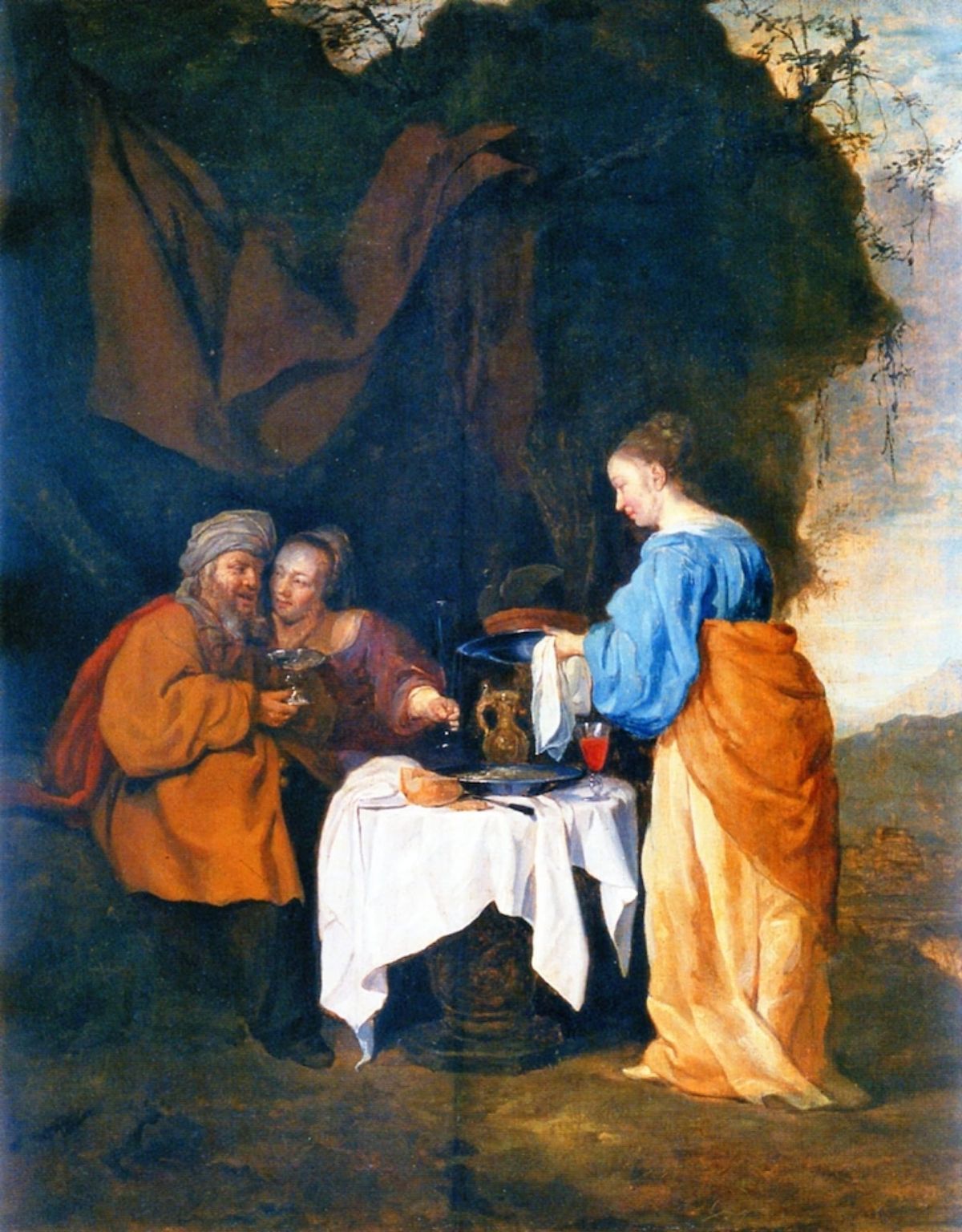
17세기 네덜란드 황금시대의 풍속화 및 역사화 거장 가브리엘 메추(Gabriel Metsu, 1629–1667)가 1650년대 초반에 완성한 초기 유화 롯과 그의 딸들(Lot and his Daughters, 네덜란드어: Lot en zijn dochters)은 71.5 cm × 57.0 cm 크기의 캔버스에 유채로 그린 대표적인 구약성경 역사화 명작입니다. 현재 프랑스 파리의 루브르 박물관(Musée du Louvre, Paris) 또는 국립 미술 컬렉션 등에 소장되어 있습니다.
스승 니콜라우스 크뉘퍼의 작업실과 와인잔을 엎지른 제자들의 소동
1650년대 초반 네덜란드 위트레흐트에서 역사화가 니콜라우스 크뉘퍼 밑에서 수련하던 젊은 메추는 성경 속 비극적인 서사를 드라마틱하게 연출하는 기법을 연마하고 있었습니다. 당시 화단에서는 소돔과 고모라가 멸망한 뒤 세상에 자신들만 살아남았다고 여긴 두 딸이 가문의 혈통을 잇기 위해 아버지를 취하게 만드는 창세기의 충격적인 이야기를 즐겨 다루었습니다. 젊은 메추는 단순한 도덕적 비난을 넘어, 죄의식과 인간적인 나약함이 뒤섞인 인물들의 미묘한 심리를 빛과 어둠의 대비로 포착하고자 깊은 고뇌에 빠져 있었습니다.
이 그림을 준비하던 날, 화실에서는 눈물겨우면서도 유쾌한 소동이 벌어졌습니다. 메추는 동굴 입구에서 술에 취해 비틀거리는 롯의 붉어진 뺨과 술잔을 건네는 딸들의 움직임을 실감 나게 표현하기 위해, 동료 학생들에게 터번과 이국적인 옷을 입히고 작은 식탁 앞에 앉혔습니다. 포즈를 취하던 모델들이 실제로 달콤한 포도주를 몇 잔 비우다 취기가 오르자, 식탁보 위에 놓인 유리잔을 팔꿈치로 건드려 하얀 린넨 식탁보를 붉은 포도주로 온통 물들여버렸습니다.
당황한 모델들이 사과하며 쩔쩔매자, 메추는 오히려 활짝 웃으며 식탁보에 번져나가는 붉은 와인 자국이야말로 이 기괴한 연회의 은밀하고 위태로운 분위기를 살려줄 최고의 소품이라며 소리쳤습니다. 그는 식탁 위에 놓인 은쟁반과 붉은 와인잔, 그리고 푸른 옷을 입고 물수건을 든 딸의 우아한 옷자락을 빠른 붓질로 화폭에 담아냈습니다. 젊은 시절 거장이 품었던 대담한 실험정신과 인간 본성에 대한 깊은 탐구가 이 웅장한 초기 화폭 속에 생생하게 각인되어 있습니다.
우아한 푸른 드레스의 여인에서 술잔을 든 롯의 붉은 뺨으로, 시선의 심리적 여정
그림을 마주하는 순간 관람객의 무의식적 시선은 화면 오른쪽 짙은 동굴 그늘 속에서 천상의 빛을 받아 눈부시게 밝게 빛나는 서 있는 딸의 선명한 코발트블루 상의와 황금빛 치맛자락으로 가장 먼저 빨려 들어갑니다. 단정하게 빗어 넘긴 머리와 물수건을 든 채 아버지를 내려다보는 여인의 차분하면서도 묘한 표정은 보는 이에게 강렬한 시각적 매혹과 함께 팽팽한 긴장감을 선사합니다.
이어 시선은 하얀 식탁보가 드리워진 작은 테이블 위로 이동하여, 은제 쟁반과 맑은 유리잔에 찰랑이는 붉은 포도주, 그리고 식탁 뒤에 기댄 또 다른 딸의 은밀한 눈빛으로 옮겨갑니다. 아버지의 어깨에 바짝 다가붙어 은빛 잔에 술을 가득 채워주는 딸의 능청스러운 손길을 확인하는 순간, 관람객은 동굴 안을 맴도는 달콤한 술 향기와 거역할 수 없는 유혹의 순간을 공감각적으로 느끼게 됩니다.
마지막으로 시선은 머리에 터번을 두르고 주황빛 겉옷을 걸친 채, 이미 취기에 젖어 붉어진 얼굴로 딸을 바라보는 노인 롯의 풀린 눈빛과 화면 뒤편 어두운 동굴 바위벽에 멈춥니다. 멸망해 버린 도시의 잿더미 너머로 피어오르는 어두운 밤하늘과 그 속에서 펼쳐지는 인간의 원초적인 욕망과 생존의 딜레마를 마주하며, 관람객은 운명의 소용돌이 속에서 흔들리는 인간 실존의 비극과 메추가 구축한 탁월한 연극적 조형미를 가슴 깊이 마주하게 됩니다.
17세기 네덜란드 역사화의 극적 연출과 조형적 완성도, 미술계의 평가
미술계는 롯과 그의 딸들을 훗날 실내 풍속화의 대가가 되는 가브리엘 메추가 청년 시절 역사화와 종교화 분야에서도 얼마나 독창적인 극적 연출력을 지녔는지를 증명하는 매우 중요한 초기 대표작으로 평가합니다.
동굴 안으로 쏟아지는 극적인 명암 대조(키아로스쿠로), 푸른색과 황금빛 및 주황색의 화려한 색채 배분, 그리고 비단과 금속 식기의 뛰어난 질감 묘사를 통해 성경 속 비극을 한 편의 연극 무대처럼 훌륭하게 완결했기 때문입니다. 성스러운 교훈과 인간 내면의 숨겨진 갈등을 섬세한 감수성으로 풀어낸 메추의 이 서사적인 화폭은, 오늘날까지도 거장의 폭넓은 예술적 스펙트럼을 보여주는 귀중한 유산으로 손꼽히고 있습니다.
The Dramatic Shadows of the Mountain Cave, Lot and his Daughters
Painted in the early 1650s by the preeminent Dutch Golden Age master Gabriel Metsu (1629–1667), Lot and his Daughters (Dutch: Lot en zijn dochters) is an oil on canvas measuring 71.5 cm × 57.0 cm (28.1 in × 22.4 in), preserved in the permanent collection of the Musée du Louvre in Paris, France.
The Utrecht Studio of Knüpfer and the Spilled Wine upon the Table Linen
During his early twenties in Utrecht, while studying under the esteemed history painter Nikolaus Knüpfer, Gabriel Metsu explored the dramatic potential of biblical narratives. The provocative Old Testament account of Lot and his daughters—who, believing the entire world destroyed following the cataclysm of Sodom and Gomorrah, conspired to intoxicate their father to preserve the human lineage—was a favored subject for painters testing their command of theatrical staging. Rather than offering simple moral condemnation, the young Metsu sought to capture the psychological tension, guilt, and raw human vulnerability through dynamic chiaroscuro.
A memorable and lively episode occurred in the studio during the preparation of this canvas. To stage the intoxicated patriarch and his scheming daughters with convincing realism, Metsu draped his fellow students in exotic turbans and robes, seating them before a draped table. As the models sipped actual sweet wine to ease their postures, one careless elbow knocked over a tall goblet, splashing rich red wine across the pristine white linen cloth.
As the models hurriedly apologized, Metsu laughed excitedly, declaring that the deep red stain soaking into the linen was the exact spontaneous touch needed to enhance the clandestine and dangerous ambiance of the scene. The master rapidly recorded the pewter platter, the glass flute of crimson wine, and the shimmering cobalt-blue mantle draped across the standing daughter. This ambitious canvas stands as an enduring testament to the painter's early mastery of dramatic storytelling and psychological nuance.
Subconscious Trajectory of the Gaze: From Luminous Blue Silk to the Intoxicated Patriarch
The observer's subconscious gaze is immediately seized by the right register, magnetized by the standing daughter bathed in radiant light against the cavernous darkness. Her vibrant cobalt-blue bodice, golden-yellow skirt, and calm downcast profile holding a white napkin establish an immediate focal point of classical poise and theatrical tension.
The visual path then shifts leftward toward the small table covered in a white linen cloth, taking in the bread, the pewter basin, and the glowing red wine in the glass flute. Catching the secretive gaze of the second daughter leaning over Lot’s shoulder to refill his cup, the viewer directly experiences the clandestine conspiracy and the intoxicating aroma of wine permeating the mountain sanctuary.
Finally, the visual trajectory sweeps toward the elderly Lot seated on the left, observing his feathered turban, warm ochre robe, and flushed countenance as he stares toward his daughters in dazed intoxication, before dissolving into the heavy brown drapery and the rocky cave opening. Confronting the existential dilemma between biblical survival and mortal fragility, the spectator perceives the dramatic complexity of the human spirit and the masterful narrative staging Metsu achieved upon the canvas.
The Monument of Early Dutch History Painting: Critical Legacy
Art historians celebrate Lot and his Daughters as a crucial milestone in Gabriel Metsu’s early development, demonstrating his exceptional command of narrative staging, theatrical lighting, and textural rendering prior to his celebrated Amsterdam genre period.
By orchestrating dramatic Caravaggesque chiaroscuro, contrasting primary hues of cobalt, amber, and cinnabar, and rendering tactile distinctions across metallic basins, coarse linen, and soft flesh, Metsu transformed an ancient moral parable into an intimate visual drama. This historic masterwork endures as an inspiring testament to the artist's early narrative ambition, celebrating the expressive power of biblical drama and the enduring beauty of classical painting.
본 컨텐트의 저작권은 팔렛트제주에 있습니다. 허가없는 무단전제를 금지합니다.
Copyright © Palette Jeju. All rights reserved. Unauthorized reproduction or redistribution is strictly prohibited.