불타는 하늘을 가르며 날아오는 재앙의 네 기사, 전쟁 The War
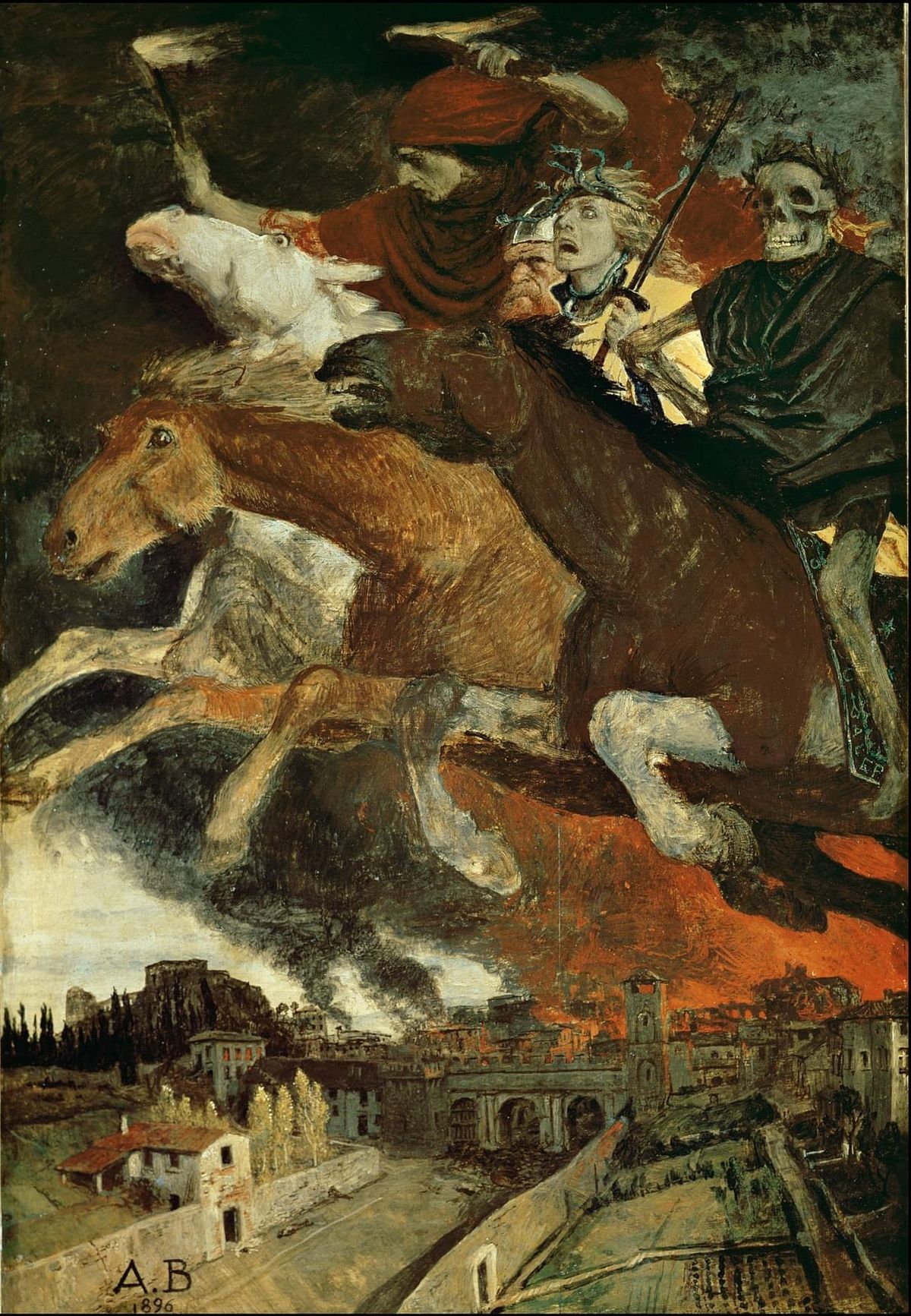
스위스 출신의 상징주의 거장 아놀드 뵈클린(Arnold Böcklin, 1827–1901)이 1896년에 피렌체 인근 산 도메니코에서 완성한 유화 전쟁(The War, 독일어: Der Krieg)은 100.0 cm × 69.5 cm 크기의 나무 패널에 유채로 그린 대작입니다. 현재 독일 드레스덴의 신 거장 갤러리(Galerie Neue Meister, Dresden)에 소장되어 있습니다.
다가올 20세기 세계 대전의 비극을 내다본 69세 노장의 예언
19세기 말 유럽 전역이 산업 혁명의 눈부신 번영과 물질적 풍요에 도취되어 낙관주의에 빠져 있을 때, 뵈클린은 인간의 끝없는 탐욕과 국가 간의 군비 경쟁이 결국 끔찍한 파멸을 불러올 것임을 직감했습니다. 70대를 바라보는 노화가는 요한계시록에 나오는 묵시록의 네 기사 전설을 바탕으로, 인류 문명을 잿더미로 만들어버릴 전쟁의 잔혹한 광기를 화폭에 소환했습니다.
거칠게 날뛰는 네 마리의 군마를 타고 허공을 질주하는 기사들은 전쟁이 몰고 오는 온갖 비극의 화신들입니다. 불타는 횃불을 치켜든 붉은 두건의 광기, 뱀을 머리에 두르고 비명을 지르는 복수의 여신, 그리고 월계관을 쓴 채 뼈만 남은 손으로 낫을 쥔 해골 사신이 좁은 하늘을 가득 채우고 있습니다. 뵈클린은 실제로 프랑스 파리에서 목격했던 2월 혁명의 유혈 사태와 평생 동안 자식들을 앗아간 죽음의 공포를 이 화폭에 쏟아부었습니다. 평화로운 시골 마을 위로 검은 연기와 핏빛 불길이 번져가는 이 무시무시한 광경은, 훗날 인류가 겪게 될 제1차 세계 대전의 참상을 약 20년 앞서 정확하게 내다본 처절한 예술적 예언이었습니다.
월계관을 쓴 해골에서 불타는 지상 마을로, 시선의 심리적 여정
그림을 마주하는 순간 관람객의 무의식적 시선은 화면 우측 상단에서 승리의 월계관을 쓴 채 앙상한 턱뼈를 드러내며 섬뜩하게 웃고 있는 해골 사신의 얼굴로 가장 먼저 빨려 들어갑니다. 검은 옷을 걸치고 창백한 뼈마디로 낫을 쥔 죽음의 형상은 보는 이에게 숨 막히는 서늘함과 거대한 공포를 안겨줍니다.
이어 시선은 허공을 향해 맹렬하게 튀어나오는 네 마리 말들의 거친 콧김과 눈동자, 그리고 횃불을 들고 낫을 휘두르는 기사들의 광기 어린 표정으로 쏟아져 내립니다. 뱀들이 똬리를 튼 머리카락을 쥐어뜯으며 절규하는 여인과 거친 말발굽이 만들어내는 폭발적인 속도감을 확인하는 순간, 관람객은 거대한 파멸의 돌진 앞에 무력하게 서 있는 듯한 시각적 압박감을 경험합니다.
마지막으로 시선은 기사들의 발밑에 깔린 자욱한 검은 연기를 지나, 화면 아래쪽 붉은 불길에 휩싸여 타들어 가는 평화로운 옛 마을의 성벽과 집들에 멈춥니다. 아무런 영문도 모른 채 불길 속에 갇혀 파괴되어 가는 지상의 건물들과 흙먼지 날리는 길가를 바라보며, 관람객은 문명의 모든 성취를 한순간에 잿더미로 만드는 전쟁의 야만성과 인간 삶의 덧없음을 뼈저리게 실감하게 됩니다.
세기말 묵시록 회화의 정점이자 현대 전쟁화의 서막, 미술계의 평가
미술계는 전쟁을 19세기 말 서양 상징주의 회화가 도달한 가장 급진적이고 파격적인 묵시록적 비전으로 평가합니다.
단순한 역사적 전투 장면의 묘사를 넘어서, 인간 내면에 잠재된 파괴 본능과 다가올 근대 문명의 위기를 환상적인 상징과 강렬한 명암 대비로 시각화했기 때문입니다. 죽음을 앞둔 노거장이 인류를 향해 던진 이 서늘한 경고는 훗날 오토 딕스, 케테 콜비츠 등 20세기 표현주의 화가들의 반전 예술에 심대한 영향을 미치며 미술사에서 가장 강력한 예언적 걸작으로 우뚝 서 있습니다.
The Apocalyptic Tempest of Destruction, The War
Painted in 1896 in San Domenico near Florence by the visionary Swiss Symbolist master Arnold Böcklin (1827–1901), The War (German: Der Krieg) is an oil on wood panel measuring 100.0 cm × 69.5 cm (39.4 in × 27.4 in), preserved in the permanent collection of the Galerie Neue Meister (Staatliche Kunstsammlungen Dresden) in Dresden, Germany.
The Prophetic Vision of Modern Catastrophe and the Four Horsemen
While late 19th-century Europe basked in the optimistic illusions of industrial progress and material wealth, Arnold Böcklin harbored a dark premonition that unchecked nationalism and human hubris would culminate in unprecedented global slaughter. Approaching his seventieth year, the aging master summoned the biblical archetype of the Four Horsemen of the Apocalypse to depict the devastating fury of modern warfare.
Galloping across the nocturnal sky upon wild, demonic steeds, the riders embody the merciless instruments of human destruction: a hooded fanatic wielding a flaming torch, a snake-crowned Fury screaming in bloodlust, and a crowned skeletal Death clutching an executioner's scythe. Having witnessed revolutionary bloodshed during his youth in Paris and endured a lifetime of private bereavement, Böcklin transformed this vertical panel into a monumental warning. The apocalyptic inferno sweeping down upon the helpless medieval town beneath proved to be a terrifyingly accurate prophecy of the mechanized horrors of the First World War nearly two decades prior to its outbreak.
Subconscious Trajectory of the Gaze: Crowned Death to the Burning Citadel
The observer's subconscious gaze is instantly seized by the gleaming skeletal visage of Death in the upper right, crowned with a triumphal laurel wreath while grinning into the void. Clasping the dark scythe with fleshless fingers, his hollow gaze commands immediate terror and solemnity.
The trajectory of sight then plunges leftward into the dynamic cascade of snorting steeds and frantic horsemen. Encountering the frantic frenzy of the torch-bearer, the snarling Fury with vipers writhing in her hair, and the outstretched hooves suspended above the clouds, the viewer experiences a visceral shock of airborne kinetic violence.
Finally, the visual path descends past the suffocating plumes of black smoke into the lower register, where a peaceful terracotta-roofed village is consumed by crimson firestorms. Observing the quiet architectural balance of the stone arches and towers against the descending storm of annihilation, the spectator confronts the heartbreaking fragility of civilization before the savage forces of mortal hatred.
The Summit of Symbolist Prophecy: Critical Legacy
Art historians recognize The War as one of the most radical and uncompromising masterworks of late European Symbolism, standing as a pivotal precursor to modern anti-war Expressionism.
By rejecting sanitized military pageantry in favor of raw psychological horror and dynamic color saturation, Böcklin forged an indelible visual indictment of militarism. This monumental warning profoundly influenced subsequent generations of Expressionists including Otto Dix and Käthe Kollwitz, enduring as an immortal testament to the prophetic power of visionary art.
본 컨텐트의 저작권은 팔렛트제주에 있습니다. 허가없는 무단전제를 금지합니다.
Copyright © Palette Jeju. All rights reserved. Unauthorized reproduction or redistribution is strictly prohibited.