붉게 물든 노을과 쏟아지는 폭포수의 서늘한 침묵, 폭포가 있는 산악 풍경 Mountain Landscape with Waterfall
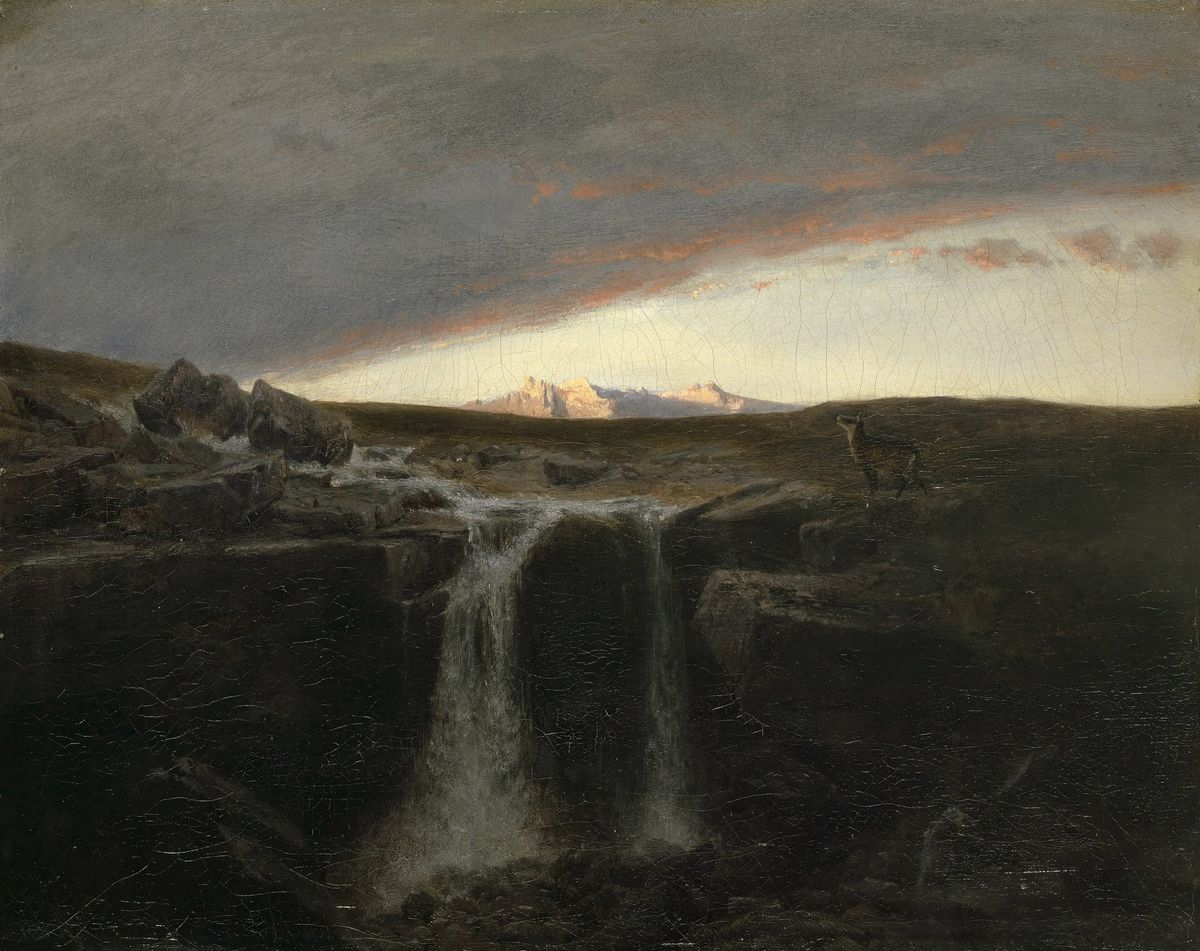
스위스 출신의 상징주의 거장 아놀드 뵈클린(Arnold Böcklin, 1827–1901)이 1849년경에 완성한 유화 폭포가 있는 산악 풍경(Mountain Landscape with Waterfall, 독일어: Gebirgslandschaft mit Wasserfall)은 48.0 cm × 60.5 cm 크기의 캔버스에 유채로 그린 초기 대표작입니다. 현재 스위스 바젤 미술관(Kunstmuseum Basel)에 소장되어 있습니다.
청년 시절 알프스 스케치 여행과 자연의 숭고함에 바친 고백
1840년대 후반 이십 대 초반의 청년 뵈클린은 독일 뒤셀도르프 아카데미에서 엄격한 풍경화 수업을 마친 뒤, 고향 스위스의 험준한 알프스 산맥을 직접 발로 걸으며 자연을 관찰했습니다. 당시 그는 화가로서의 진로에 대한 깊은 불안과 가난, 그리고 프랑스 2월 혁명의 혼란스러운 사회 분위기에 지쳐 있었습니다. 뵈클린은 인간들의 복잡한 욕망이 들끓는 도시를 떠나, 인간의 발길이 닿지 않는 거칠고 원초적인 고산 지대의 침묵 속으로 걸어 들어갔습니다.
이 그림은 뵈클린이 스위스 고산 지대의 웅장함을 직접 눈으로 보고 가슴으로 담아낸 초기 걸작입니다. 깎아지른 검은 바위 절벽 사이로 차가운 빙하수가 굉음을 내며 쏟아져 내리고, 저 멀리 붉게 타오르는 저녁 노을빛을 받는 설산의 능선 앞에는 외로운 산양 한 마리가 우뚝 서 있습니다. 뵈클린은 자연을 단순히 예쁘게 꾸며낸 정원처럼 묘사하지 않고, 인간을 압도하는 거대하고 신비로운 영적 공간으로 바라보았습니다. 거친 바람과 차가운 물안개가 감도는 이 황량한 산악 풍경은, 훗날 그가 평생 동안 탐구하게 될 고독과 침묵, 그리고 대자연의 숭고한 생명력을 알리는 위대한 출발점이었습니다.
쏟아지는 하얀 물보라에서 붉은 저녁노을로, 시선의 심리적 여정
그림을 마주하는 순간 관람객의 무의식적 시선은 화면 한가운데 깎아지른 검은 절벽을 타고 쏟아져 내리는 하얀 폭포수의 거친 물보라로 가장 먼저 빨려 들어갑니다. 어두운 바위틈 사이로 시원하게 부서져 내리는 차가운 물줄기의 생생한 질감은 보는 이에게 깊은 시각적 청량감과 서늘한 긴장감을 동시에 선사합니다.
이어 시선은 폭포수 오른쪽 절벽 끝에 우뚝 서서 먼 지평선을 바라보는 한 마리 산양의 고독한 실루엣으로 이동합니다. 험난한 고산 지대의 바위산 위에 홀로 서서 바람을 맞고 있는 작은 동물의 모습을 확인하는 순간, 관람객은 문명과 완벽하게 단절된 야생의 외로움과 자유로움을 체감합니다.
마지막으로 시선은 짙은 먹구름이 낮게 깔린 하늘을 뚫고 붉게 타오르는 얇은 노을빛 띠와, 그 아래 은은하게 빛나는 먼 알프스 설산의 봉우리들로 확장됩니다. 거친 어둠과 차가운 폭포수를 품은 대지 위로 은은한 온기를 건네는 저녁 하늘의 빛을 마주하며, 관람객은 거대한 자연의 침묵 속에서 느껴지는 숭고한 평화와 한 인간의 벅찬 감동을 가슴 깊이 마주하게 됩니다.
낭만주의 산악화의 정점이자 상징주의 풍경의 태동, 미술계의 평가
미술계는 폭포가 있는 산악 풍경을 19세기 독일과 스위스 낭만주의 풍경화가 도달한 숭고미(Sublime)의 정수를 보여주는 수작으로 평가합니다.
인간의 흔적을 철저히 배제하고 대자연의 원초적인 물, 돌, 빛, 구름만을 조화롭게 엮어내어 풍경 자체를 깊은 영적 명상의 장소로 탈바꿈시켰기 때문입니다. 젊은 뵈클린이 알프스의 거친 숨결 속에서 길어 올린 이 고요하고 웅장한 화폭은 훗날 유럽 상징주의 풍경화의 지평을 활짝 열어젖힌 소중한 디딤돌로 인정받고 있습니다.
The Alpine Sublime of Twilight and Torrent, Mountain Landscape with Waterfall
Painted around 1849 by the visionary Swiss Symbolist master Arnold Böcklin (1827–1901), Mountain Landscape with Waterfall (German: Gebirgslandschaft mit Wasserfall) is an oil on canvas measuring 48.0 cm × 60.5 cm (18.9 in × 23.8 in), preserved in the permanent collection of the Kunstmuseum Basel in Switzerland.
Alpine Solitude, Revolutionary Turmoil, and the Romantic Sublime
In the late 1840s, having completed rigorous landscape studies at the Düsseldorf Academy under Johann Wilhelm Schirmer, the young Arnold Böcklin returned to his native Switzerland to sketch amidst the high alpine passes. Burdened by financial uncertainty, familial pressure, and the traumatic social unrest of the 1848 revolutions he witnessed in Paris, the sensitive painter retreated into the pristine wilderness of the Alps to find spiritual sanctuary away from societal discord.
This early masterwork captures the monumental majesty of the Swiss highlands with profound psychological interiority. A roaring glacial cascade plunges through a dark basalt chasm, while an alpine chamois stands sentinel upon a high outcrop beneath a dramatic twilight sky pierced by a horizontal band of fiery sunset. Eschewing picturesque sentimentality, Böcklin treated the high mountains as a realm of primordial forces and transcendent stillness. This austere, mist-shrouded terrain served as a foundational milestone, establishing his lifelong exploration of solitude, transience, and the majestic grandeur of uncorrupted nature.
Subconscious Trajectory of the Gaze: From Glacial Foam to the Sunset Peak
The observer's subconscious gaze is immediately seized by the vertical descent of the foaming waterfall, drawn to the luminous white spray crashing into the rocky chasm in the lower foreground. The visceral contrast between the pale water and the dark, wet stone creates an instant impression of cool atmosphere and auditory resonance.
The visual path then ascends to the right, discovering the solitary silhouette of the chamois standing alert upon the rocky plateau above the cataract. Observing the wild animal poised between the yawning abyss and the vast horizon, the viewer experiences a profound sensation of isolation from human civilization.
Finally, the trajectory sweeps upward across the low-hanging, slate-gray storm clouds to the brilliant band of crimson and amber light illuminating the distant mountain crests on the horizon. Contemplating the delicate balance between the brooding shadows of the crags and the transcendent glow of the setting sun, the spectator perceives the sublime majesty of the alpine wilderness, finding solace within the timeless rhythms of nature.
The Alpine Sublime and Nature Symbolism: Critical Legacy
Art historians revere Mountain Landscape with Waterfall as a brilliant early achievement of Northern Romanticism that bridges topographical realism with Symbolist psychology.
By eliminating all human presence and orchestrating a dramatic dialogue between falling water, ancient stone, and atmospheric light, Böcklin transformed the alpine landscape into a cathedral of solitary reflection. This poetic canvas stands as an indispensable testament to the master's early genius, foreshadowing the visionary psychological landscapes that would later define his international legacy.
본 컨텐트의 저작권은 팔렛트제주에 있습니다. 허가없는 무단전제를 금지합니다.
Copyright © Palette Jeju. All rights reserved. Unauthorized reproduction or redistribution is strictly prohibited.