북부 시골마을의 초록빛 지붕과 포도밭 전경, 오베르의 포도밭 전경 View of Vetheuil / Vineyards with a View of Auvers
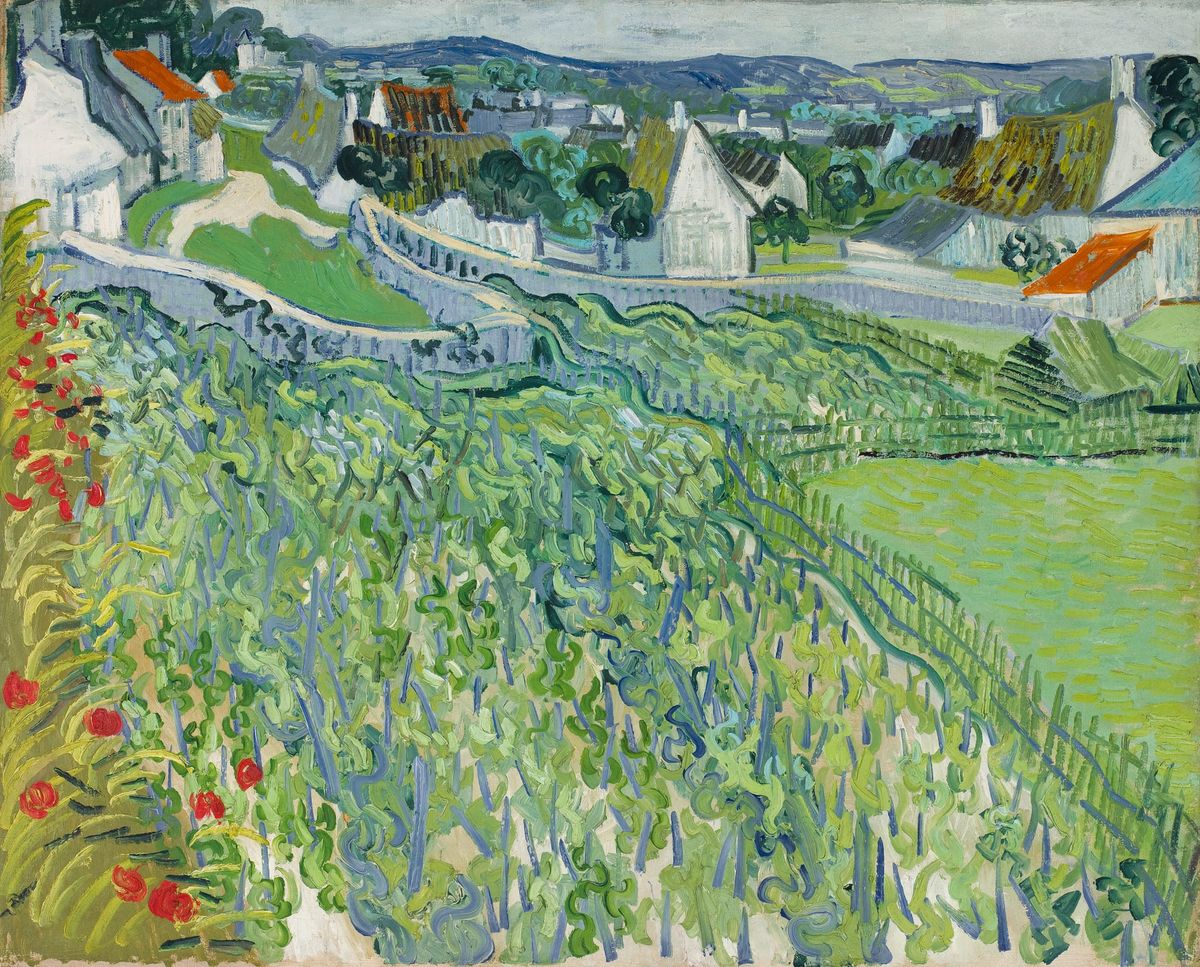
후기 인상주의의 거장 빈센트 반 고흐(Vincent van Gogh, 1853–1890)가 생애 마지막 해인 1890년 6월 프랑스 오베르 쉬르 우아즈(Auvers-sur-Oise)에서 완성한 유화 《오베르의 포도밭 전경(Vineyards with a View of Auvers)》은 64.2 cm × 79.5 cm 크기의 캔버스에 유채로 그린 풍경화로, 현재 미국 미주리주 세인트루이스 미술관(Saint Louis Art Museum)에 영구 소장되어 있습니다.
오베르의 완만한 구릉에서 마주한 전원적 안식과 예술적 분투
1890년 5월, 생레미 요양원을 떠나 파리 근교의 고즈넉한 예술가 마을 오베르 쉬르 우아즈에 도착한 고흐는 폴 가셰(Paul Gachet) 박사의 보살핌 아래 삶의 새로운 활력을 찾고자 애썼습니다. 그는 북부 프랑스 특유의 서늘하고 맑은 대기, 완만한 구릉을 따라 늘어선 초가지붕과 붉은 기와집, 그리고 푸른 포도밭이 어우러진 전원 풍경에 깊은 매료를 느꼈습니다.
고흐는 이 작품에서 높은 언덕배기에 올라 마을 전체를 내려다보는 파노라마 시점을 택했습니다. 동생 테오에게 보낸 서신에서 그는 "오베르는 참으로 아름다운 곳이며, 옛 전통을 간직한 초가지붕 오두막들이 드물게 남아 있어 그림을 그리지 않고는 배길 수 없다"고 적으며 벅찬 창작열을 드러냈습니다. 화면 좌측 전면에 붉게 피어난 양귀비꽃과 굽이치는 돌담길 너머로 펼쳐진 소박한 마을의 전경은, 생의 마지막 카운트다운이 시작되던 시기에도 자연의 싱그러움 속에서 평온을 갈구했던 화가의 애틋한 시선을 담고 있습니다.
무의식 속 시선의 공간 유영과 정서적 안정
화폭을 접하는 순간 관람자의 무의식적인 시선은 캔버스 하단을 가득 채우며 물결치는 싱그러운 연둣빛 포도나무 덤불 속으로 자연스럽게 빨려 들어갑니다. 화면 좌측 하단의 붉은 양귀비꽃 점묘 터치들이 주는 시각적 활력에서 시작된 시선은, 지주대를 따라 촘촘히 뻗어 나간 푸른 잎사귀들의 율동적인 리듬을 타고 화면 중앙으로 미끄러져 올라갑니다.
이어 시선은 포도밭을 가로지르는 구불구불한 회백색 돌담길과 언덕길을 따라 마을 어귀로 진입합니다. 흰색 벽면과 주황색 기와지붕이 옹기종기 모여 있는 가옥들을 지나 저 멀리 푸르스름한 수평선과 북부의 부드러운 하늘로 시선이 확장되면서, 감상자는 의식하지 못하는 사이에 탁 트인 해방감과 함께 북부 시골 마을이 건네는 고요하고 아늑한 정서적 안도감을 깊이 체감하게 됩니다.
파노라마 구도와 리드미컬한 필치의 결합, 미술사적 성취
미술계는 《오베르의 포도밭 전경》을 고흐가 만년에 도달한 유연하고 장식적인 선묘(Linear rhythm)와 서정적인 색채 조화가 가장 완벽하게 어우러진 풍경화의 수작으로 평가합니다.
남프랑스 아를과 생레미 시기의 작열하는 원색 대비와 격렬한 소용돌이에서 한 걸음 물러나, 부드러운 청록색, 연두색, 유백색과 주황색의 절제된 조화를 통해 북부 자연의 서정성을 담백하게 포착했습니다. 대지의 리듬을 파도처럼 일렁이는 유기적 선으로 치환한 이 독창적인 공간 구성은, 훗날 20세기 현대 풍경화의 새로운 지평을 열어젖힌 독보적인 조형적 성취로 인정받고 있습니다.
Verdant Slopes and Rustic Gables of the North, Vineyards with a View of Auvers
Painted in June 1890 during his final months in Auvers-sur-Oise by Vincent van Gogh (1853–1890), Vineyards with a View of Auvers is an oil on canvas measuring 64.2 cm × 79.5 cm (25.3 in × 31.3 in), preserved in the permanent collection of the Saint Louis Art Museum in St. Louis, Missouri.
Pastoral Tranquility and Chromatic Restraint on the Hills of Auvers
Arriving in Auvers-sur-Oise in May 1890 after leaving the asylum at Saint-Rémy, Van Gogh placed himself under the care of Dr. Paul Gachet, searching for emotional stability and physical renewal. He was instantly captivated by the distinct light of Northern France, the rolling agricultural terraces, and the timeless charm of thatched cottages coexisting with modern tiled roofs.
Perched high upon the hills, Vincent embraced an expansive elevated vantage point to capture the rolling panorama. In letters to his brother Theo, he expressed genuine admiration for the rural landscape, noting that Auvers possessed a profound and quiet beauty characterized by archaic cottages that demanded painterly documentation. The brilliant scarlet poppies flourishing on the lower left and the rhythmic stone boundaries traversing the slope reflect an artist finding momentary solace in the gentle cadences of the countryside, even as his mortal chapter neared its end.
Unconscious Spatial Navigation and Chromatic Harmony
The viewer’s subconscious gaze is immediately welcomed by the sweeping sea of green vines undulating across the lower foreground. Stimulated by the vibrant red accents of wild poppies on the left edge, visual perception follows the dynamic vertical brushwork of the vineyard stakes, gliding upward through the textured foliage toward the center of the canvas.
From this lush agricultural expanse, the eye effortlessly navigates the curving contour of the stone wall and the sloping pathway, entering the serene cluster of village cottages. As the gaze ascends past the whitewashed walls and terracotta gables toward the hazy, pale-blue horizon, the observer instinctively internalizes a profound sensation of openness and pastoral calm, sharing in the quiet equilibrium that nature offered to the painter’s restless mind.
Linear Rhythm and the Northern Palette: Critical Significance
Modern art historians recognize Vineyards with a View of Auvers as an exceptional testament to the stylistic refinement of Van Gogh’s late Auvers period.
Departing from the intense chromatic friction and turbulent vortices of his Provençal oeuvre, this work demonstrates a sophisticated reliance on fluid, decorative contours and a cool, harmonious palette dominated by sage greens, seafoams, and soft earthy ochres. By structuring pictorial space through organic visual rhythms and lyrical brushwork, Van Gogh transformed a rustic view into a foundational bridge toward early 20th-century landscape modernism.
Copyright © Palette Jeju. All rights reserved. Unauthorized reproduction or redistribution is strictly prohibited.
본 컨텐트의 저작권은 팔렛트제주에 있습니다. 허가없는 무단전제를 금지합니다.