보리나주 공장과 제련소가 있는 풍경 The Marcasite Factory / The Factory at Cuesmes
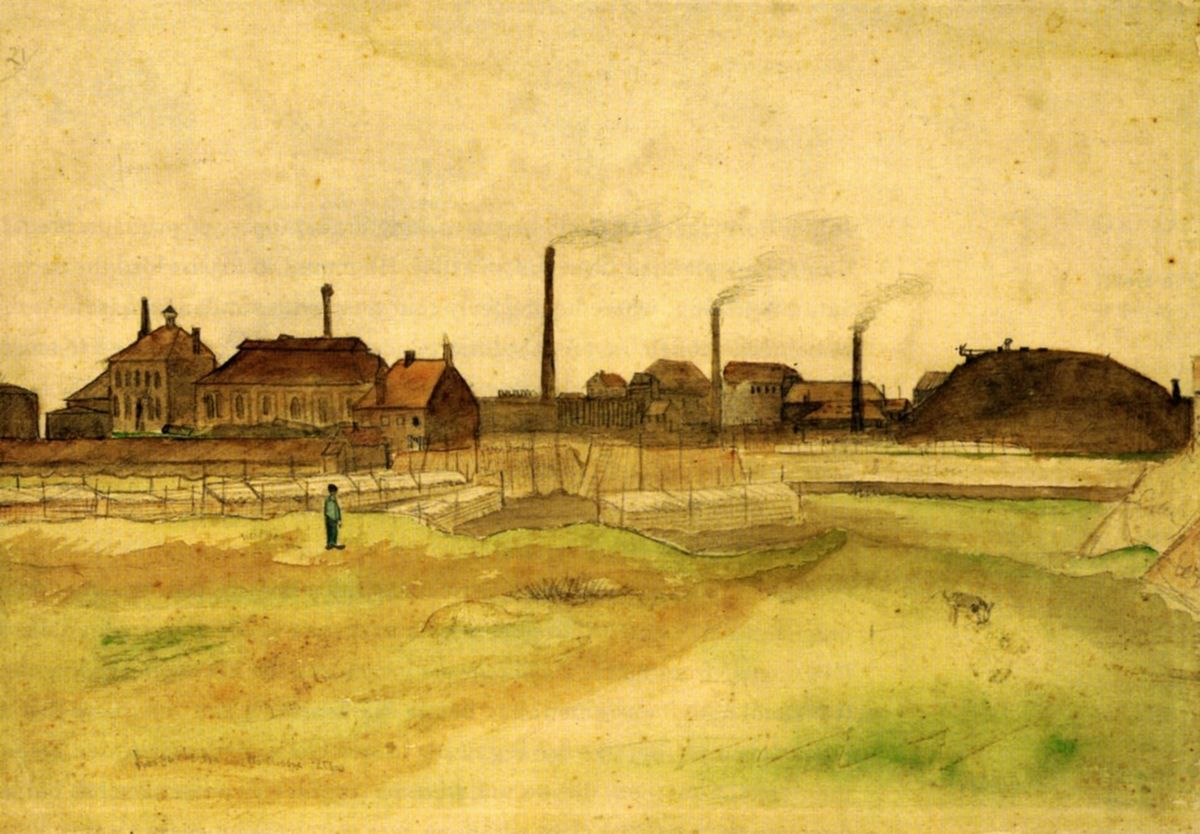
빈센트 반 고흐(Vincent van Gogh, 1853–1890)는 1879년 벨기에 남부의 가난한 탄광 지역인 보리나주에 선교사로 체류하며 광부들의 비참한 삶과 산업화된 풍경을 목격하고 이를 화폭에 담기 시작했습니다.
이 작품은 그가 보리나주에 체류하던 1879년 8월에 제작된 수채화이자 드로잉 작품으로, 야콥 바르트 드 라 파이유의 전작 도록 기준 공식 등록번호는 JH 23이며 실제 작품의 실측 규격은 23.5 × 36.5 cm입니다.
현재 네덜란드 암스테르담에 위치한 반 고흐 미술관에서 소장하고 있습니다.
작가의 고뇌와 비하인드
고흐는 보리나주 시절 종교적 이상과 현실의 거대한 괴리 속에서 깊은 절망을 겪었으며, 이 과정에서 탄광촌의 황량하고 척박한 산업 현장을 기록하는 것을 통해 예술가로서의 새로운 정체성을 찾아갔습니다.
화면 전면에는 흙빛과 연두빛이 섞인 거친 들판이 넓게 펼쳐져 있으며, 오른쪽 아래에는 풀을 뜯는 작은 개 한 마리의 실루엣이 적막한 분위기를 자아냅니다.
중경에는 펜스와 울타리가 쳐진 평탄한 작업 부지와 함께, 어두운 복식을 입고 홀로 서 있는 외로운 인물의 형상이 쓸쓸하게 배치되어 있습니다.
원경에는 높게 솟은 여러 개의 굴뚝에서 검은 연기를 뿜어내는 공장 건물들과 거대한 석탄 더미들이 수평으로 길게 이어져 있어, 당시 산업 혁명 시기 광산촌의 무겁고 억눌린 공기를 생생하게 증명합니다.
무의식 속 시선 및 심리 흐름
관람객의 시선은 가장 먼저 화면 전면의 휑하고 쓸쓸한 황무지와 풀을 뜯는 작은 동물에게 닿으며 탄광촌 특유의 고요하고 적막한 정서에 빠져들게 됩니다.
이어지는 시선은 중경에 홀로 서 있는 인물의 외로운 실루엣과 그 주변을 감싼 울타리 구조물을 거쳐, 수평으로 길게 늘어선 공장 지대로 자연스럽게 이동합니다.
마지막으로 원경의 굴뚝에서 피어오르는 연기와 하늘의 대기감으로 시선이 넓게 퍼져나가며, 산업화의 거대한 톱니바퀴 아래 놓인 인간의 무력감과 황량한 풍경이 안겨주는 깊은 고독을 온전히 체감하게 됩니다.
미술계의 평가와 조형미
미술사학계에서는 이 작품을 두고 고흐가 화가로서 본격적인 길을 걷기 시작한 초기 보리나주 시기의 중요한 기록이자, 사회적 현실을 바라보는 진중한 시선을 담은 수작으로 평가합니다.
절제된 색채와 펜 및 수채 물감을 결합한 담담한 표현 기법은 화려한 기교를 넘어 가난한 노동 현장의 진실을 가감 없이 전달합니다.
눈에 보이는 풍경의 단순한 기록을 넘어, 인간의 삶과 고통이 교차하는 시대적 진실을 캔버스 위에 묵직하게 각인시킨 소중한 예술적 성취입니다.
The Marcasite Factory
Vincent van Gogh documented the grueling realities and industrial landscapes of the impoverished mining region of the Borinage during his time as a lay preacher in southern Belgium in 1879.
Created in August 1879 during his Borinage period, this watercolor and drawing on paper is cataloged as JH 23 in standard references and measures 23.5 × 36.5 cm.
The artwork is currently housed in the Van Gogh Museum in Amsterdam.
During a time of profound spiritual and existential crisis in the Borinage, Van Gogh turned to sketching the desolate mining facilities to process the harsh realities of the working class.
The foreground is anchored by a barren, muted field of earthy tones and pale greens, accompanied by the faint silhouette of a small dog foraging in the lower right.
In the middle ground, fenced enclosures and partitioned plots stretch across the terrain, featuring the lonely figure of a person standing in dark attire.
In the distant background, a row of industrial factory buildings with tall chimneys venting dark smoke and massive heaps of coal define the harsh skyline, evoking the oppressive atmosphere of the mining district.
The viewer's gaze is initially drawn toward the desolate foreground and the solitary animal, establishing a profound sense of isolation and quiet melancholy.
The perspective then follows the horizontal expanse toward the lonely figure in the middle ground, before moving upward to the sprawling industrial complex.
Finally, the eye ascends toward the smoking chimneys and the muted sky, allowing the observer to experience a poignant psychological transition from stark reality to a somber reflection on human vulnerability amidst industrial toil.
Art historians regard this drawing as a crucial early milestone in Van Gogh's artistic journey, marking his transition toward documenting the raw social truths of the working class.
The restrained palette and delicate combination of ink and watercolor convey an unvarnished sincerity that bypasses academic convention.
It stands as an enduring historical and artistic document that etches the poignant intersection of human existence and industrialization onto paper.
본 컨텐트의 저작권은 팔렛트제주에 있습니다. 허가없는 무단전제를 금지합니다.
Copyright © Palette Jeju. All rights reserved. Unauthorized reproduction or redistribution is strictly prohibited.