봄날 뉘넌의 목사관 정원 - The Parsonage Garden at Nuenen in Spring (Spring Garden)
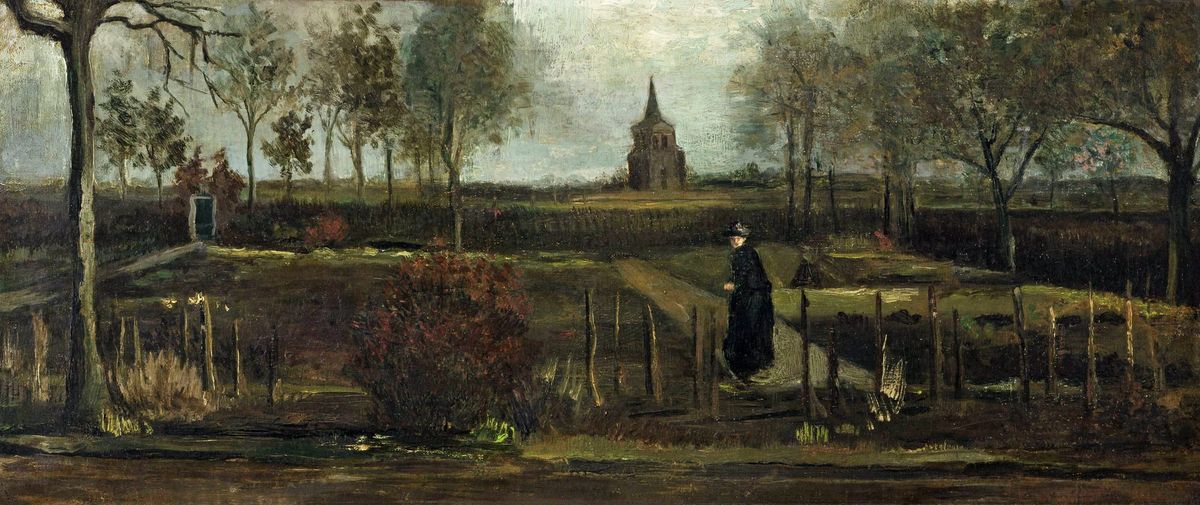
빈센트 반 고흐(Vincent van Gogh, 1853–1890)가 1884년 5월 네덜란드 뉘넌(Nuenen)에서 완성한 '봄날 뉘넌의 목사관 정원(The Parsonage Garden at Nuenen in Spring)'은 종이에 캔버스를 덧댄 패널 위에 유채(Oil on paper on panel)로 제작된 풍경화입니다. 작품의 실제 규격은 세로 25.0cm, 가로 57.0cm의 가로로 긴 파노라마 포맷이며, 네덜란드 흐로닝언 미술관(Groninger Museum)의 핵심 소장품입니다.
고흐는 이 작품에서 초기 네덜란드 시절 특유의 묵직한 흙빛 팔레트를 바탕으로, 계절의 미묘한 변화를 담아내는 섬세한 톤 변주를 시도했습니다. 짙은 녹갈색과 올리브 톤, 어두운 암갈색으로 묘사된 흙과 앙상한 나무들 사이로 파릇하게 돋아나는 연두빛 새싹과 붉은빛 꽃덤불을 배치했으며, 원경의 흐린 하늘 아래 우뚝 솟은 옛 교회의 첨탑은 단단한 형태감으로 평온하면서도 엄숙한 분위기를 자아냅니다.
이 그림에는 고흐가 병상에 누운 어머니를 위해 붓을 들었던 가슴 뭉클한 가족애와, 훗날 21세기 전 세계를 발칵 뒤집어놓은 희대의 도난 사건이라는 드라마틱한 에피소드가 함께 얽혀 있습니다. 1884년 초, 고흐의 어머니 안나 코르넬리아는 기차에서 내리다 대퇴골이 부러지는 큰 부상을 입고 침대에 누워 지내야 했습니다. 목사였던 아버지와의 극심한 불화로 늘 겉돌던 고흐였지만, 어머니의 병간호를 도맡으며 어머니가 창밖으로 내다보며 가장 아끼던 목사관 뒤뜰의 봄 풍경을 화폭에 담아 선물하기로 결심했습니다.
당시 고흐는 봄이 찾아오며 겨울잠에서 깨어나는 정원의 나무와 꽃들을 보며 어머니의 빠른 쾌유를 간절히 기도했습니다. 그림 한가운데 검은 옷을 입고 호젓하게 산책하는 여인의 뒷모습은 평생 자식 걱정으로 가슴을 졸였던 어머니의 모습을 투영한 것으로, 동생 테오에게 보낸 편지에서 고흐는 "정원에 봄이 오고 있다. 어머니가 다시 일어나 이 푸른 흙과 꽃향기를 직접 맡으실 수 있도록 이 고요한 빛을 캔버스에 담아 드리고 싶다"며 지극한 효심을 털어놓았습니다.
이 작품은 현대에 이르러 영화보다 더 영화 같은 미스터리 사건의 주인공이 되기도 했습니다. 2020년 3월 30일, 코로나19 봉쇄로 문을 닫았던 싱어 라런 미술관(Singer Laren)에 도둑들이 유리문을 깨고 침입해 흐로닝언 미술관에서 대여 전시 중이던 바로 이 그림을 훔쳐 달아났습니다. 공교롭게도 도난당한 날은 빈센트 반 고흐의 167번째 생일이었습니다. 3년 6개월 동안 행방이 묘연했던 이 불멸의 명작은 2023년 9월, 네덜란드의 전설적인 미술품 탐정 아서 브랜드(Arthur Brand)의 끈질긴 추적 끝에 명품 이케아 가방에 조심스럽게 담긴 채 기적적으로 회수되어 다시 대중의 품으로 돌아왔습니다.
후대의 미술사학자들과 평단은 이 작품을 고흐가 바르비종파의 자연주의 전통을 계승하면서도 자신만의 독자적인 서정적 감수성을 확립하기 시작한 초기 대표 걸작으로 평가합니다. 웅장한 자연의 순환 속에서 인간의 유한함과 가족을 향한 애틋한 사랑을 담아낸 이 그림은 반 고흐의 인간적인 온기와 영혼의 성숙을 엿볼 수 있는 가장 순수한 기록으로 손꼽힙니다.
관람자의 시선은 가장 먼저 화면 우측 중앙의 오솔길을 따라 묵묵히 걸어가는 검은 옷을 입은 여인의 실루엣에 머뭅니다. 이어 길옆으로 붉게 피어오른 봄 덤불과 전면의 나무 울타리를 거쳐, 좌우로 길게 뻗은 고목들의 섬세한 가지 사이를 지나 원경의 뉘넌 옛 교회 첨탑으로 자연스럽게 상승합니다. 이후 시선은 옅은 구름이 드리운 은은한 하늘의 지평선을 따라 가로로 길게 이동하며 화면 전체의 평화로운 공간감을 온전히 품게 됩니다.
심리적으로 관람자는 차분하고 정돈된 흙빛의 안정감과 대지를 뚫고 피어나는 은은한 봄의 기운 속에서 깊은 정서적 위로와 평온함을 경험하게 됩니다. 어머니의 회복을 바라며 정성스럽게 칠해 나간 화가의 따스한 시선은 보는 이의 내면에 깃든 고단함과 불안을 어루만져 주며, 메마른 일상 속에서도 다시 희망이 움트는 봄날의 햇살 같은 내적 안식을 풍성하게 채워줍니다.
The Parsonage Garden at Nuenen in Spring (Spring Garden)
Painted by Vincent van Gogh (1853–1890) in Nuenen in May 1884, The Parsonage Garden at Nuenen in Spring is an oil on paper on panel landscape measuring 25.0 cm in height and 57.0 cm in width. Utilizing an elongated horizontal format, this historic masterpiece is a prized cornerstone in the collection of the Groninger Museum in Groningen, Netherlands.
Van Gogh established the composition using the somber, earthy palette characteristic of his early Dutch period, while exploring subtle tonal transitions to signal the arrival of the new season. Between the deep umbers, dark olive tones, and gnarled silhouettes of winter-bare trees, delicate touches of fresh green shoots and blooming reddish shrubs emerge. In the distance, the solemn spire of the old village church rises against a pale, overcast sky, lending the landscape a quiet, spiritual gravity.
The painting holds an exceptionally tender history of filial devotion alongside a sensational modern art mystery. In early 1884, Van Gogh’s mother, Anna Cornelia, suffered a broken femur while stepping off a train, leaving her bedridden for months. Despite his chronic disputes with his clergyman father, Van Gogh devoted himself to nursing his mother, deciding to paint her favorite view of the parsonage garden awakening in spring as a gift to comfort her convalescence.
Van Gogh watched the garden awaken with deep personal empathy, hoping the blooming greenery would aid his mother's recovery. The solitary dark-clad female figure strolling peacefully down the central pathway serves as a gentle tribute to her enduring presence. Writing to his brother Theo, Van Gogh expressed his heartfelt desire to capture the first quiet stirrings of spring, creating an intimate visual sanctuary filled with the fragrance of warming soil and renewed hope.
In modern times, this very canvas became the center of a dramatic international art heist. On March 30, 2020—the exact 167th anniversary of Van Gogh's birth—thieves smashed through the glass doors of the Singer Laren Museum, where the painting was on loan during the pandemic lockdown. After remaining missing for three and a half years, the masterpiece was miraculously recovered in September 2023 by renowned Dutch art detective Arthur Brand, who received the stolen artwork delivered safely inside a padded blue IKEA bag.
Art historians and scholars celebrate this painting as a pivotal milestone of Van Gogh’s early development, demonstrating how he synthesized the naturalism of the Barbizon School with his own deeply personal lyricism. Beyond its topographical charm, the work endures as a profound meditation on healing, seasonal resurrection, and filial love.
A viewer’s gaze instinctively settles upon the solitary silhouette of the woman walking along the narrow garden path on the right. The eyes then journey past the vibrant reddish flowering bush and wooden garden fence in the foreground, ascending through the delicate tracery of the surrounding trees toward the ancient church tower on the horizon, before gliding across the broad horizontal expanse of the tranquil spring sky.
Psychologically, the grounded harmony of deep earth tones interwoven with subtle spring vitality induces an immediate sensation of comfort, patience, and emotional balance. Contemplating the quiet devotion poured into this canvas eases underlying tensions and fatigue, offering the observer an enduring experience of familial warmth, introspective stillness, and restorative peace.
본 리뷰에서 작품을 제외한 컨텐츠의 저작권은 팔렛트제주에 있습니다.
"퍼블릭도메인 고전명화"를 제외한 모든 창작 콘텐츠는 저작권법 제4조 및 제10조에 의거하여 보호됩니다. 무단 도용시 저작권법 제136조(벌칙)에 의거, 당사의 사전 서면 승인 없는 저작권 침해 행위를 금지합니다.